Neck injury? Consult a professional quickly!
08/08/23
How Neurovertebral Decompression Can Help You Get Back to a Pain-Free Life
09/26/23
Introduction
Context of Cruralgia
Cruralgia, also known as crural neuralgia, is a neurological condition that affects an increasing number of people and constitutes a major clinical challenge in the field of musculoskeletal medicine. It is characterized by intense pain along the course of the crural nerve, which extends from the lumbar region of the spine to the thigh, and sometimes to the foot. This pain can be triggered or exacerbated by a variety of factors, including disc damage, spinal abnormalities, inflammation, or even postural factors. Cruralgia is often confused with sciatica, but it is crucial to distinguish them because they involve different nerves and may require distinct treatment approaches. The complexity of this condition lies in its multifactoriality, meaning that it can be influenced by a variety of factors such as age, lifestyle, working conditions and existing comorbidities.
In the current medical context, where the incidence of musculoskeletal disorders is increasing, cruralgia represents not only a burden for patients but also for the health system in general. The implications of this condition extend beyond physical pain, also affecting patients' quality of life, psychological well-being, and ability to perform daily activities. Additionally, the accurate diagnosis and effective treatment of cruralgia can be complicated by the presence of symptoms similar to other medical conditions, thus requiring rigorous clinical evaluation and advanced diagnostic testing. This highlights the importance of a multidisciplinary approach in the management of cruralgia, which may include specialists in neurology, orthopedics, radiology and osteopathy, among others. In this regard, spinal decompression therapy is emerging as a promising treatment option, providing a non-invasive alternative to traditional surgical methods.
Importance of appropriate treatment of cruralgia
Proper treatment of cruralgia is not limited to simply alleviating painful symptoms; it is of crucial importance for the patient's overall quality of life. Inappropriate or late management of this condition can lead to a series of complications, ranging from deterioration of mobility to the psychological impact of Chronic Pain. Additionally, cruralgia may be a symptom of more serious underlying conditions, such as herniated discs or spinal stenosis problems, which require targeted medical intervention. Ignoring or neglecting these signals can not only worsen the initial condition, but also lead to more complex health problems that may require more invasive surgical procedures in the future. Therefore, a comprehensive medical evaluation, followed by a personalized treatment plan, is imperative to address cruralgia holistically.
In this context, spinal decompression therapy is emerging as a non-invasive treatment option that has shown promising results in the management of cruralgia and other spine-related conditions. This technique, supported by rigorous scientific research, offers an alternative to more invasive treatment methods, reducing the risks associated with surgery and medications in the long term. It is therefore essential that patients and healthcare professionals consider all treatment options available and choose the one that is most suitable for the specific condition of the patient. Such a patient-centered approach not only improves treatment outcomes, but also contributes to faster and longer-lasting recovery, allowing patients to return to active and fulfilling lives.
Cruralgia – Definition and Diagnosis
Cruralgia is a condition characterized by pain affecting the crural nerve that runs from the spine to the hips and legs. This discomfort is due to compression or irritation of this particular nerve at the level of the lumbar vertebrae. Symptoms include pain in the thighs, numbness in the legs, and difficulty getting up or walking normally. To make an accurate diagnosis, doctors do physical exams as well as imaging tests such as X-rays, MRIs, or CT scans to check for any underlying cause such as protruding/herniated discs leading to stenosis. , among others, that may have caused this issue originally. Once the problem is correctly identified, treatment plans can be developed accordingly without delay!

Types of Cruralgia
Cruralgia, also known as crural neuralgia, is a medical condition that can manifest in different forms, depending on various factors such as the underlying cause, location of the pain, and associated symptoms. Distinguishing between these types is essential to make an accurate diagnosis and develop a suitable treatment plan. The first type is primary cruralgia, which is often the result of compression or irritation of the crural nerve in the lumbar vertebrae. This form of cruralgia is usually caused by conditions such as herniated discs, spinal stenosis or spinal tumors. It is characterized by acute pain which can extend from the lumbar region to the thigh, or even to the foot in some cases. Symptoms may include shooting pain, numbness, and muscle weakness.
The second type is secondary cruralgia, which is a consequence of other medical conditions or external factors. For example, it can be induced by metabolic diseases such as diabetes, which can lead to peripheral neuropathy affecting the crural nerve. It can also be the result of trauma, infections or previous surgeries in the lumbar region. Unlike primary cruralgia, secondary cruralgia can present more varied and less localized symptoms, making its diagnosis more complex. It is therefore crucial to carry out a complete medical evaluation, including imaging tests and neurological examinations, to distinguish between these types of cruralgia and identify the underlying cause. This multidisciplinary approach, aligned with post-doctoral academic standards, will make it possible to optimally guide the treatment plan.
Risk factors
In the complex medical context of cruralgia, it is imperative to consider the various risk factors that may contribute to the onset and severity of this condition. Risk factors can be classified into several categories, including anatomical, behavioral and environmental. Anatomically, conditions such as spinal stenosis, herniated discs and spinal abnormalities can put increased pressure on the crural nerve, leading to symptoms of cruralgia. Additionally, behavioral factors such as sedentary lifestyle, lack of regular exercise, and poor posture can also contribute to the occurrence of this condition. It is also important to note that environmental factors, such as the type of work (for example, jobs requiring long periods of sitting or repetitive movements), may increase susceptibility to cruralgia.
In addition, systemic factors such as diabetes, obesity, and certain autoimmune diseases may play a significant role in the pathogenesis of cruralgia. Diabetes, for example, can lead to neuropathy that affects various nerves in the body, including the crural nerve. Obesity, on the other hand, can increase pressure on the spine and surrounding nerves, exacerbating symptoms. It is also crucial to consider the age and gender of the patient, as cruralgia is more common in older people and may present with different symptoms depending on gender. In sum, a holistic understanding of risk factors is essential for an accurate diagnosis and effective treatment plan. A comprehensive medical assessment, including imaging tests and a detailed medical history, will identify risk factors specific to each patient, paving the way for targeted, evidence-based therapeutic interventions.
Difference between Cruralgia and Sciatalgia
Cruralgia and sciatica are two neurological conditions that affect the lower extremities, but they are distinguished by several key characteristics, including the nerve involved, the region of pain, and associated symptoms. Cruralgia is pain that radiates along the crural nerve, also known as the femoral nerve, which originates in the lumbar region of the spine and extends to the front of the thigh. This condition is often caused by compression or irritation of the crural nerve in the lumbar vertebrae, and it may be accompanied by symptoms such as thigh pain, numbness, and difficulty walking. On the other hand, sciatica is a pain that follows the path of the sciatic nerve, also starting from the lumbar spine but running down the back of the leg to the foot. Symptoms of sciatica can include sharp pain in the lower back, buttocks, back of the thigh, and even the foot, often accompanied by tingling or numbness.
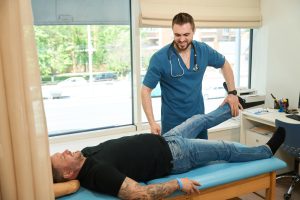
To accurately diagnose these conditions, it is crucial to conduct a thorough clinical evaluation, which may include imaging tests like X-rays, MRIs, or CT scans. The goal is to locate the exact source of the nerve compression, which can be due to various causes such as herniated discs, disc protrusions or spinal stenosis. Mobility tests and the patient's medical history are also taken into account to make an accurate diagnosis. Once the affected nerve and the cause of the compression are identified, an appropriate treatment plan can be developed, which can vary significantly depending on the underlying pathology. It is therefore essential to distinguish between cruralgia and sciatica to ensure optimal medical management, because although these conditions may present with similar symptoms, therapeutic approaches can differ significantly.
Neurovertebral decompression – Cruralgia treatment
For people with spinal problems such as cruralgia, there is hope in the form of spinal therapy. Spinal decompression therapy. This non-surgical technique involves using a traction device that applies gentle force to stretch the vertebrae and create more space between them. In doing so, it reduces pressure on the discs and nerves, which can lessen the painful symptoms associated with these conditions over time. Proven to be effective for many types of spinal problems, including herniated discs or stenosis, this treatment option has become increasingly popular among patients looking to relieve their discomfort without having to undergo invasive procedures. . If you suffer from any problem related to back pain, do not hesitate to ask if the Spinal decompression therapy might suit you!
The stages of treatment involve a series of actions that take place before, during, and after the procedure. These measures are essential to ensure optimal results of any medical intervention.
Before performing a spinal decompression to treat the symptoms of cruralgia, your doctor will perform a thorough review of your medical history, physical exams, and imaging tests. If deemed necessary, the procedure is performed by exerting slight traction on the spine using a device placed on it, while lying on a traction table. During this procedure, you may feel some pulling sensation in your legs and back, but it is usually painless. The duration varies between 20 and 45 minutes per session and several sessions until the end of the treatment. Post-treatment hydration, combined with light activity such as stretching exercises or yoga, can help strengthen weak muscles and prevent further discomfort. Your doctor may suggest an ongoing plan that includes specially designed follow-up appointments to maintain the long-term benefits gained from spinal decompression therapy. Spinal decompression therapy.
The effectiveness of spinal decompression in the treatment of cruralgia has been studied. Research suggests that this treatment may be a viable option for people with this condition. However, more research is needed to confirm its effectiveness and determine optimal dosing protocols.

Spinal decompression has been extensively studied for its effectiveness in the treatment of cruralgia. These studies have shown that this procedure can help relieve pain and other symptoms associated with the disease, such as stiffness or tingling sensations. However, it is essential to note that spinal decompression may not be suitable for all cases of cruralgia. It is necessary to consult an experienced medical professional before considering any form of medical intervention, including spinal decompression. This non-invasive technique can be effective when combined with physiotherapy or chiropractic treatments, but each case requires individual assessment by trained professionals who understand how unique each situation can be. By working with your doctor, you can find personalized solutions that will allow you to improve your quality of life without suffering from the chronic pain caused by cruralgia.
History and development of the technique
Neurovertebral decompression therapy is a relatively new innovation in the field of spine medicine, although it draws on established medical and chiropractic principles. Its origin dates back to the first methods of spinal traction, used for centuries to relieve various back pain. However, spinal decompression therapy, as we know it today, emerged in the last decades of the 20th century, thanks to technological advances in medical imaging and bioengineering. Early versions of this technique used rudimentary mechanical devices to apply traction force to the spine. Over time, these devices evolved into highly specialized, computer-controlled machines capable of applying precise traction forces to specific segments of the spine. This precision has made it possible to significantly increase the effectiveness of the treatment, specifically targeting areas affected by conditions such as herniated discs, spinal stenosis and, of course, cruralgia.
The adoption of spinal decompression therapy has been facilitated by a series of clinical studies and academic research that have validated its effectiveness. Renowned medical institutions have conducted randomized clinical trials, often in comparison with more traditional treatment methods like surgery or physical therapy. Results generally showed significant improvement in symptoms, with a reduced risk of side effects or postoperative complications. Additionally, the technique has been refined over the years to include personalized treatment protocols, based on complex algorithms that take into account a multitude of variables, ranging from patient age and gender to severity and severity. location of the condition. Thus, spinal decompression therapy has become not only a viable option for the treatment of various spinal conditions, but also a specialty in itself, requiring specific training and certification for practitioners. This continued development of the technique, supported by solid scientific foundations, makes it an increasingly popular and respected treatment option in the specialist spinal medical field.
Ideal candidates for spinal decompression therapy
Neurovertebral decompression is a non-surgical technique that has proven effective in the treatment of various spinal conditions, including cruralgia. However, it is crucial to emphasize that this method is not universally applicable to all patients. Ideal candidates for spinal decompression therapy are usually those who suffer from chronic back or leg pain due to herniated discs, protrusions disc or spinal stenosis. These conditions often result in nerve compression, which can be effectively alleviated with decompression. Additionally, patients who have not found significant relief with conservative treatments such as anti-inflammatory medications, physical therapy, or corticosteroid injections may also be good candidates. It is also important that patients have a clear understanding of the procedure and realistic expectations for the results, as spinal decompression therapy is most effective when the patient is psychologically prepared and engaged in the treatment process.
In the clinical context, a comprehensive assessment is essential to determine a patient's suitability for this form of treatment. This includes a thorough physical examination, a detailed medical history, and imaging tests such as MRI or CT scan. Potential contraindications, such as severe osteoporosis, recent vertebral fractures, or spinal tumors, should be carefully considered. Additionally, patients who have previously undergone spinal surgery with hardware implantation (such as screws or plates) may not be good candidates for spinal decompression therapy. In short, a rigorous medical evaluation is essential to identify ideal candidates, and this decision must be the result of close collaboration between the patient and a qualified health professional, taking into account the latest advances and post-doctoral studies in the field. domain.
Possible Side Effects
As part of the treatment of cruralgia by spinal decompression therapy, it is essential to take into account the potential side effects for comprehensive and informed medical care. Although spinal decompression therapy is generally considered a non-invasive and safe method, some patients may experience temporary side effects. These include slight irritation or discomfort in the treated area, which is usually due to traction on the spine. Additionally, a feeling of fatigue or muscle weakness may occur immediately after the procedure, due to the relaxation of the muscles and ligaments surrounding the spine. It is also possible that some patients may experience a temporary increase in pain or discomfort, especially during the first few treatment sessions. This reaction is often attributed to what is known as “vertebral readjustment syndrome,” a phenomenon well documented in the specialized medical literature.
It is crucial to note that these side effects are usually short-lived and fade as the body adapts to the treatment. However, in rare cases, more serious complications may occur, especially if the procedure is not performed correctly or if the patient has certain medical contraindications. For example, improper application of traction force can lead to worsening symptoms or even nerve damage. Additionally, patients with certain conditions, such as severe osteoporosis, vertebral fractures, or spinal tumors, may not be good candidates for this form of treatment. This is why a complete medical evaluation, including a detailed medical history and imaging tests, is imperative before beginning any form of spinal decompression therapy. Close monitoring by qualified healthcare professionals is also recommended throughout treatment to minimize risks and optimize therapeutic results.

For people with cruralgia, finding an effective treatment is crucial. There TagMed Clinic offers a full range of solutions tailored to your specific needs. Visit our site today and find out how we can help you manage this condition with ease!
To learn more about treating cruralgia with spinal decompression therapy, visit our website www.decompressionneurovertebrale.com





 Français du Canada
  English (Canada)