Fusion vs. dynamic stabilization: a guide for patients
02/05/26
Cervical disc replacement: long-term results
02/05/26
The management of chronic lower back pain is undergoing a major transformation thanks to the emergence of the motion surgery, an innovative surgical technique designed to restore the natural function of the spine. While lower back pain affects a significant portion of the adult population, limiting daily activities and leading to debilitating loss of mobility, this promising medical approach is redefining conventional treatment options. Dynamic implants such as TOPS and IntraSPINE perfectly illustrate this evolution, offering an alternative to spinal fusion that preserves mobility and supports functional rehabilitation.
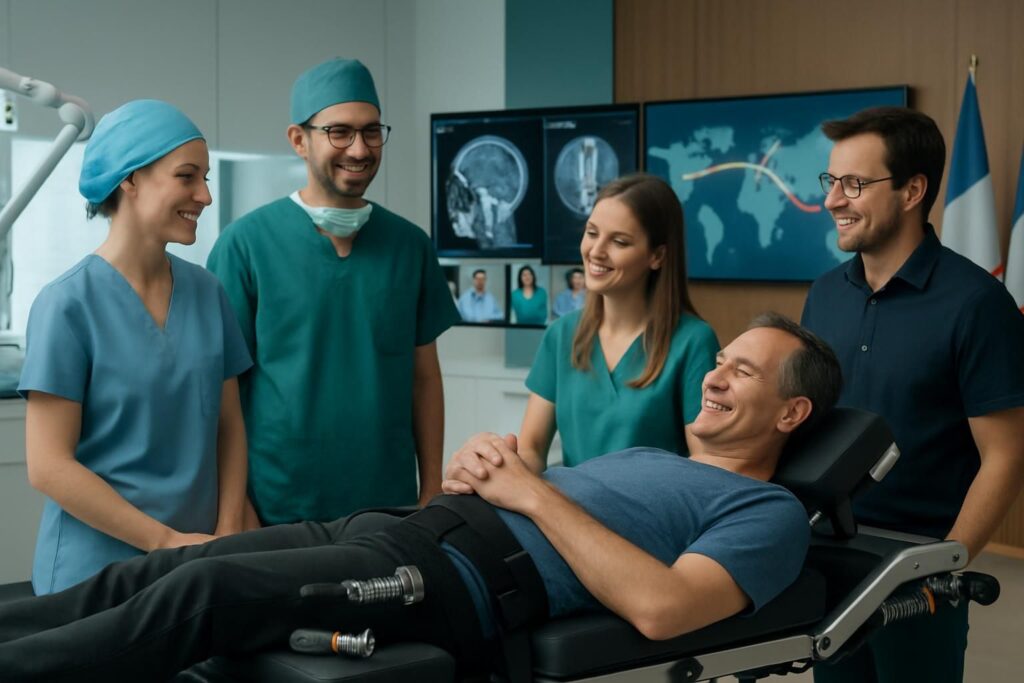
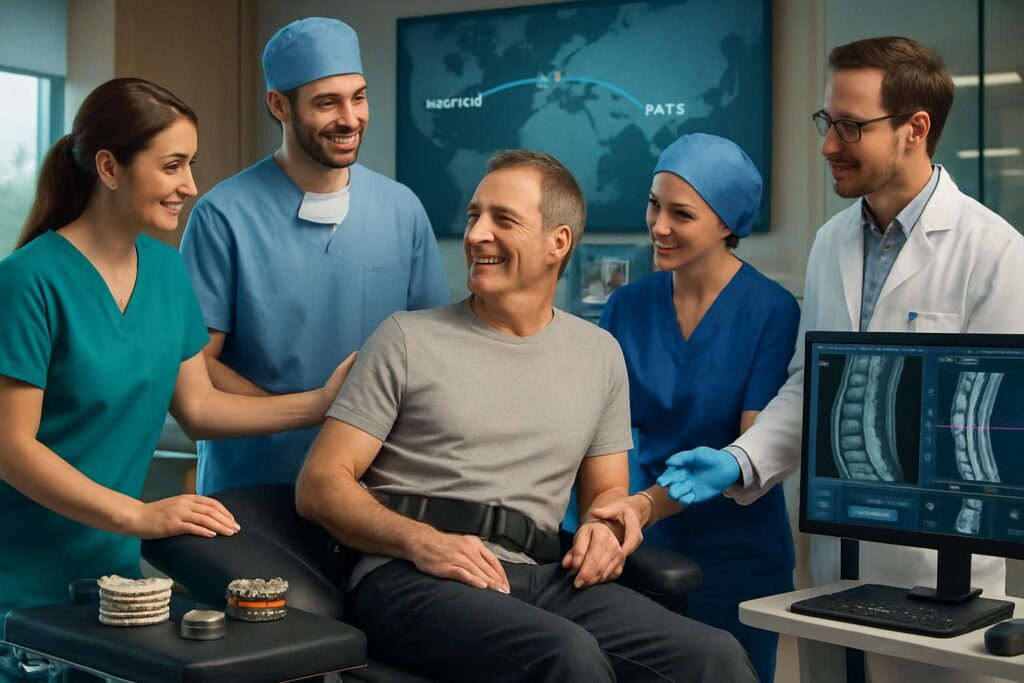
In partnership with centers of excellence in France, this new healthcare offering is specifically designed to meet the needs of Quebec patients facing long wait times and substantial treatment costs in their region. Recognized expertise in dynamic spinal implantology provides personalized support, combining scientific rigor with technological innovation. Transatlantic coordination facilitates a smooth, safe, and efficient patient journey, where each step, from initial assessment to recovery, is carefully managed to ensure appropriate, safe, and optimized treatment.
The foundations and advantages of motion surgery in the management of lower back pain
The surgery motion embodies a significant advance in the treatment of debilitating lower back pain, often caused by degenerative lesions or instabilities of the lumbar spine. Unlike traditional methods of merger vertebral, this technique is distinguished by the use of dynamic implants which preserve the natural mobility of the vertebral segments, thus offering a biomechanical function closer to the physiological.
Devices such as TOPS IntraSPINE and other implants act as flexible stabilizers, allowing the spine to move while limiting excessive movement that can cause pain and inflammation. This approach also reduces the risk of adjacent degeneration, a common problem after fusion where neighboring segments wear out prematurely. By leveraging the implants' ability to modulate mechanical load, motion surgery significantly improves patients' quality of life.
Understanding the biomechanical impact of dynamic implants
Dynamic implants are designed to adapt to physiological movements, absorbing natural mechanical stresses and reducing pathogenic micromovements. The IntraSPINE implant, for example, It is positioned between the vertebral bodies to maintain adequate intervertebral opening and restore range of motion without complete blockage. This solution promotes better force distribution, which limits wear and increases the durability of the procedure.
Similarly, the TOPS system offers controlled stabilization through a unique articulated mechanism, allowing flexion, extension, and rotation while protecting nerve structures. This innovation is particularly relevant for patients with vertebral stenosis and posterior segmental instability, where rigid stabilization would cause major functional limitations.
The combined effect of these dynamic implants results in a significant reduction in lower back pain and improved spinal mobility in the medium and long term. Several clinical studies conducted in partner centers in France confirm the increased efficacy and safety of this dynamic surgical technique, including accelerated rehabilitation and a faster return to daily activities.
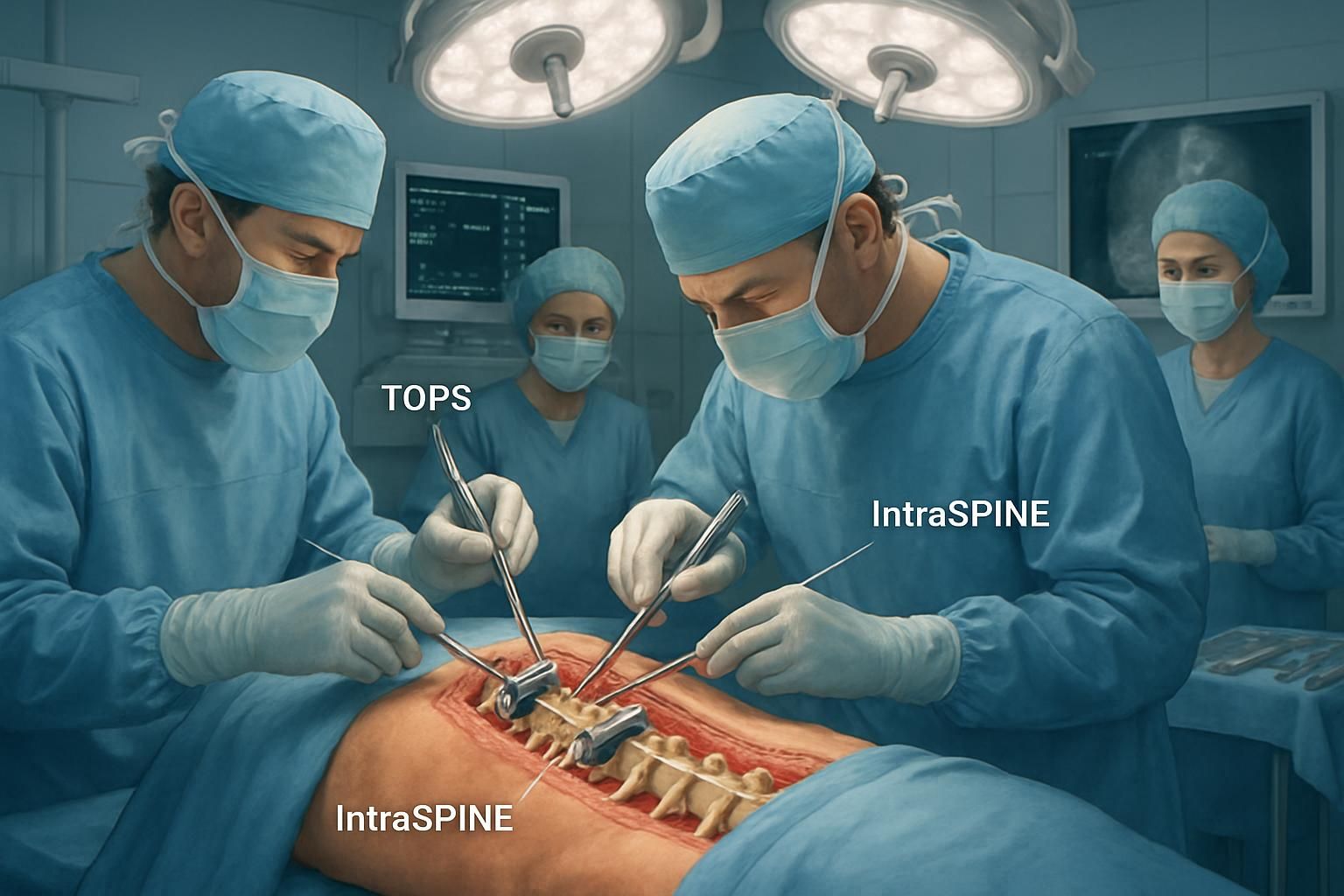
Presentation of the various innovative surgical options for lower back pain
Faced with the complexity of chronic lower back pain, several surgical solutions are offered in France, with particular attention paid to innovation and the personalization of treatments. motion surgery proves to be a credible alternative to classic spinal fusion, thanks to the biomechanical advantages of dynamic implants.
Traditional techniques, such as lumbar fusion or simple decompression, remain indicated in certain severe or complicated cases. However, they are often associated with a loss of spinal mobility, an increased risk of degeneration of adjacent segments, and a longer recovery time. minimally invasive surgery modern approaches, including the implantation of devices like IntraSPINE, aim to reduce these drawbacks.
Focus on minimally invasive surgery and its benefits
Minimally invasive surgery, supported by centers such as the TAGMED CLINIC, This approach optimizes the management of lower back pain by reducing surgical risks and accelerating healing. It utilizes small incisions, endoscopic techniques, and precision instruments, enabling effective intervention with less trauma to surrounding tissues.
Combined with dynamic implants, minimally invasive surgery allows for the implantation of devices while preserving muscles and ligaments, essential elements for natural stability. This technical compromise ensures better functional recovery and a reduction in long-term sequelae. The choice between fusion, simple decompression, or motion surgery is based on a personalized evaluation, taking into account the anatomical and clinical specificities of each patient.
Here is a simplified comparative table of the main surgical techniques offered:
| Surgical technique | Type of implant | Spinal mobility | Recovery time | Risks and complications |
|---|---|---|---|---|
| Classic lumbar fusion | Rigid screws/pawls | Complete absence | 6 to 12 months | Development of adjacent segmental degeneration |
| Simple decompression | None implant | Preserved | 3 to 6 months | Insufficient rest possible, relapse |
| Motion surgery with TOPS or IntraSPINE | Dynamic implants | Mobility preserved | 2 to 4 months | Reduced risks thanks to minimally invasive procedures |
These technical innovations are supported by rigorous protocols and expert training of French teams, thus ensuring patients a safe environment that meets the most demanding international standards.
A patient pathway orchestrated between Quebec and France for optimal care
The success of surgical treatment depends as much on the quality of the procedure as on the overall patient care. In this context, transatlantic coordination is crucial to overcome barriers related to distance, facilitate communication between professionals, and ensure optimal continuity of care.
This process begins with a thorough evaluation, often conducted in Quebec, where a multidisciplinary assessment determines the possibilities for conservative treatment. Collaboration with the TAGMED CLINIC This allows, in particular, for the provision of advanced non-surgical treatments, including neurovertebral decompression, before considering an intervention.
When surgery becomes necessary, particularly after 3 to 6 months of conservative treatments, care is organized with French teams specializing in dynamic implants. The management of implant displacements, appointment Medical care, as well as pre- and post-operative organization, are provided by dedicated platforms such as SOS Medical Tourism, which support patients throughout their journey.
This personalized system aims to:
- To provide smooth communication between the healthcare teams of the two countries; ;
- To ensure fast and secure support in France; ;
- Ensure appropriate post-operative follow-up with a targeted rehabilitation program; ;
- To limit the stress and uncertainties related to distance and changing context.
Thus, this integrated model maximizes the chances of success, reduces treatment times and optimizes functional outcomes for the benefit of patients suffering from chronic lower back pain.
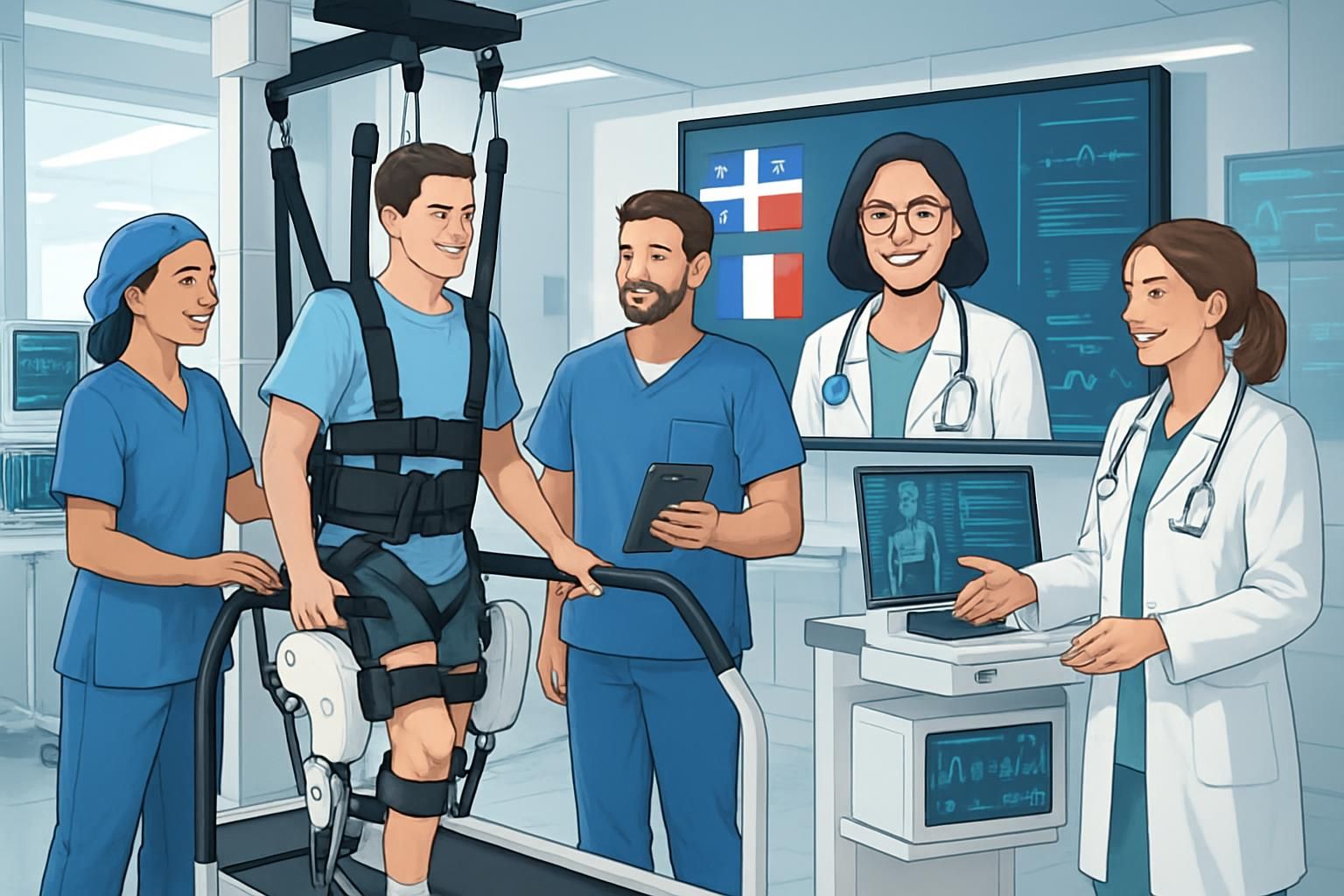
Impact and concrete benefits of dynamic implants on rehabilitation and quality of life
The benefits of motion surgery These benefits extend beyond simple anatomical correction. By preserving spinal mobility, these innovative implants promote active and rapid rehabilitation, essential for a lasting return to normal life. The reduction in lower back pain, often severe in patients suffering from disc degeneration or instability, is significant and long-lasting.
Patients thus benefit from improved posture, a significant increase in their range of motion, and a faster return to work and leisure activities. This functional restoration is accompanied by a positive psychological impact, with a reduction in stress and symptoms associated with chronic pain.
Adherence to international standards and evidence-based methods ensures the safety of procedures, limiting complications and/or the need for reinterventions. Furthermore, reduced hospital stays and faster recovery contribute to optimized treatment costs and a lighter economic burden on the healthcare system, without compromising quality.
A clinical example illustrates this progression: a patient treated after many months of pain and traditional treatment failures saw their mobility restored just a few weeks after an intervention with dynamic implant TOPS, performed in France. Post-operative follow-up, organized through transatlantic coordination, allows for effective targeted rehabilitation, generating a return to a normal active life in less than four months.
Comparison of surgical techniques for lower back pain
Discover the key differences between the main surgical techniques for treating lower back pain.
Use the filters to target the important criteria according to your needs.
| Technique ▲▼ | Recovery time ▲▼ | Mobility ▲▼ | Risks ▲▼ |
|---|
Frequently asked questions about motion surgery and its role in the management of lower back pain
{"@context": "https://schema.org", "@type": "FAQPage", "mainEntity":[{"@type": "Question", "name": "What is motion surgery and how does it differ from traditional methods?", "acceptedAnswer":{"@type": "Answer", "text": "Motion surgery uses dynamic implants that preserve spinal mobility, unlike fusion techniques that immobilize the operated segment. It offers a better quality of life by maintaining natural spinal function."}},{"@type": "Question", "name": "What are the criteria for considering motion surgery?" ", "acceptedAnswer":{"@type": "Answer", "text": "Motive surgery is recommended after a complete conservative treatment of at least 3 to 6 months, including neurovertebral decompression, notably offered at the TAGMED Clinic. It is intended for patients experiencing symptomatic vertebral instability or spinal stump."}},{"@type": "Question", "name": "What are the biomechanical advantages of TOPS and IntraSPINE implants?"}} ", "acceptedAnswer":{"@type": "Answer", "text": "These implants modulate the load and provide constructive stabilization while allowing natural spinal movements, which reduces the risk of injury to adjacent segments and facilitates rehabilitation."}},{"@type": "Question", "name": "How is medical follow-up organized for a Quebec patient operating in France?"}},{"@type": "Question", "name": "How is medical follow-up organized for a Quebec patient operating in France?"}}} ", "acceptedAnswer":{"@type": "Answer", "text": "Follow-up is ensured through careful coordination between Quebec and French teams, with personalized support before, during, and after surgery, thus allowing for a safe and smooth process."}},{"@type": "Question", "name": "What are the economic and human benefits of treatment in France?"}},{"@type": "Question", "name": "What are the economic and human benefits of treatment in France?"}} ", "acceptedAnswer":{" @type": "Answer", "text": "By benefiting from advanced surgical techniques and comprehensive support, the patient optimizes the chances of success, reduces waiting times and can resume their activities quickly, thus reducing the overall cost of care."}}]}What is motion surgery and how does it differ from traditional methods?
Motion surgery uses dynamic implants that preserve spinal mobility Unlike fusion techniques that immobilize the operated segment, this technique offers a better quality of life by maintaining the spine's natural function.
What are the criteria for considering motion surgery?
Motion surgery is recommended after a complete course of conservative treatment of at least 3 to 6 months, including the Spinal decompression therapy, This treatment, notably offered at the TAGMED Clinic, is intended for patients with symptomatic spinal instability or spinal stenosis.
What are the biomechanical advantages of TOPS and IntraSPINE implants?
These implants modulate the load and ensure controlled stabilization while allowing natural spinal movements, which reduces the risk of degeneration of adjacent segments and facilitates rehabilitation.
How is medical follow-up organized for a Quebec patient undergoing surgery in France?
Follow-up is ensured through careful coordination between Quebec and French teams, with personalized support before, during, and after surgery, thus allowing a safe and smooth process.
What are the economic and human benefits of treatment in France?
By benefiting from advanced surgical techniques and comprehensive support, the patient optimizes the chances of success, reduces waiting times and can resume activities quickly, thus reducing the overall cost of care.



 Français du Canada
  English (Canada)