

Hip or groin pain?
The problem might be coming from your back.
Are you receiving treatment for trochanteric bursitis, psoas tendinitis, femoroacetabular impingement, or buttock pain without lasting relief? This is often because the true cause is in the lumbar region. Discover how a pinched nerve radiates to the hip and mimics a local joint problem.
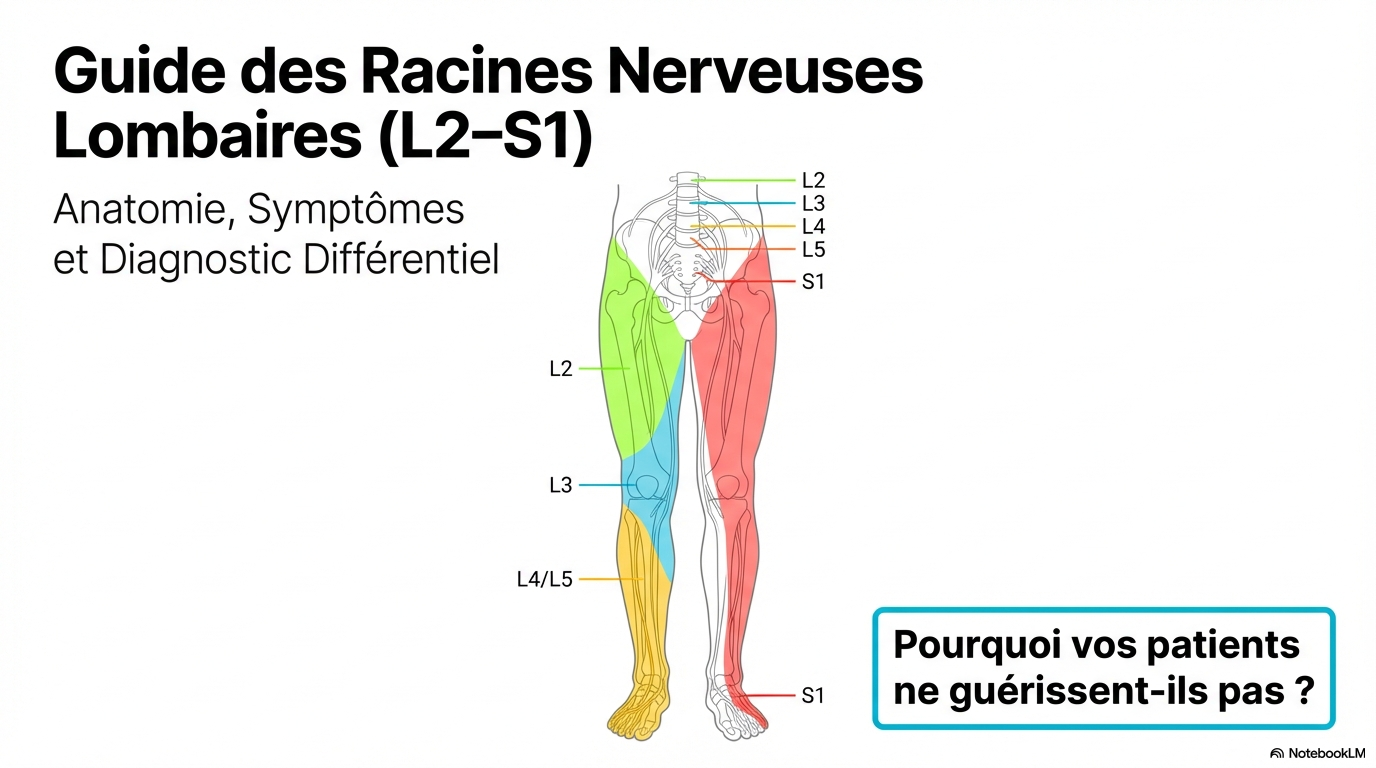
The "Fake" Hip Problem
Insisting on treating the hip joint, bursa or gluteal muscles with injections or stretching when the nerves (L1 to S1) are pinched at their base in the lower back is a very common diagnostic error that condemns patients to chronicity.
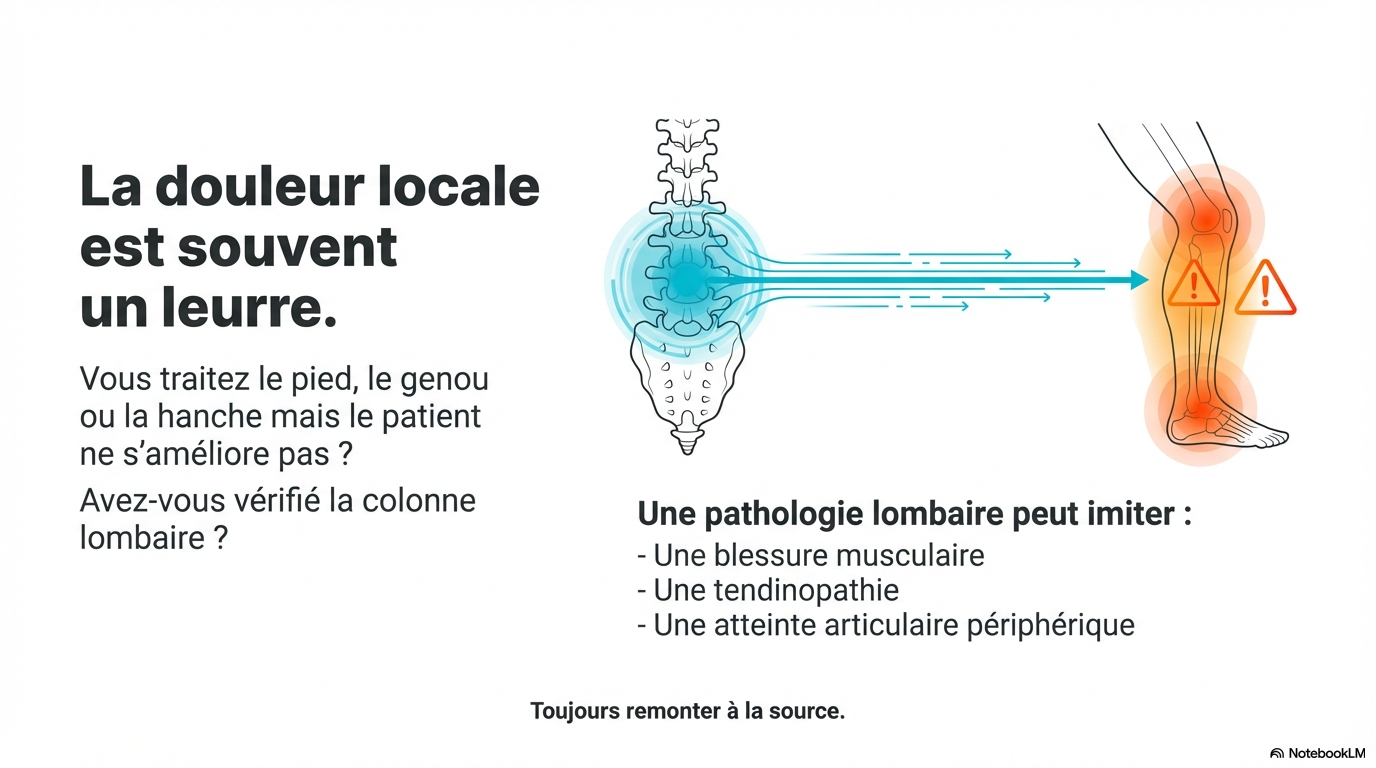
Anatomy & Pathology
The impact of the lumbar nerves on the hip
The nerves that provide sensation and strength to the groin, side of the hip, and buttock all originate in the lumbar region.
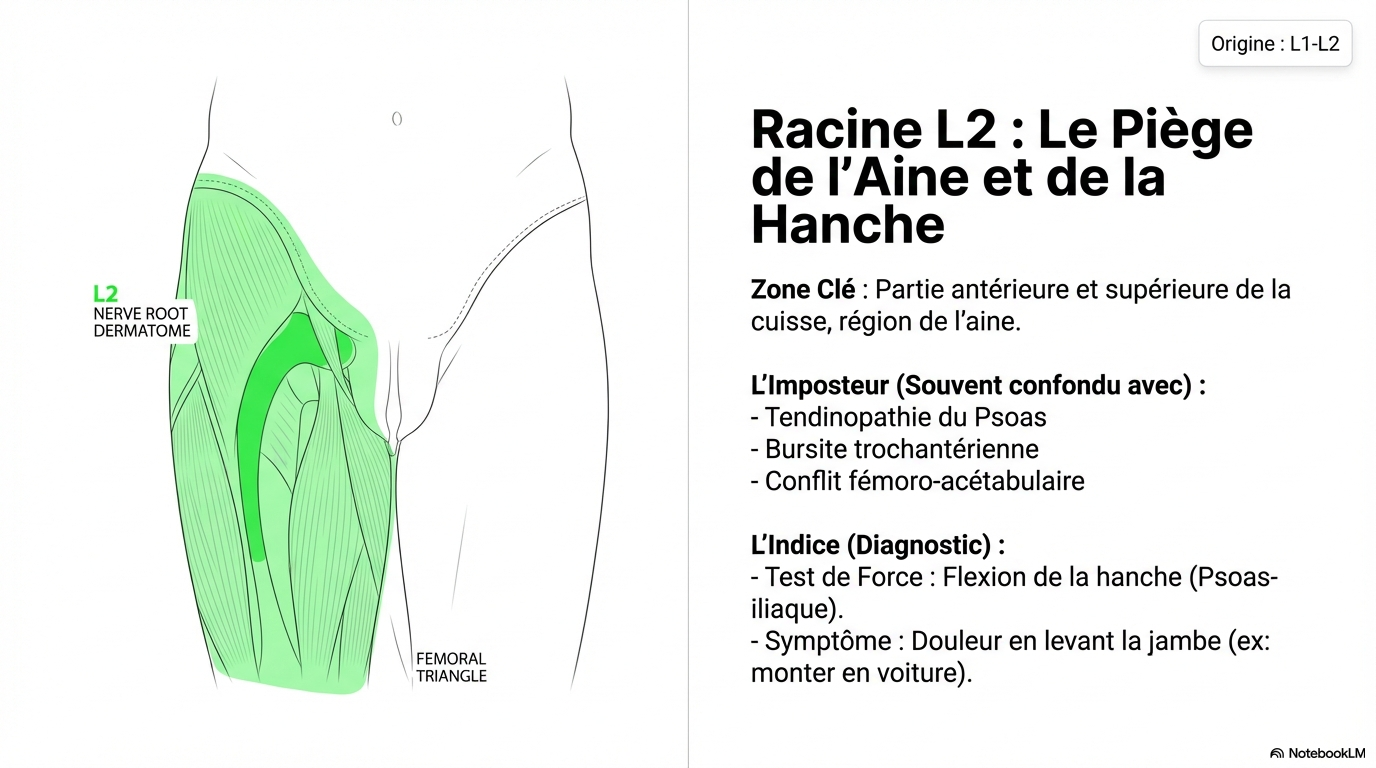
Root L1-L2
Origin: T12-L2Flexor control
(Iliopsoas muscle, hip flexors)
Sensory Zone
The groin crease • The upper and front of the thigh
False psoas tendinitis
Compression in the upper lumbar spine radiates directly into the groin. It is often confused with femoroacetabular impingement, psoas tendinopathy, or a muscle tear. The pain typically occurs when raising the leg (e.g., to get into a car).
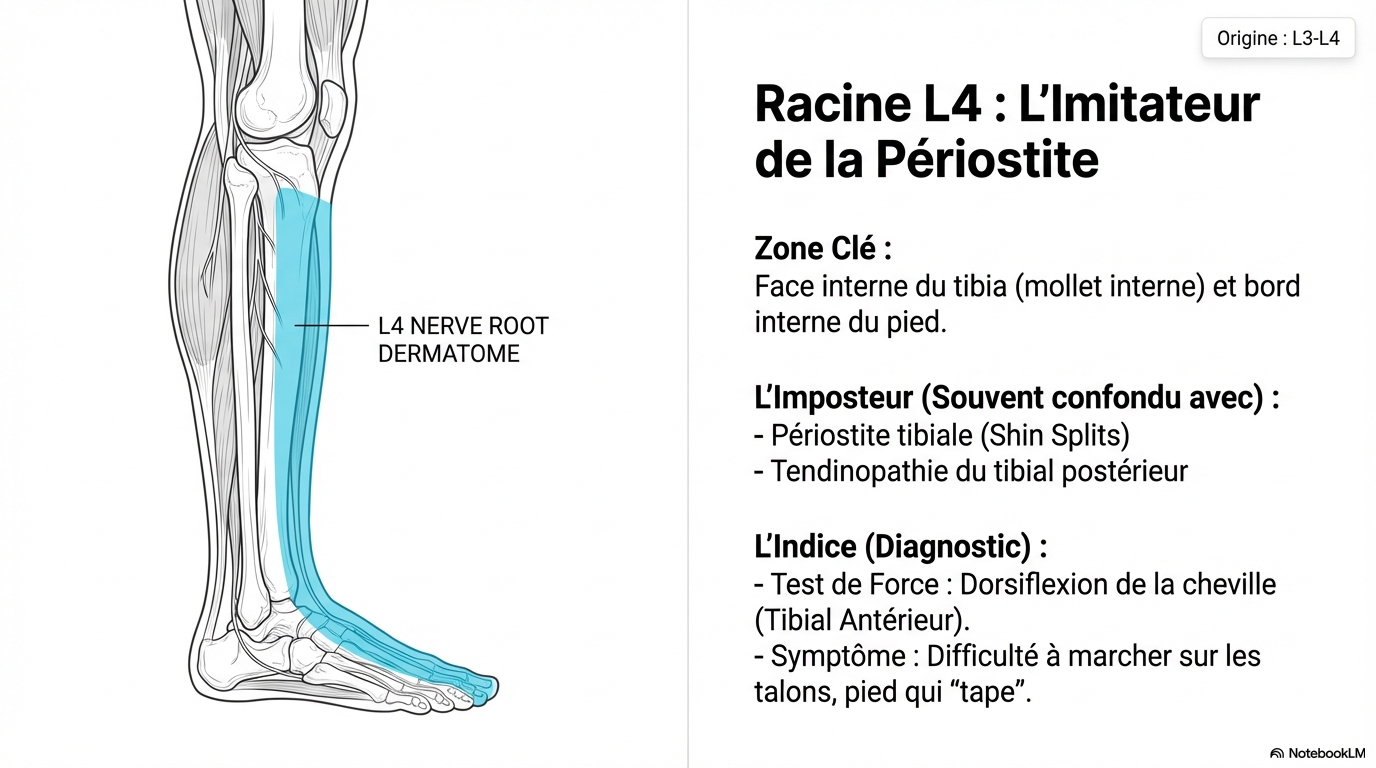
Root L4
Origin: L3-L4Hip extensors
(Iliotibial band, tensor fascia lata)
Sensory Zone
Hip side (Greater trochanter) • Lowering onto the thigh
The Bursitis Trap
Often mistaken for stubborn trochanteric bursitis. The sharp pain felt on the side of the hip (especially when lying on your side at night) very frequently originates from a herniated disc L3-L4 projecting its pain into the corresponding dermatome.
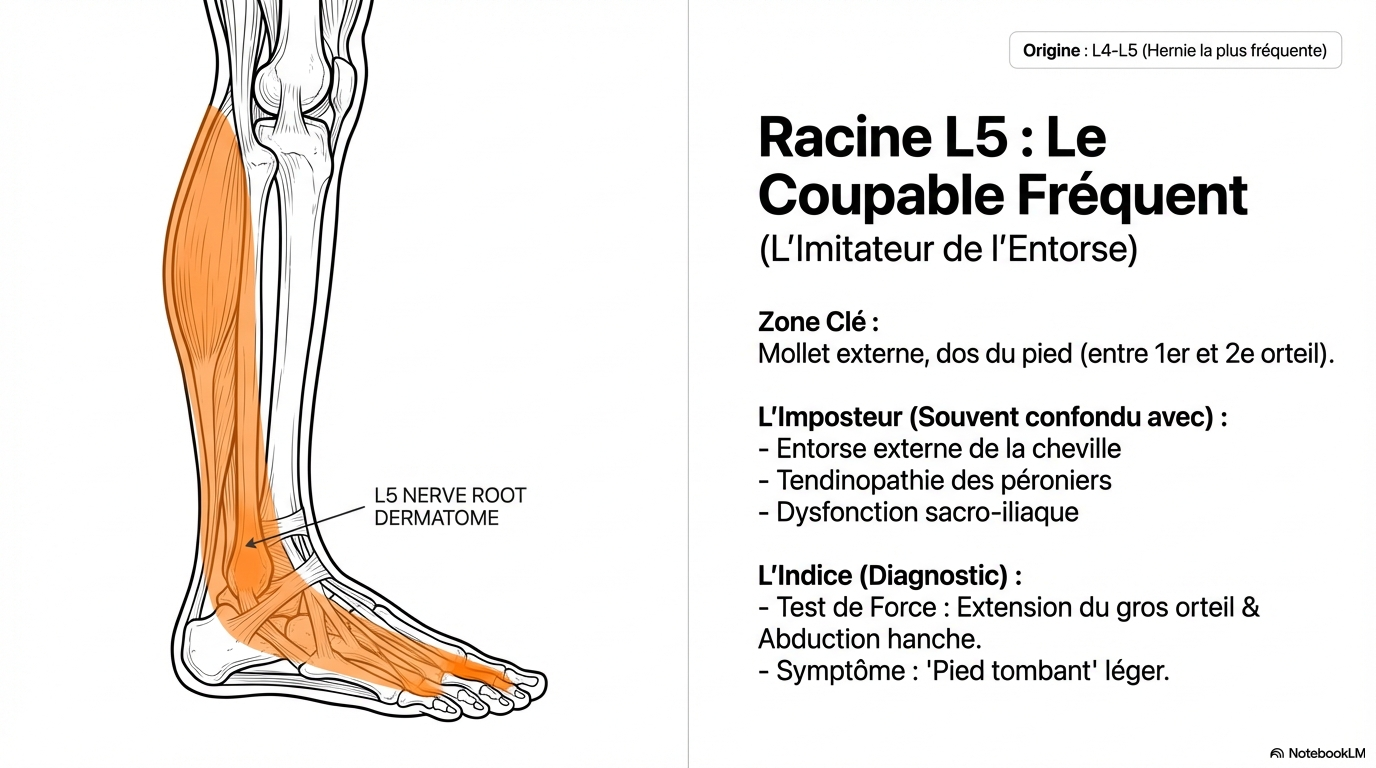
Root L5
Origin: L4-L5Pelvic stability
(Gluteus minimus and medius, abductors)
Sensory Zone
Lateral side of the buttock and hip
Weakness and Limping
Compression of the L5 muscle causes weakness in the gluteus medius. It is often mistakenly treated as gluteus medius tendinitis. If you start to limp or walk with a "hip sway," L5 is the prime suspect.
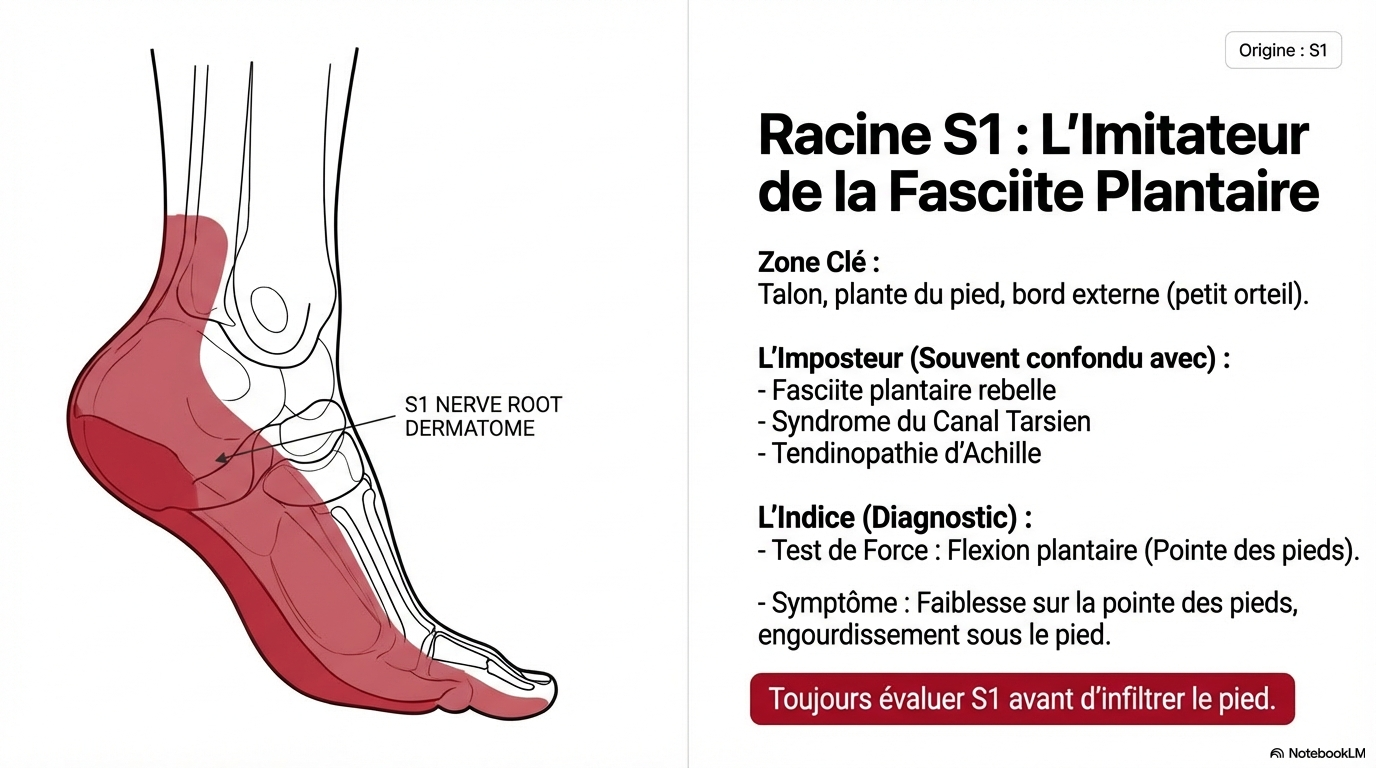
Root S1
Origin: L5-S1Propulsion and Extension
(Gluteus maximus)
Sensory Zone
Deep buttock (center) • Back of the thigh
The pitfall of sacroiliac dysfunction
A deep, stabbing pain in the buttock is frequently labeled piriformis syndrome, muscle spasm, or sacroiliac joint dysfunction. It is one of the most classic symptoms of a sciatica pure.
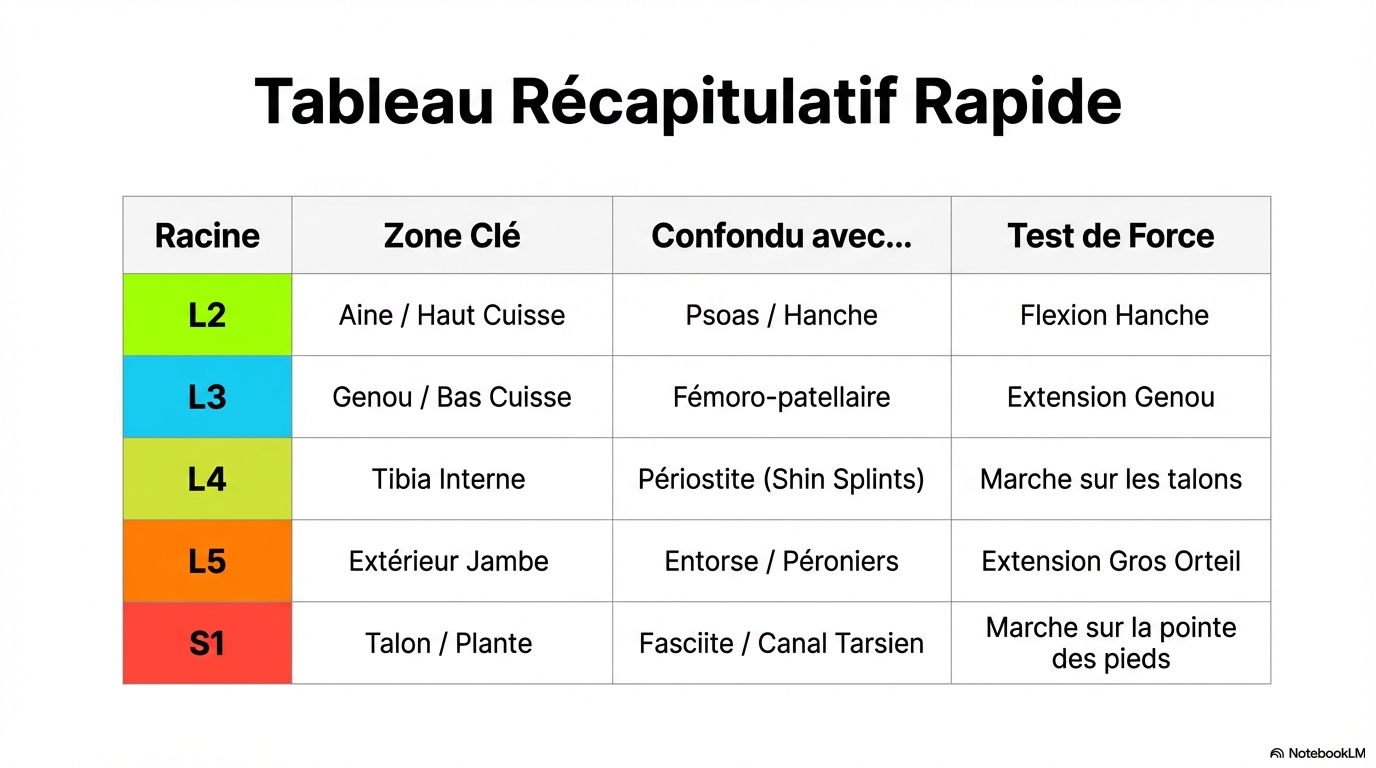
Differential Diagnosis
Hip or Lower Back? (Or both?)
To avoid unnecessary injections into the hip bursa, it is imperative to determine the exact origin of the pain through a thorough clinical evaluation.
How do we make the diagnosis?
Hip X-ray vs. Lumbar MRI
Ultrasound and X-rays of the hip often show slight wear and tear or minor inflammation that is benign for the age of the patient. Only a lumbar evaluation or MRI will allow us to see if a nerve is pinched., causing most of the referred pain in the groin or buttocks.
Neurological Provocation Tests
We combine hip tests (FADIR, FABER) with nerve tension tests in the back. If bending your back or stretching the femoral nerve triggers a "pinching" sensation in your groin, the problem is not joint-related, it's spinal!
The "Double Crushing" & the Subsidence
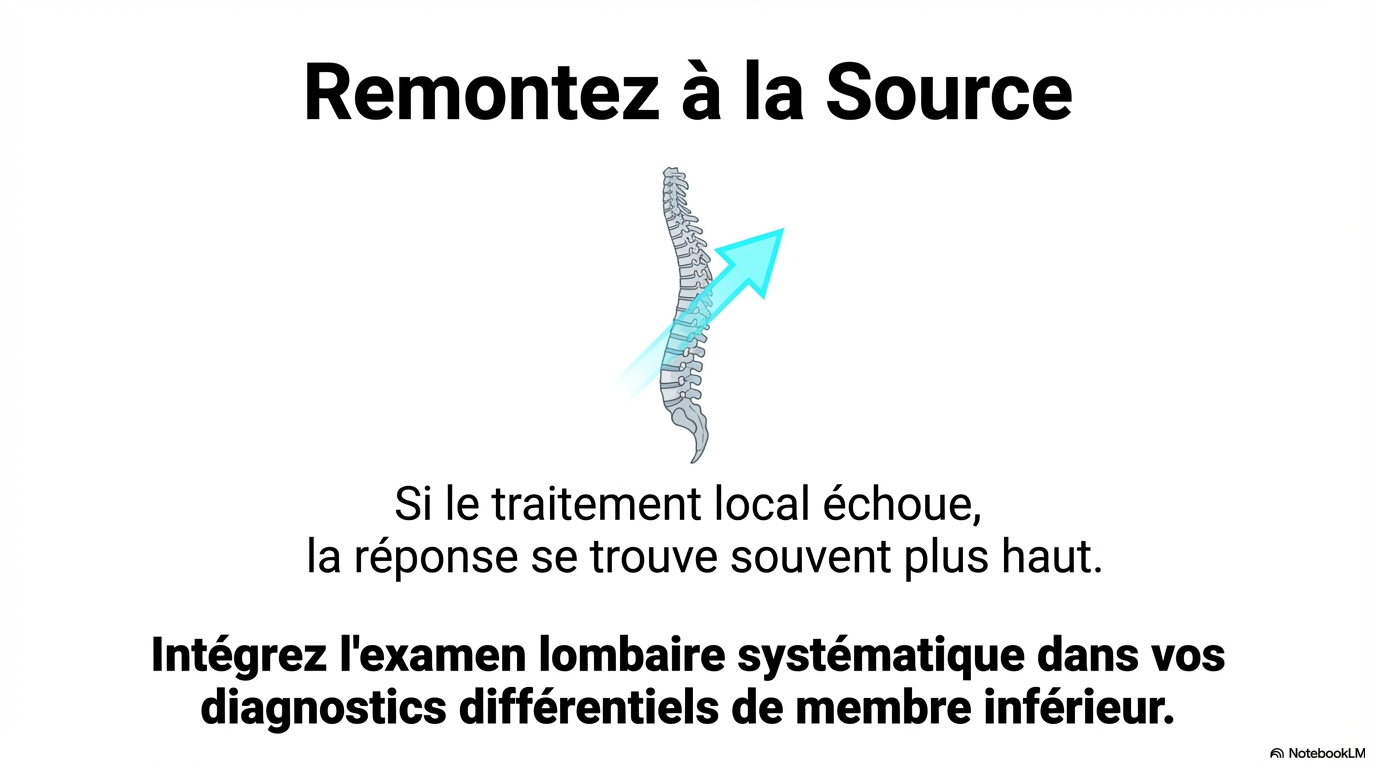
In some cases, bursitis in the hip is real, but it is strictly secondary to a lower back problem.
The cascade of hip destruction:
- 1. Lumbar nerve compression (L4-L5)
- 2. Loss of electrical impulse to the gluteus medius muscle
- ↓
- 3. Muscle weakness; the pelvis "drops" with each step
- 4. Excessive mechanical friction = Trochanteric bursitis
Why do hip stretches fail?
No matter how much you inject into the bursa or stretch the psoas muscle, if the lumbar nerve remains compressed, muscle weakness and friction will persist. Local inflammation will inevitably return.
Consequence: Treating the hip alone is a band-aid solution. For a permanent cure, the stabilizing muscles of the pelvis must be "reconnected" by releasing the root lumbar spine thanks to neurovertebral decompression.
The Solution: Spinal decompression therapy
To the At TAGMED Clinic, we target the true neurological source of pain to the pelvis and groin. If your symptoms stem from nerve pain, local hip treatments will only offer temporary relief.
The lumbar neurovertebral decompression is an advanced, non-invasive technology. By creating a computerized and specific stretch of the lower back, it generates negative intradiscal pressure. This shrinks herniated discs, rehydrates the discs, and releases the nerves (L1 to S1) that connect your back to your hip.
Effective for treating the lumbar causes of false hip pain:
- Pain in the groin crease mimicking a psoas problem (L1-L2)
- False stubborn trochanteric bursitis on the side of the hip (L4)
- Limping, gluteal weakness and pelvic instability (L5 involvement)
- Deep sciatica in the buttock mimicking piriformis syndrome (S1)
Do not treat the symptom.
Address the root cause.
Failure of local treatments (bursa injections, psoas massages, gluteal stretches...)
Specialized lumbar assessment (T12-S1) by a spine expert
Lumbar Neurovertebral Decompression
Release of the sciatic/femoral nerve, restoration of pelvic strength and cessation of trochanteric burns.
Stop your hip pain.
Let's check the condition of your lumbar nerves today to put your mind at ease.


 Français du Canada
  English (Canada)