Lumbar disc replacement: clinical results and benefits
02/05/26
TOPS™: Implantation and Functional Recovery
02/06/26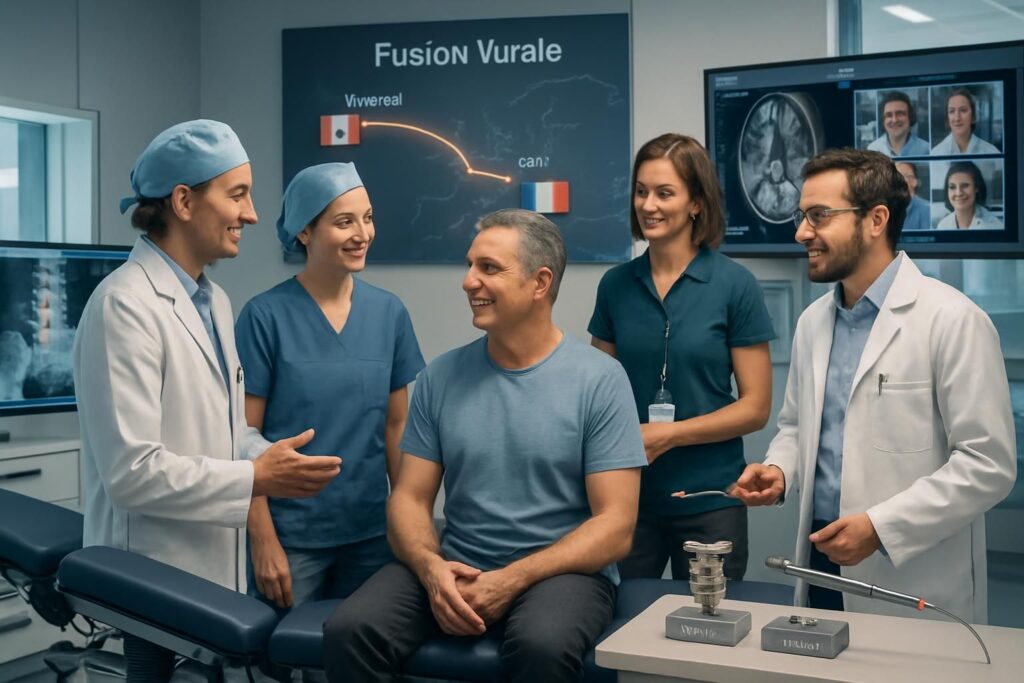
The management of spinal disorders has evolved considerably in recent years, offering patients innovative surgical solutions that go beyond simple spinal fusion. This traditional approach, while often effective in stabilizing the spine, frequently results in significant stiffening, impacting quality of life, including marked limitations in mobility and an increased risk of complications in adjacent segments. Today, thanks to technological advancements and medical devices such as dynamic implants, it is possible to preserve spinal flexibility while ensuring the stability necessary to relieve pain and restore function. These alternatives represent cutting-edge options, particularly for Quebec patients seeking recognized expertise in spinal surgery. back surgery, often via a transatlantic journey to specialized clinics in France, such as the TAGMED Clinic.
This new generation of implants, including systems like TOPS or IntraSPINE, This is at the heart of discussions within the medical community. These devices offer the advantage of segmental stabilization with natural maintenance of mobility, thus reducing the risk of vertebral ankylosis and the detrimental effects on adjacent discs. This development reflects a commitment to combining scientific rigor and innovation to ensure patient safety and comfort. Simultaneously, personalized support and coordination between Quebec and French specialists guarantee optimal follow-up, combining rapid access to care with adherence to international best practices. It is essential that any surgery be performed after a thorough evaluation and rigorous conservative treatment, thereby avoiding rushed interventions.
Traditional surgical techniques and limitations of spinal fusion
The merger Spinal fusion remains a widely used method for treating various spinal conditions, such as severe disc herniation, spinal instability, and degenerative lesions. This procedure involves immobilizing two or more vertebrae by fusing them together using bone grafts and devices such as pedicle plates or screws. This immobilization eliminates the movement responsible for pain or neurological compression. Furthermore, fusion is effective in restoring spinal stability in cases of mechanical instability or significant deformities.
However, the main limitation of this technique lies in the loss of natural mobility of the operated segment. Stiffening not only leads to functional impairment but also promotes excessive stress on adjacent segments, which can accelerate their degeneration—a phenomenon known as adjacent segment syndrome. These complications are documented in several clinical studies and represent a significant cause of re-intervention in the medium and long term.
Furthermore, spinal fusion can expose the patient to various risks and complications, ranging from postoperative infection to mechanical implant failure. These factors necessitate close monitoring and highly skilled surgical expertise. Traditional surgery is therefore a valid option, but one that requires a rigorous assessment of the benefits and risks, as well as recourse to alternatives as soon as possible.
The table below illustrates in a concise manner the advantages and limitations of spinal fusion compared to dynamic implants.
| Appearance | Spinal Fusion | Dynamic Implants (TOPS, IntraSPINE) |
|---|---|---|
| Stabilization | Rigid fixation of the vertebrae | Stabilization with maintenance of mobility |
| Mobility | Total loss in the segment operated | Partial or total preservation |
| Risk of adjacent syndrome | Pupil | Reduced |
| Recovery time | Longer in general | Often shorter and with better rehabilitation |
| Surgical complexity | Moderate to high | High level, requires advanced expertise |
To delve deeper into the differences and clinical implications, reading the comparison of clinical outcomes between fusion and motion is recommended in this article. Fusion vs. Motion: A Comparison of Clinical Outcomes.
Dynamic implants: a revolution for preserving spinal mobility
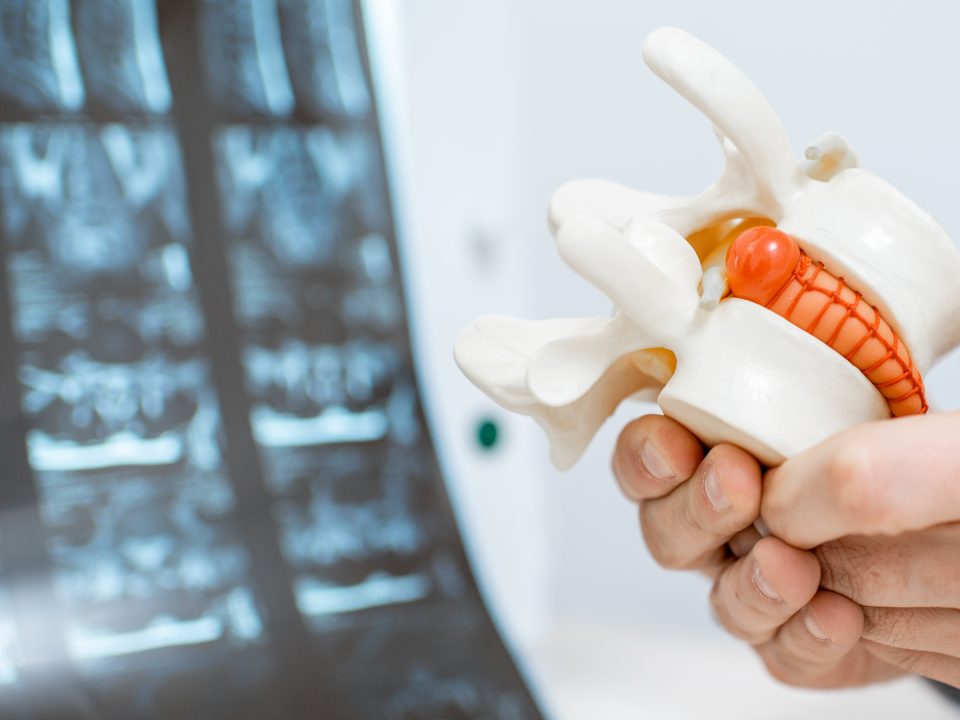
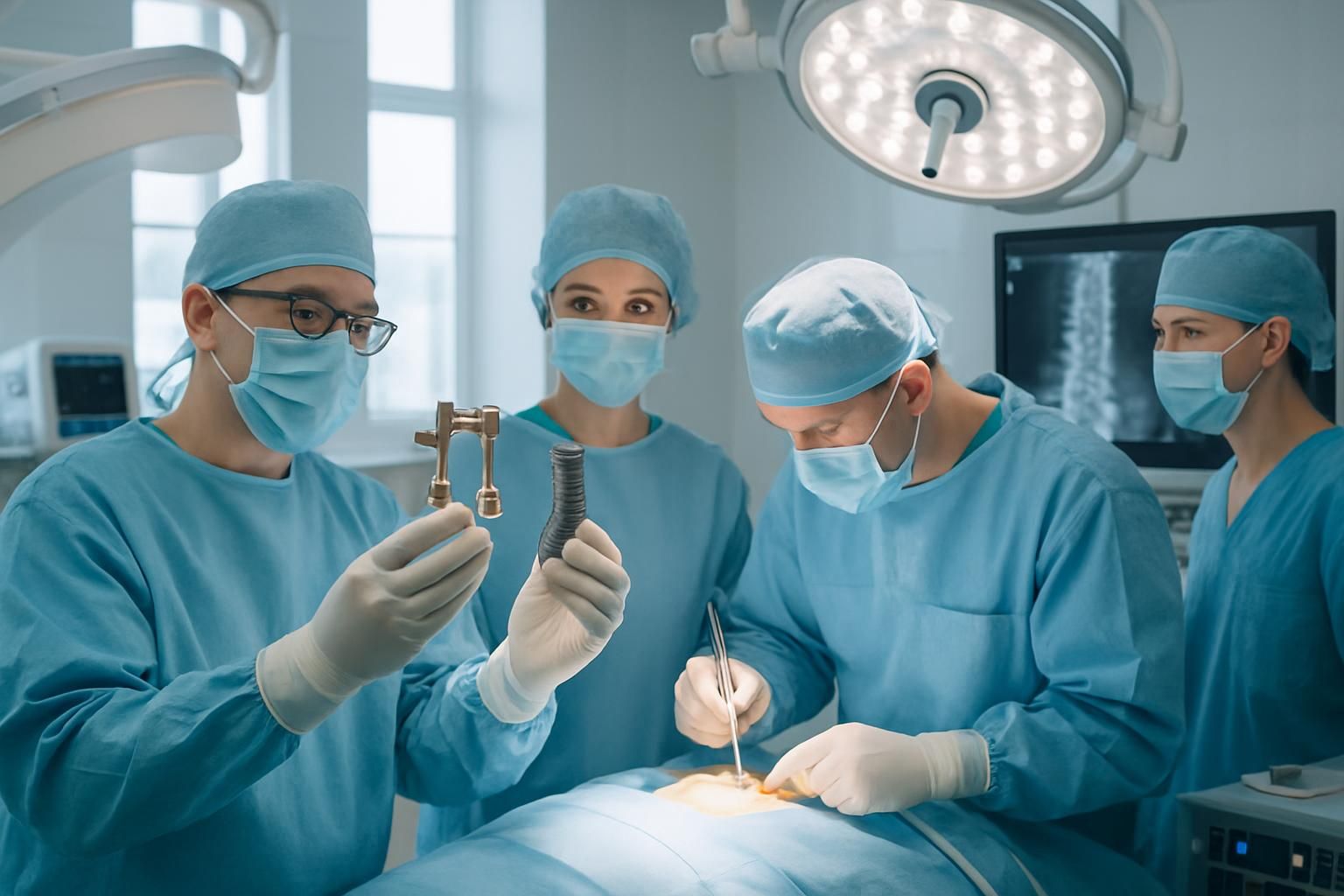
Dynamic implants represent a major advancement in spinal surgery. Designed to stabilize the spine while preserving natural movement, they offer a modern alternative to rigid spinal fusion. These devices attach to the affected vertebrae using articulated systems or springs that limit excessive movement, a source of pain or instability, but allow a controlled degree of flexion-extension and rotation.
Among the dynamic implants, The TOPS system offers sophisticated mechanics. Thanks to its articulated arms that replicate physiological movements, the IntraSPINE implant acts at the interspinous level, reducing pressure on the discs while improving spinal flexibility. These advanced technologies are supported by valid clinical studies and rely on a rigorous implantation protocol to guarantee their durability and functionality.
The use of these implants is particularly indicated for patients with moderate to severe disc degeneration, without major instability, and for those who wish to avoid the constraints associated with fusion. Preserving spinal mobility not only provides greater comfort but also improves quality of life, notably by reducing wear and tear on adjacent segments—an advantage validated by several specialized publications.
It is important to note that the placement of dynamic implants requires specific surgical training and a thorough understanding of the indications. Louis Blanchard collaborates closely with leading centers in France, ensuring complete mastery of these techniques. This Franco-Quebec partnership is part of a commitment to excellence and maximum safety, with comprehensive follow-up and individualized patient support.
In addition to the technical aspects, these devices incorporate a significant educational component: the patient is guided step by step to fully understand the biomechanical benefits, the surgical procedure, and the necessary spinal rehabilitation. This educational approach is essential for a rapid regaining of motor skills and an optimal return to daily life.
The transatlantic patient journey: coordination and personalized support
For Quebec patients, considering innovative back surgery in France requires meticulous planning. This process involves close collaboration between various stakeholders on both sides of the Atlantic, ensuring a smooth exchange of medical information and adherence to international safety standards.
The coordination process begins with a thorough initial assessment, including remote consultations with French specialists. This step allows for the development of a personalized treatment plan tailored to the patient's condition and expectations. From then on, support is provided by specialized platforms such as SOS Medical Tourism facilitates logistical, administrative and medical support.
After a wait that is often shorter than in Quebec, the patient can travel to France for the procedure. They are received at a recognized clinic, such as Clinique TAGMED, a preferred partner for conservative care and pre-surgical preparation. This center also offers effective non-invasive treatments, such as... Spinal decompression therapy, to be prioritized before any surgical intervention.
Post-operative follow-up is also provided through an integrated approach: regular teleconsultations, tailored rehabilitation, and multi-professional support to optimize recovery. This comprehensive approach guarantees not only high-quality care but also a reassuring and motivating patient experience.
Here are the key steps in a typical journey:
- Initial consultation and remote multidisciplinary assessment
- Planning and preparation for surgery with targeted assessments
- Targeted surgical intervention in a specialized center in France
- Immediate post-operative phase with appropriate rehabilitation
- Regular follow-up via teleconsultation and check-up visit
Non-invasive treatments and preparation before any back surgery
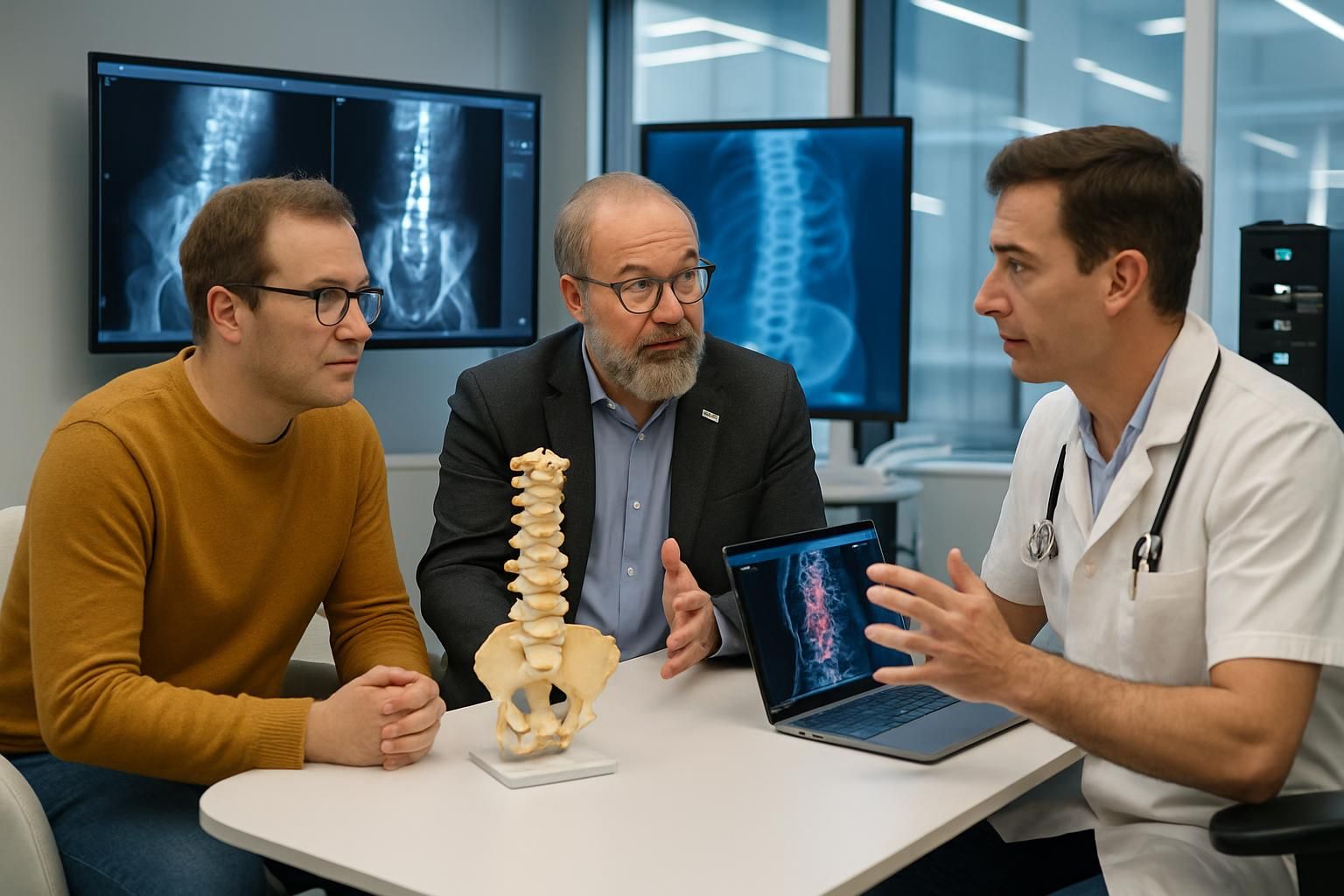
Back surgery, including alternatives to spinal fusion, should never be the first option considered. According to international guidelines, a period of 3 to 6 months of conservative treatment should be observed to optimize the chances of success and reduce risks.
Non-invasive treatments include targeted physiotherapy, spinal rehabilitation, Pain management and neurovertebral decompression techniques can stabilize the situation or even avoid surgery. The TAGMED Clinic, a key partner in this process, offers advanced decompression solutions that relieve pressure on nerve roots without invasive surgery.
The goal of this phase is to restore optimal function, strengthen stabilizing muscles, and improve quality of life. If, despite these efforts, debilitating pain or neurological symptoms persist and necessitate intervention, the use of dynamic implants or fusion is then considered, depending on the specific pathology and the patient's profile.
This preferred approach guarantees scientific rigor and safety-focused care. It also illustrates the importance of surgical expertise, which must be accessible, particularly through coordination between teams in Quebec and those in specialized French centers, which have a thorough understanding of these complex protocols, as explained in this article. Spinal fusion: understanding the importance of surgical expertise.
The biomechanical and functional benefits of implants for preserving mobility
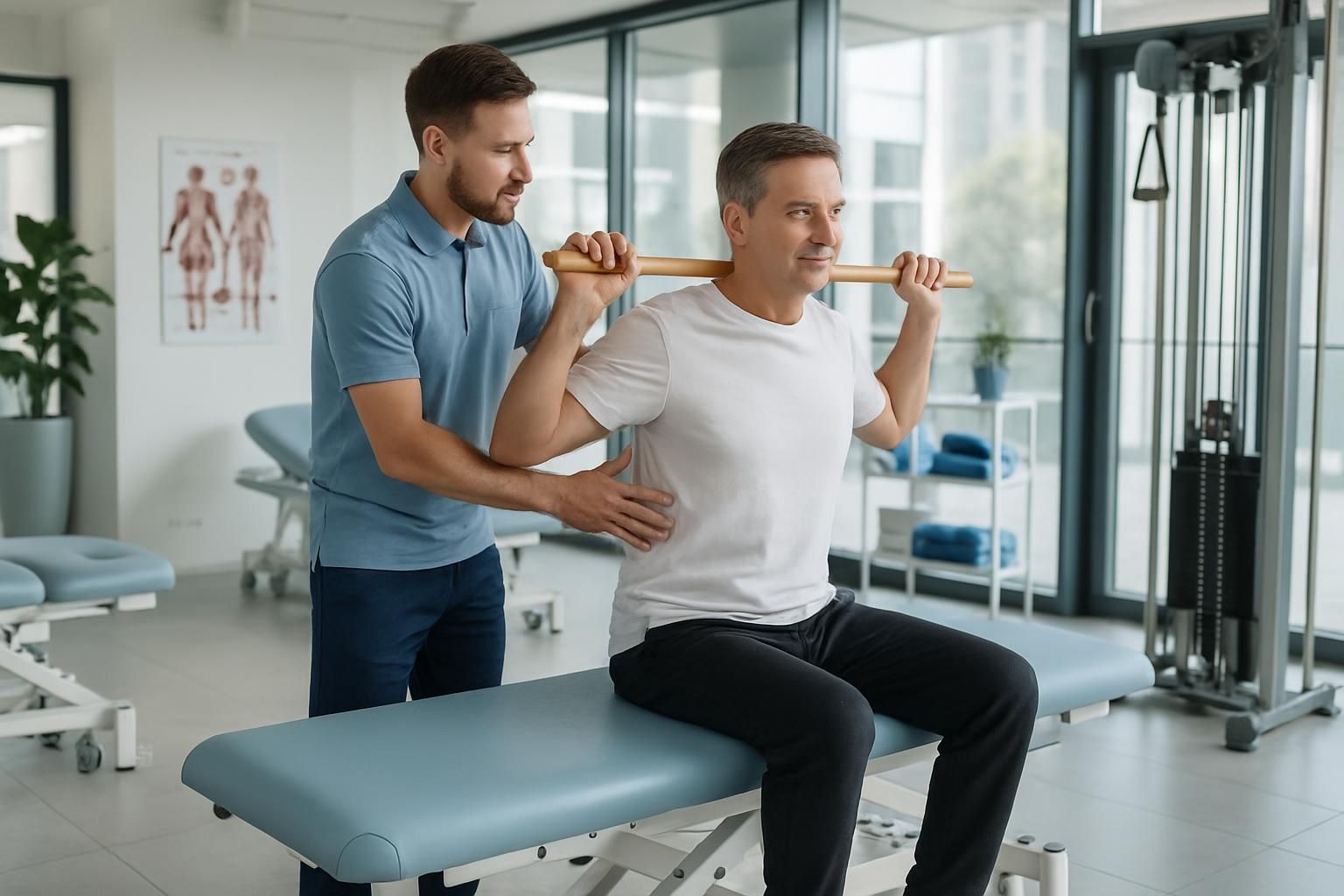
Dynamic implants offer superior biomechanical support compared to traditional fusion. They replicate or respect the physiological movements of the spine, particularly flexion, extension, and rotation. This adapted mechanics reduce pressure on adjacent discs and intervertebral joints, helping to limit their premature wear.
Restoring controlled spinal flexibility reduces inflammation and pain, promotes better local blood circulation, and improves post-surgical rehabilitation. These benefits translate into a tangible improvement in the patient's quality of life, as they regain their functional abilities more quickly and sustainably.
Furthermore, preserving mobility helps reduce the usual long-term complications of fusion, such as chronic pain, severe functional limitations, and the frequent need for secondary interventions. Implants like TOPS and IntraSPINE play a central role in this evolution, marking a decisive shift towards less invasive and more anatomically respectful surgical solutions.
Here is a list of the main biomechanical advantages of dynamic implants:
- Maintaining natural movement in the operated segment
- Reduction of mechanical stress on adjacent discs
- Reduced risk of adjacent syndrome
- Better distribution of forces during daily activities
- Facilitating faster and more efficient rehabilitation
These benefits encourage a renewed focus on therapeutic choices. Prioritizing spinal mobility is essential for preserving functional independence in the medium and long term, particularly for active or young patients. However, decision-making must always be based on a rigorous individual assessment and recognized surgical expertise.
To explore modern alternatives to rigid fusion in more detail and how to limit long-term complications, this article provides helpful insights. Spinal fusion: modern alternatives to avoid stiffness.
{"@context": "https://schema.org", "@type": "FAQPage", "mainEntity":[{"@type": "Question", "name": "What are the criteria for choosing between vertebral fusion and dynamic implants?", "acceptedAnswer":{"@type": "Answer", "text": "The choice depends on the condition of the spine, the severity of the instability, the pain, as well as the patient's functional expectations. A thorough evaluation by experts helps guide the patient towards the most appropriate technique."}},{"@type": "Question", "name": "Is surgery with dynamic implants riskier than fusion?" ", "acceptedAnswer":{"@type": "Answer", "text": "Dynamic surgery requires specific expertise, but when performed by specialized centers, it offers a safety profile comparable to conventional fusion while providing better preservation of mobility."}},{"@type": "Question", "name": "How does education proceed after dynamic implantation?"}},{"@type": "Question", "name": "How does education proceed after dynamic implantation?"}} ", "acceptedAnswer":{"@type": "Answer", "text": "Education begins quickly after the intervention with adapted exercises aimed at restoring mobility, strengthening stabilizing muscles and preventing relapses, under the supervision of specialized professionals."}},{"@type": "Question", "name": "Is it possible to avoid surgery thanks to conservative treatments?"}},{"@type": "Question", "name": "Is it possible to avoid surgery thanks to conservative treatments?"}} ", "acceptedAnswer":{"@type": "Answer", "text": "In many cases, non-invasive treatments such as physiotherapy and neurovertebral compression are sufficient to alleviate symptoms, thus delaying or avoiding surgery."}},{"@type": "Question", "name": "What are the benefits of the transatlantic journey for Quebec patients?"}} ", "acceptedAnswer":{" @type": "Answer", "text": "This pathway allows for rapid access to cutting-edge surgical expertise recognized in France, with personalized support and coordinated follow-up, optimizing the safety and quality of care."}}]}What are the criteria for choosing between spinal fusion and dynamic implants?
The choice depends on the condition of the spine, the severity of the instability, the pain, and the patient's functional expectations. A thorough evaluation by experts helps guide the patient toward the most appropriate technique.
Is surgery with dynamic implants riskier than fusion?
Dynamic surgery requires specific expertise but, when performed by specialized centers, it presents a safety profile comparable to classic fusion while offering better preservation of mobility.
How does rehabilitation proceed after dynamic implantation?
Rehabilitation begins soon after the procedure with tailored exercises aimed at restoring mobility, strengthening stabilizing muscles and preventing recurrence, under the supervision of specialist professionals.
Is it possible to avoid surgery through conservative treatments?
In many cases, non-invasive treatments such as physiotherapy and neurovertebral decompression are sufficient to improve symptoms, thus delaying or avoiding surgery.
What are the benefits of the transatlantic route for Quebec patients?
This pathway provides rapid access to cutting-edge surgical expertise recognized in France, with personalized support and coordinated follow-up, optimizing the safety and quality of care.