Dynamic implants: benefits
02/06/26IntraSPINE®: effective treatment
02/06/26
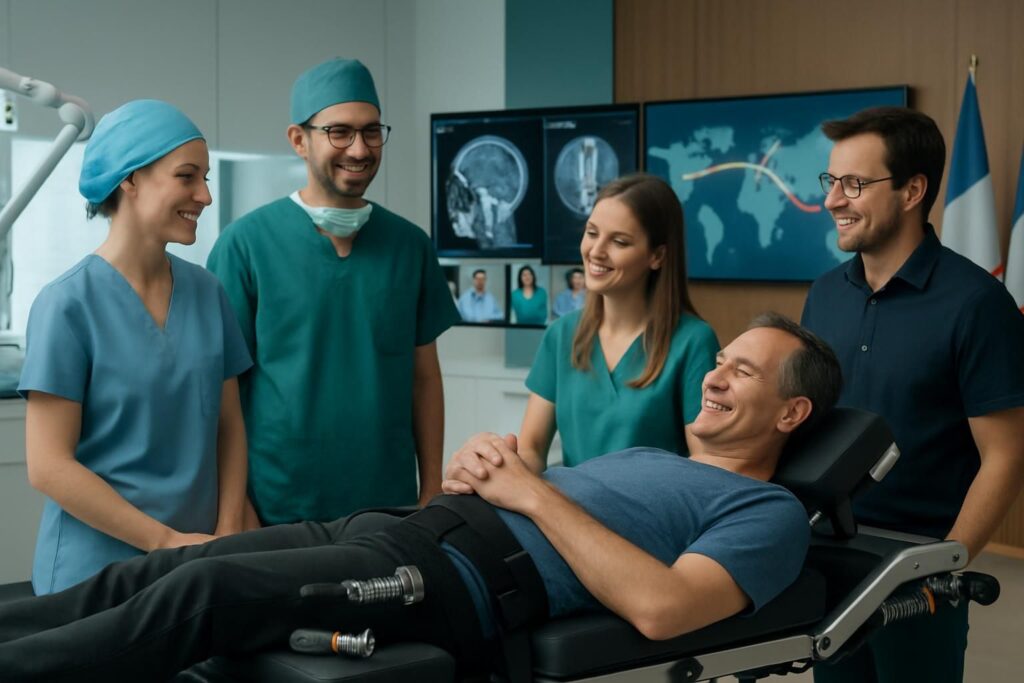
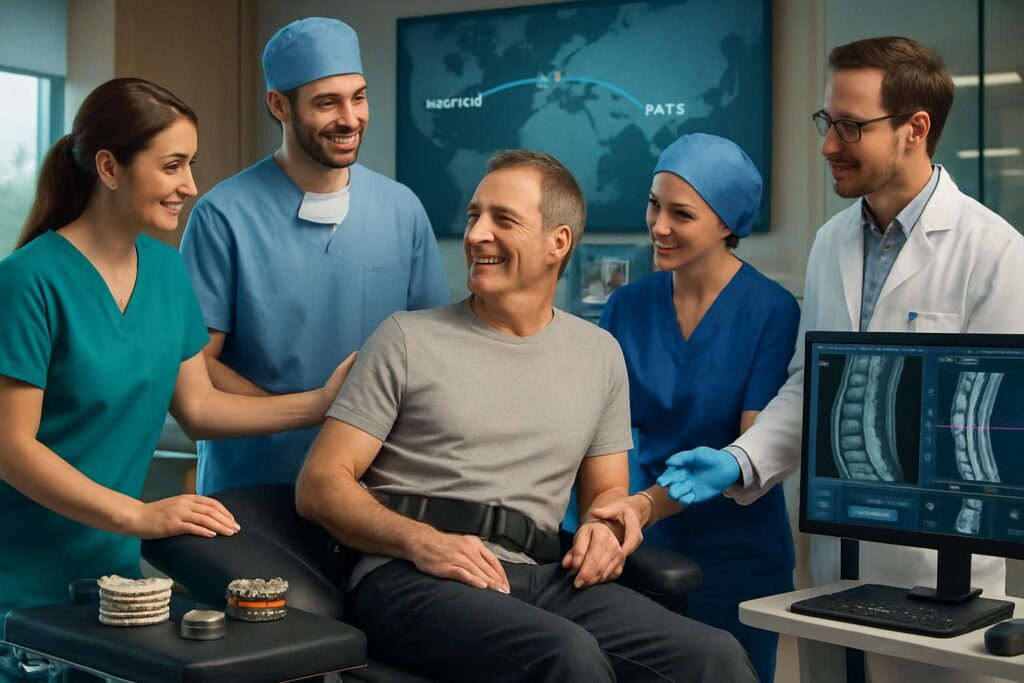
The surgical management of spinal disorders is undergoing a major transformation thanks to new technologies. In France, significant advances in the field of dynamic implants, such as the TOPS and IntraSPINE systems, are revolutionizing the treatment of back pain and dysfunction related to age, trauma, or spinal deformities. These innovations aim to offer an effective alternative to traditional surgery, preserving spinal mobility and functionality while minimizing the risks associated with conventional procedures. In Quebec, where waiting times for certain treatments can be lengthy, coordinated care pathways between France and Quebec are essential to provide optimized, safe surgical care that adheres to international standards.
These new options are offered in state-of-the-art centers, combining advanced medical imaging, surgical robotics, and computer-assisted navigation to guarantee maximum precision during the procedure. surgery Minimally invasive surgery, supported by augmented reality and electrical stimulation, reduces trauma and accelerates recovery. For patients, understanding these options, the selection criteria, and the overall care pathway, from pre-operative assessment to post-operative follow-up, is essential for making an informed decision.
Innovative surgical techniques in back treatment: focus on dynamic implants
For several years, back surgery has benefited from constant progress thanks to the arrival of dynamic implants such as the TOPS system or the implant IntraSPINE. Unlike traditional methods such as merger These devices, designed to preserve the natural mobility of vertebral segments, aim to limit biomechanical stress on adjacent areas and thus reduce the risk of osteoarthritis or secondary degeneration.
The TOPS system is a dynamic posterior prosthesis that replaces an unstable vertebral segment while maintaining multidirectional physiological movement. This approach is particularly suitable for patients with lumbar spinal stenosis and disc instability. The result is a significant improvement in quality of life, with a faster return to normal activities and a reduction in chronic pain. The IntraSPINE implant, on the other hand, is positioned between the vertebral spines, providing dynamic support that reduces the load on the discs and aids in postural correction.
The choice between these dynamic implants and conventional techniques It must be based on a rigorous evaluation, taking into account the patient's anatomy, specific pathology, and functional goals. Clinical studies and scientific publications now quantify the medium- and long-term benefits of these innovations. This scientific rigor is crucial to guarantee not only the effectiveness but also the safety of patients undergoing surgery.
- Preservation of spinal mobility
- Reduction of degeneration in adjacent segments
- Reduction of postoperative pain
- Faster rehabilitation
- Reduction in the use of rigid fusion
The dynamic implant is thus integrated into a broader strategy for spinal surgery in France, where technological innovation is combined with outstanding surgical expertise. It allows for the restoration of the spine's physiological dynamics instead of imposing rigidity that is often poorly tolerated. To better understand these procedures and related therapeutic options, participation in a specialized consultation at a reference center is essential.

Coordinated transatlantic pathway: key steps for Quebec patients undergoing back surgery
The process of obtaining back surgery in France relies on rigorous organization and personalized support, connecting Quebec patients with recognized French medical teams. Before any surgical decision, a phase of conservative treatment is systematically recommended. Indeed, modern protocols specify that only cases not responding favorably to 3 to 6 months of care such as physiotherapy, Spinal decompression therapy or medication management are candidates for intervention.
The TAGMED CLINIC In Quebec, this clinic represents a key partner in this process. It offers advanced conservative solutions, optimizing the patient's condition before any potential surgical procedure. Therefore, this institution serves as a starting point for any thorough evaluation prior to referral for cutting-edge surgery in France.
Once the indication is validated by the experts, a specific protocol is put in place to organize all aspects of the medical trip. This coordination ensures comprehensive care before, during, and after surgery, taking into account logistical constraints and patient preferences. The use of specialized platforms such as SOS Medical Tourism It greatly facilitates administrative management, appointments, and multidisciplinary follow-up.
This transatlantic model also relies on close dialogue between surgeons, anesthesiologists, rehabilitation specialists, and biomedical engineers from both continents, guaranteeing patients a high level of safety and innovation. Postoperative follow-up is carefully planned to ensure optimal recovery and prevent any complications. Electrical neurostimulation and augmented reality techniques can be integrated to improve the precision and effectiveness of procedures and follow-up.

Biomechanical and functional benefits of innovative implants for spinal surgery
Dynamic implants bring about a true revolution from a biomechanical and functional point of view in the spinal surgery. By counteracting the rigidity imposed by traditional fusion techniques, they reproduce natural movements in flexion, extension, and rotation. This ability is fundamental for maintaining vertebral behavior close to the original physiology.
For example, the TOPS system stabilizes the spine while maintaining precise control of movement. This prevents overloading adjacent levels, which is often a source of postoperative pain or medium-term complications. The IntraSPINE implant, on the other hand, acts as a dynamic shock absorber that reduces pressure on the intervertebral discs and improves spinal alignment. These benefits all contribute to improving quality of life after surgery.
The adoption of these technologies is not insignificant. It is always accompanied by in-depth surgical expertise combined with mastery of minimally invasive techniques. The integration of the surgical robotics, assisted navigation Advanced medical imaging allows for optimized implant positioning and fixation. These crucial steps for success are guaranteed by teams trained to the most demanding international standards.
Preserving mobility with these innovative implants also addresses a growing demand from patients who wish to regain a normal, functional life with less pain and a faster recovery. The associated reconstructive techniques, using electrical stimulation and augmented reality during the procedure, provide an additional guarantee of safety. These advances open up promising prospects for modern spinal surgery.
- Preserved physiological mobility
- Reduced risk of adjacent degeneration
- Accelerated recovery
- Reduction of chronic pain
- Overall improvement in quality of life

Surgical options in France: innovations and recognized expertise
France now has a network of specialized centers offering a full range of surgical solutions for the back, combining safety, efficiency, and innovation. Among these options, minimally invasive surgery stands out for its ability to reduce trauma and improve functional outcomes. This technique is often combined with advanced medical imaging-assisted navigation, which allows for precise and personalized control of the procedure.
Traditional techniques such as spinal fusion remain indicated in certain cases, particularly when spinal stability cannot be maintained by a implant dynamic alone. However, the trend is towards the gradual integration of new technologies that reduce post-surgical complications and promote the preservation of mobility. This is accompanied by an educational approach aimed at clearly explaining to patients the advantages and limitations of each approach.
Collaboration with the TAGMED CLINIC This reflects the commitment to providing tailored and rigorous support. Patients benefit from a comprehensive pathway including pre-operative assessment, surgery, and personalized post-operative follow-up, ensuring the best possible rehabilitation.
Here is a table summarizing the main characteristics of the surgical solutions offered:
| Surgical technique | Main benefits | Indications | Average recovery time |
|---|---|---|---|
| Dynamic implants (TOPS, IntraSPINE) | Preservation of mobility, reduction of pain, less degeneration | Spinal instabilities with moderate mechanical stress | 4 to 6 weeks |
| Traditional spinal fusion | Long-term stabilization, correction of severe deformations | Severe instabilities, fixed deformations | 3 to 6 months |
| Minimally invasive surgery | Less trauma, reduced scarring, rapid recovery | Cases suitable for targeted and limited interventions | 2 to 4 weeks |
Personalized support and recommendations for a successful journey
The human element and quality of follow-up care are essential for the success of back surgery. Patients admitted to leading French centers benefit from a personalized assessment that takes into account their medical history, professional situation, and expectations. The expertise of a recognized specialist in spinal implants guarantees support based on best practices and scientifically validated innovations.
Before surgery, clear information and open dialogue help to alleviate anxieties related to the operation and to explain, in a clear and accessible way, how innovative implants work and the benefits of minimally invasive techniques. This approach reassures and motivates patients throughout their treatment. The integration of technological tools such as electrical stimulation or assisted navigation further strengthens confidence in the success of the procedure.
Following the operation, close follow-up care is provided, including personalized rehabilitation sessions and regular check-ups using advanced medical imaging. Collaboration between French and Quebec teams ensures continuity of care, even after the patient returns home. This pathway is designed to reduce the length of hospital stay and facilitate a gradual return to an active and normal life.
Comparison of back surgery techniques
Discover the key differences between traditional back surgery, innovative new technologies, and the coordinated transatlantic route.
| Criteria | Traditional back surgery | Innovative back surgery | Coordinated transatlantic route |
|---|
For patients considering back surgery, a comprehensive and structured approach is recommended, allowing them to benefit from the best technologies while ensuring their safety. The Franco-Quebec collaboration offers a genuine opportunity to access cutting-edge surgical expertise while receiving attentive and dedicated support.
What are the major new developments in back surgery in 2026?
The innovations mainly focus on dynamic implants such as TOPS and IntraSPINE, the integration of surgical robotics, and the increased use of minimally invasive surgery assisted by medical imaging and navigation.
What is the surgical process like between Quebec and France?
The patient benefits from personalized support from the initial assessment at the TAGMED Clinic, through to surgery in France, with coordination ensured by SOS Medical Tourism ensuring comprehensive monitoring before, during and after the intervention.
What are the advantages of dynamic implants compared to conventional fusion?
They help to preserve spinal mobility, reduce chronic post-operative pain and limit the degeneration of adjacent segments, thus offering a better quality of life post-surgery.
Is surgery the first option for back pain?
No, surgery is only considered after a period of 3 to 6 months of complete conservative treatments, such as the care provided at the TAGMED Clinic, before considering surgical intervention.
What are the benefits of minimally invasive surgery?
It reduces trauma, diminishes scarring, accelerates recovery and allows a faster return to daily activities through the use of technologies such as assisted navigation and augmented reality.



 Français du Canada
  English (Canada)