IntraSPINE®: a step forward in dynamic surgery
02/05/26
Minimally invasive surgery: reducing postoperative pain
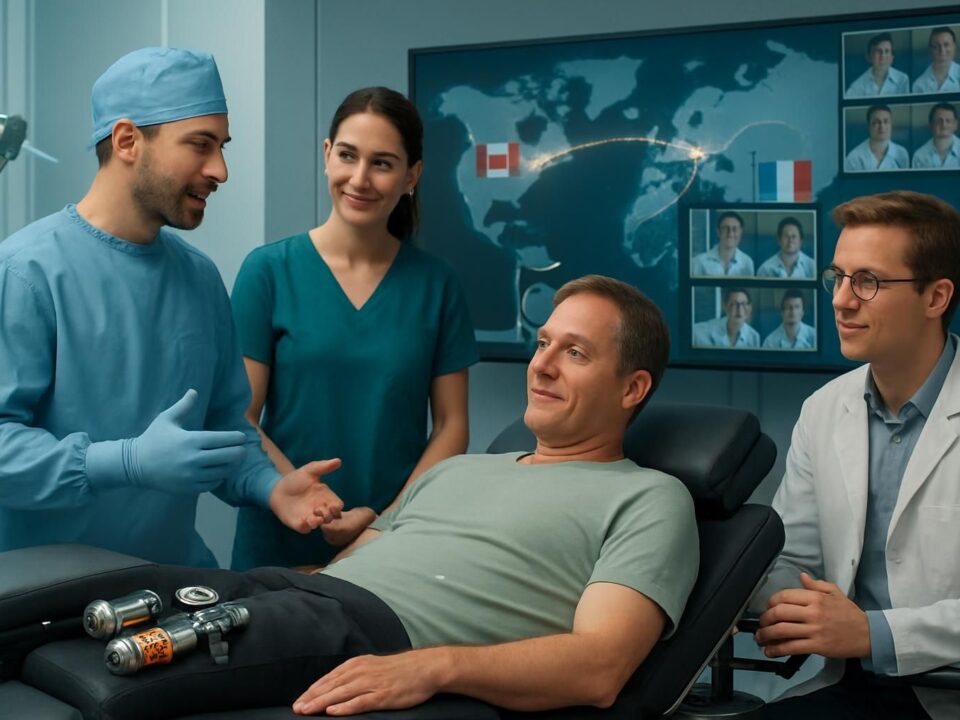
02/05/26The management of back pain and spinal disorders has been profoundly transformed in recent years thanks to significant innovations in spinal surgery. For Quebec patients facing a choice between spinal fusion and dynamic implants that preserve joint movement, understanding these technical and biomechanical advances is essential. This comprehensive guide explores the various options available in France, where recognized surgical expertise and technologies such as the TOPS system and IntraSPINE are opening new perspectives for mobility and quality of life. While ensuring scientific rigor and safety, it highlights a personalized care pathway, coordinated between Quebec and France, that aims to optimize clinical outcomes through tailored and innovative treatment.
The current health, economic and logistical context encourages patients to take a greater interest in international care, particularly through specialized partnerships such as SOS Medical Tourism. This opportunity not only reduces processing times but also provides access to protocols for surgery back pain. The merger Spinal fusion, long considered the norm, is now being challenged by methods that promote the preservation of spinal mobility, thus limiting the often-feared side effects. This evolution relies on the introduction of dynamic implants capable of reproducing natural movement and ensuring stability and support during post-operative rehabilitation. Patients are therefore invited to discover these advanced surgical solutions with a comprehensive understanding of their benefits and limitations, enabling them to confidently plan their treatment.
The fundamentals of spinal fusion in spinal surgery
The spinal fusion This is a classic surgical technique that involves immobilizing one or more segments of the spine to stabilize vertebrae affected by a condition. This procedure aims to reduce pain by eliminating excessive movement between the problematic vertebrae, which is often responsible for debilitating symptoms. It is primarily intended for patients suffering from spondylolisthesis, severe herniated discs, spinal stenosis, or advanced disc degeneration.
This procedure involves the placement of bone grafts, sometimes combined with metal implants such as rods and screws, to fuse the affected vertebrae. The surgery is meticulous and requires specialized expertise, particularly to avoid complications such as infections or nerve damage. Thanks to advanced techniques and technologies, French teams, in collaboration with international experts, have optimized surgical protocols to ensure maximum patient safety.
One of the major challenges of the spinal fusion This concerns the effects on adjacent segments, where excessive rigidity can lead to mechanical overload and accelerated degeneration. Therefore, post-operative follow-up includes appropriate rehabilitation, integrating physiotherapy and exercises to strengthen back muscles and prevent recurrence. The experience of leading centers, such as the TAGMED Clinic, ensures comprehensive support, combining conservative care and surgery when necessary. For patients interested in a detailed scientific approach, the understanding the importance of surgical expertise is a key step before any decision.
In practice, spinal fusion remains effective in many cases, particularly when pain is severe and conservative treatments have failed. However, limited mobility can impact daily activities and athletic performance, hence the recent emergence of alternatives aimed at preserving natural movement.
Dynamic implants and motion surgery: preserving spinal mobility
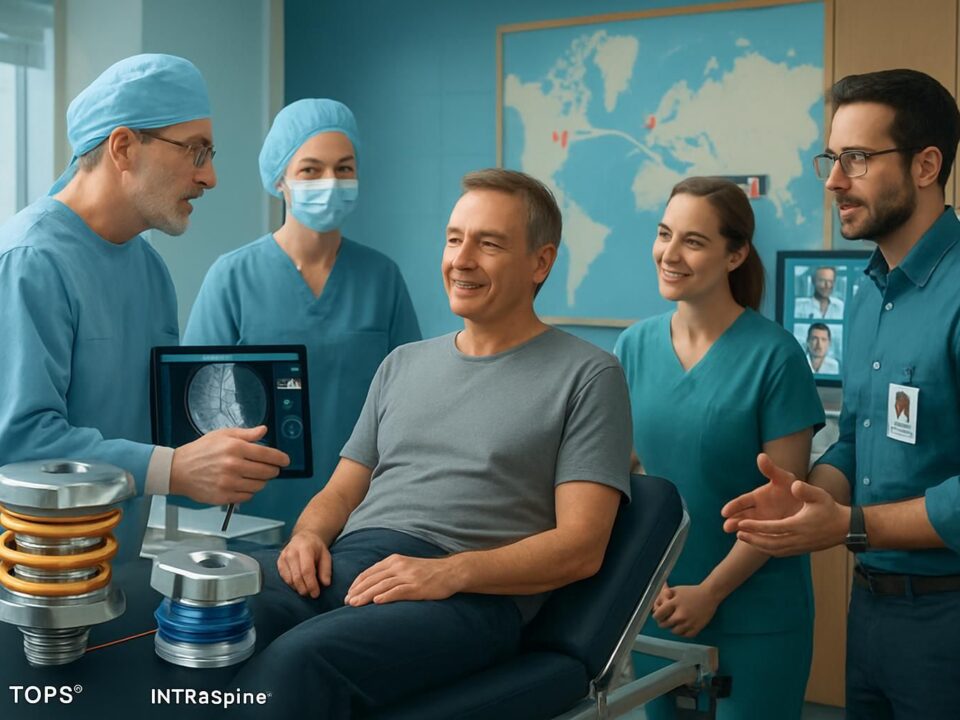
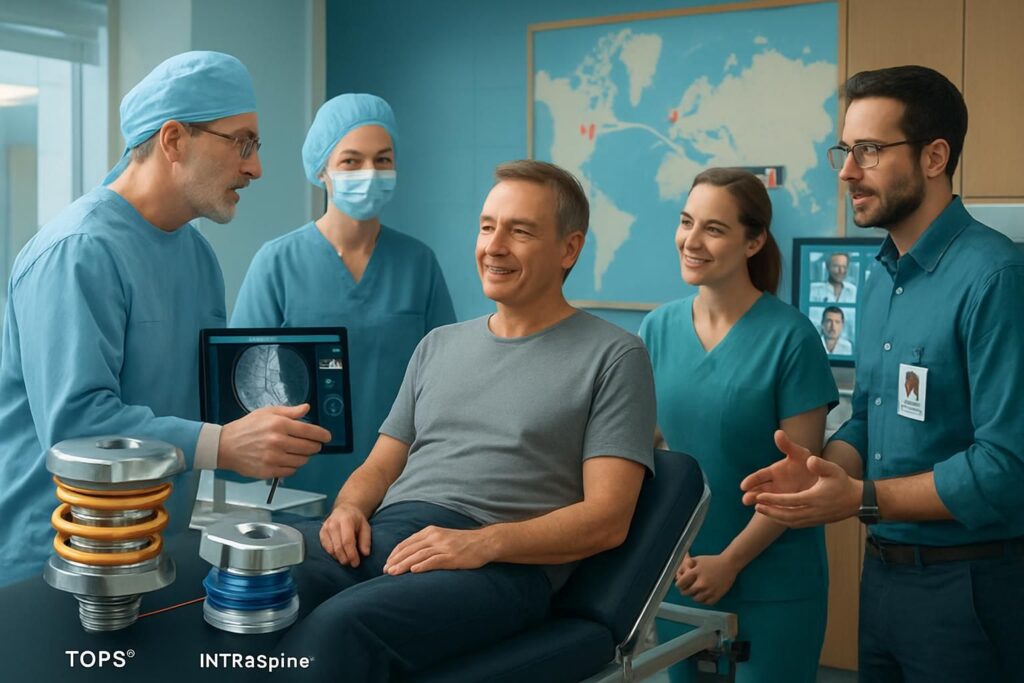
The so-called "« motion »This approach is characterized by innovative surgical techniques that aim to maintain the movement of the operated spinal segments. Unlike spinal fusion, this approach relies on the implantation of dynamic devices such as the TOPS system or the implant. IntraSPINE, designed to stabilize without stiffening the spine.
These implants function by respecting the natural biomechanics of the spine. For example, the TOPS (Total Posterior Spine System) allows for a near-normal range of motion while protecting the nerves. A case study showed that patients with debilitating back pain regained significant mobility after implantation of this device, with a marked reduction in symptoms and a faster return to activities.
The use of dynamic implants also aligns with the principle of reducing stress on adjacent segments. By absorbing some of the mechanical stress, they limit the premature degeneration that can result from conventional fusion. Patients thus benefit from a better postoperative quality of life and a program of rehabilitation adapted, promoting the restoration of mobility and muscle strengthening.
This technology is particularly well-suited to patients who are still active and keen to maintain functional mobility for their daily activities or sports. However, this does not eliminate the need for a preliminary conservative treatment phase, which remains essential to confirm the suitability of surgery. In this regard, the TOPS solution to avoid rigid fusion This perfectly illustrates this advancement in the field.
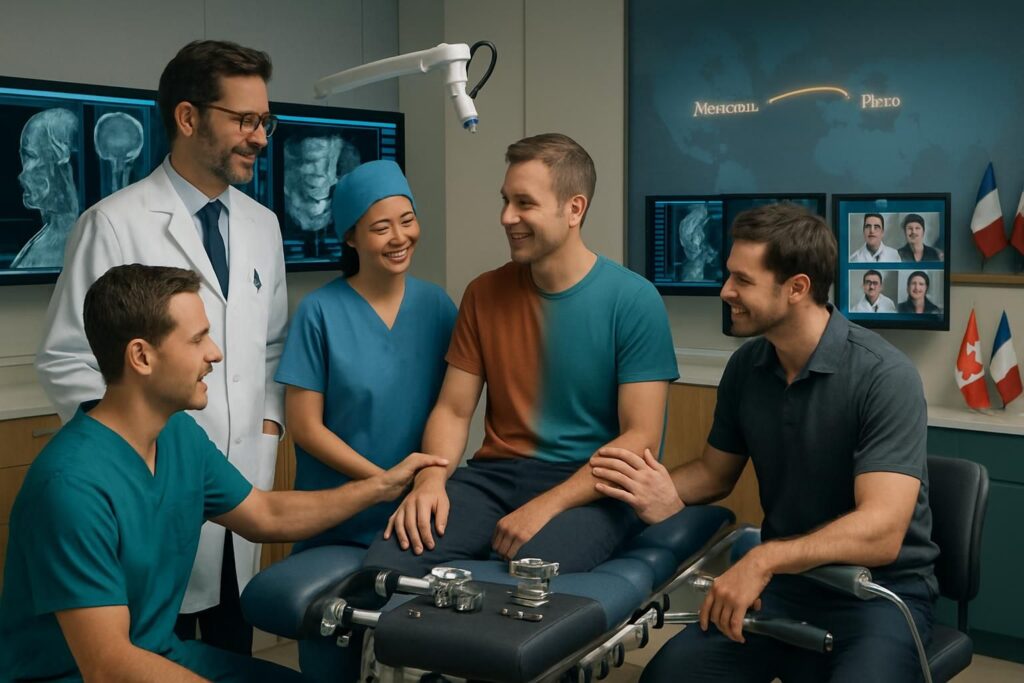
The role of spinal surgery experts, including those involved in the coordination between Quebec and France, is to select the most appropriate solution for each individual patient. This selection is made possible through a comprehensive assessment that integrates clinical data, medical imaging, and biomechanical analysis. Personalized support ensures safe care that meets the strictest international standards, thus providing a reassuring experience for patients.
A closer look at the biomechanical benefits and post-operative rehabilitation
The biomechanical benefits of dynamic implants represent a turning point in the management of spinal disorders. By replicating the natural movement of the vertebrae, these devices limit ankylosis and preserve the spinal flexibility essential for proper back function. Excessive rigidity, often observed in traditional spinal fusion, can lead to overloading of the discs and adjacent joints, thus increasing the risk of chronic pain.
Implants like IntraSPINE, placed between the vertebral bodies, act as shock absorbers, significantly reducing pressure on the intervertebral disc. This biomechanical function is crucial for improving the quality of life of patients, particularly those with moderate degenerative conditions. Maintaining joint movement naturally requires a rigorous rehabilitation program, combining targeted physiotherapy and functional exercises.
This phase of rehabilitation Post-operative rehabilitation, often performed in partnership with specialized clinics such as Clinique TAGMED, aims to restore mobility and strengthen trunk muscles. It is an essential component of the overall treatment, helping to limit the risk of relapse and optimize functional recovery. Modern techniques, including Spinal decompression therapy, are also offered before any surgical decision in order to ensure a complete and appropriate evaluation of the patient.
The table below compares the main biomechanical differences between fusion and dynamic implants:
| Criteria | Spinal Fusion | Dynamic Implants (TOPS, IntraSPINE) |
|---|---|---|
| Joint movement | Elimination of movement on the operated segment | Partial or complete maintenance of natural movement |
| Impact on adjacent segments | Accelerated degeneration possible | Reducing constraints and preserving neighboring segments |
| Recovery time | Longer, with intensive rehabilitation | Faster and more functional recovery |
| Risks of complications | Possibility of infection and rigidity | Reduced risks thanks to the implemented flexibility |
| Indications | Severe and advanced pathologies | Moderate cases with tissue preservation |
This table highlights the importance of a personalized analysis to determine the optimal solution based on the patient's profile. A rigorous, evidence-based approach is essential for safe and appropriate surgery.
Transatlantic patient pathway: coordination and support for back surgery in France
Quebec patients considering innovative back surgery in France now benefit from a seamless and integrated care pathway, based on a transatlantic coordination proven. This organization makes it possible to significantly reduce waiting times for access to specialized surgery, while guaranteeing comprehensive and safe care.
The starting point is often a thorough assessment conducted in Quebec, in collaboration with partners such as the TAGMED Clinic, which notably offers... advanced conservative treatments such as neurovertebral decompression. This essential preliminary phase is a guarantee of rigor: surgery is only considered after 3 to 6 months of complete conservative treatments, ensuring that the patient has explored all possible options before undertaking an intervention.
Once the indication is confirmed, the spinal implant specialist acts as a guide and key contact, directing the patient to leading French centers. These facilities, equipped with the latest technologies and staffed by specialized teams, guarantee safe surgery that meets international standards. The support provided includes administrative management, travel arrangements, and adjustments to post-operative care, thus offering personalized and compassionate support.
This transatlantic collaboration offers an innovative response to the challenges of waiting times and costs associated with private healthcare in Quebec, while simultaneously showcasing French expertise in spinal implantology. It is based on a comprehensive approach that considers not only surgical aspects but also rehabilitation and social reintegration. Patients thus benefit from a reassuring experience that extends well beyond the surgical procedure itself.
To facilitate informed choice, decision-support tools based on clinical data and personal circumstances are deployed, contributing to a better understanding of the implications of each option. Thus, considering a personalized assessment becomes an accessible and encouraged step.
Fusion vs Motion: A comparative guide for patients
Discover the main differences between the Spinal Fusion and the Dynamic Implants, their advantages and disadvantages, to help you choose the best option for you.
| Option | Benefits | Disadvantages |
|---|
Making informed decisions: criteria, risks and modern alternatives in spinal surgery
The decision to undergo back surgery is based on a thorough assessment of symptoms, medical imaging, and the patient's overall profile. It is essential that patients are supported by an expert who can provide clear and accessible information about the procedure. different surgical options, their biomechanical benefits, but also their limitations and potential risks.
Spinal fusion, while a common procedure, carries significant risks, including decreased mobility and complications in adjacent segments. Dynamic implants attempt to mitigate these adverse effects; however, they are not indicated in all cases. The choice therefore depends on specific criteria such as the stage of degeneration, the location of the lesions, and the patient's overall health.
Another key aspect is managing patients' expectations regarding athletic performance and daily life. Motion surgery often promotes a faster return to activity, preserving more natural function, as detailed in the analysis of the impact on athletic performance. This information is important for those who wish to maintain an active lifestyle.
Finally, it is important to remember that surgery should always be a last resort, after a phase of conservative treatments including physiotherapy, examinations, and sometimes non-invasive neurovertebral decompression. This protocol significantly reduces risks and improves long-term outcomes. The integrated care offered in France, particularly through reference centers, represents a model of excellence in this regard.
This comprehensive and personalized support is essential to ensure a safe and respectful journey that embraces innovation and prioritizes patient safety. Patients are encouraged to ask all their questions, research available options, and choose a solution tailored to their unique situation, with the guidance of a caring and expert multidisciplinary team.
{"@context": "https://schema.org", "@type": "FAQPage", "mainEntity":[{"@type": "Question", "name": "What are the main differences between vertebral fusion and dynamic implants?", "acceptedAnswer":{"@type": "Answer", "text": "Vertebral fusion immobilizes the affected segments, while dynamic implants preserve partial or complete mobility, depending on the indications and the type of implant used."}},{"@type": "Question", "name": "When is surgery recommended for back pain?" ", "acceptedAnswer":{"@type": "Answer", "text": "Surgery is considered only after 3 to 6 months of comprehensive conservative treatments, including kinesitherapy and neurovertebral compression, when symptoms persist or worsen."}},{"@type": "Question", "name": "What are the specific benefits of TOPS and IntraSPINE implants?" ", "acceptedAnswer":{"@type": "Answer", "text": "These implants offer an innovative solution to preserve natural movement, reduce pain and limit the risks associated with fusion rigidity, thus improving post-operative comfort and function."}},{"@type": "Question", "name": "How is post-surgery follow-up organized in France for a Quebecois patient?"}},{"@type": "Question", "name": "How is post-surgery follow-up organized in France for a Quebecois patient?"}} ", "acceptedAnswer":{" @type": "Answer", "text": "Follow-up is strictly coordinated between the French teams and the practitioners in Quebec, ensuring continuous support before, during, and after the intervention for comprehensive care."}}]}What are the main differences between spinal fusion and dynamic implants?
Spinal fusion immobilizes the affected segments while dynamic implants preserve partial or complete mobility, depending on the indications and the type of implant used.
When is it recommended to consider surgery for back pain?
Surgery is considered only after 3 to 6 months of comprehensive conservative treatments, including physiotherapy and neurovertebral decompression, when symptoms persist or worsen.
What are the specific benefits of TOPS and IntraSPINE implants?
These implants offer an innovative solution to preserve natural movement, reduce pain and limit the risks associated with fusion rigidity, thus improving post-operative comfort and function.
How is post-surgery follow-up organized in France for a Quebec patient?
The follow-up is strictly coordinated between the French teams and the practitioners in Quebec, ensuring continuous support before, during and after the intervention for complete care.
To learn more or for a personalized assessment, visit https://www.sostourismemedical.com/contact.