
Motion Surgery: a quick return to professional life
08/27/25
Neck surgery: innovations for treating degenerative disc disease
09/03/25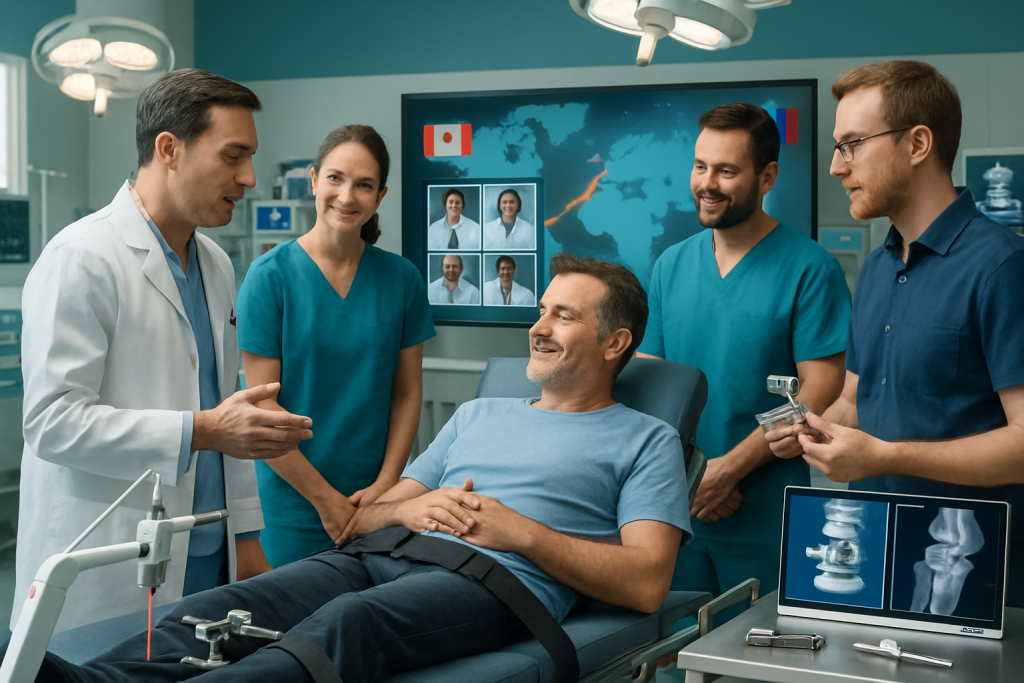
Chronic lower back pain, often linked to disc degeneration or lumbar spine instability, presents a significant therapeutic challenge for many patients. Given the limitations of traditional interventions such as rigid lumbar fusion, dynamic stabilization has emerged as a major advancement. The IntraSPINE system, an innovative interspinous implant, offers an effective alternative that respects the natural biomechanics of the back. Developed and manufactured in France, it provides a high-performance surgical solution primarily designed to preserve spinal mobility while providing lasting pain relief. The surgical process, particularly for patients in Quebec, is facilitated by expert transatlantic coordination, ensured through active collaboration with leading centers in France. This comprehensive approach thus benefits from complete care, balancing scientific rigor, safety, and responsiveness to the patient's needs.
Understanding IntraSPINE dynamic stabilization: principles and biomechanical innovations
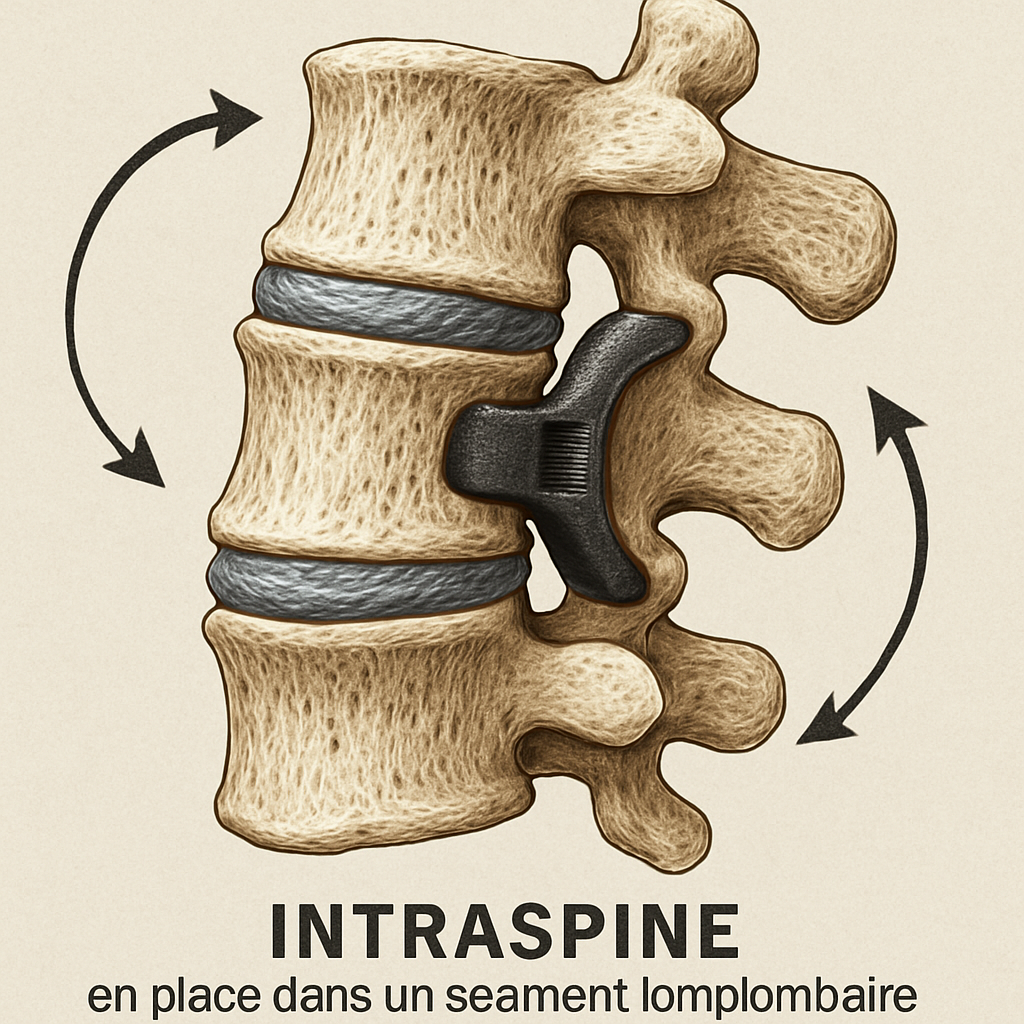
Dynamic stabilization of the lumbar spine, embodied by the system IntraSPINE, revolutionizes the surgical management of chronic lower back pain related to disc degeneration from L1 to S1. Unlike the techniques of merger Unlike conventional spinal devices, which stiffen the affected spinal segment, IntraSPINE maintains spinal mobility naturally by providing subtle and controlled stabilization.
This Class IIb medical device, developed by COUSIN BIOTECH, is designed according to rigorous standards, including ISO 13485, guaranteeing its compliance with strict quality and safety requirements. Its success is based in particular on an original anatomical design: a implant The interspinous space is covered with a polyester fabric that fits into the interlaminar space. This arrangement provides an effective "posterior shock absorber" capable of absorbing mechanical stresses while maintaining the physiological lumbar lordosis, thus improving overall posture.
IntraSPINE's biomechanical innovation translates into several functional advantages:
- Preservation of mobility Unlike traditional arthrodesis, segmental movement is preserved, which reduces the risk of degeneration of adjacent joints.
- Spinal decompression therapy improved : the support on the blades and the cushioning promote the relief of compressed nerve roots.
- Anti-migration stability : the wings of the implant and its precise positioning prevent any post-operative displacement.
- Reducing stress on implants : the materials used, silicone and polyester, combine flexibility and robustness, allowing dynamic adjustment to back movements.
By comparison, other systems offered by implant companies such as Medtronic, Zimmer Biomet, DePuy Synthes, or Stryker also offer dynamic solutions, but IntraSPINE stands out for its specific interspinous implantation which minimizes the risk of soft tissue irritation.
| Features | IntraSPINE | Traditional fusion | Other dynamic implants (TOPS, (DIAM) |
|---|---|---|---|
| Segmental mobility | Preserved | Rigidified | Preserved |
| Type of approach | Interspinous, minimally invasive | Bony, invasive | Variable, often more invasive |
| Migration risks | Weakened by the anti-migration system | N / A | Moderate |
| Biomechanical adaptability | Elevated thanks to the polyester and silicone fabric | Low | Mean |
These features demonstrate how the IntraSPINE implant offers an innovative approach to treating lower back pain while respecting the biomechanical requirements of the spine. For a more in-depth technical presentation, it is recommended to consult resources such as the one available on the website. Cousin Surgery or the detailed document published by COUSIN BIOTECH IntraSPINE technique.
Surgical options in France: from conservative treatment to innovative dynamic implants
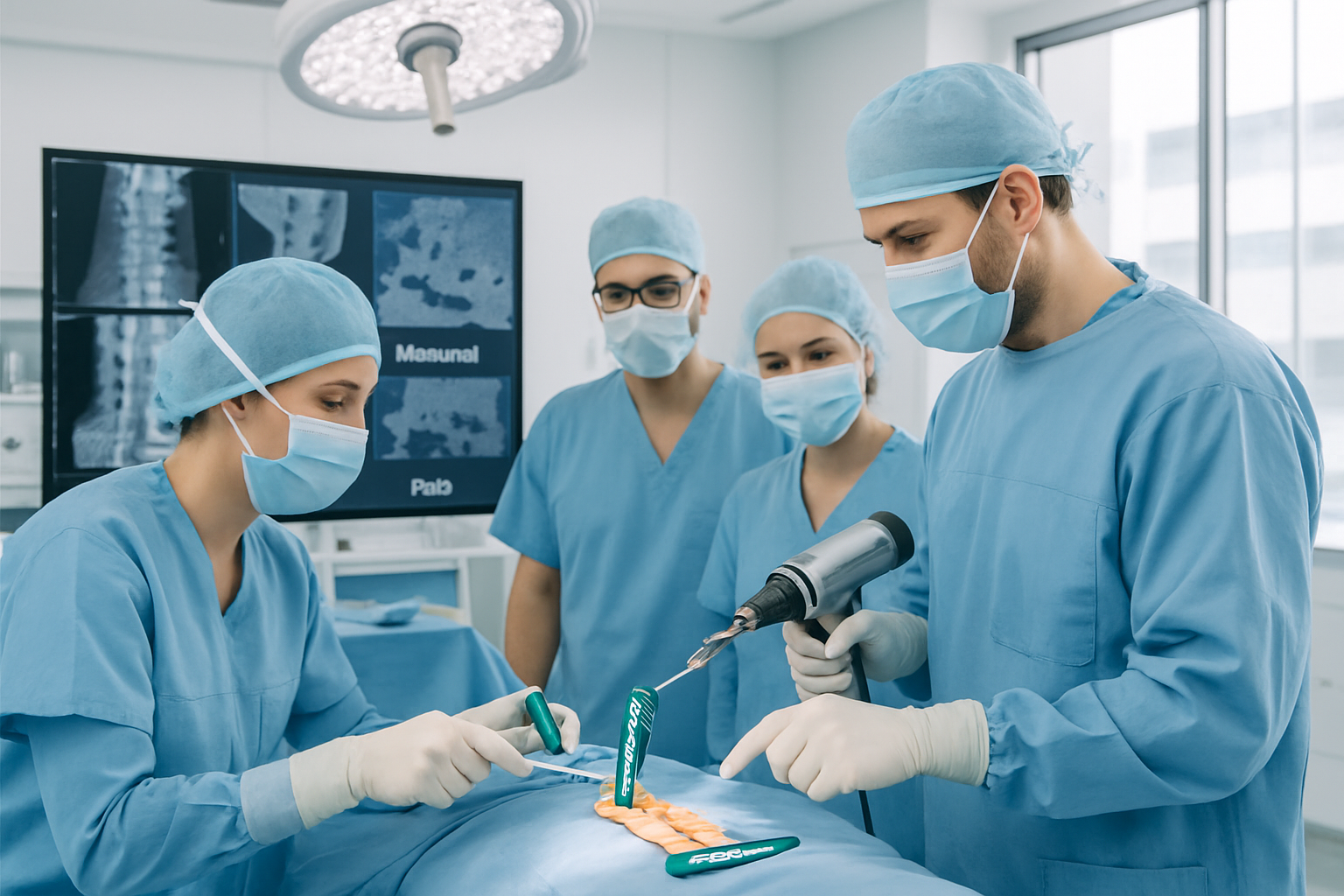
For patients suffering from chronic lower back pain For debilitating conditions, the surgical decision is part of a comprehensive approach, always beginning with conservative treatments. In France, the support provided to Quebec patients is based on a thorough multidisciplinary assessment, notably offered by the TAGMED CLINIC. The latter specializes in neurovertebral decompression and offers non-invasive therapies prior to any surgical intervention.
The usual recommended protocol includes a 3- to 6-month period of conservative treatment, which optimizes the chances of relief without surgery. This step is essential and meticulously followed to ensure responsible care. When surgery becomes necessary, several options are then possible:
- Simple decompression : intervention aimed at freeing nerves compressed by herniated discs or ligamentous hypertrophies, without stabilization.
- Classical spinal fusion (arthrodesis) : a well-known technique, which stiffens the injured segment but limits mobility and can lead to overloading of neighboring segments.
- Dynamic implants systems such as IntraSPINE or TOPS that provide stabilization while preserving mobility.
Dynamic implants have gained popularity due to their ability to reduce complications associated with traditional spinal fusions, particularly residual pain and adjacent segmental degeneration. However, their selection is rigorous, depending on the clinical profile, imaging, and surgical preference. The use of technologies from reputable manufacturers such as Medtronic, Spineart, LDR Medical, NuVasive, or Alphatec Spine reflects the importance placed on device quality.
| Surgical option | Benefits | Disadvantages | Indications |
|---|---|---|---|
| Simple decompression | Less invasive, faster recovery | Possible instability | Isolated nerve compression |
| Spinal fusion | Permanent stability, lasting relief | Loss of mobility, overheating of adjacent segments | Major instability, failure of conservative treatments |
| Dynamic implants (IntraSPINE, TOPS) | Preserved mobility, effective decompression | Newer technique, variable experience | Moderate instability, chronic disc pain |
The process in France also includes rigorous post-operative monitoring with personalized support, ensuring optimal control of results and recovery. Coordination between Quebec and French teams, sometimes via platforms such as SOS Medical Tourism, guarantees that each patient receives appropriate, rapid and safe care.
The fundamental role of transatlantic coordination in the surgical patient pathway
The success of spinal surgery requires more than just technical expertise. For several years, a dynamic network has developed between Quebec and France, facilitating a smooth process for patients seeking access to cutting-edge care, particularly with regard to dynamic implants such as IntraSPINE.
This coordination is based on several essential pillars:
- Complete pre-surgical evaluation : thanks to clinical, radiological and functional examinations carried out both in Quebec and in France, with cross-expertise.
- Informed advice and guidance : the spinal implant expert plays a key role in popularizing the available options, facilitating patient understanding and choice.
- Administrative management : assistance with medical procedures, insurance, and practical travel arrangements.
- Personalized support : presence of a coordinator who follows the patient at each stage, before, during and after surgery.
Collaboration with centers such as the TAGMED Clinic, renowned for its advanced conservative treatments and multidisciplinary approach, guarantees comprehensive and safe care. This network avoids the significant waiting times encountered in some healthcare systems, while ensuring complete control over the quality and innovation of technical treatments.
| Key steps | Role of transatlantic coordination | Benefits for the patient |
|---|---|---|
| Initial assessment | Remote consultation, image exchange | Save time, precise diagnosis |
| Surgical planning | Joint analysis, selection of the appropriate dynamic implant | Optimized results, increased safety |
| Surgery in France | On-site logistical and medical support | Confidence and serenity |
| Post-operative follow-up | Continuous feedback and adjustments | Better recovery |
This personalized transatlantic support embodies practical excellence in spinal surgery Modern, a model to adopt for all those seeking security, innovation, and attentive listening. It is recommended to learn more in detail through institutional resources such as SOS Medical Tourism.
Biomechanical and functional benefits of dynamic implants: an approach that preserves spinal mobility
The main advantage of the IntraSPINE implant lies in its ability to combine effective stabilization with respect for spinal physiology. This biomechanical approach minimizes the typical side effects of rigid surgeries and paves the way for a better post-operative quality of life.
The benefits include, in particular:
- Preserving natural mobility : the implant allows for harmonious segmental movement, essential for maintaining the cushioning and adaptation functions of the back.
- Reduction of post-operative pain : by avoiding excessive rigidity, patients generally experience less chronic pain related to overloading of adjacent segments.
- Reduction of the risk of adjacent degeneration : by preserving normal mechanics, we limit the progression of lesions on neighboring segments, which is common in classic arthrodesis.
- Faster functional recovery : the mobility allowed facilitates active rehabilitation and an earlier return to daily activities.
Clinical studies and accumulated experience, notably in collaboration with industry leaders such as Spineart, NuVasive, GlobUS Medical and Vexim, demonstrate the long-term relevance of these dynamic implants.
To delve deeper into biomechanical principles and motion surgery, the TAGMED clinic offers a series of educational articles detailing the mechanisms and benefits: Dynamic stabilization innovations and clinical applications.
The economic and human advantages of the surgical pathway in France for Quebec patients
Beyond the technical and clinical aspects, choosing a surgical approach in France for chronic lower back pain requires careful consideration of both economic and human factors. Waiting times for spinal surgery in Quebec can be long, negatively impacting patients' quality of life. Undergoing surgery in France offers several significant advantages:
- Rapid access to innovative surgery : thanks to efficient organization and partnerships with private and public centers of excellence, the delays are considerably shortened.
- Overall cost controlled Although the trip represents an investment, the overall cost, often lower than with local private options, includes full support and quality guarantees.
- Personalized and multidisciplinary follow-up From initial assessment to rehabilitation, each step is coordinated to optimize patient recovery.
- Innovation and security : French centers use modern implants from renowned manufacturers such as Medtronic, Zimmer Biomet, DePuy Synthes, and guarantee compliance with the strictest international standards.
- Reassuring human experience : Transatlantic support from a recognized expert and empathetic teams creates a climate of trust essential to success.
| Criteria | Surgery in Quebec | Surgery in France via SOS Medical Tourism |
|---|---|---|
| Waiting times | Often several months or years | A few weeks to 2-3 months |
| Estimated cost (excluding insurer) | Raised privately, variable in public | Transparent pricing, comprehensive support |
| Multidisciplinary support | Limited or variable | Assured and coordinated |
| Technological quality of implants | Familiar but less diverse devices | Innovative, latest generation implants |
For a better understanding of these issues and practical advice, the SOS Medical Tourism platform remains a key contact for guiding each patient towards the most suitable solution: contact the team for a personalized assessment.
Frequently asked questions about IntraSPINE dynamic stabilization
- What is the IntraSPINE implant and who is it for?
This is a dynamic interspinous stabilization system designed to treat chronic lower back pain related to disc degeneration and moderate instability between L1 and S1. - What are the main advantages compared to a conventional fusion?
Preservation of spinal mobility, reduction of the risk of degeneration of adjacent segments and faster functional recovery. - What is the average length of a surgical stay in France?
The stay generally varies from a few days to a week, depending on the follow-up protocols and the patient's general condition. - Is surgery with IntraSPINE covered by insurance?
This device is reimbursable, notably through French health insurance organizations with prior agreement and precise documentation. - How does post-operative follow-up take place?
It includes regular consultations, tailored rehabilitation, and ongoing coordination between Quebec and French teams.
Comparison of the main surgical solutions for chronic lower back pain
| Option | Mobility preserved | Risk of adjacent degeneration | Level of invasiveness | Estimated recovery | Availability |
|---|


 Français du Canada
  English (Canada)