IntraSPINE®: dynamic surgery for the back
02/05/26
Neck surgery: innovations for mobility
02/05/26
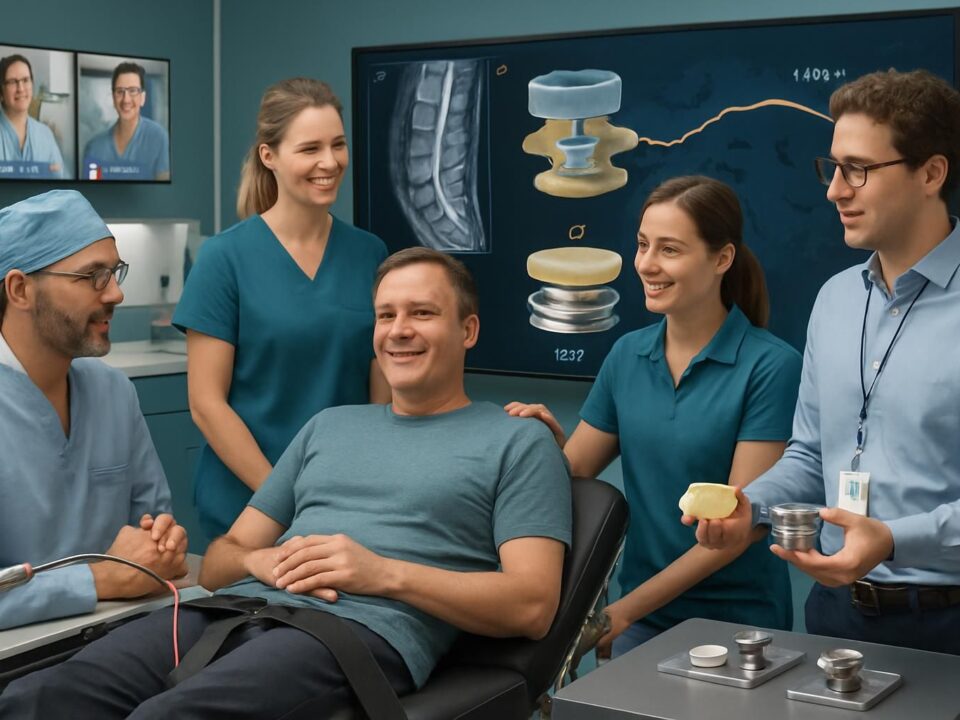
Lower back pain is a common condition that affects the quality of life of millions of people worldwide. Among its many causes, lumbar disc pathology, including herniated discs and lumbar osteoarthritis, is a major factor. When conservative treatments fail, surgery may become a viable option. However, the choice of disc prosthesis Lumbar surgery is based on precise eligibility criteria, tailored to each patient. This innovative surgical procedure preserves spinal mobility and significantly improves the biomechanical functions of the spine.
France now offers privileged access to advanced surgical techniques, particularly with dynamic implants such as the system TOPS or IntraSPINE, in partnership with leading centers such as the TAGMED Clinic. These implants, the result of constant innovation, offer an alternative to the merger Classic rigid supports help reduce chronic lower back pain while maintaining natural back movements. For Quebec patients, this transatlantic program, guided by experts like Louis Blanchard, guarantees personalized, safe, and high-quality support.
Understanding the eligibility criteria for a lumbar disc replacement
Lumbar disc replacement is not suitable for all patients suffering from lower back pain. The evaluation is based on a thorough analysis of the disc pathology and medical history. This is a solution specifically designed for people with significant disc degeneration and debilitating symptoms that are refractory to a full course of conservative treatment lasting at least 3 to 6 months. This preliminary step is essential to avoid the surgery useless.
Indeed, before proposing surgical intervention, treatments such as physiotherapy, medication, or even neurovertebral decompression should be considered. TAGMED CLINIC are given preference. For example, the Spinal decompression therapy It soothes nerve roots that are often compressed in cases of herniated disc without requiring an immediate invasive approach.
French experts also assess spinal morphology and the integrity of ligamentous structures using precise medical imaging examinations, including MRI and CT scans. Only patients with a reasonable degree of lumbar mobility preservation are candidates for disc replacement. Contraindications such as severe osteoporosis, certain advanced forms of osteoarthritis, or major spinal instabilities are systematically excluded to guarantee the implant's durability.
The key clinical and radiological signs
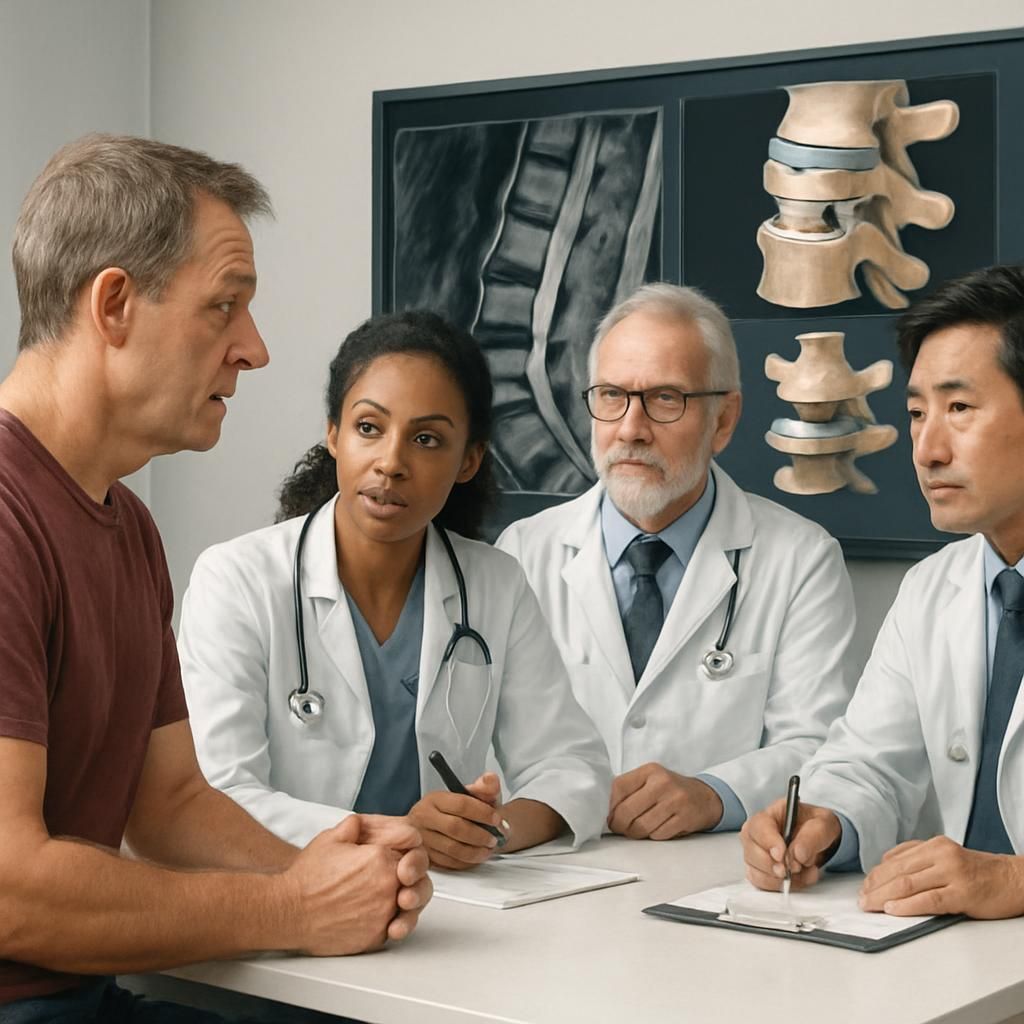
The typical eligible patient presents with lumbar pain of discogenic origin associated with significant functional limitation. Disc herniation, often accompanied by radiculopathy, is a common indicator. Radiological examinations confirm isolated disc damage, without severe involvement of the facet joints. This distinction is crucial for choosing a disc replacement instead of conventional spinal fusion.
For example, an image of’lumbar osteoarthritis In cases of extensive disc degeneration, treatment by fusion would be more appropriate, given the inability to preserve healthy mobility. However, in cases of moderate disc degeneration, a prosthesis offers a clear advantage, providing an ideal compromise between stability and function. This delicate balance requires the expert eye of a surgeon trained in French dynamic implants, such as those described in this resource.
Innovative implant solutions and their rigorous selection
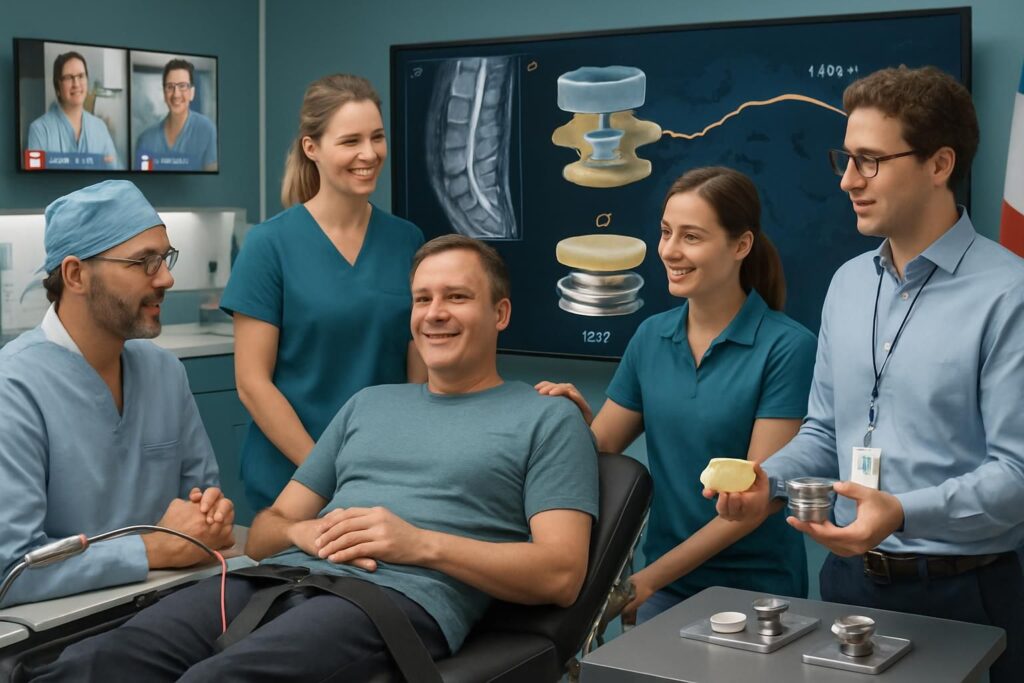
Dynamic lumbar disc replacement is part of an advanced surgical approach that aims to restore the natural biomechanics of the spine. Among the options available in France, the TOPS system and the IntraSPINE implant stand out for their modern design and promising results. These implants function while preserving the spinal mobility while ensuring the necessary stability to prevent the progression of the pathology.
The choice of implant type depends on several factors. For example, the TOPS system is often recommended for cases where decompression is also performed because it offers multidirectional flexibility. Conversely, IntraSPINE is more suitable for patients with lower back pain without significant instability, thanks to its ease of implantation and immediate biomechanical effect.
This technological choice is always based on meticulous clinical studies and a thorough understanding of surgical indications. Scientific rigor is paramount in order to minimize risks, optimize patient safety, and achieve lasting results. These innovations are regularly presented in specialized journals and validated by international experts.
To better understand the difference between dynamic implants and more traditional techniques such as rigid fusion, it is helpful to consult this detailed analysis.
- Restoration of segmental mobility
- Reduction of lower back pain
- Prevention of secondary degeneration in adjacent segments
- Less adhesion and fewer mechanical defects related to rigidity
- Less invasive surgical techniques, promoting rapid recovery
Comparative table of dynamic lumbar implants
| Characteristic | TOPS | IntraSPINE | Classic Fusion |
|---|---|---|---|
| Preservation of mobility | Very high | Moderate | None |
| Surgical complexity | High | Moderate | Variable |
| Post-operative recovery | Fast | Quite fast | Slower |
| Suitable for instabilities | Yes | No | Yes |
| Sustainability | Long-term validated | Intermediate | Very long |
Interactive comparison tool: Eligibility criteria for lumbar disc replacement
Select your characteristics to see the associated eligibility criteria:
| Criteria | Selected value | Eligible? |
|---|---|---|
| Age | ||
| Disc pathology | ||
| Spinal mobility | ||
| Medical imaging | ||
| Lower back pain | ||
| Surgical indication |

The journey of a Quebec patient towards innovative back surgery in France
For Quebec patients facing long wait times and high costs in spinal surgery, France is a prime destination. The process begins with a personalized assessment in collaboration with specialized teams such as the TAGMED Clinic, which offers advanced conservative treatments. This Franco-Quebec collaboration is essential to validate the surgical indications.
Once eligibility is confirmed, the patient receives comprehensive support. This support includes transatlantic coordination of appointment, The organization of pre-operative assessments and the planning of the intervention take place in French institutions renowned for their expertise in dynamic spinal implants. Throughout the treatment, patients benefit from human and technical support, with a single point of contact who facilitates the integration of care, communication, and understanding of each step.
This exclusive model prioritizes safety and innovation while adhering to international standards. Post-operative care extends beyond surgery, including regular consultations, rehabilitation sessions, and extended monitoring, ensuring optimal recovery.
This tailor-made program, adapted to specific needs, is based on a strong partnership with recognized French professionals, thus ensuring a high degree of trust and satisfaction among patients.
Neurovertebral decompression: a key phase before surgery
Among the conservative treatments, the Spinal decompression therapy This technique, performed notably at the TAGMED Clinic, plays a central role. It aims to release nerve roots compressed by a herniated disc or other forms of lumbar pathology. This method can significantly relieve pain and sometimes avoid the need for major surgery.
If, after several months of decompression and other treatments, the pain persists, eligibility for disc replacement can be reassessed. Collaboration between the Canadian and French teams ensures continuity of care and an informed decision, taking into account the progression of the condition and the patient's expectations.
The biomechanical and functional benefits of a lumbar disc prosthesis
The installation of a dynamic lumbar disc prosthesis It offers several major benefits compared to rigid fusion techniques. By restoring the ability to absorb shock and maintain flexion-extension, segmental mobility is preserved, which reduces stress on adjacent spinal segments. This decreases the risk of secondary lumbar osteoarthritis and prolongs back health.
From a functional standpoint, this allows patients to return to daily activities more quickly and efficiently. Active patients, particularly those wishing to maintain a dynamic lifestyle, benefit directly from preserving spinal mobility.
Furthermore, the use of these innovative implants limits the formation of scar tissue adhesions and reduces the risk of postoperative complications. Medium-term studies, such as those presented in these clinical data, attest to the stability and satisfaction of patients after implantation.
This advance represents a decisive turning point in the back surgery, profoundly transforming spinal treatment options.

Common questions about lumbar disc replacement and eligibility
{"@context": "https://schema.org", "@type": "FAQPage", "mainEntity":[{"@type": "Question", "name": "What are the essential criteria for a candidate for lumbar disc replacement? ", "acceptedAnswer":{"@type": "Answer", "text": "The criteria include modulated disc pathology, disabling lumbar pain after several months of complete conservative treatment, absence of superficial osteoarthritis, adequate spinal stability as verified by medical imaging, and good general condition of the patient."}},{"@type": "Question", "name": "Does lumbar disc protrusion allow for the preservation of back mobility?"}},{"@type": "Question", "name": "Does lumbar disc protrusion allow for the preservation of back mobility?"}} ", "acceptedAnswer":{"@type": "Answer", "text": "Yes, this is one of the main advantages of dynamic implants like TOPS or IntraSPINE. They restore natural spinal mobility while ensuring the stability of the lumbar segment."}},{"@type": "Question", "name": "What risks are associated with disc replacement surgery?", "acceptedAnswer":{"@type": "Answer", "text": "Like any surgery, it carries infectious, musculoskeletal, or neurological risks. However, the scientific rigor and mastery of innovative implant technologies in France minimize these risks as much as possible." "}},{" @type": "Question", "name": "What alternatives exist before considering surgery?", "acceptedAnswer":{" @type": "Answer", "text": "Advanced conservative treatments, including neurovertebral compression offered at the TAGMED Clinic, as well as physiotherapy and appropriate medication, are essential before any surgical decision."}},{" @type": "Question", "name": "How is the process between Quebec and France organized?" ", "acceptedAnswer":{" @type": "Answer", "text": "Personalized support coordinates the stages of evaluation, surgical scheduling, and post-operative follow-up with bilingual teams, ensuring safe and tailored care adapted to the patient's specific needs."}}]}What are the essential criteria for being a candidate for lumbar disc replacement?
The criteria include moderate disc pathology, disabling lumbar pain after several months of complete conservative treatment, absence of severe osteoarthritis, adequate spinal stability verified by medical imaging, and good general condition of the patient.
Does lumbar disc replacement allow for the preservation of back mobility?
Yes, that's one of the main advantages of dynamic implants like TOPS or IntraSPINE. They restore natural spinal mobility while ensuring the stability of the operated lumbar segment.
What risks are associated with disc replacement surgery?
Like any surgical procedure, it carries risks of infection, mechanical issues, or neurological problems. However, scientific rigor and mastery of innovative implant technologies in France minimize these risks as much as possible.
What alternatives exist before considering surgery?
Advanced conservative treatments, including neurovertebral decompression offered at the TAGMED Clinic, as well as physiotherapy and appropriate medication, are essential before any surgical decision.
How is the journey between Quebec and France organized?
Personalized support coordinates the stages of evaluation, surgical programming and post-operative follow-up with bilingual teams, ensuring safe care adapted to the specific needs of the patient.
To learn more or for a personalized assessment, visit SOS Medical Tourism.