Cervical disc replacement: clinics
02/10/26
TOPS™: validated
02/12/26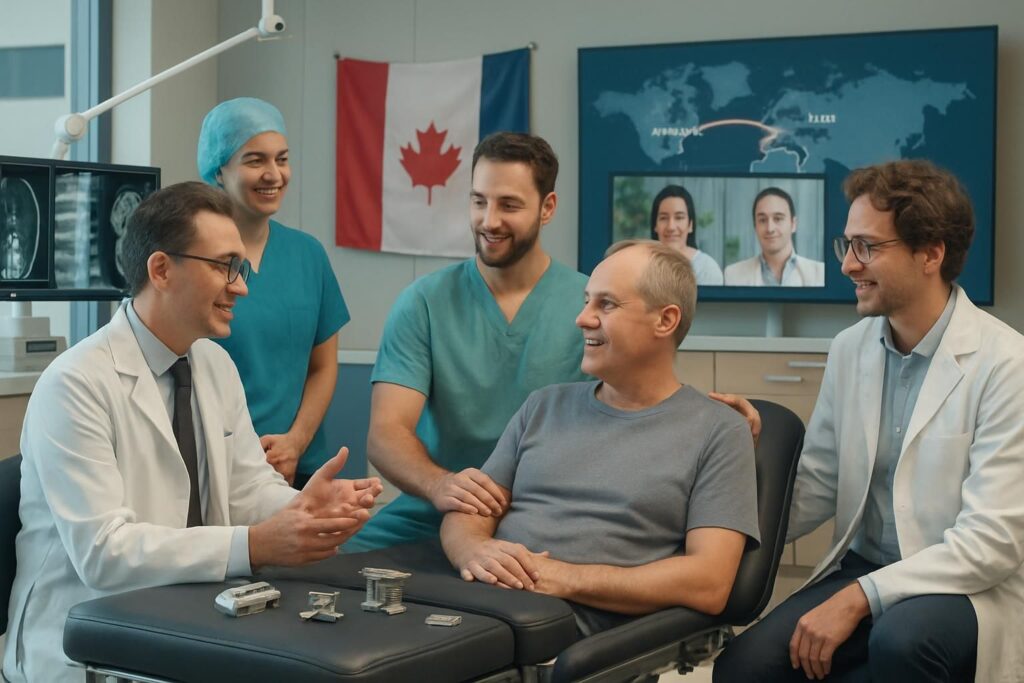
Minimally invasive surgery is now emerging as a revolution in the treatment of spinal disorders, offering a promising alternative to traditional procedures. Quebec patients, often facing long wait times or prohibitive costs for private care, are finding new hope in these innovative techniques offered in France. Indeed, surgical methods based on small incisions, a significant reduction in trauma, and rapid recovery are transforming the management of back and neck conditions.
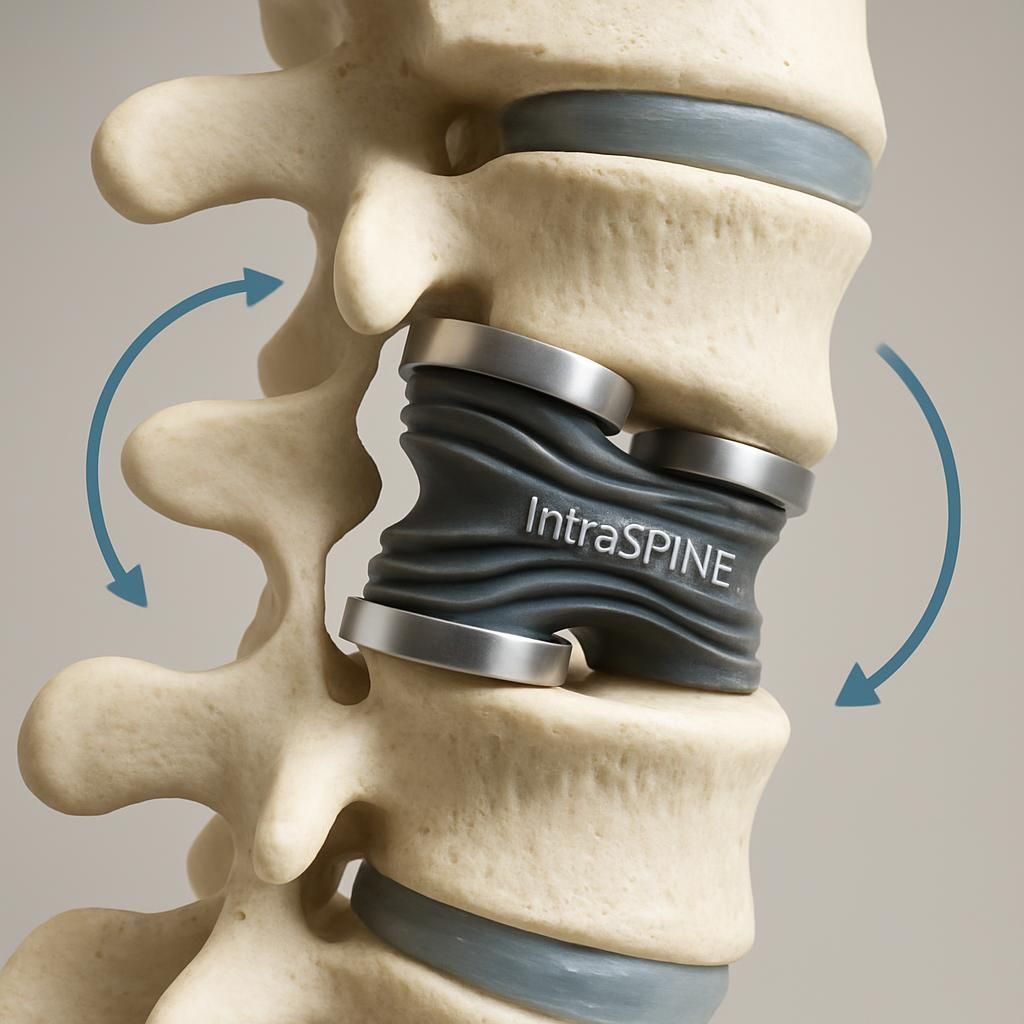
At the heart of this advance are dynamic implants such as the TOPS system or IntraSPINE, designed to preserve spinal mobility while stabilizing the spine. Their use, combined with procedures of Spinal decompression therapy These procedures, performed in centers of excellence, illustrate the effectiveness of modern interventions. Close coordination between French specialists and Quebec teams guarantees safe, rigorous care perfectly tailored to each patient.
This surgery The results observed in the short and long term are carefully monitored: it only occurs after several months of comprehensive conservative treatments, including advanced care available at the TAGMED Clinic. Furthermore, the patient journey, from initial assessment to post-operative follow-up, benefits from personalized, compassionate, and coordinated support thanks to specialized platforms such as SOS Medical Tourism.
Minimally invasive surgery: minimally invasive techniques and optimal surgical results
The minimally invasive surgery This technique is distinguished by the use of small, precise incisions, minimizing damage to surrounding tissues. Instead of large cuts and extensive manipulation, the surgeon navigates along targeted pathways, sometimes assisted by high-resolution imaging and advanced tools. These advancements not only reduce complications but also achieve remarkable surgical results, with the effectiveness of the procedures widely demonstrated by rigorous clinical studies.
The techniques employed include laparoscopic spinal surgery and other minimally invasive approaches, promoting rapid recovery. These techniques offer numerous benefits: reduced intraoperative and postoperative pain, a lower risk of infection and nerve damage, and a shorter convalescence period facilitating a quicker return to normal life. These advantages have been documented in publications associated with the TAGMED Clinic, making these procedures a benchmark for Quebec patients seeking a reliable and modern alternative.
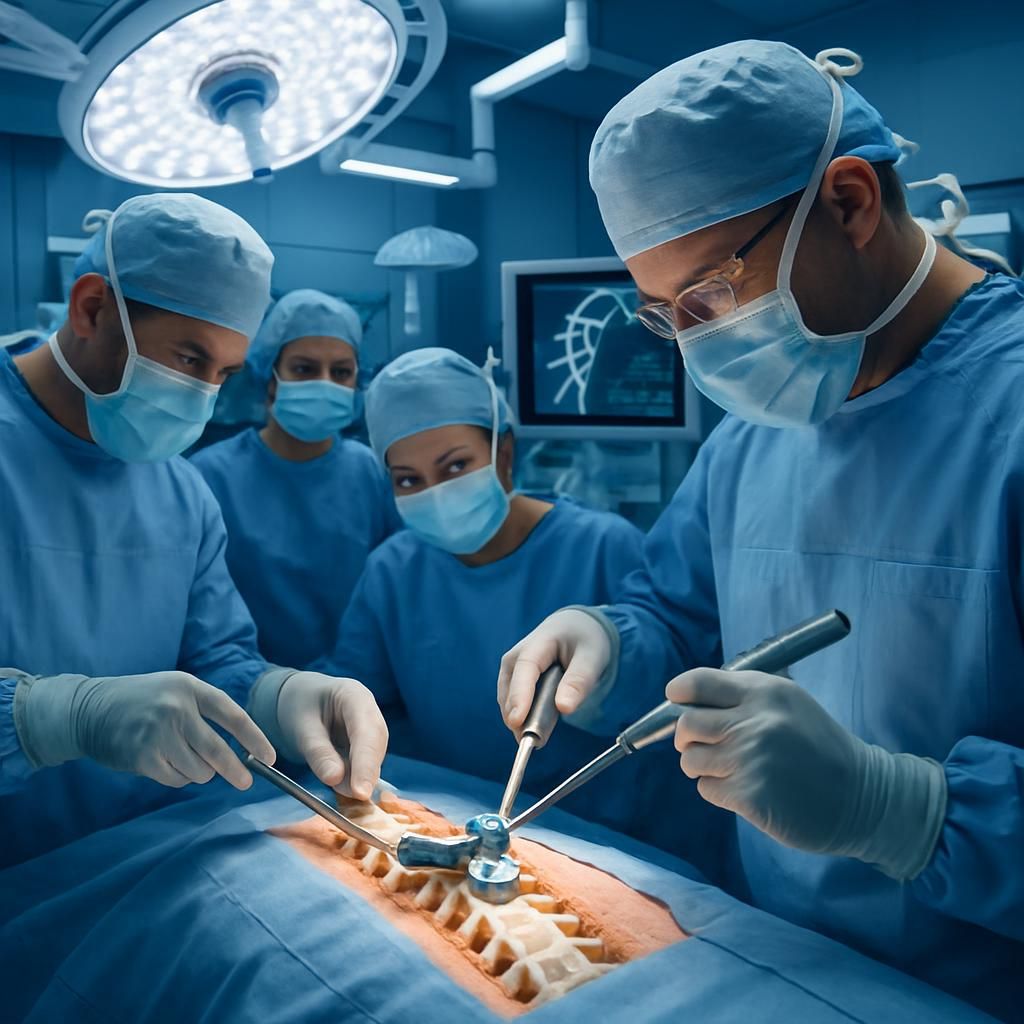
A concrete example can be taken from an intervention aimed at stabilizing a lumbar vertebra with a implant TOPS dynamic. The initial incision, often less than 5 cm, allows access to the targeted area with extreme precision, thus avoiding destabilization of neighboring segments. The recovery observed in this case is significantly superior to traditional open surgery, allowing patients to resume their activities much more quickly. This type of approach perfectly illustrates the promise of minimally invasive techniques in the field of spinal surgery.
Dynamic implants: biomechanical innovation and preservation of spinal mobility
French expertise in minimally invasive spinal surgery is distinguished in particular by the development and mastery of dynamic implants, such as the TOPS and IntraSPINE systems. These technological innovations allow for spinal stabilization while preserving natural mobility, a fundamental objective for limiting secondary complications and improving post-surgical quality of life.
Traditional implants, namely rigid devices of merger, These devices immobilize part of the spine, which can lead to mechanical overload of adjacent segments and, ultimately, accelerated degeneration. In contrast, dynamic implants offer an advanced biomechanical solution that replicates spinal flexibility, providing support without stiffening the segment. This reduces chronic pain and decreases the risk of further surgery.
For patients, this approach means fewer functional limitations in their daily lives. The surgical expertise of specialists working with state-of-the-art centers guarantees optimal implantation, ensuring the safety and effectiveness of the devices. Carefully managed post-operative follow-up allows for monitoring the spine's response and adapting rehabilitation to maximize long-term benefits.
This technology is particularly suitable for patients who, after complete conservative treatment, still experience functional limitations and require a balanced alternative between stabilization and mobility. According to protocols validated in partner institutions in France, the use of dynamic implants has shown encouraging results, including a significant reduction in pain and accelerated functional recovery.
Transatlantic coordination: personalized support for a smooth surgical journey
The success of effective minimally invasive surgery depends not only on the technique or technology, but also on a perfectly coordinated patient pathway, especially when it involves international care. For Quebec patients, close collaboration between French specialists and local teams, as well as specialized platforms, is essential to ensure a safe and reassuring experience.
The initial phase includes a personalized assessment, based on a thorough clinical examination and review of medical history. This step often includes a remote consultation with spine experts, followed by a appointment in France to complete the investigations. This transatlantic organization makes it possible to reduce delays, while personalizing the approach according to each situation.
Post-operative follow-up is equally important, with regular telemedicine consultations and local monitoring provided by teams trained in the specific care of patients who have received dynamic implants or other innovative techniques. SOS Medical Tourism plays a central role in this coordination, facilitating administrative and logistical procedures and ensuring constant communication between all stakeholders.
For example, a patient treated for a herniated disc A lumbar patient with a TOPS implant will be able to follow a personalized rehabilitation protocol via connected platforms, benefiting from advice from physiotherapists in France and Quebec, which optimizes their recovery and secures the short convalescence.
Complete patient journey: from initial assessment to recovery
Before considering surgery, it is essential to have undergone 3 to 6 months of conservative treatment, as recommended by scientific rigor and international guidelines. TAGMED Clinic, now a leading partner for advanced conservative care, offers, in particular, non-invasive neurovertebral decompression, which can provide effective relief before any surgical intervention becomes necessary.
When minimally invasive surgery is considered, the patient's journey follows specific steps: pre-operative consultation, comprehensive diagnostic assessments (MRI, CT scan), surgical procedure, and then post-operative care. Surgery with dynamic implants or other techniques is thus integrated into a comprehensive plan, with particular attention paid to safety and complete risk management.
The importance of post-operative care is often underestimated. This includes regular medical follow-up, appropriate physiotherapy, and radiological examinations to ensure optimal healing conditions. The educational approach used allows the patient to understand each step, its benefits, and the requirements for a successful recovery.
To facilitate this process, a list of the main benefits of minimally invasive surgery can be highlighted:
- Small incisions minimizing the risk of infection and pain.
- Reduced complications : increased vigilance and targeted interventions.
- Fast recovery : accelerated return to daily activities.
- Short recovery period : reduction of professional and social downtime.
- Appropriate post-operative care : personalized follow-up and optimal support.
Economic and human benefits of innovative French implant solutions
The surgical options offered in France, particularly with dynamic implants, represent a major added value. From a biomechanical standpoint, they ensure better functional preservation of the spine, but they are also associated with invaluable human benefits and significant cost savings for Quebec patients.
The speed of recovery and the reduction of indirect complications not only allow for greater comfort but also a faster return to an active professional life. This optimization also avoids the traditional burdens of rehabilitation, which often weigh heavily on patients both physically and psychologically.
Economically, accessing innovative surgery in France, thanks to the coordination provided by SOS Medical Tourism, offers patients a competitive and transparent solution. The overall cost, including the procedure, hospital stay, and post-operative care, often remains lower than that of private alternatives in Quebec, while ensuring a recognized level of quality and safety.
| Criteria | Minimally invasive surgery in France | Private surgery in Quebec |
|---|---|---|
| Waiting times | Reduced (less than 2 months on average) | Long (3 to 6 months or even longer) |
| Overall cost | Competitive and transparent | Pupil |
| Recovery | Fast, thanks to dynamic implants and minimally invasive techniques | Variable, often longer |
| Post-operative follow-up | Customized, with transatlantic coordination | Variable |
| Security and innovations | Cutting-edge technologies and evidence-based protocol | Less access to advanced implants |
These factors confirm the significant advantages of opting for minimally invasive surgery in France, leveraging recognized innovations such as TOPS and IntraSPINE. Patients thus benefit from comprehensive care within a rigorous yet compassionate framework, maximizing their chances of success and daily comfort.
To gain a deeper understanding of the benefits, it is recommended to consult the resources on the optimal results of minimally invasive surgery or on the pain reduction and accelerated recovery offered by these new techniques.
Comparison of Results: Minimally Invasive Surgery vs. Conventional Surgery
What is minimally invasive spinal surgery?
Minimally invasive spinal surgery consists of procedures performed through small, precise incisions, aiming to limit tissue trauma, with advanced tools such as laparoscopic surgery for increased efficiency and better recovery.
What are the advantages of dynamic implants like TOPS or IntraSPINE?
These implants help stabilize the spine while preserving its natural mobility, thus reducing post-operative pain and the risk of degradation of adjacent segments, promoting a better quality of life after surgery.
What is the surgical process like in France from Quebec?
The patient benefits from personalized support including remote assessment, a consultation in France, transatlantic coordination by SOS Medical Tourism, as well as adapted post-operative follow-up via telemedicine and local physiotherapy.
Is it mandatory to attempt conservative treatment before surgery?
Yes, it is recommended to undergo 3 to 6 months of non-surgical treatments, such as spinal decompression, before considering any surgical procedure. TAGMED Clinic is a key partner for these conservative treatments.
What are the economic benefits of receiving treatment in France?
With shorter waiting times, competitive costs and rapid recovery thanks to minimally invasive techniques, surgery in France represents an economically and humanly advantageous alternative for Quebec patients.