

Sciatica • Leg pain • TAGMED Clinic
Sciatica: understanding the pain, possible causes, and non-surgical treatments
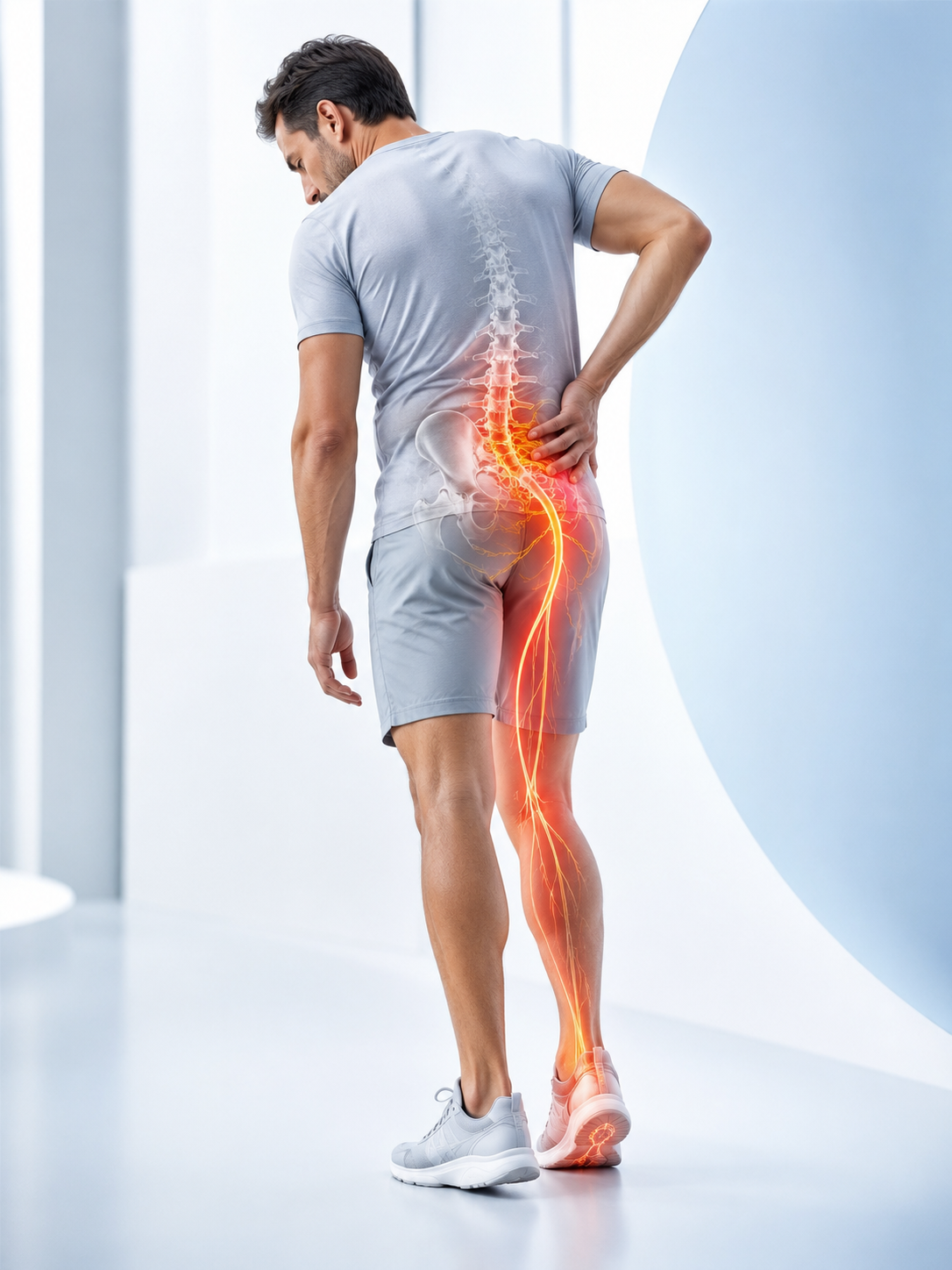
Pain radiating down the buttock, thigh, calf, or foot can be consistent with irritation of a lumbar nerve root. The important thing is to connect the nerve's path, symptoms, and signs to watch for before choosing an approach.
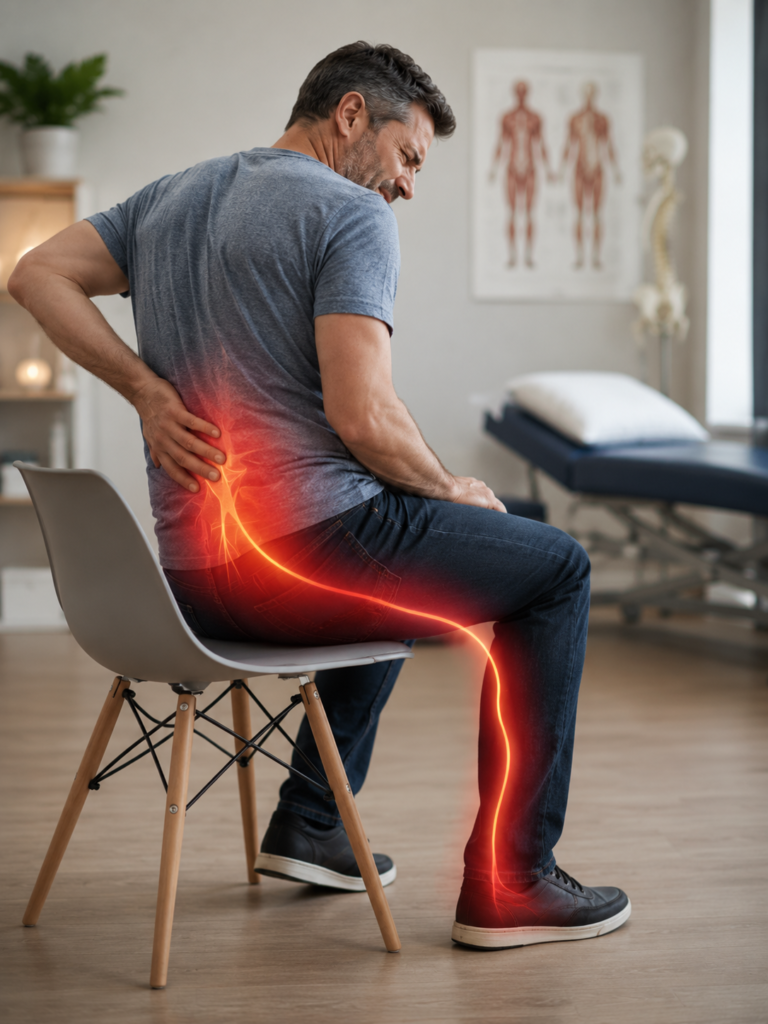
Sciatica is often described as a burning, electric, or deep pain that starts in the lower back or buttock and radiates down the leg. It may be accompanied by tingling, numbness, weakness, or difficulty tolerating certain positions.
At TAGMED Clinic, the goal is not to draw a quick conclusion based on a single symptom. Rather, the assessment aims to understand the complete pain profile, identify signs that require medical referral, and determine if a non-surgical approach such as... Spinal decompression therapy, Specific osteopathy or instrument-assisted intervention may be relevant depending on the case.
Key takeaways
Sciatica is a symptom, not a single cause.
The word "sciatica" is often used to describe any pain that radiates down the leg. In practice, pain consistent with sciatica can originate from irritation or a compression of a lumbar nerve root, often linked to a herniated disc, a disc protrusion, a pinched disc, a foraminal stenosis or a spinal stenosis.
Pain descending
The pain can originate in the lower back, buttock, or from the hip and down towards the thigh, the calf, the foot or the toes.
Nervous sensation
Burning, electric shock, tingling, numbness or loss of sensation may accompany the pain.
Cause to be clarified
The pathway provides clues, but the probable cause must be assessed before choosing a treatment, exercise, or care strategy.
Signs to watch for
Progressive weakness, loss of urinary or bowel control, anesthesia of the stool, or rapidly worsening pain requires urgent attention.
Important
This page is not a substitute for medical advice. Its purpose is to help patients better understand the symptoms consistent with sciatica and when to seek medical help. For a more detailed triage guide, see the page Sciatica: when to consult a doctor? on SOS Sciatica.
Symptoms
How to recognize pain that is consistent with sciatica?
Typical sciatic pain follows a nerve pathway. It may be more intense in the leg than in the lower back. Some people experience little lower back pain but significant pain in the buttock, calf, or foot. Therefore, it's important to avoid concluding that it's not a lower back problem simply because the back hurts little.
Pain in the buttock
Deep pain, burning or pressure in a buttock, sometimes aggravated by sitting, driving a car or certain trunk movements.
Pain behind the leg
Pain that radiates down the back of the thigh, calf, or heel. The pain may be continuous or intermittent.
Foot pain
Symptoms in the big toe, outer edge of the foot or heel, depending on which nerve root is irritated.
Tingling
A tingling or electric shock sensation in the leg, foot, or some toes. The condition should be monitored.
Numbness
Decreased sensitivity in a specific area. A progressive numbness warrants rapid evaluation.
Weakness
Difficulty lifting the foot, walking on the heels or on the tips of the toes, or the feeling that the leg is "giving way".
To delve deeper into the symptoms
A full page is available on sciatic pain, symptoms and pathway. This linking allows the TAGMED page to remain the clinical conversion page while transferring thematic authority to SOS Sciatica.
L4-L5 • L5-S1 • S1
Where does sciatic pain go?
The location of the pain can guide the assessment. Pain toward the big toe may suggest irritation consistent with L5, while pain toward the heel or the outer edge of the foot may be consistent with S1. These landmarks are helpful, but they are not sufficient on their own to identify the cause.
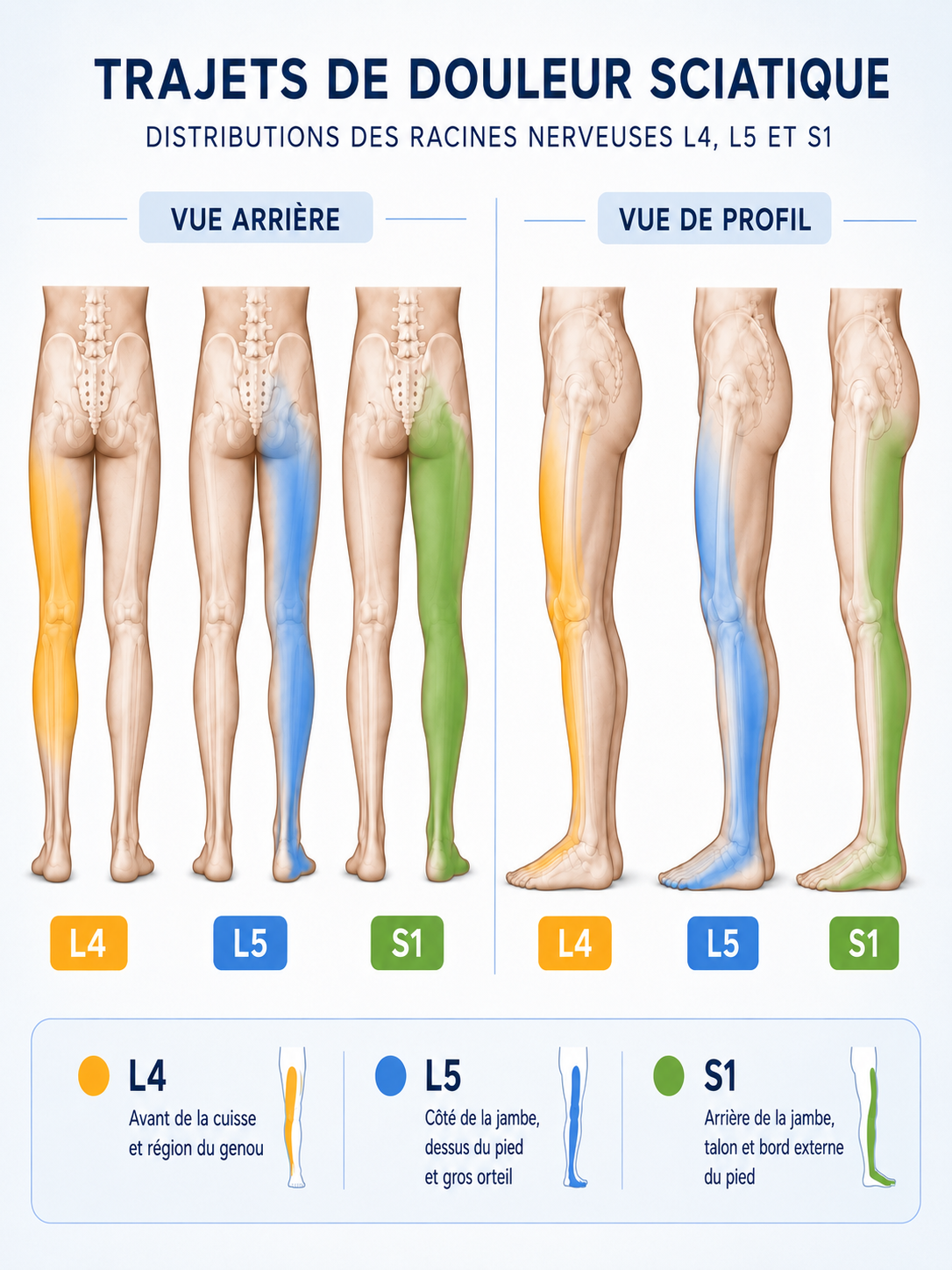
| Journey felt | Racine is often mentioned. | Cautious interpretation |
|---|---|---|
| Lower back, buttocks, back of thigh | L5 or S1 | May be consistent with irritation of a lumbar nerve root, especially if the pain extends below the knee. |
| Pain near the big toe | L5 | Often associated with L4-L5 or L5-S1 levels, depending on the clinical context and available examinations. |
| Pain towards the heel or the outer edge of the foot | S1 | May be compatible with an L5-S1 or S1 implication. |
| Pain in the front of the thigh | L3 or L4 | Can more to mention cruralgia than classic sciatica. |
Possible causes
What are the common causes of sciatica?
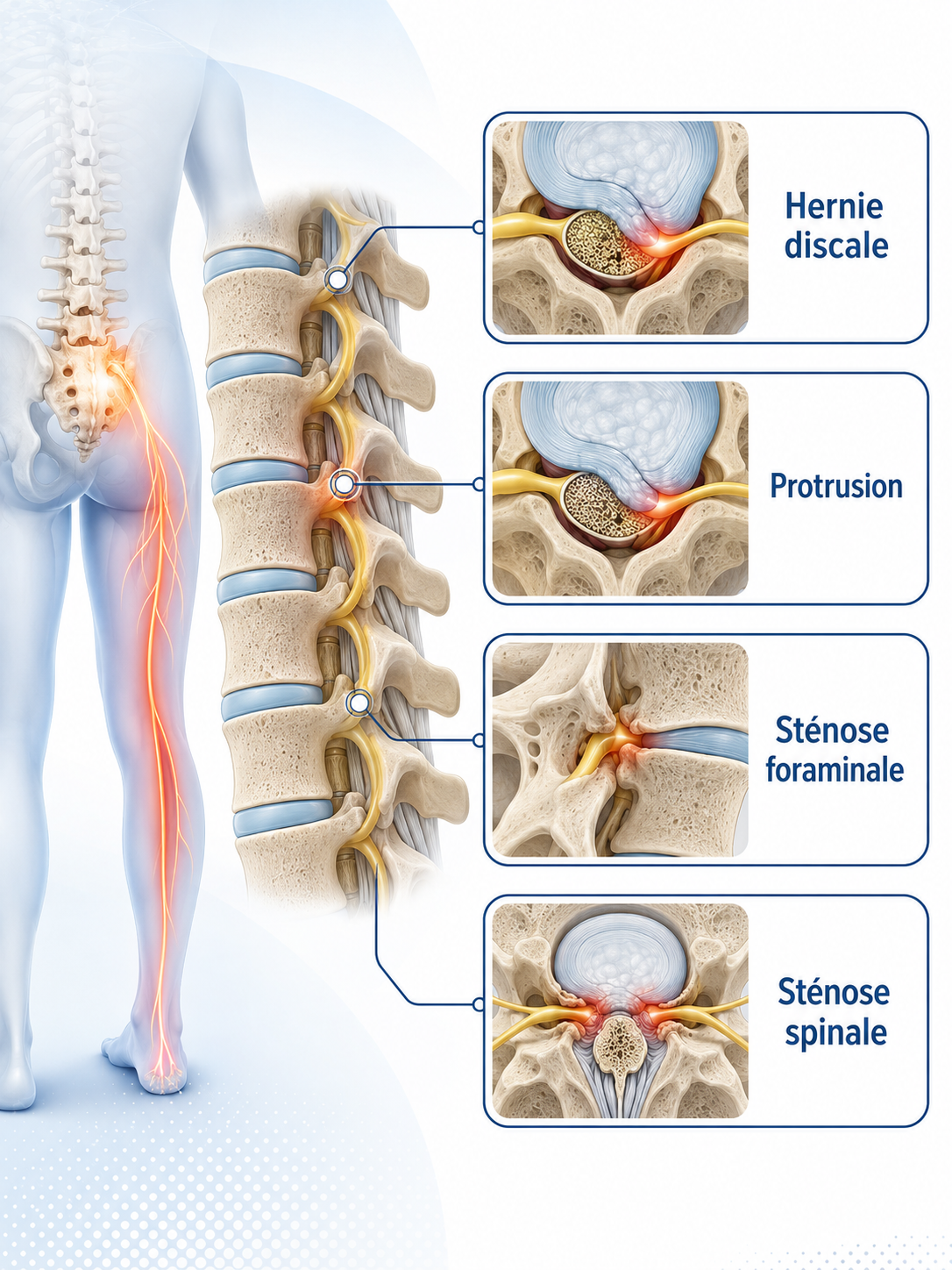
The most discussed cause is a lumbar herniated disc, but it is not the only one. A disc protrusion, a pinched nerve, foraminal stenosis, spinal stenosis, Lumbar osteoarthritis or spondylolisthesis can also contribute to irritation of a nerve root.
Lumbar disc herniation
Part of the disc may irritate or compress a nerve root. The pain may radiate down the leg and be accompanied by neurological symptoms.
Protrusion or bulge
The disc may protrude without a full-blown hernia, but contribute to reducing the space around a nerve root.
Degenerative disc disease
Loss of disc height can alter lumbar mechanics and reduce the foraminal space.
Foraminal stenosis
The foramen, the exit passage of the nerve root, can become narrower and cause symptoms in the leg.
Spinal stenosis
Lumbar spinal stenosis can cause pain, heaviness or weakness when walking, sometimes relieved by rest.
Piriformis: caution
Piriformis syndrome exists, but it should not become the default explanation without considering the more frequent lumbar causes.
Pillar page to be strengthened
For a more detailed explanation of the causes, use the link causes and assessment of sciatica. This link is strategic because it promotes an important pillar page of SOS Sciatica.
When to consult
Warning signs that should not be ignored
Most pain consistent with sciatica is not an absolute emergency. However, certain symptoms should be evaluated promptly, as they may indicate a more serious neurological condition or a condition requiring medical attention.
Quick consultation
- Pain that moves further and further down the leg.
- Numbness that increases or becomes constant.
- Weakness of the foot, leg or difficulty walking.
- Pain that does not improve despite precautions.
- Pain that severely disrupts sleep or daily activities.
Medical emergency
- Loss of urinary or bowel control.
- Anesthesia in the saddle area.
- Significant or rapidly progressive weakness.
- Fever, general malaise or significant unexplained pain.
- Pain following significant trauma.
Clear position
In the presence of significant or progressive neurological signs, one should not attempt to "unblock" sciatica through repeated exercises, stretches, or manipulations. A proper evaluation must be obtained first.
Treatment
Sciatica treatment: what options are available at the TAGMED Clinic?
Treatment depends on the probable cause, the stage of symptoms, tolerance of positions, the presence or absence of neurological signs, and the patient's overall condition. A serious approach should not promise a quick or automatic cure.
| TAGMED Approach | Possible role | Patient profile that may be considered |
|---|---|---|
| Motorized neurovertebral decompression | To reduce certain mechanical stresses on the discs and nerve roots. | Pain consistent with a disc origin, herniation, protrusion, disc pinching or mechanical compression, depending on the assessment. |
| Specific osteopathy | Adapt interventions to the patient's mobility, compensations, and tolerance. | Pain with stiffness, limited movement, mechanical overload or postural adaptation. |
| Precision striker | Instrument-assisted intervention, targeted and of low amplitude. | Precise mechanical dysfunction, when the patient's assessment and tolerance justify it. |
To be specified
Medical lasers and shock waves are not used at the TAGMED Clinic for the treatment of back pain or sciatica.
Exercises and movements
Should you do exercises when you have sciatica?
Exercises are not automatically bad, but they are not automatically good either. In cases of pain consistent with sciatica, an exercise should be chosen based on the probable cause, the path of the pain, the stage of irritation, muscle strength, and the patient's reaction during and after the movement.
Avoid
Forcing stretches, repeating a movement that moves the pain further down the leg, or trying to "crack" the back.
To watch
Increased numbness, onset of weakness, more intense pain in the foot, or symptoms that persist for several hours after exercise.
Cautious approach
Start by understanding what aggravates and what relieves the pain. Exercises should be progressive, well-tolerated, and tailored to the individual case.
Additional resource
To address this search intent without overloading the TAGMED page, the link Exercises for sciatica: caution depending on the cause reinforces a specialized page on the SOS Sciatica website.
Patient journey
How does an evaluation at the TAGMED Clinic take place?
The assessment aims to link the symptoms to the patient's mechanical and functional context. It also helps determine whether the case seems appropriate for a conservative approach or if a medical referral should be prioritized.

Historical
Onset of pain, progression, medical history, available imaging, treatments already tried.
Route
Specific location: back, buttock, thigh, calf, foot, toes, numbness or weakness.
Tests
Analysis of mobility, tolerance to positions, and signs consistent with nerve irritation.
Plan
Discussion of possible options, precautions, pace of care and reasonable limits.
Montreal • Terrebonne
TAGMED Clinic: Two locations for patients with sciatic pain
TAGMED Clinic sees patients in Montreal/Mount Royal and Terrebonne. Treatment is provided based on assessment, without any guarantee of results. Services are not covered by RAMQ, but osteopathic receipts can be provided and are eligible for reimbursement by several private plans, depending on the insurance contract.
TAGMED Clinic Terrebonne
1150 Lévis Street, Suite 200
Terrebonne, QC, J6W 5S6
Telephone: 450-704-4447
Days: Monday, Wednesday and Friday
TAGMED Clinic Montreal / Mount Royal
1140 avenue Beaumont
Mount Royal, QC, H3P 3E5
Telephone: 1-877-672-9060
Days: Tuesday and Thursday
FAQ
Frequently asked questions about sciatica
How can I tell if my pain is sciatica?
Pain consistent with sciatica often radiates from the lower back or buttock down the leg, sometimes reaching the foot. It may be accompanied by burning, electric shock-like sensations, tingling, numbness, or weakness.
Does sciatica always originate from a herniated disc?
No. A herniated disc is a common cause, but a protrusion, a pinched disc, foraminal stenosis, spinal stenosis, or other factors can also contribute to the symptoms.
Can foot pain originate from the lower back?
Yes. Irritation of a lumbar nerve root can cause pain, numbness, or tingling in the foot or toes.
Should I do stretches to relieve my sciatica?
Not automatically. Some stretches can increase tension on an irritated nerve root. Any movement that pushes the pain further down the leg or increases numbness should be avoided.
When should you seek medical help quickly?
Prompt medical attention is recommended if pain worsens, numbness increases, weakness develops, or walking becomes difficult. Emergency medical attention is indicated in cases of loss of urinary or bowel control, anesthesia of the stool, or significant weakness.
Can neurovertebral decompression be relevant? ?
It may be considered in certain cases of pain consistent with a disc herniation or mechanical compression, depending on the assessment. It is not suitable for all patients and should not be presented as a guarantee of results.
Is this covered by RAMQ?
No. TAGMED Clinic services are not covered by RAMQ. However, osteopathic receipts can be provided and are eligible for reimbursement by some private insurance plans, depending on the patient's contract.
Where can I read a comprehensive article on sciatica?
The site SOS Sciatica It includes educational pages on symptoms, causes, treatments, safe exercises, warning signs, and special cases.
Limitations, safety and medical information
The content of this page is provided for informational purposes only. It does not constitute a medical diagnosis, prescription, or guarantee of results. Any pain with significant neurological signs, rapidly progressive symptoms, fever, trauma, loss of urinary or bowel control, or anesthesia of the stool should be evaluated immediately by appropriate medical services.
Useful resources for patients: Ameli — Sciatica, High Authority for Health, MSD Manual.
Does your pain radiate down your leg?
An assessment can help clarify the path of the pain, identify signs to watch for, and determine if a non-surgical approach may be relevant in your situation.
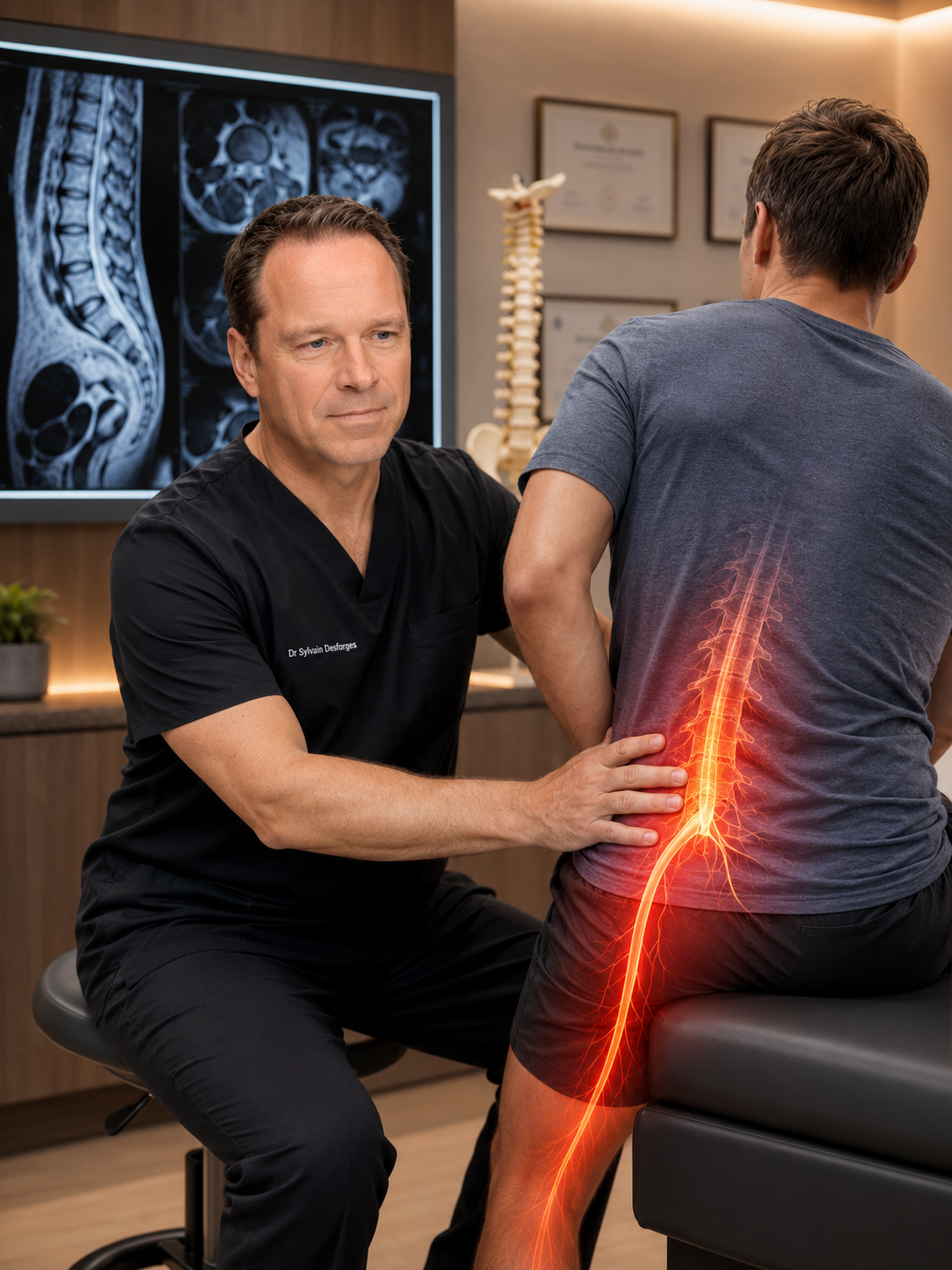
Dr. Sylvain Desforges, B.Sc., DO, ND, Osteopath
TAGMED Clinic — Montreal / Mount Royal and Terrebonne
Dans le même silo
Guides connexes sur la sciatique
Continuez avec des guides qui approfondissent le même symptôme, sa cause possible, son évaluation ou les options de prise en charge.
Sciatica treatment in Montreal
Clinique TAGMED Montréal / Mont-Royal Traitement de la sciatique à Montréal Une approche non chirurgicale centrée sur l’évaluation de la douleur qui descend dans…

Sciatique et laser thérapeutique : une modalité complémentaire, pas une solution universelle
Clinique TAGMED Montréal / Mont-RoyalSciatique et laser thérapeutique : une modalité complémentaire, pas une solution universelleComprendre la place de cette option dans une prise…

Crise aiguë de sciatique : que faire pendant les premiers jours?
Clinique TAGMED Montréal / Mont-RoyalCrise aiguë de sciatique : que faire pendant les premiers jours?Repères pratiques pour progresser sans perdre de vue la fonction,…

Cruralgia
Introduction La cruralgie, également connue sous les noms de névralgie crurale ou douleur du nerf crural ou fémoral (L3 ou L4), est une…
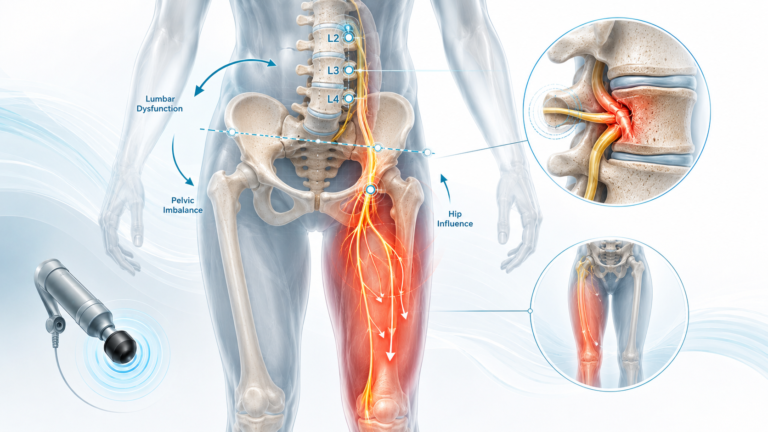
Cruralgie : douleur devant la cuisse, hanche ou nerf lombaire ?
Clinique TAGMED | Ostéopathie spécifique et technologies avancées Cruralgie : douleur devant la cuisse, hanche ou nerf lombaire? Une douleur qui descend à l’avant…
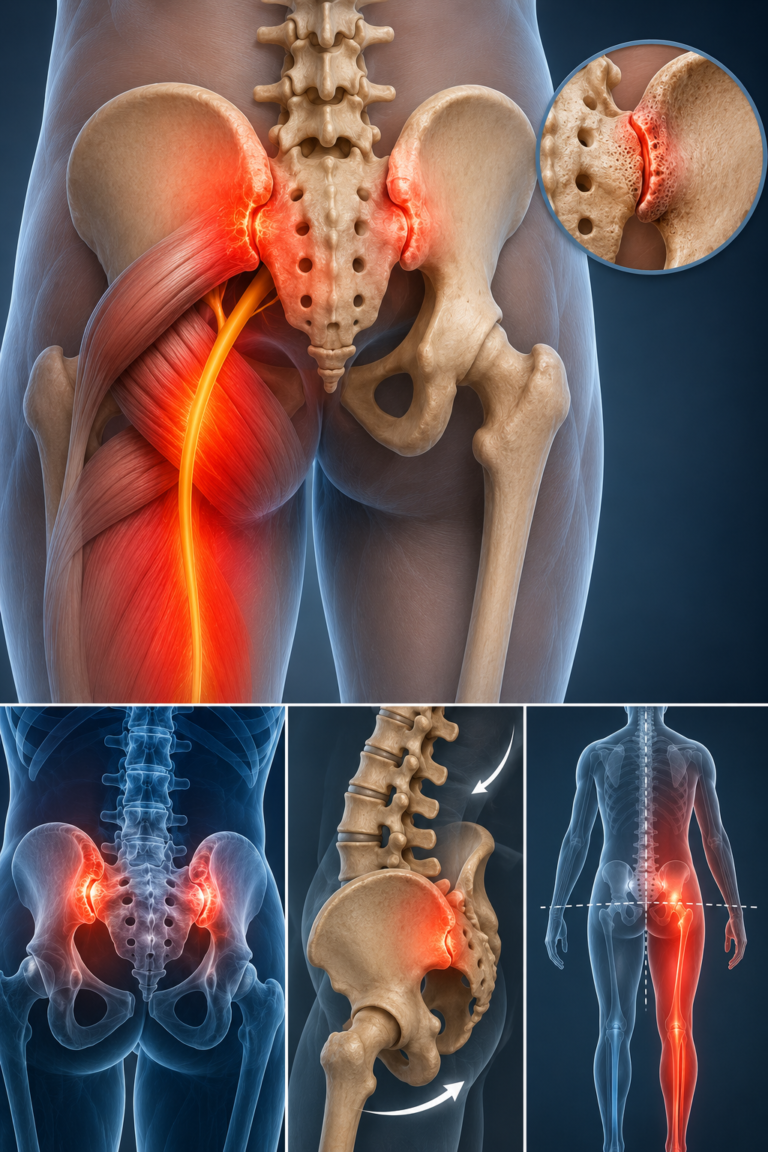
Sacroiliac dysfunction: buttock pain, hip pain or pseudo-sciatica?
Clinique TAGMED | Ostéopathie spécifique et technologies avancées Dysfonction sacro-iliaque : douleur fessière, hanche ou fausse sciatique? Une douleur située dans le bas du…


 Français du Canada
  English (Canada)