Spinal fusion: what are the effects on adjacent segments?
08/13/25Minimally invasive surgery: reducing pain and accelerating healing
08/15/25As patients with lumbar conditions such as spinal stenosis and spondylolisthesis seek effective and less invasive solutions, a major innovation is revolutionizing spinal surgery: the TOPS system. Designed to stabilize the spine while preserving the natural mobility of the operated segment, this dynamic implant offers a promising alternative to traditional spinal fusion. Intended for patients between 40 and 75 years of age, it is particularly suitable for those who have not responded to conservative treatments after several months. Surgery using the TOPS system offers safe and scientifically validated care, performed in leading French centers, thanks to effective coordination with Quebec medical teams. This internationally recognized, high-tech device incorporates a transatlantic approach that guarantees patients personalized and comprehensive support throughout the surgical and postoperative process.
TOPS: a dynamic alternative to traditional fusion for lumbar stenosis
Spinal surgery traditionally performed for conditions such as severe lumbar stenosis or degenerative spondylolisthesis often relies on an arthrodesis procedure, in other words, a fusion of the vertebrae. This intervention, while often effective, results in stiffness in the operated segment, sometimes leading to pain or degeneration of adjacent vertebral levels. The TOPS system offers a completely innovative approach: it is a dynamic mechanical implant which, after surgical decompression, replaces the removed bone and ligament structures without permanently immobilizing the vertebral segment.
Therefore, the main benefit is the preservation of segmental mobility, which allows for better overall postoperative spinal biomechanics. This characteristic limits secondary complications related to stiffening. The TOPS device allows controlled movement in flexion, extension, and axial rotation, reproducing the physiological movements of the lumbar spine.
How does the TOPS system work?
- Stabilization without rigid fusion: The implant maintains stability while allowing a natural range of motion between vertebrae L3 to L5.
- Nerve decompression: essential for relieving the symptoms of sciatic pain, it is facilitated by the surgery associated with the implant.
- Innovative materials: Made of titanium and polyurethane, ensuring durability and biocompatibility, these implants are CE approved and certified according to ISO 13485.
This technology is developed in partnership with renowned manufacturers of spinal implants such as Zimmer Biomet, Medtronic, and NuVasive, leaders in biomedical innovation. This choice ensures seamless integration with the patient's anatomy and long-term reliability.
| Characteristic | Description | Benefit for the patient |
|---|---|---|
| Range of motion | Flexion/extension (+8°/-2°), axial rotation (±1.5°) | Preserved natural mobility, post-operative functional mobility |
| Conditions of indication | Moderate to severe spinal stenosis, grade 1 degenerative spondylolisthesis | Treatment suitable for patients aged 40 to 75 years, with failure of conservative treatment |
| Materials | Titanium, medical polyurethane | Durability, biocompatibility, resistance |
To gain a deeper understanding of the TOPS system, a very comprehensive resource is available on the website. mieuxdefusionrachidienne.ch.
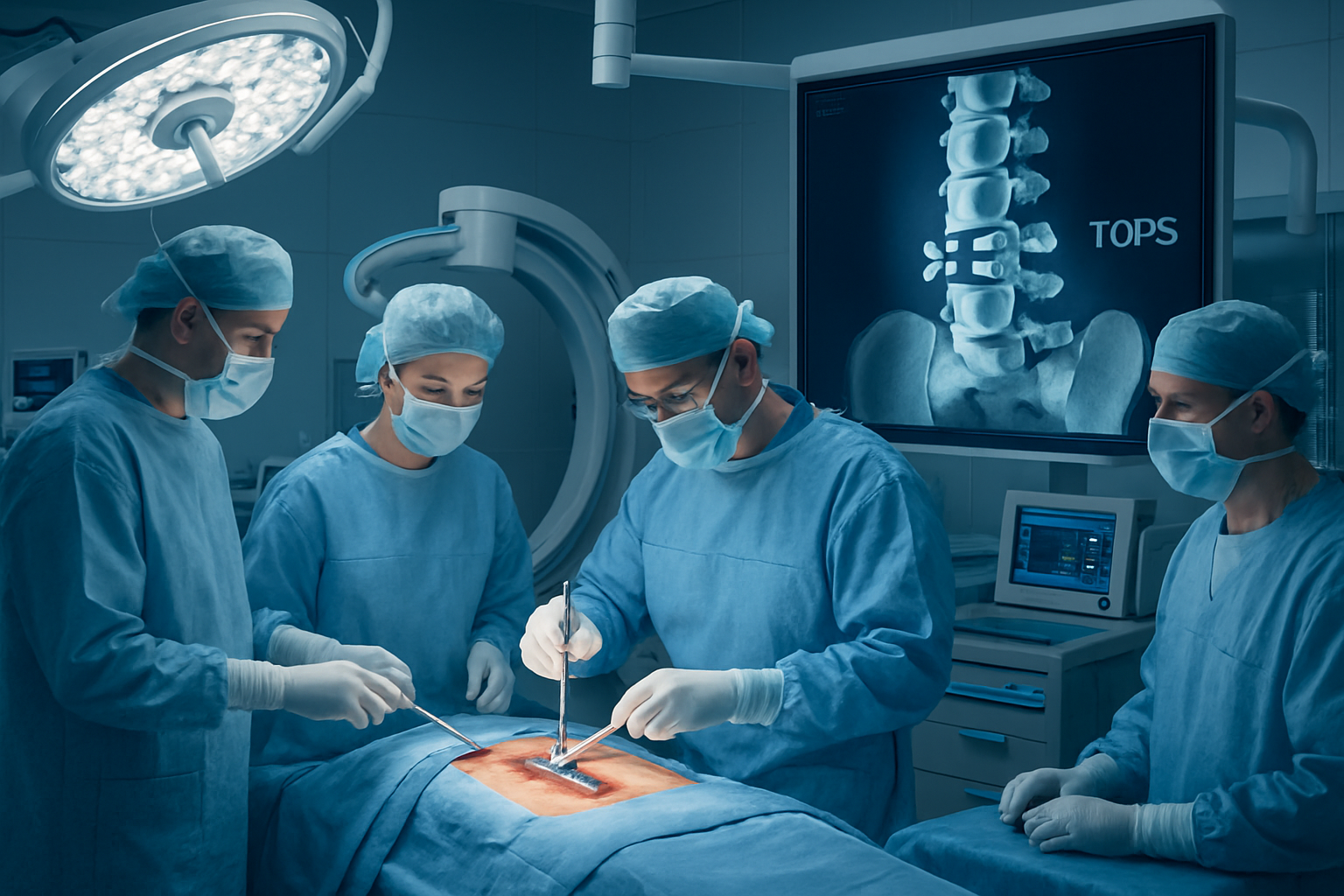
The journey of a Quebec patient seeking innovative lumbar surgery in France
Choosing TOPS back surgery is part of a structured and secure process, particularly for Quebec patients considering this option in France. Collaboration with leading centers, notably the TAGMED Clinic, a partner of SOS Medical Tourism, guarantees rigorous care from the initial assessment through to complete post-operative follow-up. This transatlantic coordination simplifies administrative procedures and optimizes medical appointments, offering a seamless and personalized experience.
Before any surgical intervention, the main recommendation is to continue conservative treatment for a minimum of three to six months. This treatment includes:
- Anti-inflammatory medications: to reduce pain and inflammation.
- Epidural and facet joint infiltrations: Targeted injections to relieve nerve compression.
- Specialized physiotherapy: Appropriate exercises and neurovertebral decompression techniques.
- Electrotherapy and heat: Non-invasive methods to improve circulation and reduce muscle tension.
This protocol, available in particular through the TAGMED Clinic, is essential to evaluate the effectiveness of non-surgical care and to guide the surgical indication in a personalized way. More information on conservative treatment prior to surgery is available here..
| Stage | Description | Key details |
|---|---|---|
| Initial consultation | Multidisciplinary team evaluation in France | Clinical assessment and MRI/CT examination, discussions on therapeutic options. |
| Preservative treatment | Minimum 3-6 months | Physiotherapy, medication, injections, neurovertebral decompression. |
| Surgical decision | Rigorous evaluation after failure of conservative treatments | Informed consent, preparation for surgery, international logistical planning. |
| Intervention | TOPS system surgery performed in a specialized center | Experienced team, adherence to international standards, maximum safety. |
| Post-operative follow-up | Regular check-ups in France followed by teleconsultations in Quebec | Rehabilitation, monitoring for potential complications, gradual reintegration. |
This organization guarantees human and secure support, at the crossroads of French expertise and monitoring adapted to the Quebec reality, thus avoiding the long delays and high costs of some private interventions in Canada.
The importance of transatlantic medical coordination
Close collaboration with teams in France ensures continuity of care that combines quality and rigorous control. The technical expertise of specialized surgeons and mastery of dynamic implants such as TOPS provide optimal safety. Furthermore, thanks to SOS Medical Tourism, patients benefit from support at every stage, from scheduling appointments to postoperative follow-up.
- Facilitating administrative and logistical procedures
- Rapid access to state-of-the-art technical facilities
- Personalized support during stays and convalescence periods
Testimonials and additional information about the journey are available here..
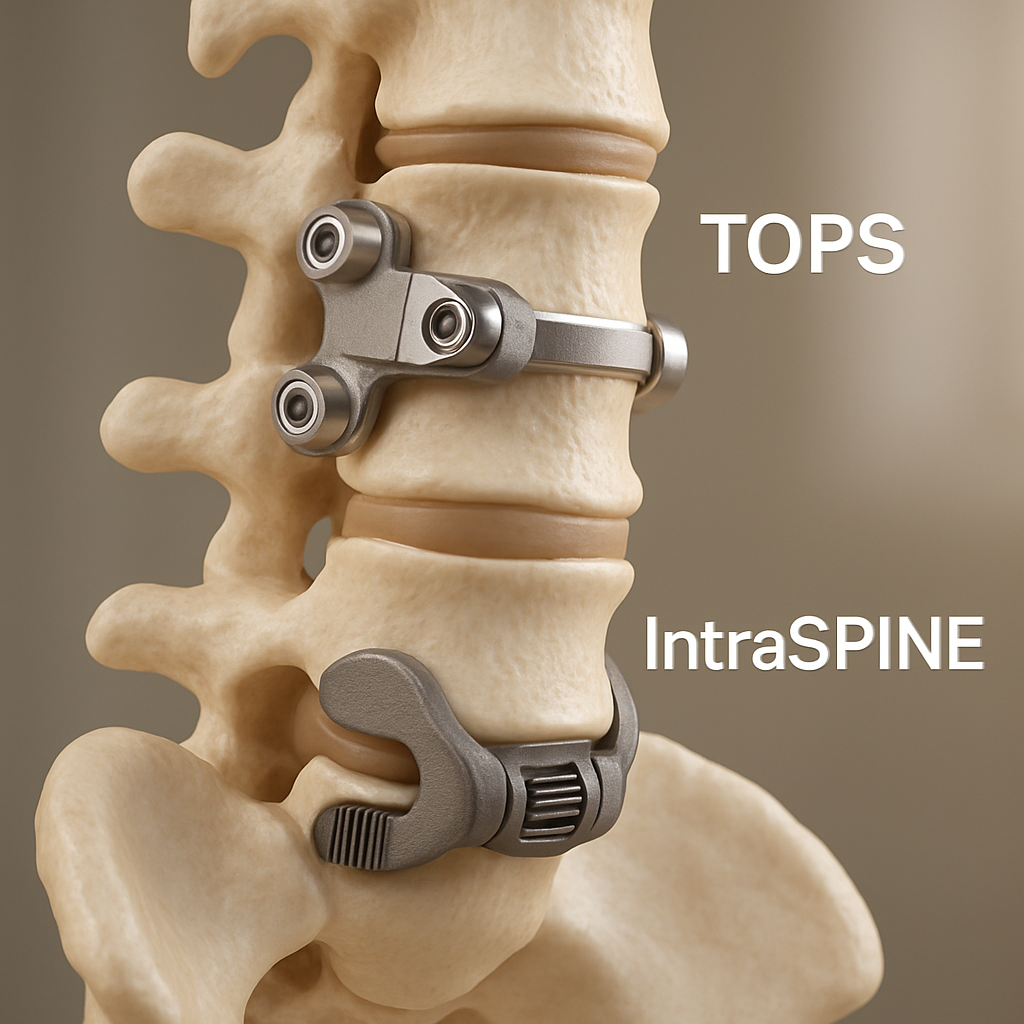
Biomechanical benefits of TOPS and IntraSPINE dynamic implants
At the heart of innovations in spinal surgery, preserving natural movement while ensuring stability is a fundamental challenge. Dynamic implants such as TOPS or the IntraSPINE system allow for the restoration of spinal biomechanics without resorting to rigid fusion, a known risk factor for long-term complications. These technologies are part of a motion surgery approach, which aims for a balance between mobility and functional safety.
Mechanical function of dynamic implants
The TOPS system functions like a biomechanical hinge implanted on the operated segment. Unlike fusion, where two vertebrae are consolidated into a single unit, TOPS maintains the joint by allowing:
- A controlled movement in flexion-extension and rotation, mimicking natural spinal mobility.
- Post-decompression stability after removal of the structures compressing the nerves.
- A balanced distribution of forces avoiding overvoltage of adjacent segments.
The same principle guides IntraSPINE implants, which are placed between the joint processes to generate support while respecting the biomechanics of the spine. These devices provide lasting relief from pain associated with spinal stenosis and facet joint osteoarthritis.
| Comparison | TOPS implant | IntraSPINE Implant | Traditional Spinal Fusion |
|---|---|---|---|
| Segmental mobility | Preserved thanks to the dynamic movement | Preserved, support between apophyses | Complete immobilization due to the merger |
| Impact on adjacent segments | Reduces the risk of degeneration | Reduces the load on neighboring levels | Frequent increase in stress and wear and tear |
| Flexion/Extension | 8°/-2° | Similar amplitude | Impossible |
| Recovery time | Often faster | Often faster | Longer due to the merger |
The devices offered by leaders such as DePuy Synthes, Stryker, Globe Medical, Spineart, Medicrea, SeaSpine, and Kisco International reflect this trend toward less invasive and biomechanically sound surgical solutions. Find in-depth details on these solutions at [website address]. the page dedicated to dynamic implants from the TAGMED Clinic.
Safety, scientific rigor and clinical advances around the TOPS system
Surgical innovation must be based on rigorous scientific validation, particularly when it involves an implant designed to stabilize the spine. Several clinical studies, including the post-marketing trial identified NCT02234154, demonstrated the safety and efficacy of the TOPS system in a group of patients suffering from lumbar stenosis and spondylolisthesis.
These studies, conducted over a period of 24 months, confirmed:
- A significant improvement in motor function and a reduction in pain, as measured by validated indices such as the Oswestry Disability Index (ODI).
- A significant reduction in leg pain scores (VAS), indicating lasting relief.
- An improvement in clinical scales of functional capacity and quality of life (SF-36).
The very strict patient inclusion criteria (notably excluding subjects with severe scoliosis, insufficient bone density, or metabolic bone diseases) guarantee appropriate selection, thus ensuring reproducible and safe results. This scientific rigor is validated by the French National Authority for Health (HAS), whose full report is available online. here.
| Inclusion criteria | Exclusion criteria |
|---|---|
| Ages 40 to 85 | Scoliosis > 10°, morbid obesity (BMI > 40) |
| Moderate to severe lumbar stenosis (L3-L5) | Active infections, metabolic bone diseases |
| Grade 1 degenerative spondylolisthesis | Allergy to the implant components |
| At least 3 months of failed conservative treatment | psychosocial conditions preventing monitoring |
Mastery of implant technologies, ongoing training for French surgeons, and coordination with Quebec teams play a central role in providing patients with maximum safety. International manufacturers such as Medtronic, Zimmer Biomet, and NuVasive also collaborate to guarantee exemplary manufacturing standards and optimal post-operative care.
Commitment to safety and innovation
- Use of ISO 13485 certified implants
- Adherence to clinical protocols by an experienced surgical team
- Systematic and personalized post-operative follow-up
- Ongoing research to improve and optimize implant systems
You can access an educational overview of the safety and innovation of TOPS implants via this detailed link: the TOPS system.
French surgical services and personalized support for Quebec patients
For Quebec patients, spinal surgery in France using the TOPS system offers an exceptional opportunity to benefit from cutting-edge technology at a controlled cost and with high-quality patient support. This framework offers:
- Rapid access to advanced technologies and to specialist surgeons benefiting from continuing education with a network of centers such as the TAGMED Clinic.
- Comprehensive support where the patient is guided from diagnosis to rehabilitation and post-operative follow-up.
- Modern and compliant medical infrastructure meeting international standards, ensuring a calm and well-maintained environment.
- Effective coordination between France and Quebec for planning, thus facilitating travel and logistical constraints.
This system avoids the significant delays sometimes encountered in Quebec and provides access to less invasive, more innovative surgery that respects the natural functioning of the spine.
What distinguishes the surgical offer
- Renowned expertise in dynamic implants, particularly in the management of the TOPS system.
- Customized solutions incorporating the specific needs of each patient.
- Compliance with international best practices and scientifically validated protocols.
- Complete support before, during and after the intervention, provided by trilingual teams.
To learn more about the specifics of this offer and its benefits, consult This resource is dedicated to back surgery in France..
Comparison between fusion surgery and TOPS implants
| Criteria | Fusion surgery | TOPS implant |
|---|
Common questions about the TOPS system and dynamic lumbar spine surgery
What are the eligibility criteria for the TOPS system?
The TOPS system is indicated for patients aged 40 to 75 years with moderate to severe lumbar spinal stenosis or grade 1 degenerative spondylolisthesis. Failure of at least three months of conservative treatment is required to consider this surgery. Certain contraindications, such as significant scoliosis, insufficient bone density, or infections, may exclude a patient from the protocol.
What are the advantages compared to a classic spinal fusion?
Unlike traditional fusion, the TOPS system preserves the mobility of the operated segment, reduces the risk of degeneration of adjacent vertebrae, and generally allows for faster recovery with improved functional return.
What are the risks associated with this type of dynamic implant?
As with any surgical procedure, risks exist, including infection, implant displacement, or postoperative nerve irritation. However, scientific rigor and adherence to inclusion/exclusion criteria significantly reduce these risks.
How is post-operative follow-up organized for a Quebec patient operated on in France?
The follow-up combines regular visits to the French center, supplemented by teleconsultations to ensure tailored monitoring after returning to Quebec. This personalized follow-up is essential to optimize rehabilitation and recovery.
Are other dynamic implants available in France?
Yes, the highly innovative IntraSPINE implant is offered clinically within specific protocols. The choice of implant depends on individual characteristics and associated pathologies, following a thorough evaluation.