
TAGMED Clinic Montreal / Mount Royal
Sciatica or a vascular problem: how to tell the difference
Clinical guidance, signs to watch for and next steps for sciatic or radicular pain.
Une douleur qui apparaît à la marche et touche le mollet peut venir d’une racine nerveuse, d’une sténose lombaire ou d’un problème circulatoire. Cette distinction est importante parce que les délais et les traitements diffèrent.
- Related page in this guide series Sciatica treatment in Montreal.
- An approach focused on whether symptoms, examination findings and imaging, when relevant, are consistent.
- Particular caution is needed when weakness, loss of sensation or emergency signs are present.

Understanding
What this symptom pattern may mean
Une douleur qui apparaît à la marche et touche le mollet peut venir d’une racine nerveuse, d’une sténose lombaire ou d’un problème circulatoire. Cette distinction est importante parce que les délais et les traitements diffèrent.
Key point 1
Une claudication vasculaire apparaît souvent après une distance relativement reproductible et s’améliore à l’arrêt, même debout.
Key point 2
Une claudication neurogène liée à une sténose peut être influencée par la posture et soulagée assis ou penché vers l’avant.
Key point 3
Une jambe soudainement froide, pâle, douloureuse ou sans pouls est une urgence vasculaire.
Clinical guidance
Why the path of the pain and its progression matter
Two people who use the word "sciatica" may have different underlying mechanisms. Location, duration, aggravating factors, changes in sensation and strength provide more guidance than a single word or an imaging abnormality considered on its own.

An important point
Pain, numbness or weakness must be interpreted according to its distribution, progression and impact on function. A neurological or vascular emergency must be ruled out before routine care continues.
Assessment
What can be assessed during a consultation
L’évaluation doit intégrer les facteurs de risque cardiovasculaire, la couleur et la température de la jambe, les pouls, le déclenchement à l’effort, la posture et les signes neurologiques. Une orientation médicale est parfois prioritaire.

Symptom history
Pattern, duration, intensity, sleep, walking, positions, recurrences and treatments already tried.
Function and neurological assessment
Strength, sensation, gait and relevant tests according to the presentation.
Imaging when relevant
Existing studies are compared with the level, side and symptoms.
Plan and reassessment
Measurable goals, precautions and criteria for modifying or stopping the plan.
Options and limitations
Adapt treatment to the likely cause
Si le tableau évoque une origine vasculaire, une investigation médicale est nécessaire. Une approche de traitement de la sciatique ne doit pas retarder l’évaluation d’un problème circulatoire potentiel.
Conservative approach
Maintaining tolerated activities, gradual progression, rehabilitation and other measures appropriate to the clinical presentation.
Spinal decompression therapy
Motorized traction may be discussed for selected patients. It is neither suitable for everyone nor guaranteed to work, and requires objective reassessment.
Medical referral
An injection, further investigation or a specialist opinion may become relevant depending on severity, duration, imaging and neurological signs.
When should you seek prompt or emergency care?
- New, significant or rapidly progressive weakness.
- Recent foot drop or a leg that gives way increasingly often.
- New bladder or bowel problems.
- Numbness in the saddle area or perineum.
- Significant symptoms on both sides, major trauma, fever or a decline in general health.
These signs should not wait for a routine appointment. Urgent medical assessment may be necessary.
Follow-up
Measure progress rather than repeat the same treatment
Useful measures include leg pain, walking distance, sitting tolerance, sleep, strength and the ability to resume usual activities. A lack of progress or deterioration should prompt a review of the working diagnosis and plan.

Montréal / Mont-Royal
Assessment at TAGMED Clinic Montreal
The clinic is located at 1140 avenue Beaumont, Mont-Royal, QC H3P 3E5. The aim is to clarify the clinical presentation, identify signs that change the priority and discuss a cautious strategy based on the likely cause.
Address
1140 avenue Beaumont
Mont-Royal, QC H3P 3E5
Phone
Main guide
Would you like an assessment of these sciatica symptoms?
A consultation can help clarify the likely cause, the signs to watch for and whether conservative care or another referral is appropriate.
Frequently Asked Questions
FAQ — Sciatique ou problème vasculaire : comment faire la différence?
Une crampe au mollet à la marche peut-elle être vasculaire?
Oui, surtout si elle apparaît après une distance régulière et cesse rapidement au repos.
La position penchée vers l’avant change-t-elle les symptômes vasculaires?
Généralement moins que dans une claudication neurogène, mais il existe des variations.
Quels facteurs de risque comptent?
Tabagisme, diabète, maladie cardiovasculaire, hypertension et dyslipidémie augmentent la suspicion vasculaire.
Une jambe froide est-elle inquiétante?
Une jambe soudainement froide, pâle ou très douloureuse peut être une urgence.
Des engourdissements peuvent-ils être vasculaires?
Oui, mais ils peuvent aussi être neurologiques. Le contexte est essentiel.
Une IRM lombaire exclut-elle un problème vasculaire?
Non. Une IRM de la colonne n’évalue pas adéquatement la circulation artérielle de la jambe.
Dois-je consulter avant de faire de la décompression?
Oui si une cause vasculaire est possible; elle doit être clarifiée avant un traitement ciblant la colonne.
Medical references
References and guidelines
The references below provide general guidance for assessing low back pain with sciatica, radiculopathy and the use of imaging. They do not replace an individualized clinical decision.
- NICE NG59 — Low back pain and sciatica: assessment and management
- American College of Radiology — Appropriateness Criteria: Low Back Pain
- North American Spine Society — Lumbar disc herniation with radiculopathy guideline
Important information
This page provides general information and does not establish a diagnosis. Results and recovery times vary according to the cause, duration, neurological signs, medical history and individual response to care.
Sylvain Desforges, docteur en ostéopathie
TAGMED Clinic — Spinal decompression, specific osteopathy and assessment of low back, disc-related and sciatic pain.
Professional profile · Contact · Main guide to sciatica in Montreal
In the same guide series
Related guides to sciatica
Continue with guides that explore the same symptom, its possible cause, assessment or options for care.
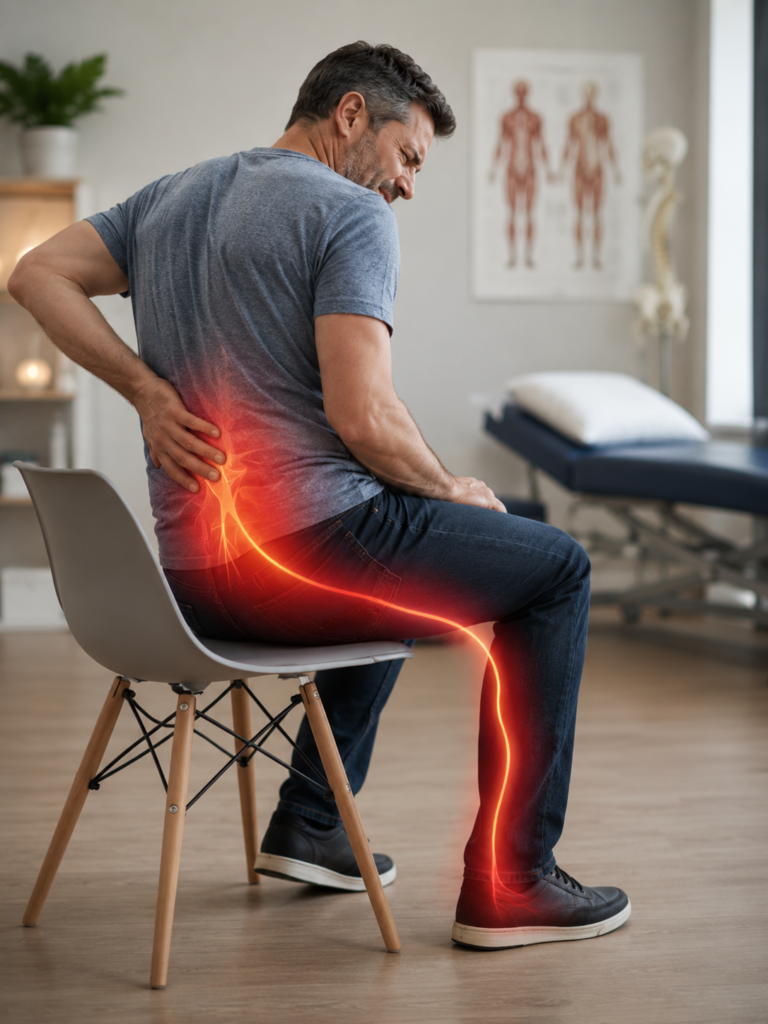
Sciatica treatment in Montreal
TAGMED Clinic Montreal / Mount Royal — Sciatica treatment in Montreal. Book an appointment: 1 (877) 672-9060.
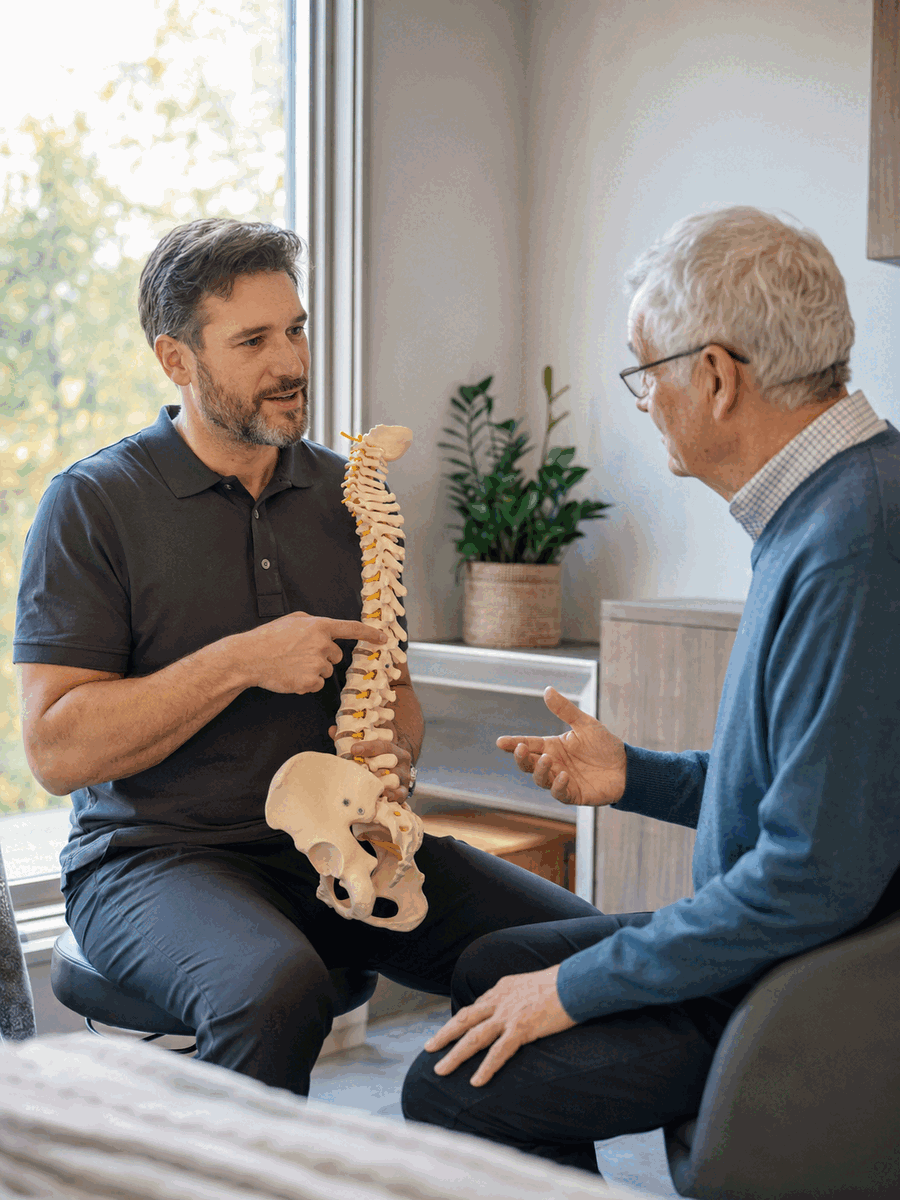
Sciatica or a hip problem: common differences
TAGMED Clinic Montreal / Mount Royal — Sciatica or a hip problem: common differences. Clinical pointers, signs to monitor and next steps for pain…

Sciatica or cruralgia: pain behind the leg or at the front of the thigh?
TAGMED Clinic Montreal / Mount Royal — Sciatica or cruralgia: pain behind the leg or at the front of the thigh? Comparing the distribution, neurological signs and…

Acute sciatica: what to do during the first few days
TAGMED Clinic Montreal / Mount Royal — Acute sciatica: what to do during the first few days. Practical pointers for progressing while keeping function,…
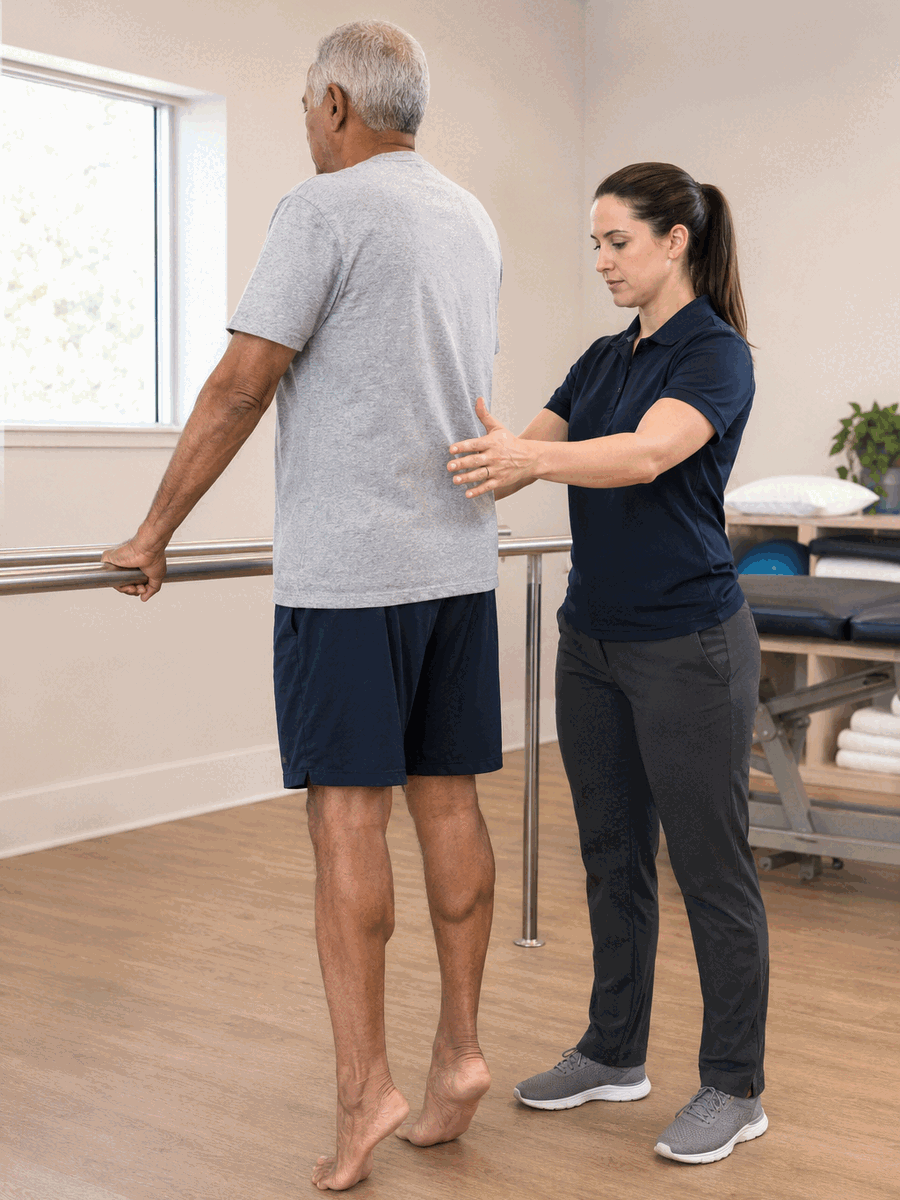
Sciatica: lumbar MRI or CT scan — what is the difference?
TAGMED Clinic Montreal / Mount Royal — Sciatica: lumbar MRI or CT scan — what is the difference? Understanding what this diagnostic sign can contribute — and especially…

Sciatica in the heel or sole of the foot: distinguishing S1 from a local problem
TAGMED Clinic Montreal / Mount Royal — Sciatica in the heel or sole of the foot: distinguishing S1 from a local problem. Understanding the nerve distribution,…


 Français du Canada
 English (Canada)