TAGMED Clinic Montreal / Mount Royal
L5-S1 herniated disc and sciatica: calf, heel and foot pain
Understanding the link between a herniated disc, the path of sciatic pain, neurological signs and care decisions.
An L5-S1 herniated disc can irritate the S1 nerve root and cause pain that travels down the back of the leg towards the calf, heel, sole or outer edge of the foot. The Achilles reflex, plantar flexion and toe walking can complement the assessment.
- Also see our guide to sciatica treatment in Montreal.
- A herniated disc seen on MRI is only relevant when the level, side and clinical findings are consistent.
- Progressive weakness, foot drop or signs of cauda equina syndrome change the priority of assessment.
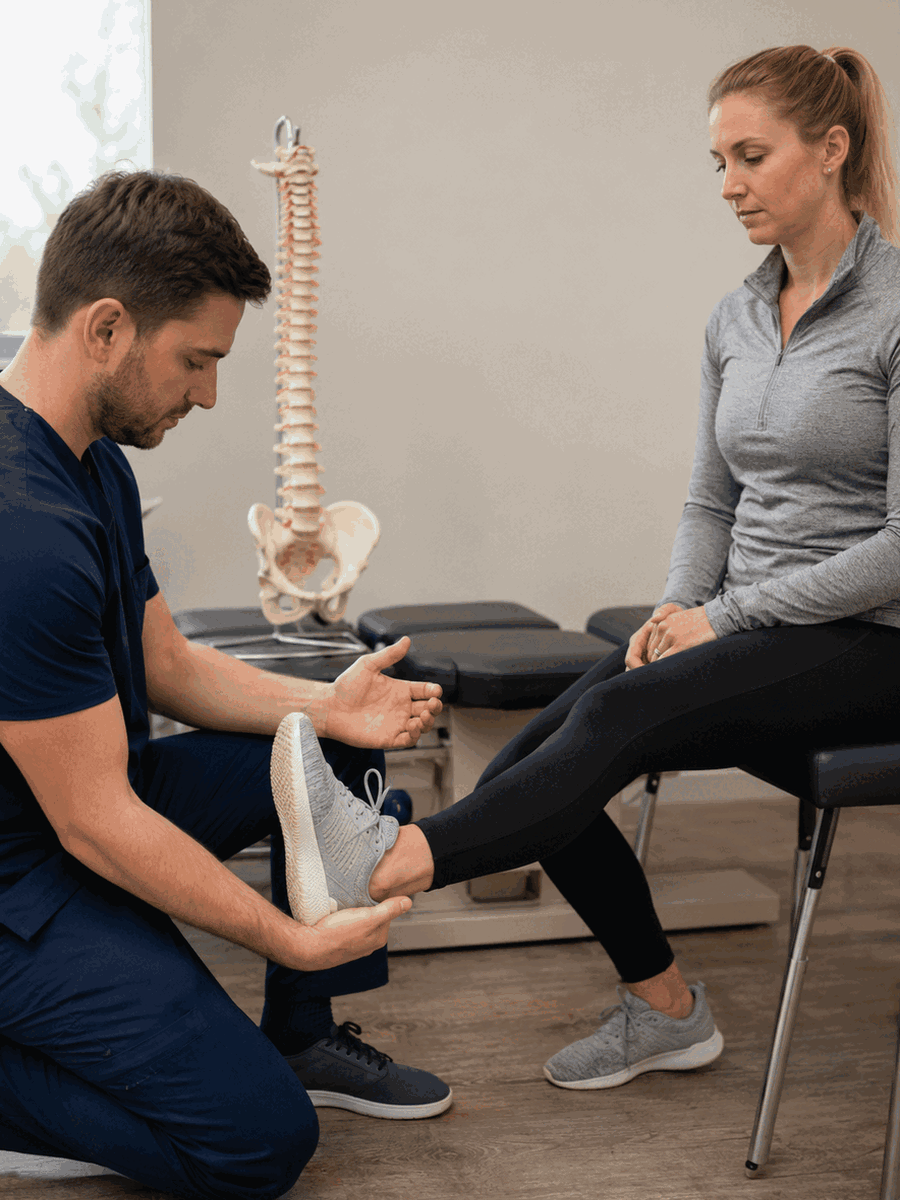
Herniated disc: consult us in Montreal or Terrebonne
Looking for a consultation for a herniated disc? Find information about treatment and spinal decompression at the clinic of your choice.
Montréal / Mont-Royal
- Herniated disc treatment in Montreal
- Tuesday and Thursday, 9 a.m. to 6 p.m.
Terrebonne
- Herniated disc treatment in Terrebonne
- Monday and Wednesday, 8 a.m. to 6 p.m.
Understanding
What this symptom pattern may mean
An L5-S1 herniated disc can irritate the S1 nerve root and cause pain that travels down the back of the leg towards the calf, heel, sole or outer edge of the foot. The Achilles reflex, plantar flexion and toe walking can complement the assessment.
Key point 1
The S1 nerve root is often associated with the back of the calf, the heel and the outer edge of the foot.
Key point 2
Weakness in plantar flexion can make rising onto the toes more difficult on the affected side.
Key point 3
The Achilles reflex may be reduced, but no single sign can confirm S1 radiculopathy on its own.
Clinical guidance
Symptoms, function and disc level should tell a consistent story
The S1 pattern may be more posterior than the L5 pattern. Pain can also be accompanied by numbness or burning. Anatomical variations are common, and calf pain can also have a muscular or vascular origin.
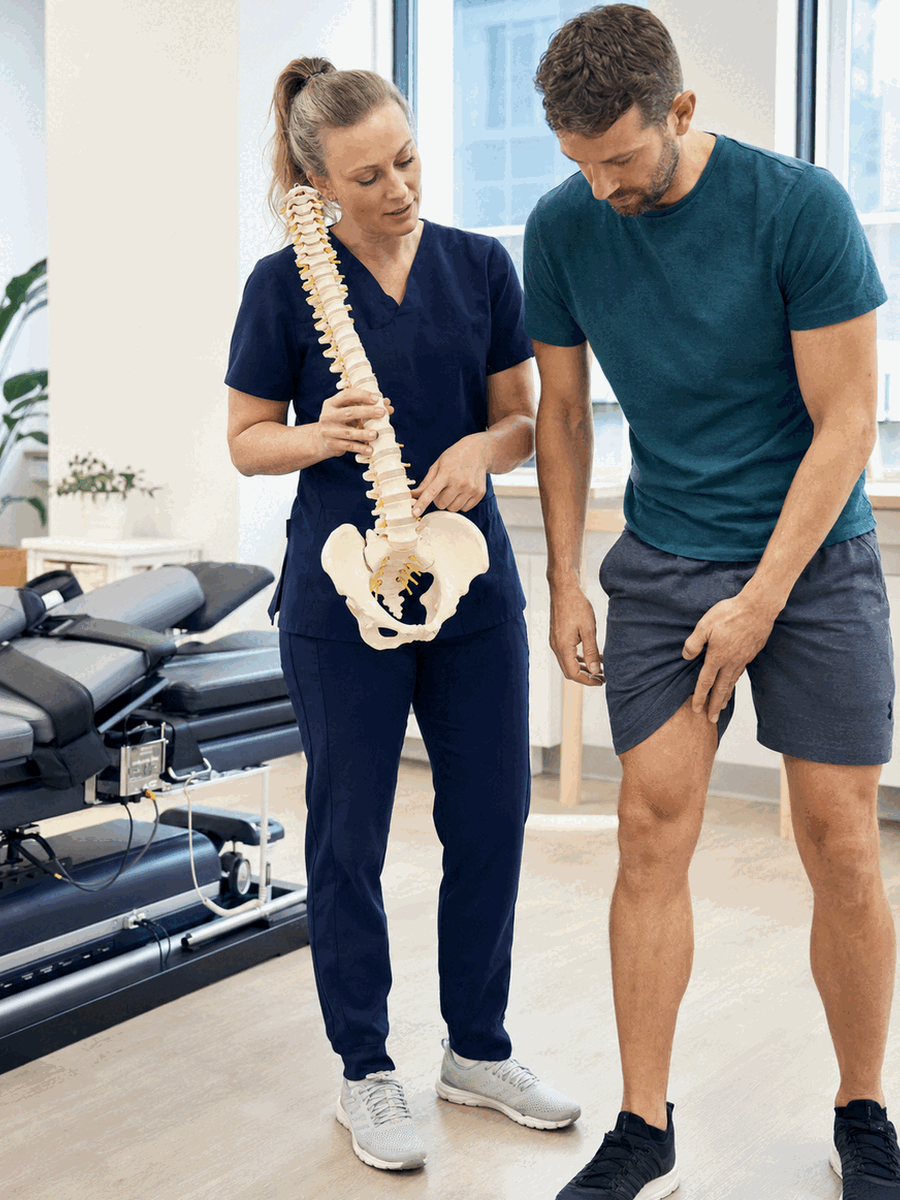
An important point
The presence of a herniated disc alone does not establish that it is causing the symptoms. Disc abnormalities are also seen in people without pain.
Assessment
What can be assessed during a consultation
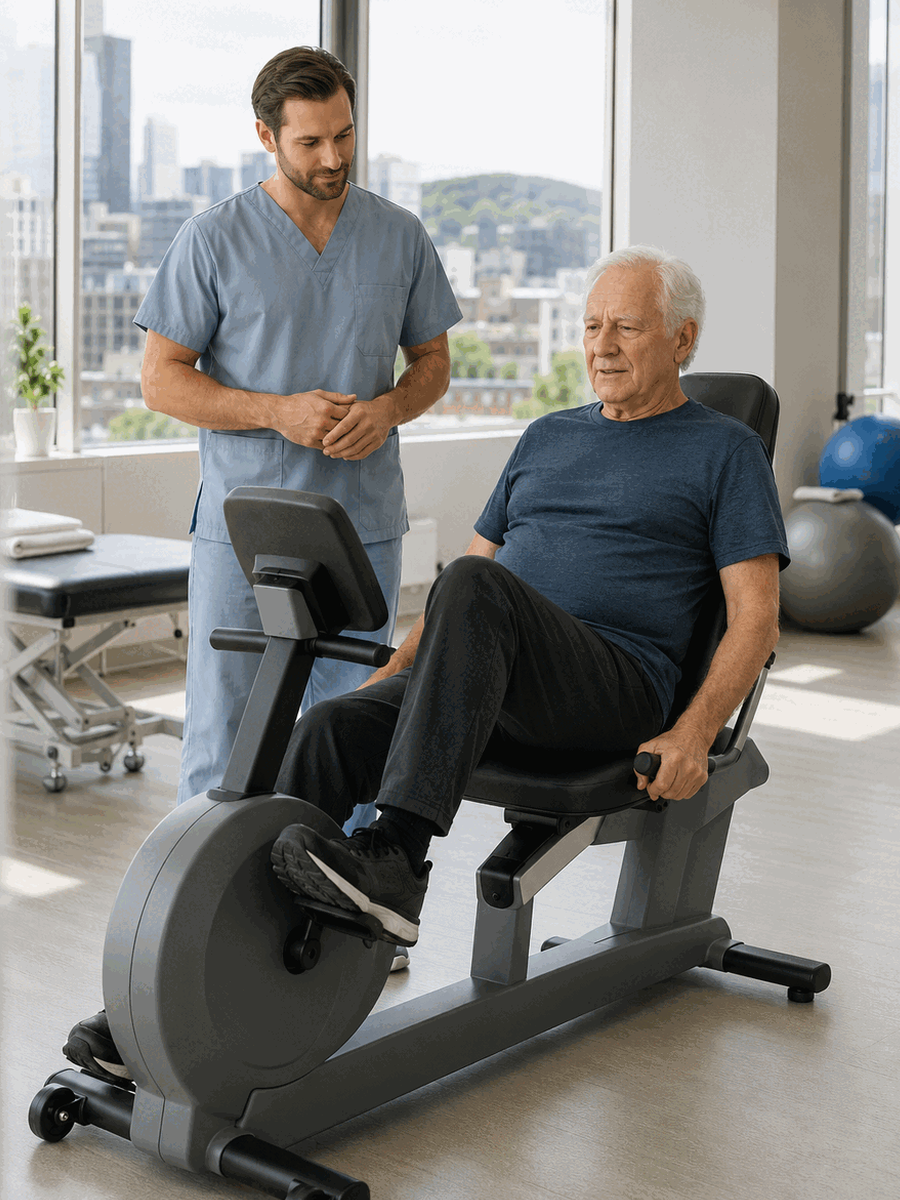
The consultation compares gait, plantar flexion strength, the Achilles reflex, sensation and nerve tension tests. MRI is interpreted according to the side and location of the nerve root involvement, rather than simply the mention of L5-S1 in a report.
Route
Precisely locate pain, tingling and areas of numbness.
Strength and function
Compare key movements, walking and tasks that may reveal weakness.
Imaging
Relate the disc level, side and morphology to the clinical findings rather than treating an isolated report.
Changes over time
Measure symptom trends and define the criteria that would call for a different course of care.
Evidence and decisions
What the guidelines say
Many herniated discs follow a favourable natural course, and some regress over time. A conservative approach may therefore be reasonable when there is no major deficit. NICE does not recommend routine traction; any motorized decompression should be presented as a non-standard option, with limited evidence and objective follow-up.
Stay active
NICE recommendations encourage self-management and maintaining normal activities as much as possible, with adjustments to individual needs and abilities.
Targeted imaging
NICE recommends considering imaging in a specialist setting only if the result is likely to change management.
Traction / decompression
NICE does not recommend traction for low back pain with or without sciatica. Motorized decompression should therefore not be presented as a standard or guaranteed treatment, and requires transparent information about the uncertainty of the evidence.
When should you seek prompt or emergency care?
- New, significant or rapidly progressive weakness.
- Recent foot drop or worsening walking ability.
- New bladder or bowel problems.
- Numbness in the saddle area or perineum.
- Significant symptoms on both sides, fever, major trauma or a general deterioration in health.
These signs should not wait for a routine appointment.
Follow-up
Measure progress rather than repeat the same treatment
Follow-up compares leg pain, the area of numbness, strength, walking, sitting tolerance, sleep and activities. Objective worsening should lead to a reassessment of the diagnosis and plan.

Do you have sciatica that may be associated with a herniated disc?
A consultation can help clarify how symptoms, examination findings and imaging fit together, the signs to watch for and the options for care.
Spinal decompression in Montreal · Spinal decompression in Terrebonne
Frequently Asked Questions
FAQ — L5-S1 herniated disc and sciatica: calf, heel and foot pain
Which nerve root is often affected at L5-S1?
The S1 nerve root is often involved in a posterolateral L5-S1 herniation.
Where is S1 pain located?
It can travel down the back of the thigh and calf towards the heel or the outer edge of the foot.
Why is standing on tiptoes tested?
Because plantar flexion engages, among others, muscles associated with S1.
Can the Achilles reflex change?
Yes. It may be reduced in some S1 presentations.
Is calf pain always nerve-related?
No. A muscular or vascular cause sometimes needs to be considered.
Can a herniated disc shrink spontaneously?
Yes. Some herniated discs regress over time, although this does not guarantee that all symptoms will disappear.
When should you seek prompt care?
If strength decreases, walking worsens or emergency signs appear.
Medical references
References and guidelines
These resources provide general guidance on sciatica, lumbar disc herniation, imaging and radiculopathy. They do not replace an individualized clinical decision.
- NICE NG59 — Low back pain and sciatica: recommendations
- American College of Radiology — Appropriateness Criteria: Low Back Pain
- North American Spine Society — Lumbar Disc Herniation with Radiculopathy
Important information
This page provides general information and does not make a diagnosis. Outcomes, recovery times and the need for an intervention vary with the cause, neurological signs, function and individual response.
Sylvain Desforges, docteur en ostéopathie
TAGMED Clinic — Spinal decompression, specific osteopathy and assessment of low back, disc-related and sciatic pain.
Professional profile · Contact · Main guide to sciatica in Montreal
In the same guide series
Related guides to sciatica
Continue with guides that explore the same symptom, its possible cause, assessment or options for care.
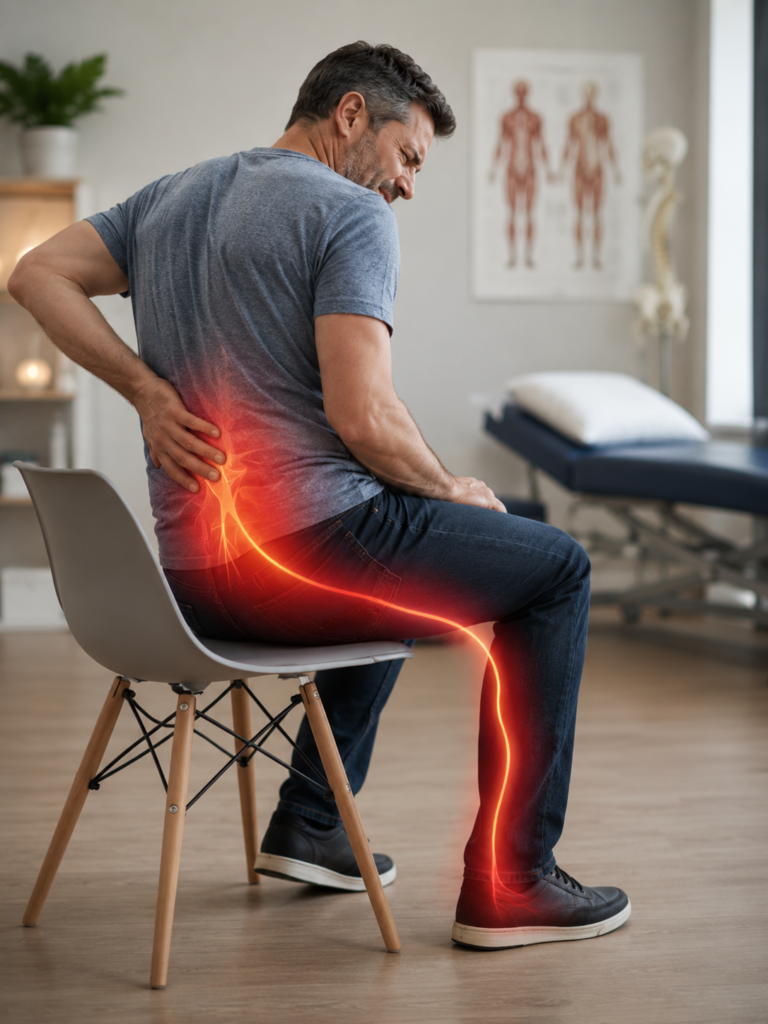
Sciatica treatment in Montreal
Clinique TAGMED Montréal / Mont-Royal Traitement de la sciatique à Montréal Examen gratuit — valeur de 85 $ CADemander mon examen gratuitVoir les disponibilitésDemandez…

S1 sciatica: pain in the calf, heel and outer edge of the foot
TAGMED Clinic Montreal / Mount Royal — S1 sciatica: pain in the calf, heel and outer edge of the foot. Understanding the nerve distribution, motor signs…

L5-S1 foraminal stenosis and sciatica: calf or foot pain
TAGMED Clinic Montreal / Mount Royal — L5-S1 foraminal stenosis and sciatica: calf or foot pain. Exploring possible symptoms when the foramen…

Pain from the buttock to the foot: is it sciatica?
Clinique TAGMED Montréal / Mont-Royal Douleur de la fesse jusqu’au pied : est-ce une sciatique? Rendez-vous dans nos deux cliniques Montréal / Mont-Royal Mardi…

Herniated disc and sciatica when sitting: why sitting can make symptoms worse
TAGMED Clinic Montreal / Mount Royal — Herniated disc and sciatica when sitting: why sitting can make symptoms worse. Understanding the connection…

Herniated disc and sciatica at night: why sleep becomes difficult
TAGMED Clinic Montreal / Mount Royal — Herniated disc and sciatica at night: why sleep becomes difficult. Understanding the connection between a herniated disc,…