Herniated disc treatment in Montreal: Avoid surgery with neurovertebral decompression
05/12/26
Back Clinic in Montreal: A Guide to Avoiding Surgery in 2026
05/14/26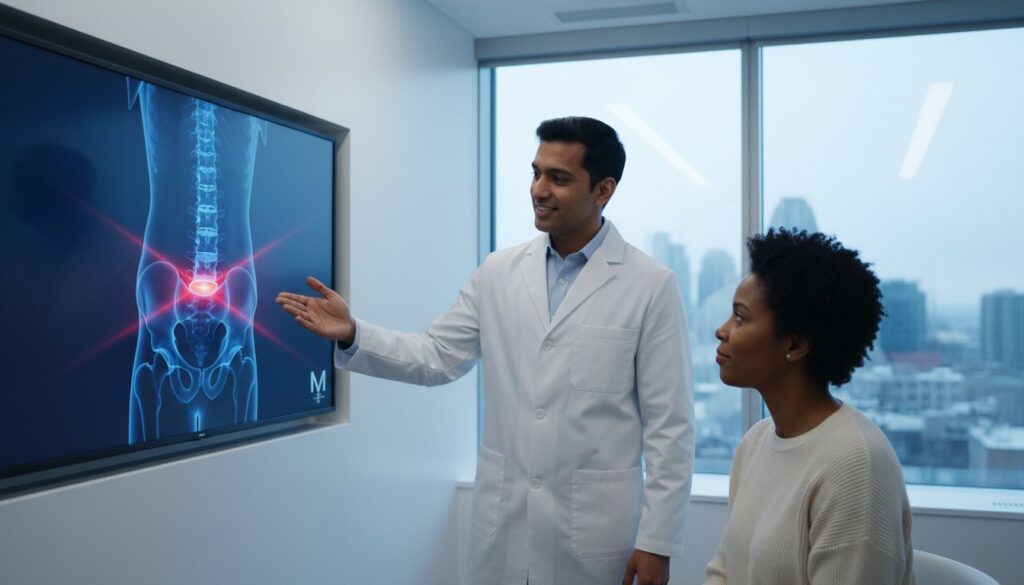
Imagine every everyday movement becoming a source of anxiety, turning your weekend outings into periods of enforced rest. Whether you are getting into your car or simply tying your shoes, the fear of a sudden electric shock-like pain can become paralyzing. Uncertainty about radiating pain often creates stressful confusion about what to do to obtain lasting relief.
It is essential to understand how to tell if you have a herniated disc accurately, to avoid starting a course of care that is ineffective or too invasive. You deserve clear answers that go beyond simply managing symptoms with medication. This guide was designed to help you identify your body's warning signs and navigate Quebec's diagnostic system with confidence.
Together, we will explore revealing clinical tests, the importance of specialized imaging, and non-surgical treatment options that address the mechanical cause of your pain to help you regain full mobility.
Key Takeaways
- Learn to distinguish simple muscle stiffness from the electric shock-like pain and numbness that signal actual nerve compression.
- Discover why MRI is the essential diagnostic tool in Quebec for answering this question with certainty: how to tell if you have a herniated disc.
- Understand why masking pain with medication or injections does not resolve the mechanical problem affecting your disc.
- Explore how spinal decompression works, using advanced technology designed to draw the herniation inward without surgery.
- Identify lasting solutions to regain mobility and stop letting pain spoil your car journeys or weekend outings.
Recognizing symptoms: unmistakable signs
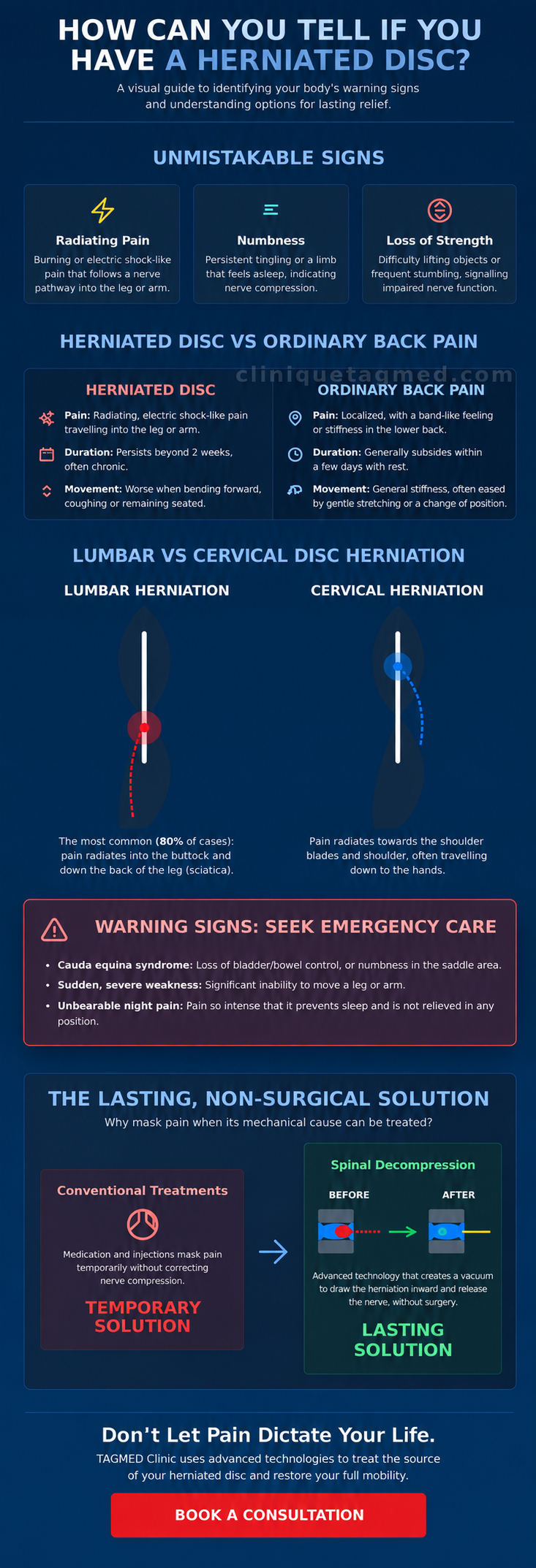
Pain is not always the only sign of a disc problem. Patients often seek care wondering how to tell if you have a herniated disc while experiencing a burning sensation or radiating electric shock-like pain. This pain, known as radicular pain, follows the precise pathway of a nerve compressed by disc material. For a detailed explanation of the underlying mechanism, you can consult the definition of What is a herniated disc ? on Wikipedia.
Beyond sharp pain, paresthesia is a major clinical sign. This persistent numbness or tingling can make a limb feel permanently asleep. More concerning still, a loss of muscle strength indicates that nerve signalling is seriously impaired. If you start tripping because your foot drags slightly along the ground, or you drop objects for no apparent reason, the warning sign is clear. The nerve is no longer transmitting information to the muscles correctly.
A simple everyday observation is to notice the effect of pressure. A herniated disc often reacts strongly to increased intrathecal pressure. Coughing, sneezing or even mild straining can trigger a sharp stab of pain in your back or the affected limb. Similarly, sitting in your car during a long journey often becomes unbearable. Sitting significantly increases the load on the intervertebral discs compared with standing, which aggravates nerve compression.
Lumbar versus cervical disc herniation
About 80% of lumbar disc herniations affect the L4-L5 or L5-S1 discs. In these cases, pain travels into the buttock, down the back of the thigh and sometimes as far as the foot, following the nerve pathway associated with sciatica. By contrast, a cervical disc herniation causes pain that radiates towards the shoulder blades and shoulder, often travelling down to the hands. A static desk posture with the head tilted forward increases disc pressure and can worsen symptoms over the course of the working day.
Red flags: when to seek emergency care
Some situations require immediate medical attention to avoid permanent damage. Cauda equina syndrome is the most critical emergency. It causes loss of bladder or bowel control, or numbness in the saddle area. If you experience sudden, severe weakness in a leg or arm, or unbearable night pain keeps you awake throughout the weekend, an emergency neurological assessment is necessary. These signs indicate that nerve compression has reached a critical stage.
Herniated disc or ordinary back pain: how can you tell the difference?
Distinguishing muscle fatigue from a structural problem is the crucial step in choosing the right treatment. The location of your pain is your first clue. Ordinary back pain generally remains confined to the lower back, creating stiffness or a band-like feeling across the lumbar area. A herniated disc, on the other hand, causes radiating pain. It travels along a nerve, often down into the buttock or leg. To explore these differences further, consult the official resources on herniated disc symptoms and diagnosis.
How long your symptoms last is another determining factor. Lumbago often subsides after a few days of relative rest. If your pain continues for more than two weeks despite applying ice or heat, the disc structure could be involved. Finding out how to tell if you have a herniated disc then becomes necessary to avoid deterioration that could affect your ability to drive your car or sit at a desk.
The effect of everyday movements also provides clear answers. Bending forward to pick something up increases pressure inside the disc, pushing its gel-like material towards the nerve. If this movement triggers an electric shock-like pain in your leg, the diagnosis points towards a disc disorder. During a clinical examination, checking neurological reflexes, such as the knee or Achilles reflex, helps confirm whether a nerve root is actually being affected.
Lumbago versus a herniated disc
What is commonly called throwing your back out is often a muscular or ligamentous lumbar sprain. Recovery normally takes a few days to a few weeks with basic care. A herniated disc, however, involves complex chemical inflammation around a pinched nerve. Rest alone is not enough to resolve this mechanical irritation. If you see no improvement after a full weekend of rest, a specialized consultation at TAGMED Clinic can help clarify the exact nature of your injury.
The straight leg raise test (Lasègue test)
This clinical test is used worldwide to identify lumbar nerve compression. While you lie on your back, the practitioner slowly raises your straightened leg. If sharp, radiating pain appears from 30 degrees of elevation, the test is considered positive. This suggests that the sciatic nerve is being stretched against a disc protrusion. It is essential not to interpret this test on your own at home, as performing it incorrectly could distort your understanding of how serious your situation really is.
Obtaining a diagnosis in Quebec: MRI and clinical examinations
A plain X-ray is never enough to confirm a disc problem. This examination uses X-rays that pass through soft tissues, revealing only the bony structure of your vertebrae. To really establish how to tell if you have a herniated disc, the disc itself and the surrounding nerve roots must be visualized. This is where magnetic resonance imaging (MRI) becomes essential. It can show with millimetre precision whether the disc's gel-like nucleus has broken through its outer wall and is compressing a nerve.
In some cases, if you have a pacemaker or certain metal implants, MRI may be contraindicated. A CT scan then provides an effective alternative for examining structural changes. Caution is still needed, however: the image does not tell the whole story. Many people have disc abnormalities on imaging without experiencing any pain. A thorough diagnosis must therefore always correlate imaging findings with your actual physical symptoms to determine the most appropriate intervention plan.
How can you obtain an MRI in Montreal?
In Quebec, the usual pathway often begins in the public system covered by the RAMQ. Although free, waiting times can extend over several months, during which a protrusion may worsen. For people who cannot wait any longer to drive again or return to work, private clinics in Montreal, Mont-Royal or Terrebonne offer appointment options with short waiting times. Comparing examination providers according to their waiting times can make it possible to obtain a radiology report in less than 48 hours, facilitating immediate care.
The neurological examination at the clinic
Imaging must be supplemented with a thorough physical assessment. The clinician first tests your dermatomes, the areas of skin connected to specific nerve roots, to check sensation. A reflex hammer is then used to identify any reduction in deep tendon reflexes, a clear sign of nerve compression. Finally, measuring your motor strength helps grade the severity of the herniation. Difficulty standing on your heels or tiptoes indicates a need for urgent treatment that only clinical expertise can identify correctly.
Why do conventional treatments sometimes fail?
Many patients arrive at our clinic after trying everything. They have spent months attending appointments without lasting relief. If you are still trying to find out how to tell if you have a herniated disc despite several attempts at treatment, it is often because the approach addressed symptoms rather than the mechanical cause. Painkillers and cortisone injections act like a chemical bandage. They temporarily calm inflammation, but the disc protrusion continues to compress the nerve root. Once the medication wears off, the pain returns, often more intensely than before.
Prolonged rest, although often recommended, frequently works against recovery. Complete inactivity weakens the muscles that stabilize the spine and deprives the disc of the movement it needs for nourishment. Without an intervention that corrects the physical pressure, the disc remains trapped in a state of degeneration. For severe herniations, traditional approaches such as physiotherapy or standard chiropractic care can also sometimes reach their limits. Certain strengthening exercises or manipulations may even further irritate an already highly sensitive nerve if performed when compression is at its greatest.
The problem of constant compression
Gravity is a relentless force acting on your spine every minute you stand or sit. For someone experiencing disc pinching, this pressure prevents the disc from rehydrating. This is particularly true during daily car journeys or days spent at a desk. Masking the pain signal does not free the nerve. An opposing mechanical force is needed to create the space required for recovery, something passive treatments do not always achieve. If your recovery has stalled, it is time to consider a targeted solution for a herniated disc at TAGMED Clinic.
Avoiding surgery: a priority for many people
The prospect of back surgery often causes considerable anxiety, and with good reason. A discectomy carries a risk of complications, including scar tissue that can cause long-term chronic pain. Statistics also indicate a herniation recurrence rate of 5% to 15% after surgery. Advanced conservative approaches, such as spinal decompression, report impressive success rates of 70% to 90%. Surgery should be the absolute last resort, considered only when every non-invasive option has been thoroughly explored without success.
Spinal decompression at TAGMED Clinic: the solution
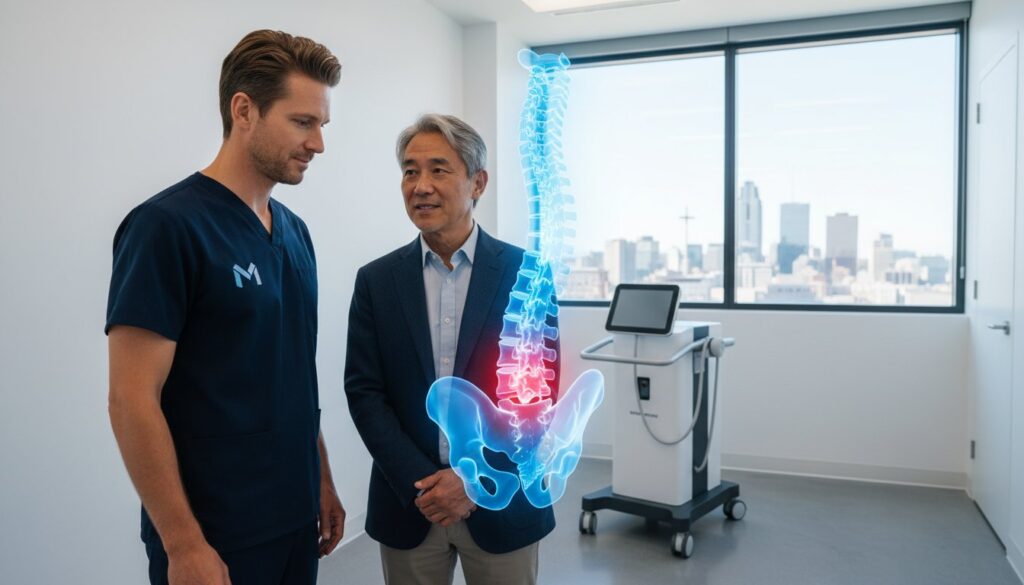
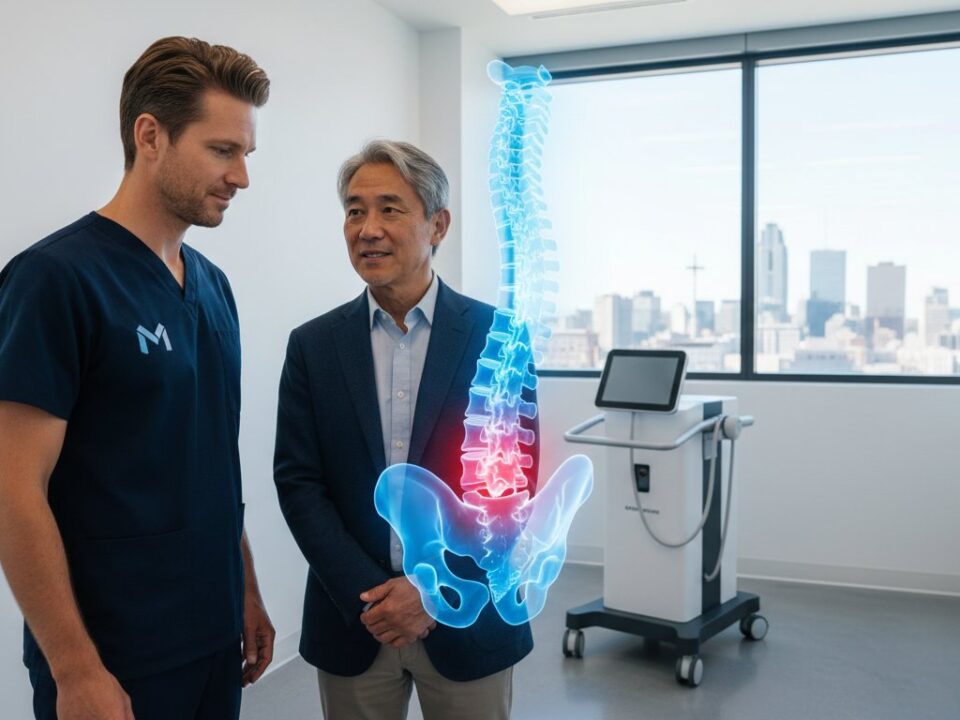
Once you have taken the essential steps to understand how to tell if you have a herniated disc, the goal becomes clear: restore the integrity of your spine without entering an operating room. Spinal decompression offers a precise technological response to this mechanical challenge. Unlike passive approaches, this method relies on a powerful physical principle. It creates a partial vacuum inside the disc, a negative-pressure phenomenon that acts like a natural pump.
This controlled force gently draws the gel-like herniated material towards the centre of the disc. Its withdrawal frees the compressed nerve root, reducing the electric shock-like pain and numbness you experience. At TAGMED Clinic, we use advanced technology that can target the affected spinal level specifically. Whether the L4-L5 or L5-S1 discs or the cervical segments are involved, the equipment adjusts to your anatomy. Our protocol, refined through expertise recognized since 1991, provides a level of precision traditional methods cannot match.
The treatment stands out for being completely non-invasive. It involves no needles, cortisone injections or medication. It is an ideal solution for patients who want to avoid the risks of surgery and the long recovery periods that interfere with weekend outings. Patients remain clothed and comfortably positioned throughout the procedure, receiving safe, soothing care that aims for lasting recovery rather than temporary relief.
What happens during a decompression session?
You are positioned on a high-tech table designed to work around reflex muscle spasms. The computer system adjusts tension with millimetre precision to gently stretch the targeted spinal segment. Most people feel relief within the first few minutes, describing a gentle, releasing stretch. A course of regular care is needed to allow the disc to rehydrate fully. This helps you resume normal activities, such as driving comfortably or returning to work without constant pain.
Book in Montreal
Your recovery begins with a thorough assessment of your condition. During the initial consultation, our experts analyze your file and MRI reports to confirm the diagnosis. We then develop a personalized treatment plan adapted to the severity of your disc protrusion or disc space narrowing. Book an appointment at TAGMED Clinic today for your disc-related pain and finally regain the mobility and peace of mind you deserve.
Take back control of your spinal health
Understanding how to tell if you have a herniated disc is the essential first step in avoiding invasive procedures and regaining your quality of life. By identifying signs of nerve compression and obtaining an accurate MRI diagnosis, you can move beyond temporary solutions such as medication and focus on genuine mechanical correction. Pain is not inevitable; it is a signal from your body calling for a targeted intervention.
With more than 30 years of expertise in spinal health, TAGMED Clinic offers a personalized approach led by Sylvain Desforges, docteur en ostéopathie. Our advanced spinal decompression technology treats the cause of your discomfort without surgery, injections or pain. Whether you want to drive comfortably again or make the most of your next weekend, a lasting, non-invasive solution is within reach.
You do not have to live with this disabling pain. Avoid surgery: book your spinal decompression consultation in Montreal today. Together, we will find a path towards complete recovery and a return to your normal activities.
Local TAGMED guides
Choose a local guide to prepare for your visit and find the contact information for your preferred clinic.
Frequently Asked Questions
Can a herniated disc heal on its own without surgery?
Most herniated discs can regress without surgery thanks to the body's natural ability to address inflammation. However, this process often takes too long to avoid permanent nerve damage or chronic pain. Spinal decompression helps accelerate this mechanical withdrawal, offering an effective alternative for the 70% to 90% of patients who want to avoid the operating room and its associated risks.
How long does pain from a typical herniated disc last?
The acute pain phase generally lasts four to six weeks if it is addressed promptly. If nerve compression is not treated at its source, symptoms can persist for months and become disabling. It is crucial not to wait until pain becomes permanent before seeking care, as early intervention supports a faster, more complete recovery.
Can I continue working with a herniated disc?
Whether you can continue working depends on your duties and the severity of the nerve compression. Desk work or long periods of driving can increase pressure on the L4-L5 or L5-S1 discs. If your job involves physical exertion, temporary leave or modified duties is often necessary to allow the disc to heal without additional irritation.
What is the difference between a bulging disc and a herniated disc?
The bulging of the disc is an enlargement of the disc in which the outer wall remains intact, whereas a herniation involves a tear in that wall that allows the gel-like nucleus to escape. Although a bulge is considered less severe structurally, it can cause equally intense pain if it compresses a nerve. Both conditions respond very well to the non-invasive decompression protocols offered at our clinic.
Is walking recommended when you have a herniated disc?
Walking is generally encouraged because it promotes blood circulation and maintains mobility without excessive impact on the spine. However, you should stop immediately if the activity triggers sciatic pain or a feeling of weakness in your leg. Every case is unique and requires a clinical assessment to determine your specific tolerance for movement and avoid further irritating the already compressed nerve.
Why is my pain worse when I wake up in the morning?
Pain is often more intense on waking because the intervertebral discs naturally rehydrate and swell overnight, increasing internal pressure. As soon as you stand up, this increased pressure on sensitive nerves causes stiffness and intense pain. This generally eases after a few minutes of gentle movement, but clearly indicates that the space available for the nerve is already restricted by a disc protrusion.
Does TAGMED Clinic accept patients without a physician's referral?
Yes, TAGMED Clinic accepts patients directly, without requiring a referral from your family physician. During your first consultation, our experts carry out a thorough, comprehensive clinical assessment of your condition. This step is crucial for accurately determining how to tell if you have a herniated disc and for analyzing your imaging reports to build an effective, safe care plan.
Is spinal decompression covered by private insurance in Quebec?
Spinal decompression treatments are frequently covered by most private insurance plans in Quebec. Depending on your policy, reimbursement may fall under osteopathy or specialized therapeutic care. Since the RAMQ does not cover these advanced technologies in private practice, we issue the detailed receipts needed to facilitate claims and maximize reimbursement from your insurer.


 Français du Canada
 English (Canada)