TOPS™: detailed postoperative monitoring
02/06/26
Minimally invasive surgery: benefits for patients
02/06/26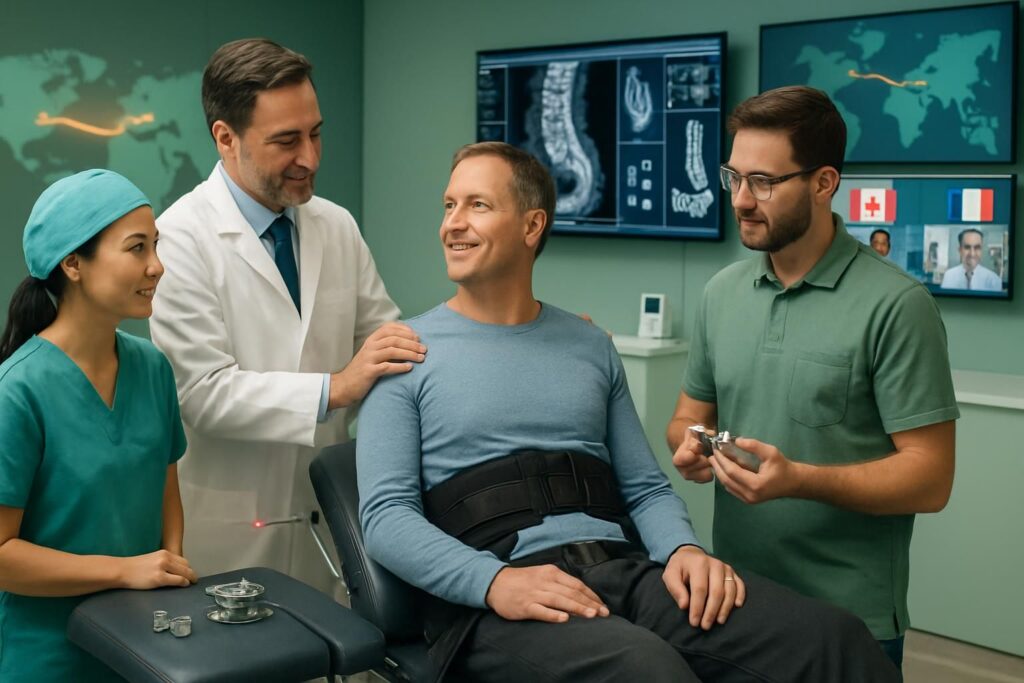
Lower back pain, recognized as one of the leading causes of medical consultations and disability worldwide, profoundly affects patients' quality of life and functional capacity. Faced with the steady increase in chronic cases, back surgery, particularly implantation techniques, is undergoing major advancements that warrant special attention. Indeed, dynamic implants, such as the TOPS system and the IntraSPINE implant, are now emerging as innovative and promising alternatives to traditional spinal fusion procedures. These technologies, developed and refined in collaboration with leading centers in France, not only treat back pain while preserving the spine's natural mobility, but also minimize the complications associated with traditional rigid techniques.
At the heart of this evolution, French surgical expertise plays a key role thanks to its scientific rigor and commitment to international best practices. For Quebec patients, this transatlantic partnership represents a unique opportunity to access advanced surgical solutions, perfectly tailored to their individual journey and specific needs. It is in this context that a thorough understanding of the mechanism, benefits, and complete process associated with the implantation of dynamic implants is essential for better planning of effective and safe management of chronic lower back pain.
Dynamic implants: a major innovation for lumbar surgery
Dynamic implants represent a revolution in the surgical management of lower back pain, particularly for patients suffering from spinal instability or disc degeneration. Unlike the merger Unlike traditional spinal implants, which rigidly immobilize several segments of the spine, these implants allow for a degree of flexibility in the treated area. This biomechanical characteristic is essential for maintaining the natural biomechanics of the spine and preventing overstressing of adjacent segments.
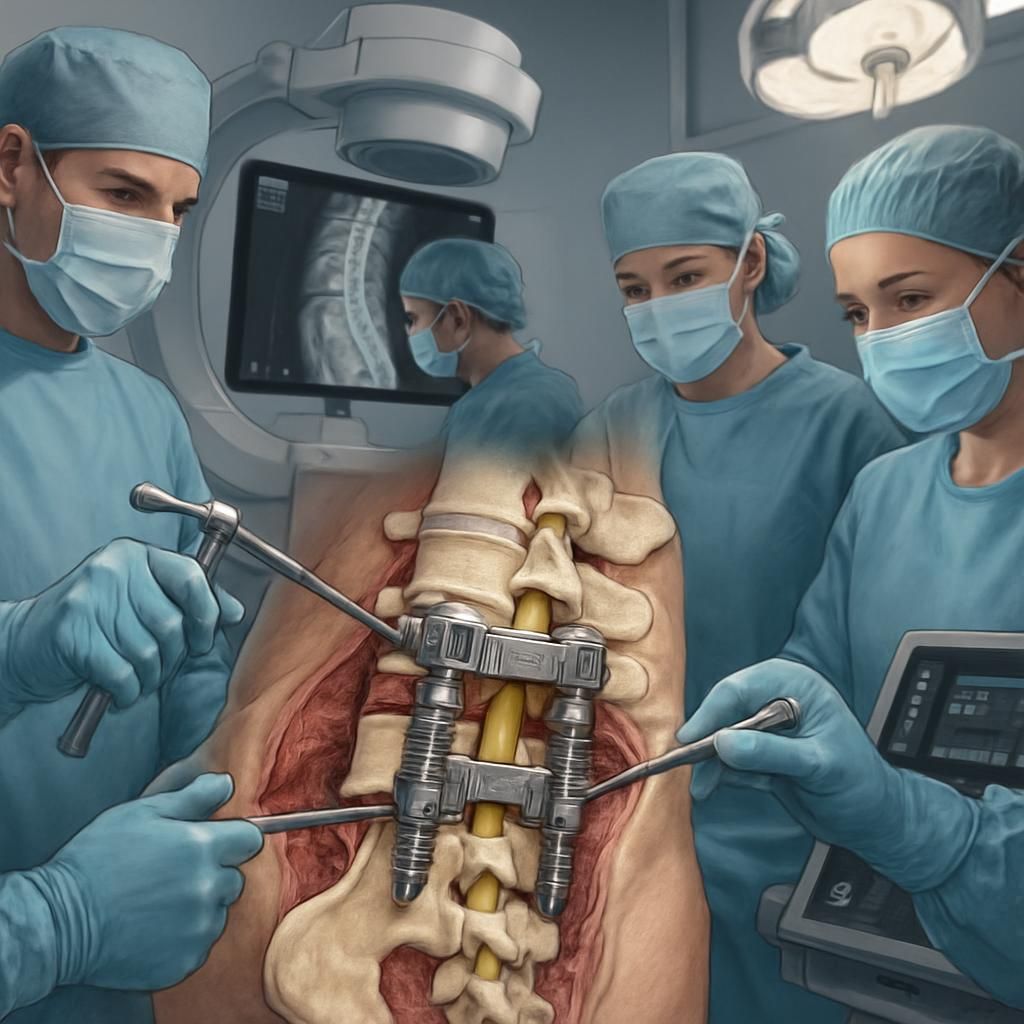
The system TOPS The Total Posterior Spine System (TPS) is a prime example of this generation of implants. It is a complex device designed to replace damaged posterior stabilizing elements. Its metallic and high-strength polyethylene components absorb and redistribute mechanical forces, thus promoting effective stabilization while preserving natural movement. In addition, the implant IntraSPINE It is presented as a minimally invasive solution inserted between the spinal spines, reducing the load on the intervertebral discs without compromising mobility.
The biomechanical benefits of dynamic implants are numerous:
- Preservation of intervertebral mobility, limiting the risk of secondary osteoarthritis.
- Reduction of lower back pain through better distribution of mechanical stress.
- Reduction of the "adjacent segment disease" phenomenon frequently observed after rigid fusion.
- Facilitating a faster return to daily activities through a less invasive approach.
Clinical and scientific studies, particularly those reported to the TAGMED CLINIC, These studies demonstrate the significant effectiveness of these systems in lumbar treatment, with increased surgical safety thanks to the mastery of innovative implantable technologies. surgery Modern orthopedics relies on this evidence to offer individualized options, tailored to each patient profile and the severity of the lower back pain.
Personalized pathway for surgical care in France
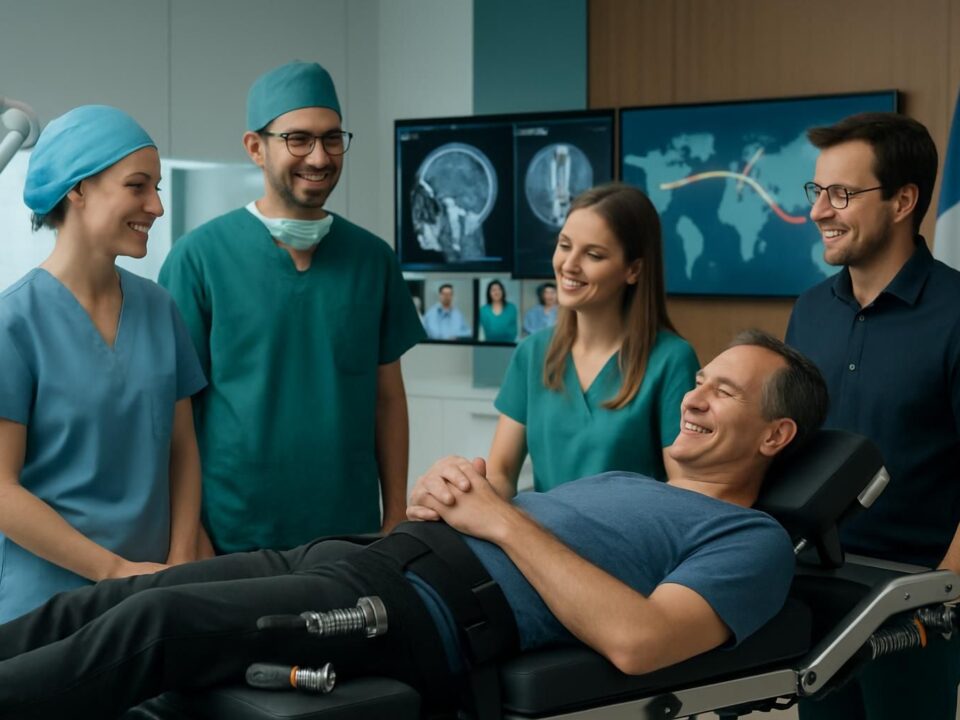
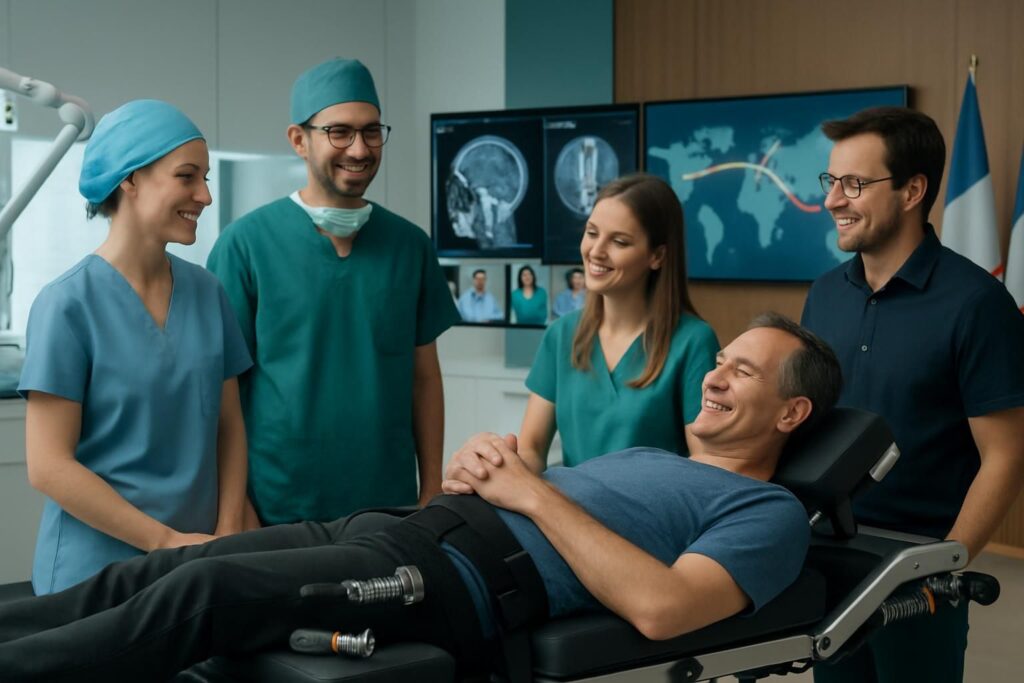
Managing lower back pain with dynamic implants goes far beyond surgery. It relies on a comprehensive and coordinated care pathway, exemplifying international collaboration between Quebec and France. This transatlantic link is essential to providing Quebec patients with rapid and secure access to cutting-edge medical interventions.
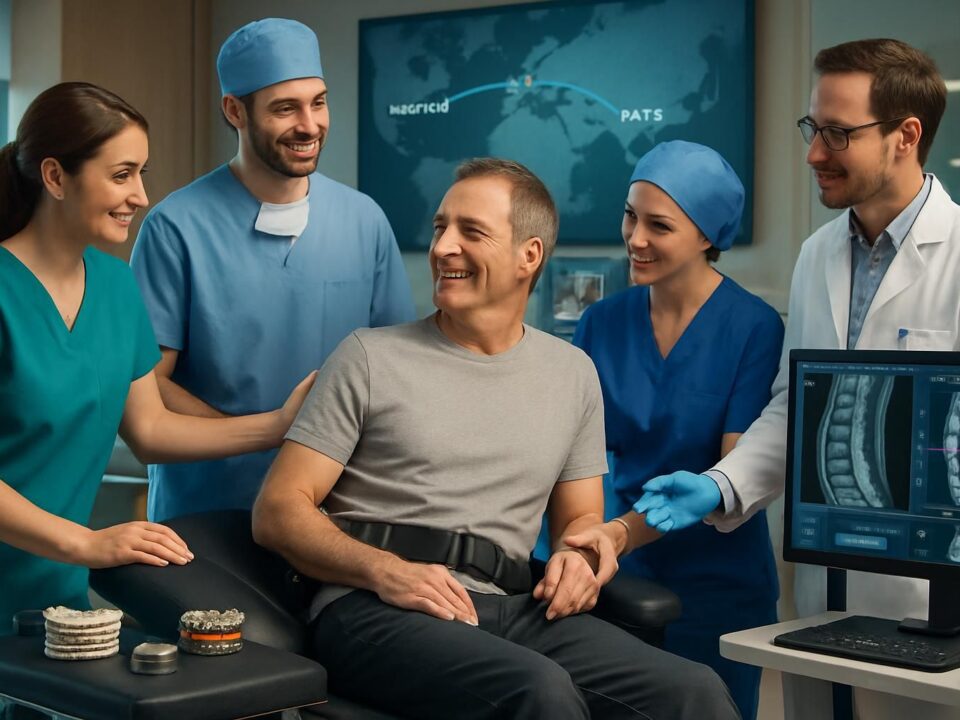
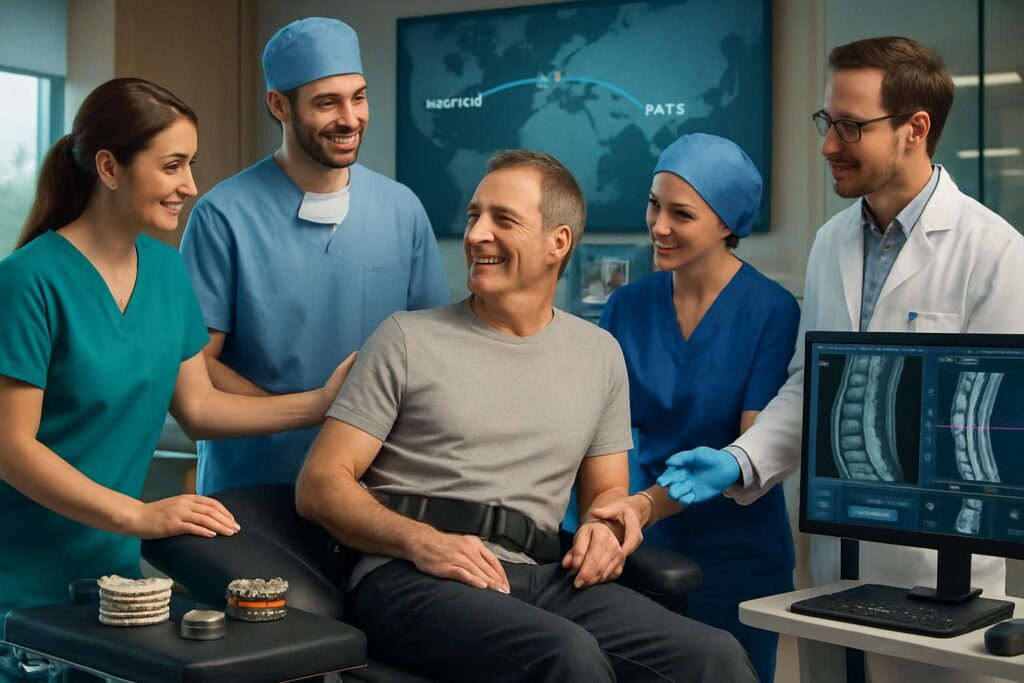
From the first signs of a need for surgery, a complete evaluation is carried out. This crucial step includes clinical assessments, high-resolution medical imaging, and careful consideration of medical history and any conservative treatments already performed. Within this framework, the TAGMED CLINIC plays a leading role with its expertise in advanced conservative treatment, particularly in neurovertebral decompression, which is essential before any surgical decision.
This is followed by personalized planning, including the selection of the most suitable type of implant (TOPS or IntraSPINE), depending on the precise location and anatomical characteristics of the patient. This step involves a multidisciplinary consultation bringing together neurosurgeons, biomedical engineers, physiotherapists, and support teams. This multidisciplinary approach ensures:
- Comprehensive patient care before, during and after the operation.
- Optimization of operating time and rehabilitation protocols.
- Complete control of the risks associated with new medical technologies.
- Rigorous and personalized monitoring reinforcing the safety and quality of post-operative care.
A concrete example illustrates this coordination: a Quebec patient suffering from chronic lower back pain benefits from an initial remote consultation with the French team, is referred for conservative treatment at the TAGMED Clinic, and then scheduled for surgery in France, with full coverage guaranteed via SOS Medical Tourism. This seamless process ensures a smooth and efficient surgical experience.
Key differences between dynamic implants and conventional spinal fusion
Spinal fusion has remained a major surgical technique for several decades. It involves stiffening one or more vertebral segments to stop painful movements and stabilize the spine. However, this procedure has limitations, particularly in terms of mobility and impact on neighboring segments, which can lead to premature degeneration and worsening of back pain.
In contrast, dynamic implants offer a more biomechanically-friendly approach to the spine. They are distinguished in particular by:
| Criteria | Dynamic implants (TOPS, IntraSPINE) | Classic spinal fusion |
|---|---|---|
| Mechanism | Maintains mobility & partial stabilization | Rigid immobilization of the vertebral segment |
| Impact on adjacent segments | Reduction of the risk of secondary osteoarthritis | High risk of adjacent segment disease |
| Recovery time | Faster, easier rehabilitation | Longer initial functional loss |
| Invasive surgical options | Less invasive, sometimes minimally invasive | More complex, often invasive surgery |
| Functional benefits | Preservation of natural mobility | Loss of mobility at the merged level |
The balance between these two approaches depends on the patient's profile, the severity of the condition, and also the desire to preserve an optimal quality of life. Dynamic implants therefore represent a perfectly suitable alternative for a large number of patients, offering an innovative and safe surgical solution.

Preparation and rehabilitation: key steps before and after surgery
Successful surgery depends heavily on meticulous preparation and appropriate rehabilitation. Before any intervention, it is essential to have undergone at least 3 to 6 months of conservative treatments, including modalities such as physiotherapy, pain management, and neurovertebral decompression, offered in particular at the TAGMED CLINIC. These treatments aim to improve the spontaneous stability of the spine, reduce inflammation, and prepare the lumbar muscles for the procedure.
Post-operative rehabilitation is equally crucial. It aims to restore muscle function, improve posture, and strengthen the spine without placing excessive stress on the implant. Thanks to the preservation of mobility offered by dynamic implants, rehabilitation can be more active and often leads to a faster return to normal activities.
Key steps in lumbar rehabilitation after dynamic implantation:
- Initial phase: pain relief and inflammation reduction.
- Gentle and biological muscle activation phase, controlled mobility.
- Targeted muscle strengthening, posture and balance phase.
- Phase of gradual return to daily and sporting activities.
- Regular follow-up with the multidisciplinary team to ensure the sustainability of the result.
Personalized care in France benefits from an optimized organization, offering patients from Quebec rigorous monitoring in collaboration with physiotherapists trained in the specific techniques related to dynamic implants. This system thus guarantees patient safety, comfort, and satisfaction at every stage.
Comparison of techniques for lower back pain
An interactive chart presenting key information on dynamic implants and spinal fusion.
| Technical | Invasiveness | Post-operative mobility | Recovery time | Pathology severity classification |
|---|
Added value of French implant solutions and comprehensive support
The implant solutions promoted through the Franco-Quebec partnership, particularly via systems like TOPS and IntraSPINE, stand out for their unparalleled technological quality and globally recognized French surgical expertise. This alliance guarantees access to scientifically validated implants incorporating the latest advances in biocompatibility and biomechanics.
In addition to innovation, this offering is characterized by personalized, human support. Quebec patients benefit from complete coordination between French and Quebec teams, facilitated by specialized platforms such as SOS Medical Tourism. This system ensures continuous monitoring and optimal care, from the initial consultation through rehabilitation and post-operative follow-up.
The specific advantages of this surgical procedure are:
- Access to cutting-edge medical technologies often unavailable in Quebec.
- Reduction of waiting times for essential orthopedic surgery.
- Optimizing the cost/efficiency ratio in a controlled economic context.
- Comprehensive support including administrative, logistical and medical assistance.
- Psychological support and clear information throughout the process.
Beyond the technical aspects, this process is designed to reassure and motivate each patient in their decision, emphasizing that every case is unique and deserves tailored attention. To learn more or for a personalized assessment, visit https://www.sostourismemedical.com/contact.

What is a dynamic implant and how does it differ from a vertebral fusion?
A implant dynamic is a device that stabilizes the spine while preserving its natural mobility, unlike fusion which permanently stiffens a segment.
What are the benefits of dynamic implants for treating lower back pain?
They help to reduce pain, preserve spinal mobility, limit degeneration of adjacent segments, and accelerate the return to normal activities.
What is the surgical process like for a patient from Quebec?
After a comprehensive evaluation and conservative treatment At the TAGMED Clinic, the patient can be referred for surgery in France with personalized support and rigorous follow-up.
What are the risks associated with surgery using dynamic implants?
As with any surgical procedure, there are risks, but technological and scientific mastery minimizes these risks, ensuring scientifically validated safety and effectiveness.
Why is rehabilitation important after the placement of a dynamic implant?
Rehabilitation promotes muscle strengthening, functional recovery and the sustainability of the result, while adapting to the mobility preserved by the implant.