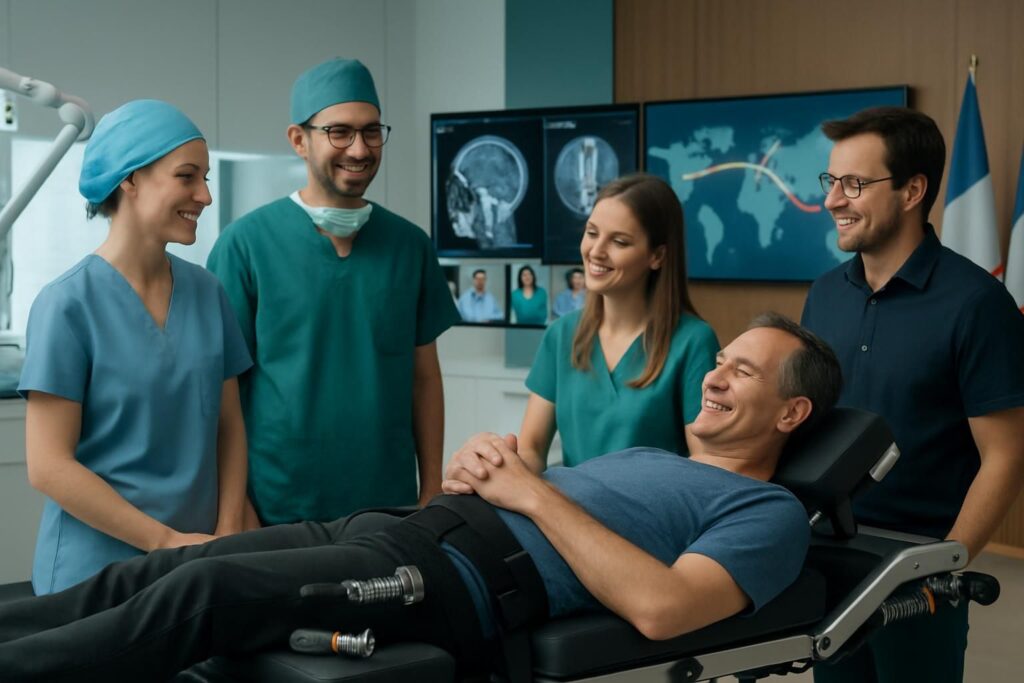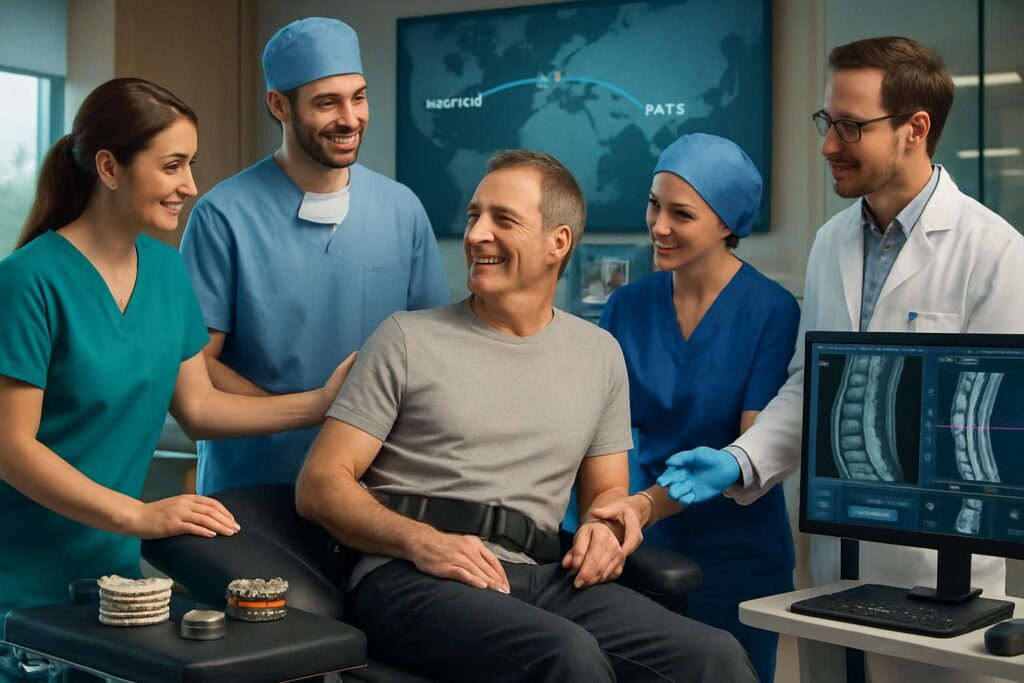
TOPS™: Implantation and Functional Recovery
02/06/26
Motion Surgery: Benefits for Active Patients
02/06/26
Lower back pain, or lumbago, is one of the most common musculoskeletal conditions worldwide. This chronic or acute lower back pain significantly impacts patients' quality of life, limiting their daily activities and often accompanied by profound discomfort. In this context, the search for modern and effective solutions is essential, particularly through innovations in orthopedics and spinal surgery. The medical device IntraSPINE appears as a major advancement, offering a dynamic option for the treatment of lower back pain. Its design, aimed at preserving spinal mobility while providing appropriate lumbar support, revolutionizes traditional approaches that often favored the merger vertebral column.
This modern treatment is part of a comprehensive approach where patient safety, scientific rigor, and technological innovation are paramount. Working closely with leading centers in France and incorporating dynamic implant techniques, it offers a credible alternative for Quebec patients facing the long wait times and high costs of local interventions. This transatlantic collaboration fosters personalized support and multidisciplinary care tailored to each individual case, positioning IntraSPINE as a true revolution in the treatment of lower back pain.
The biomechanical principles and benefits of the IntraSPINE device for lower back pain
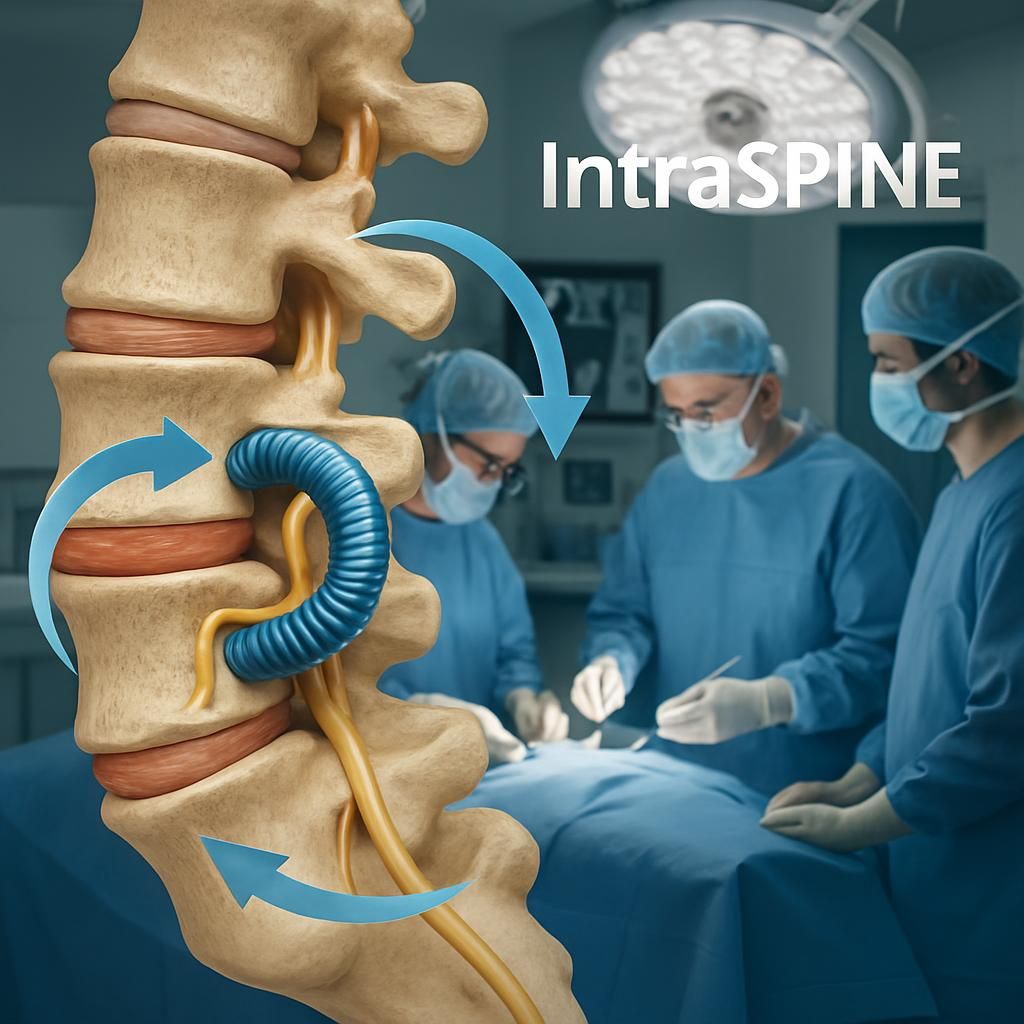
The precise functioning of the IntraSPINE implant relies on an advanced understanding of the biomechanical stresses exerted on the spine. By maintaining physiological disc space, this medical device optimizes lumbar support while avoiding the rigidity induced by fusion techniques. Unlike traditional surgical procedures that immobilize a section of the spine, IntraSPINE acts as a kind of natural shock absorber designed to reduce lower back pain while respecting vertebral movement.
This biomechanical approach is essential to prevent common post-surgical side effects, such as degeneration of adjacent segments. By enabling a harmonious distribution of mechanical stresses, IntraSPINE promotes better functional recovery. Patients thus benefit from a significant improvement in their mobility and experience a notable reduction in chronic lower back pain, facilitating a faster return to their usual activities.
For example, a comparative clinical study showed that patients who received a implant IntraSPINE patients experienced a faster and more sustained reduction in pain compared to those who underwent conventional fusion. This functional benefit was also accompanied by a reduction in complications related to the surgery, in particular, vertebral ankylosis. In short, the IntraSPINE implant effectively illustrates the shift towards less invasive solutions that respect the natural dynamics of the spine.
To better understand the biomechanical benefits, here is a summary table comparing the characteristics between conventional fusion surgery and the IntraSPINE implant:
| Characteristic | Traditional Spinal Fusion | IntraSPINE Device |
|---|---|---|
| Preservation of mobility | No, induced stiffness | Yes, maintaining natural movement |
| Reduction of lower back pain | Variable, sometimes delayed | Fast and durable |
| Degeneration of adjacent segments | Frequent in the long term | Rare, thanks to the dynamics |
| Recovery time | Long (several months) | Shorter, easier rehabilitation |
| Technical complexity | High elevation, bone fusion | Moderate, dynamic system |
The different modern surgical options for treating lower back pain in France
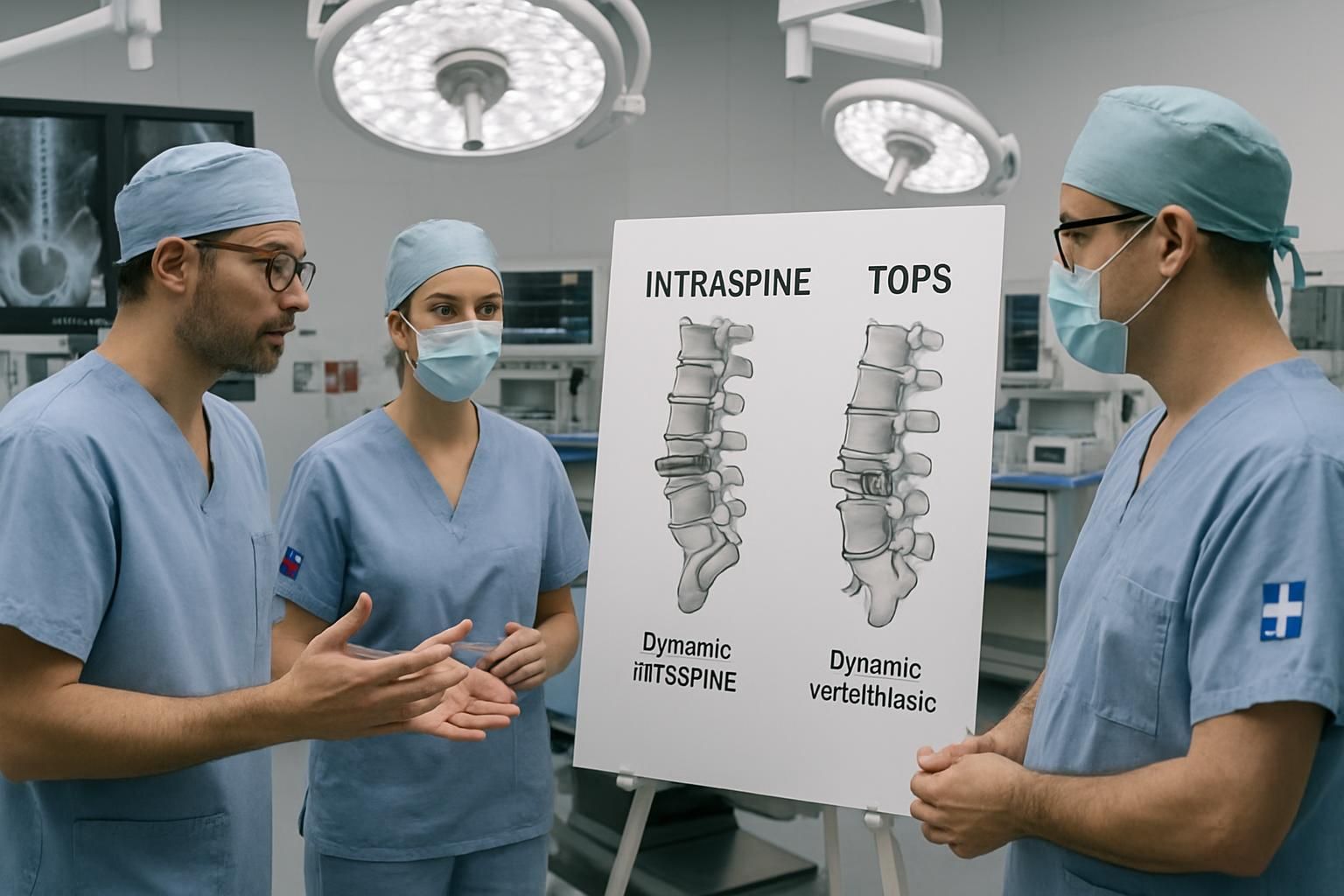
Faced with debilitating lower back pain resistant to conservative treatments, Various surgical options are available, particularly in France where implant technologies have reached a very high level of expertise. Among them are dynamic implants such as IntraSPINE and the system TOPS represent innovative alternatives to traditional surgery.
Spinal fusion surgery, long the gold standard, involves immobilizing the affected segments to relieve nerve compression or stabilize the spine. However, this method can lead to functional limitations and risks of degeneration in adjacent segments. This is why dynamic implants were designed to offer an ideal compromise between pain relief and respect for natural biomechanics.
The TOPS system falls into this category: it stabilizes the spine while preserving the possibility of controlled movement. This French innovation is recognized for its promising results, particularly in terms of pain reduction and functional preservation. Furthermore, procedures are often performed in specialized centers equipped with advanced imaging technologies, ensuring optimal surgical precision.
Coordination between surgeons, biomedical engineers, and nursing teams promotes comprehensive patient care, from initial assessment to postoperative follow-up. In parallel, conservative procedures offered by centers such as the TAGMED CLINIC They complete the process, with rehabilitation sessions and adapted neurovertebral treatments before considering surgery.
To determine the most appropriate technique, a personalized assessment is essential. Several medical, functional, and personal criteria must be considered, including age, degree of mobility, severity of symptoms, and response to conservative treatments. This transatlantic expertise, combining French rigor with knowledge of the Quebec context, guarantees a smooth and safe journey for each patient.
The journey of Quebec patients towards IntraSPINE surgery in France: support and coordination
Surgical treatment of lower back pain with IntraSPINE is not limited to the procedure itself. It is part of a structured and coordinated care pathway, promoting comprehensive and personalized follow-up. Quebec patients find in this device easy access to best practices and innovations in back surgery In France.
This process begins with a thorough initial consultation, often virtual, involving experts in orthopedics and spinal surgery, who assess the clinical situation taking into account the patient's history, radiological examinations, and previous treatments. It includes a phase of rigorous conservative treatments. TAGMED CLINIC, the first recommended step before considering any surgery.
When surgery becomes necessary, coordination between the patient, French medical teams and specialized platforms such as SOS Medical Tourism proves crucial. The latter manages the logistical organization, the taking of appointment, The reception and linguistic and cultural support throughout the stay. The patient thus benefits from optimal conditions, both medically and personally.
Post-operative follow-up includes a tailored rehabilitation program based on physiotherapy and close monitoring of clinical signs. The goal is to maximize functional recovery while minimizing post-operative risks. Finally, transatlantic collaboration ensures continuity of long-term care, providing a point of contact and attentive support after the patient's return to Quebec.
This streamlined and secure organization will result in a reassuring experience for patients, built on trust, transparency, and education. Surgery with IntraSPINE becomes more efficient thanks to rigorous patient support and complete mastery of implant technologies.
Innovation and safety: the commitment of dynamic implant experts like IntraSPINE
Spinal implant surgery, whether conventional or dynamic, requires expert supervision by highly experienced professionals dedicated to patient safety. These professionals employ practices based on current scientific data, ensuring rigor and adherence to international standards.
Expertise in the use of implants such as IntraSPINE requires a thorough understanding of spinal biomechanics and mastery of innovative surgical technologies. This know-how is precisely what distinguishes French quality in this field. spinal surgery, particularly in world-renowned centers.
In this context, close collaboration between surgeons, biomedical engineers, and paramedical teams ensures comprehensive patient care. The use of advanced imaging tools, precise surgical planning, and personalized post-operative follow-up enhance the safety and effectiveness of the treatment.
The philosophy behind this approach is clear: to offer a modern solution that minimizes risks and promotes functional preservation, without sacrificing patient comfort or responsiveness. Thus, dynamic implants like IntraSPINE represent a significant evolution in modern orthopedics, aiming to improve quality of life while respecting the natural complexity of the spine.
Practical information and advice for patients considering IntraSPINE surgery
For patients suffering from chronic lower back pain and considering a surgical solution such as the IntraSPINE implant, some practical guidelines are essential to support an informed decision. It is crucial to remember that surgery should only occur after three to six months of comprehensive conservative treatment, including, in particular, the neurovertebral decompression offered at the [location/location]. TAGMED CLINIC.
Before any intervention, a multidisciplinary assessment is recommended, allowing the solution to be tailored to each specific clinical situation. The expertise provided by specialists from both sides of the Atlantic ensures that the patient has a clear understanding of the benefits as well as the potential limitations of the surgery.
Here are some practical tips to support you on this journey:
- Carefully analyze the alternatives: prioritize conservative treatments before considering invasive surgery.
- Be well-informed about the available technologies: understand the operation and advantages of dynamic implants compared to traditional methods.
- Opt for personalized support: relying on experienced transatlantic coordination teams for a smooth process.
- Preparing for your stay in France: plan the logistical aspects, in particular with the support of SOS Medical Tourism.
- Strictly follow the post-operative recommendations: to actively participate in rehabilitation and medical follow-up after the procedure.
To facilitate understanding of the different stages of treatment and their implications, a summary table below details the key phases of the IntraSPINE surgical procedure:
| Phase | Main actions | Average duration | Goals |
|---|---|---|---|
| Initial assessment | Consultations, imaging examinations, conservative treatments | 3 to 6 months | Confirm the surgical indication |
| Surgical preparation | Intervention planning, travel organization, multidisciplinary meetings | 1 to 2 weeks | Optimize security and logistics |
| Surgery | IntraSPINE implant placement in a specialized center | 1 day of hospitalization | Pain reduction and preservation of mobility |
| Post-operative follow-up | Rehabilitation, medical monitoring, regular consultations | 3 to 6 months | Optimal functional recovery |
Deciding on spinal surgery is a significant moment. Expert guidance and clear explanations help patients feel confident and approach this process with peace of mind. Using an innovative solution like IntraSPINE maximizes the chances of success and lasting relief from lower back pain.
Quiz: IntraSPINE and lower back pain
To learn more or for a personalized assessment, visit https://www.sostourismemedical.com/contact.
{"@context": "https://schema.org", "@type": "FAQPage", "mainEntity":[{"@type": "Question", "name": "What is the IntraSPINE implant?", "acceptedAnswer":{"@type": "Answer", "text": "IntraSPINE is a dynamic implant medical device designed to treat lower back pain by supporting the spinal column while preserving the natural mobility of the spine."}},{"@type": "Question", "name": "What are the benefits of surgery with IntraSPINE?" ", "acceptedAnswer":{"@type": "Answer", "text": "Patients experience rapid and lasting reduction of lower back pain, improved mobility, and a significant functional recovery thanks to this innovative technique."}},{"@type": "Question", "name": "What is the recommended duration before considering surgery?", "acceptedAnswer":{"@type": "Answer", "text": "It is advisable to follow a full course of conservative treatment for 3 to 6 months before considering surgery such as that offered with IntraSPINE."}} "}},{" @type": "Question", "name": "How does the follow-up proceed after the placement of the IntraSPINE?", "acceptedAnswer":{" @type": "Answer", "text": "Post-operative follow-up includes specialized education and regular consultations to ensure optimal recovery and prevent complications."}}]}What is the IntraSPINE implant?
IntraSPINE is a dynamic implant medical device designed to treat lower back pain by supporting the spine while preserving the natural mobility of the spine.
What benefits can be derived from surgery with IntraSPINE?
Patients experience rapid and lasting reduction in lower back pain, improved mobility, and accelerated functional recovery thanks to this innovative technique.
What is the recommended waiting period before considering surgery?
It is advisable to follow a complete conservative treatment of 3 to 6 months before considering a surgical intervention such as that proposed with IntraSPINE.
How is the follow-up performed after the implantation of IntraSPINE?
Post-operative follow-up includes specialized rehabilitation and regular consultations to ensure optimal recovery and prevent complications.