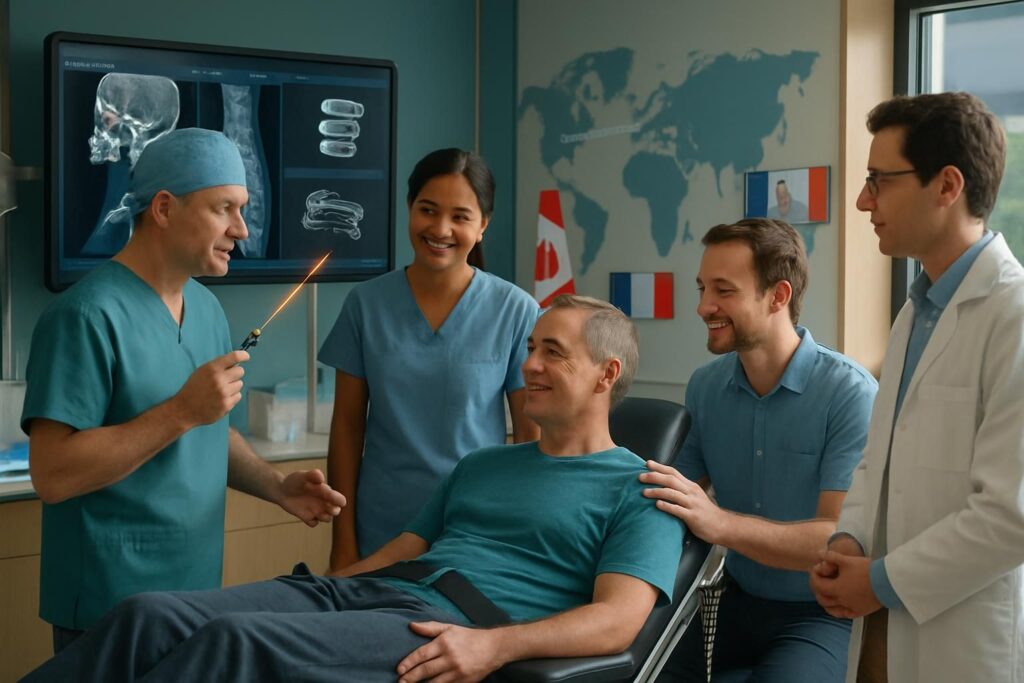
Lumbar disc replacement: benefits for active patients
02/05/26
Dynamic implants: how do they work?
02/05/26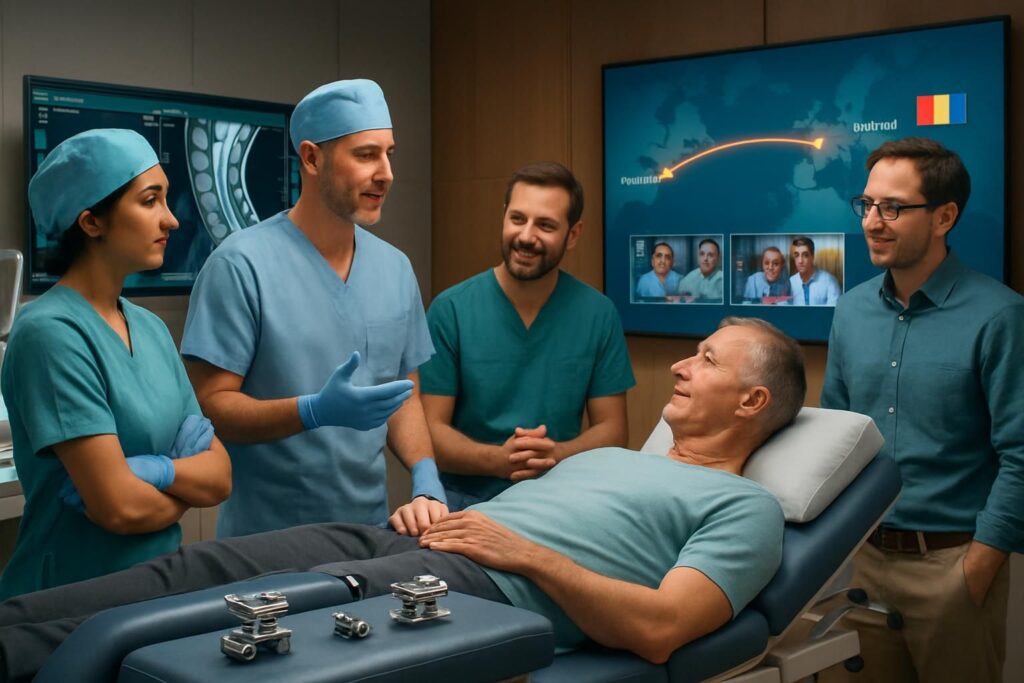
Neck surgery, or cervical spine surgery, is a delicate procedure that aims not only to relieve often debilitating pain in the cervical spine, but also to preserve the mobility essential for an active daily life. Technological advances in this field, particularly with dynamic implants such as the TOPS system or IntraSPINE, are paving the way for innovative solutions that respect the natural movements of the spine while ensuring effective stabilization. These modern techniques, combined with a rigorous and personalized care pathway, allow many patients, especially those in Quebec, to consider safe and effective surgical treatment in collaboration with leading French centers. Understanding the different surgical options, as well as the complete process before, during, and after the operation, is essential for making an informed choice tailored to each individual situation.
Chronic neck pain often results from degenerative or traumatic conditions affecting the intervertebral discs and joints. The challenge lies in treating these conditions without compromising joint mobility or causing long-term complications. This is where French surgical expertise, recognized worldwide, truly shines, particularly through its rigorous scientific approach and adherence to international standards of safety and innovation. Transatlantic support, partly managed by experts specializing in spinal implants, ensures comprehensive follow-up and optimal preparation, from conservative treatments to post-operative rehabilitation.
In this context, this article explores in detail the various surgical solutions available today, with a focus on the surgery This guide describes the dynamic nature of the procedure and innovative implants, while also outlining the support system that facilitates the care of Quebec patients in France. This informative guide aims to be reassuring, educational, and motivating, encouraging all patients to confidently consider a personalized evaluation.
Cervical surgical techniques: tailored solutions to preserve cervical mobility
Neck surgery has changed dramatically in recent years, now offering options that go far beyond the traditional merger spinal. Historically, fusion consisted of immobilizing the pathological segments of the cervical spine, which reduced pain but at the cost of a significant loss of mobility and sometimes stiffening of adjacent segments, increasing the risk of secondary complications.
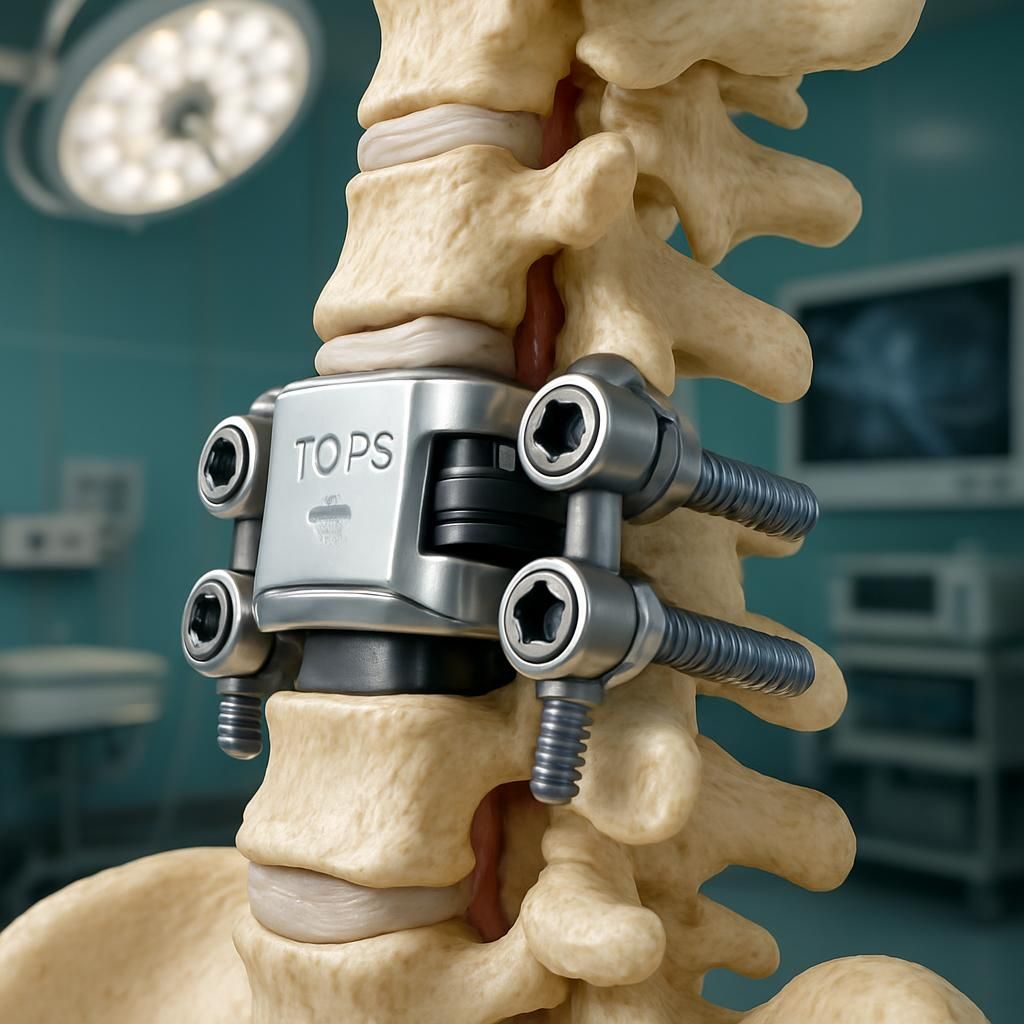
Technological innovations have enabled the emergence of dynamic implants such as the system TOPS and IntraSPINE, designed to stabilize without blocking spinal movement. These devices act as biomechanical shock absorbers, allowing natural movement while maintaining the stability necessary to protect nerves and vascular structures. This preservation of cervical mobility is a crucial advantage for patients wishing to maintain an optimal quality of life while reducing their pain.
For example, the TOPS system is a solution for dynamic stabilization which replaces traditional fusion. It supports the spine without altering its flexibility, thus limiting the risks associated with ankylosis of adjacent segments. For its part, IntraSPINE offers minimally invasive interspinous support, ideal for certain degenerative conditions, by acting directly on decompression and mechanical support.
Cervical surgery techniques must always be preceded by a rigorous assessment, including high-precision imaging and a complete functional evaluation. This protocol is essential to determine the best option suited to the specific pathology and the patient's expectations. Today, several French centers, particularly the TAGMED Clinic, stand out for their integrated approach that combines advanced evaluation, innovative surgery, and postoperative follow-up.
Patient journey: from initial assessment to post-operative rehabilitation in Franco-Quebec collaboration
The patient's journey towards successful cervical surgery is a gradual process that emphasizes safety and personalized support. Before any surgical decision, it is imperative to’having undergone conservative treatment for a minimum of 3 to 6 months. This treatment includes, in particular, the Spinal decompression therapy, an advanced therapy available at the TAGMED Clinic which aims to relieve pressure on the nerves without resorting to surgery.
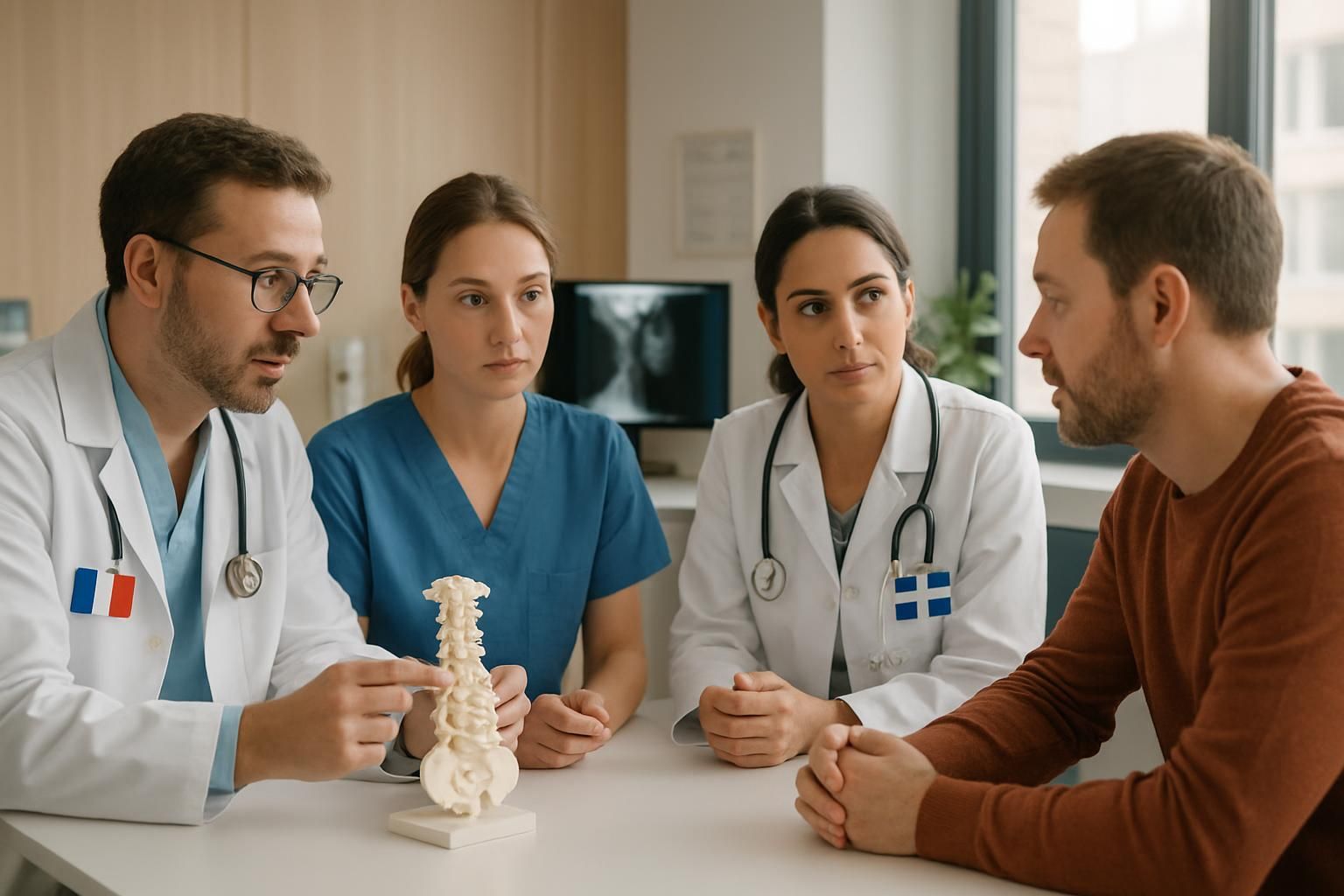
If this initial treatment phase is insufficient to reduce pain or restore satisfactory mobility, the patient may then consider surgery. It is at this stage that the expertise of a spinal implant specialist plays a key role in guiding the patient toward the best-suited options. This specialist supports the patient through rigorous coordination between Quebec and France, facilitating access to renowned surgeons and clinics, and ensuring optimal preparation of the medical file.
The main stages of the surgical process include:
- Pre-operative consultation including transatlantic tele-expertise and thorough clinical examination.
- Personalized intervention planning taking into account available technologies, such as dynamic implants.
- Intervention in a specialized French center, with immediate postoperative follow-up including pain management and prevention of complications.
- A personalized post-operative rehabilitation program is essential to optimize joint mobility and accelerate cervical rehabilitation.
- Long-term follow-up through coordination between medical teams from both countries, ensuring continuity of care after returning to Quebec.
This model ensures not only safe and secure care, but also personalized support that helps reduce anxiety related to surgery and promotes good treatment adherence. The benefits are tangible in terms of pain reduction and nerve preservation, thanks to precise mastery of surgical techniques.
Biomechanical and functional benefits of dynamic implants in neck surgery
The integration of dynamic implants into the surgical treatment of cervical pathologies represents a significant advancement. Unlike traditional spinal fusion, these implants offer stabilization that respects the biomechanical complexity of the cervical spine, which is essential for proper neurological function and cervical mobility.
The cervical spine consists of seven vertebrae with joints that allow a wide range of motion: flexion, extension, rotation, and lateral flexion. Traditional surgery, by blocking certain segments, limits these movements and can lead to overloading of adjacent segments, accelerating their degeneration.
| Characteristic | Dynamic Implant (TOPS, IntraSPINE) | Traditional Spinal Fusion |
|---|---|---|
| Joint mobility | Preserved, promoting natural movement | Lost, segment immobilized |
| Nerve preservation | Optimal, with compression reduction | Good, but with a risk of secondary effects |
| Pain management | Significant and lasting reduction | Often effective, but with risks of post-fusion pain |
| Cervical rehabilitation | Faster and more comprehensive | Longer, less favorable rehabilitation |
| Risks | Limited, thanks to advanced technology and surgical expertise | Increased risk of degenerative osteoarthritis |
Clinical results demonstrate an improved quality of life for patients who have received dynamic implants, with safety standards meeting international requirements. This innovative approach is supported by very positive studies and feedback, as highlighted in the review dedicated to the spinal surgery modern dynamics.
Post-surgical care and cervical rehabilitation: ensuring long-term success
The postoperative period is a crucial phase for ensuring optimal recovery after neck surgery. Coordination of postoperative care between the French and Quebec teams aims to manage pain effectively, prevent complications, and promote successful rehabilitation. This multidisciplinary approach integrates physiotherapy, tailored medication management, and regular follow-up to assess functional and neurological progress.
In practice, the program of post-operative rehabilitation is structured around several stages:
- Pain control and anti-inflammatories to optimize patient comfort.
- Progressive mobilizations to restore joint mobility safely.
- Targeted muscle strengthening exercises to support the cervical spine.
- Neuropsychological monitoring to support overall rehabilitation and prevent anxiety.
- Regular follow-up with the implant surgeon to adjust care and ensure proper integration of the implant.
Thanks to this comprehensive approach, the patient experiences more than just pain reduction; it benefits from genuine functional restoration, facilitating a rapid return to daily and professional activities. The quality of post-surgical care also contributes to strengthening the patient's confidence in their recovery, reducing stress and improving their overall quality of life.

Interactive quiz: Neck surgery and cervical mobility
Test your knowledge of neck surgery, preserving mobility, and reducing pain.
For each question, select the correct answer and submit at the end.
Your score: ${score} / ${totalQuestions}
- ${feedback.map(f => `
- ${f} `).join( »)}
The advantages of the French route for Quebec patients considering cervical surgery
Franco-Quebec collaboration in the field of neck surgery makes it possible to offer Quebec patients credible alternatives Faced with the sometimes prohibitive delays and costs of private care in Quebec, patients choosing France gain access to world-renowned surgical expertise, with innovative techniques and implants that preserve mobility and provide lasting pain reduction.
Beyond the technical quality, the process is characterized by exemplary coordination between the team of spinal implant experts, specialized surgeons, and leading institutions such as the TAGMED Clinic. This network ensures comprehensive follow-up, from pre-operative preparation to final rehabilitation. The guarantee of personalized support is complemented by streamlined administrative management and reassuring logistical support, combining comfort and safety.
A recent study has shown that this transatlantic care model significantly reduces waiting times for appropriate surgery, while offering competitive overall costs and optimal patient comfort. For patients, it provides the opportunity to consider a comprehensive and safe surgical pathway, with genuine human and scientific support—an essential element for navigating this delicate stage with peace of mind.
To learn more or for a personalized assessment, visit https://www.sostourismemedical.com/contact.
{"@context": "https://schema.org", "@type": "FAQPage", "mainEntity":[{"@type": "Question", "name": "What are the main advantages of dynamic implants in neck surgery?", "acceptedAnswer":{"@type": "Answer", "text": "Dynamic implants allow for the preservation of cervical mobility while providing effective stabilization, thus reducing pain and limiting the dullness of adjacent vertebral segments."}},{"@type": "Question", "name": "When should neck surgery be considered after conservative treatment?"}} ", "acceptedAnswer":{"@type": "Answer", "text": "Surgery should only be considered after 3 to 6 months of comprehensive conservative treatments, including neurovertebral decompression, if pain and functional limitation persist."}},{"@type": "Question", "name": "How does post-operative education proceed after cervical surgery?"}} ", "acceptedAnswer":{"@type": "Answer", "text": "The early education process includes pain management, progressive mobilization, muscle strengthening exercises, and regular follow-up to restore joint mobility and nerve function."}},{"@type": "Question", "name": "How does the Franco-Quebecois approach facilitate the acceptance of innovative cervical surgery?"}},{"@type": "Question", "name": "How does the Franco-Quebec approach facilitate the acceptance of innovative cervical surgery?"}} ", "acceptedAnswer":{" @type": "Answer", "text": "This coordinated pathway offers personalized support from the initial assessment to rehabilitation, in close collaboration between Quebec experts and leading French surgical centers."}}]}What are the main advantages of dynamic implants in neck surgery?
Dynamic implants help preserve cervical mobility while providing effective stabilization, thus reducing pain and limiting degeneration of adjacent vertebral segments.
When should neck surgery be considered after conservative treatment?
Surgery should only be considered after 3 to 6 months of comprehensive conservative treatments, including Spinal decompression therapy, if pain and functional limitation persist.
How does post-operative rehabilitation proceed after cervical surgery?
Early rehabilitation includes pain management, progressive mobilization, muscle strengthening exercises, and regular follow-up to restore joint mobility and nerve function.
How does the Franco-Quebec pathway facilitate access to innovative cervical surgery?
This coordinated pathway offers personalized support from initial assessment to rehabilitation, in close collaboration between Quebec experts and leading French surgical centers.




 Français du Canada
  English (Canada)