Minimally invasive surgery: reducing pain and accelerating healing
08/15/25
TOPS™: Step-by-step implantation explained to patients
08/19/25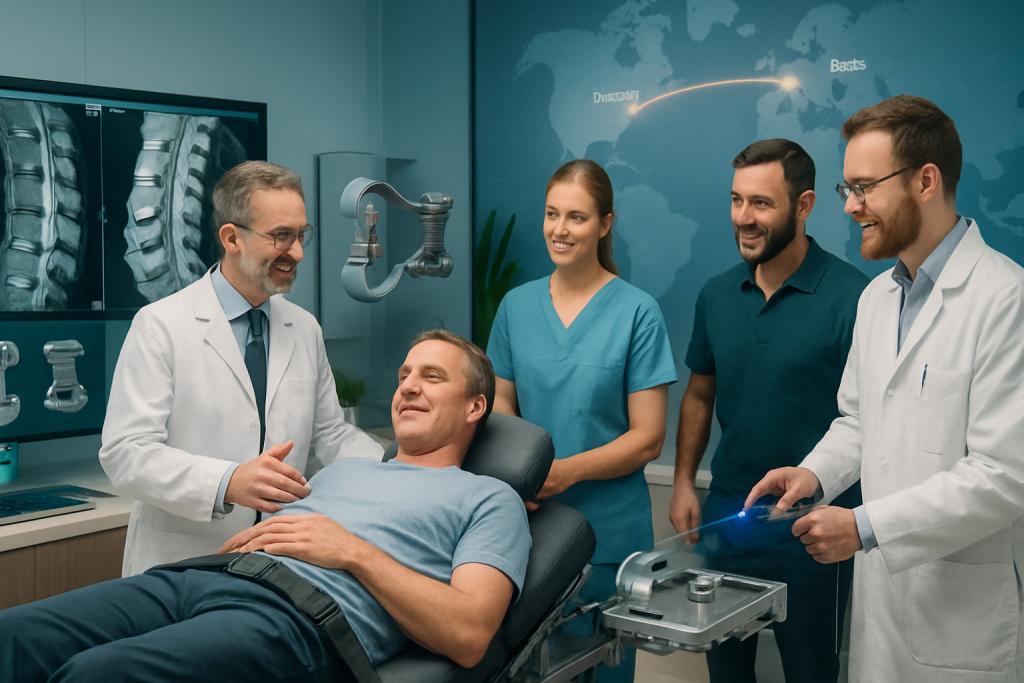
By 2025, complex disc herniations will represent a major challenge in spinal surgery, requiring technological innovations to reduce pain and preserve quality of life. Among the significant advances, dynamic implants offer promising alternatives to traditional surgery, promoting spinal mobility while ensuring effective stabilization. These new solutions, such as the TOPS system or the IntraSPINE implant, are part of a rigorous surgical approach, promoted by French experts and accessible to Quebec patients thanks to high-quality transatlantic coordination. Faced with the growing challenges of back pain, particularly in a context where wait times in Quebec can be significant, the surgery innovative back care in France is becoming a relevant option, supported by recognized medical expertise and personalized care.
In parallel, French research is making progress on biomimetic implants capable of regenerating tissues damaged after surgery. herniated disc, This limits the risk of recurrence. These biodegradable implants support the natural restoration of the annulus fibrosus, ensuring better postoperative durability. Combined with accessible, patient-centered education, this technological advancement allows for a better understanding of the functional benefits of the proposed implant solutions, as well as for engaging in a comprehensive care pathway that includes advanced conservative treatments.
This innovative medical context also relies on strong partnerships, notably with the TAGMED Clinic in Montreal, renowned for its cutting-edge conservative care prior to any surgical intervention. This article details these dynamic and traditional surgical approaches and sheds light on the complete patient journey in Quebec towards... back surgery in France, and highlights the technical and human elements that distinguish this innovative healthcare offering.
Dynamic implants: a biomechanical revolution for complex disc herniations
Les implants dynamiques représentent une avancée majeure dans le traitement chirurgical des herniated discs complexes, en particulier celles qui nécessitent à la fois décompression nerveuse et maintien de la mobilité vertébrale. Contrairement aux techniques traditionnelles de merger These spinal implants, which permanently immobilize the operated area, preserve physiological movement while stabilizing the spine. This dual role significantly reduces the risk of disc osteoarthritis in adjacent segments, a common problem associated with rigid spinal procedures.
Among the most recognized devices is the system TOPS (Total Posterior Solution) and the IntraSPINE implant have undergone rigorous approvals, including biomechanical and clinical testing. TOPS is designed to replace the stabilizing functions of the posterior vertebral joints, providing controlled freedom of movement in multiple planes, thus protecting nerve roots while maintaining flexibility. IntraSPINE, on the other hand, is positioned between the spinous processes to restore disc spacing and improve spinal dynamics without the need for invasive osteosynthesis.
Functional and biomechanical advantages of dynamic implants
- Preservation of mobility : Maintains natural ranges of motion, avoiding harmful compensations.
- Reduction of chronic pain : By limiting the stress on the nerve roots, there is a notable improvement in quality of life.
- Reduced risk of recurrence By preserving anatomical structures, accelerated degeneration phenomena are reduced.
- Optimized postoperative recovery Less immobilization leading to a faster return to daily activities.
The table below summarizes the key characteristics of dynamic implants compared to conventional fusion methods:
| Criteria | Dynamic Implants (TOPS, IntraSPINE) | Spinal Fusion |
|---|---|---|
| Segment mobility | Preserved | Eliminated |
| Risk of adjacent osteoarthritis | Reduced | Pupil |
| Recovery time | Shorter | Longer |
| Surgical approach | Less invasive | Invasive |
| Indications | Complex disc herniations, moderate instabilities | Severe instabilities, significant deformations |
These implant innovations, offered by renowned manufacturers such as Medtronic, Zimmer Biomet, Spineart and Stryker, These techniques are integrated into very strict surgical protocols ensuring safety and efficacy. Their use relies on rigorous patient selection and proven surgical expertise, which explains the close collaboration developed between French experts and Quebec specialists.
Transatlantic medical journey: from Quebec to cutting-edge surgery in France
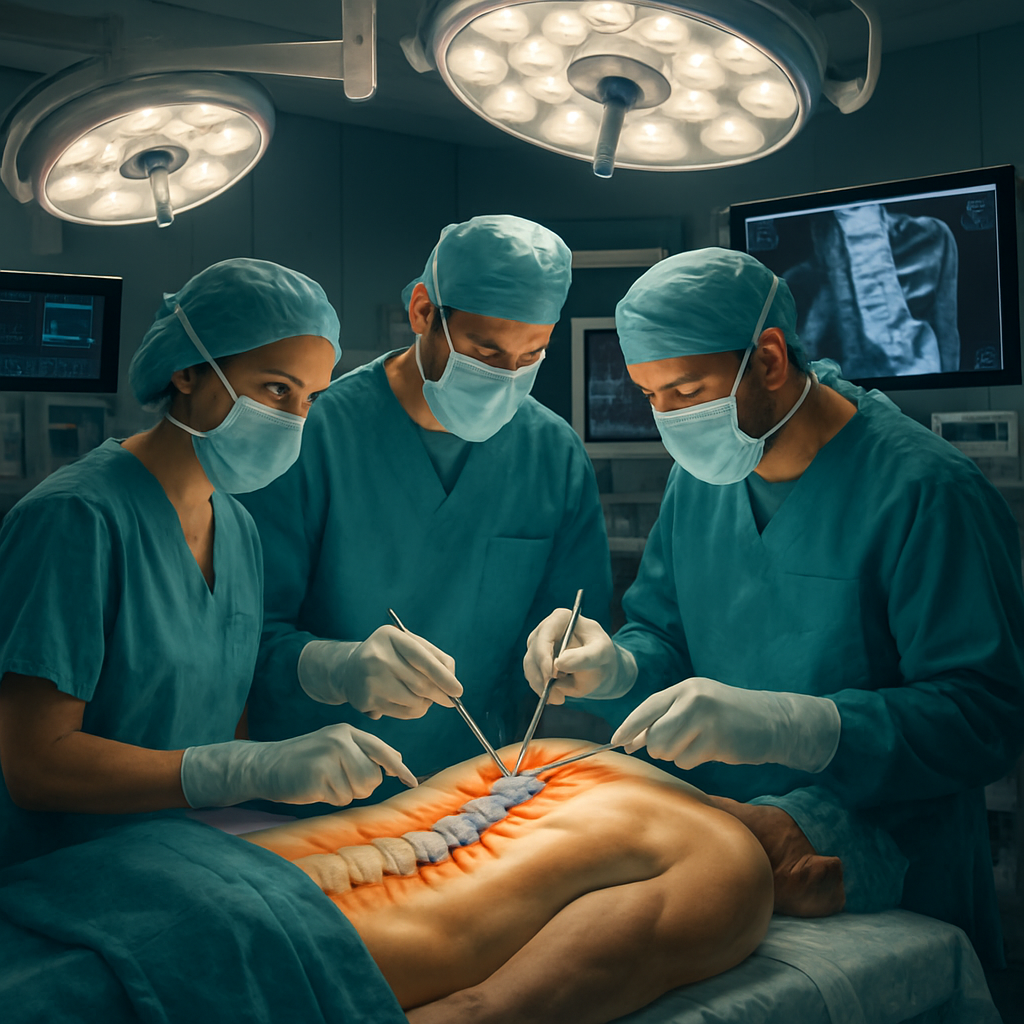
Les patients québécois souffrant de hernies discales complexes ont de plus en plus recours à des solutions chirurgicales innovantes en France, où l’accès aux technologies implantaires avancées est souvent plus rapide et appuyé par un réseau de centres d’excellence. La coordination transatlantique mise en place garantit une prise en charge fluide, sécuritaire et personnalisée, à chaque étape du parcours médical.
This process always begins with a thorough evaluation in Quebec, involving, among others, the TAGMED Clinic, which specializes in advanced conservative treatments. This initial phase, which lasts 3 to 6 months, includes:
- Drug treatments tailored to the symptoms
- Targeted physiotherapy sessions, including Spinal decompression therapy non-invasive
- Multidisciplinary medical monitoring to assess the response to treatment
If surgery becomes necessary, coordination is intensified with surgeons specializing in dynamic implants in France, ensuring:
- Preoperative planning via combined teleconsultations between Quebec and French teams
- A short hospital stay in highly equipped facilities, meeting international standards
- Personalized post-operative support with local and remote follow-up
This cross-border support model relies on high-performing digital platforms such as SOS Medical Tourism, which facilitates administrative and medical procedures, while guaranteeing compliance with European and French standards.
The strong alliances between Canadian and French clinics also facilitate continuing education and scientific exchanges between specialists, thereby strengthening the quality and safety of care provided to Quebec patients. Manufacturers such as DePuy Synthes and NuVasive collaborate closely with these teams to offer state-of-the-art devices.
| Stages of the journey | Key players | Main objectives |
|---|---|---|
| Initial assessment | TAGMED Clinic, Quebec specialists | Confirm the diagnosis and optimize conservative treatments |
| Surgical planning | French surgeons, multidisciplinary team | Define the most suitable technique and prepare for the intervention |
| Surgery | French operating room, biomedical engineers | Enabling safe and innovative surgery |
| Post-operative follow-up | TAGMED Clinic, French teams | Ensuring rehabilitation and limiting risks |
Traditional and alternative surgeries: their role and limitations in the face of innovative implants
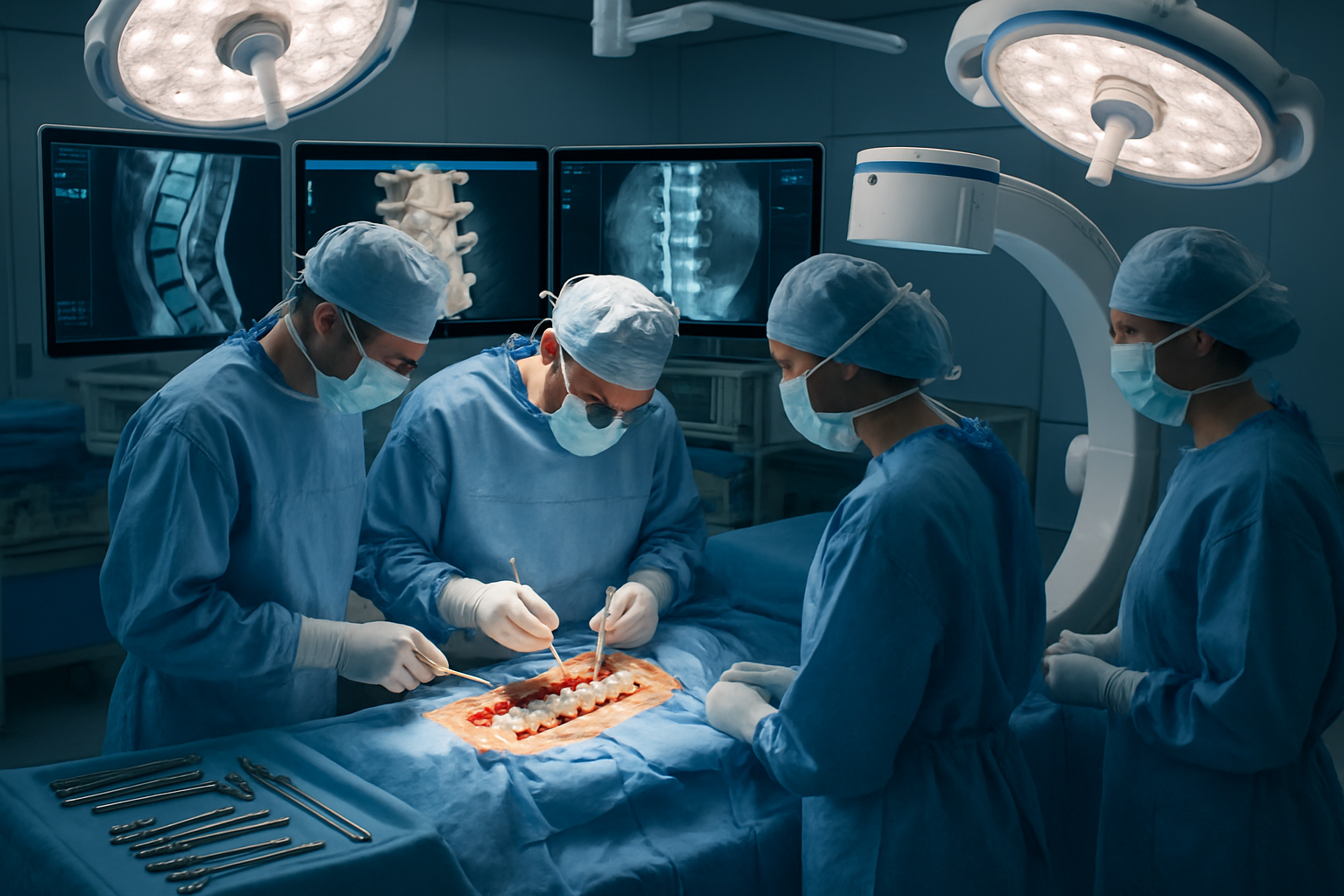
While dynamic implants are a leading solution for certain complex cases of herniated discs, traditional techniques such as spinal fusion (arthrodesis) and simple decompression remain important. These alternatives are still essential when:
- A herniated disc is accompanied by severe instability or major deformities of the spine.
- The patient has associated pathologies requiring robust mechanical immobilization.
- Dynamic technology is not indicated due to specific clinical contraindications.
Spinal fusion, while effective in stabilizing the spine, has recognized biomechanical drawbacks, including increased stress on adjacent segments, which can contribute to other long-term pain. Simple decompression involves releasing the compressed nerve, but it does not address the underlying mechanical cause, which may limit its long-term effectiveness.
Approximately 30 to 40 patients should be referred to these traditional techniques based on their preoperative assessment. Collaboration between surgeons and multidisciplinary teams allows for the selection of the most appropriate strategy for each patient profile, always prioritizing safety and innovation.
The French partner clinics, including the TAGMED Clinic, ensure rigorous monitoring of operated patients, taking advantage of the latest advances in recovery and rehabilitation.
French advances: biomimetic implants for tissue regeneration and recurrence prevention
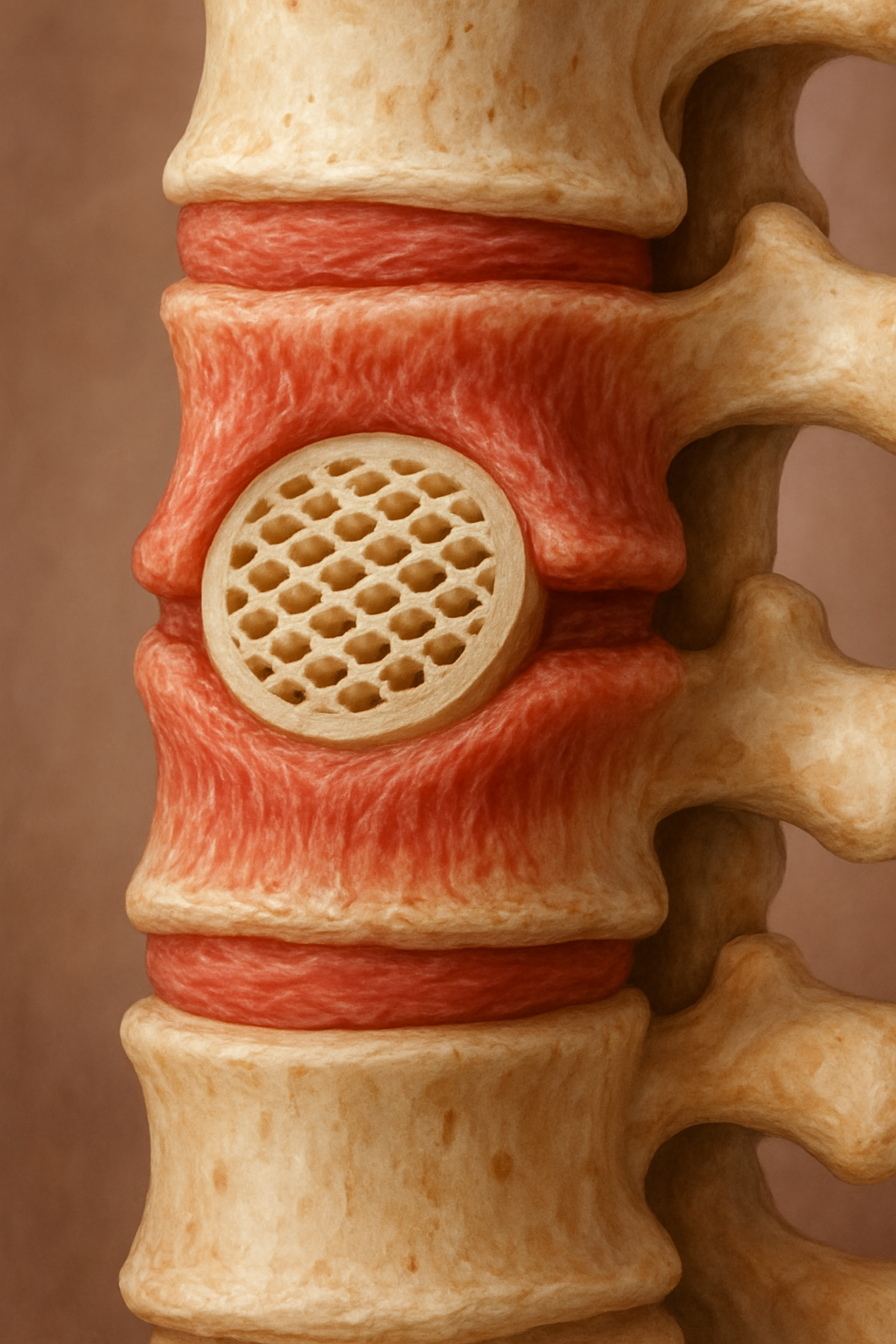
At the heart of the most promising French research is the development of biodegradable, biomimetic implants designed to stimulate the regeneration of tissues damaged by herniated discs and surgery. These implants, made primarily from polycaprolactone, a biocompatible and resorbable material, recreate the concentric structure of the annulus fibrosus of the vertebral disc. This innovative tissue engineering aims to fill the tears that occur during surgery, seeking to prevent the formation of new herniations.
Preclinical trials conducted on sheep models have demonstrated that these implants promote colonization by disc cells, resulting in increased synthesis of collagen, an essential component of cartilage. This regeneration reduces the risk of postoperative degradation and thus improves the functional durability of the operated segments.
- Stimulate natural healing : structural support improving tissue repair.
- Reduce the recidivism rate : maintenance of long-term disc integrity.
- Promote gradual degradation : temporary implantation respecting regeneration.
- Improve functional recovery : accelerated functional biopsy thanks to improved biomimesis.
This cutting-edge research confirms France's position as a driving force for innovation in spinal surgery, in collaboration with major companies such as LDR Medical, Globus Medical or Orthofix. This synergy between scientific research and clinical expertise offers new perspectives for sustainably reducing pain and complications related to herniated discs.
Patients interested in these technologies can find more detailed information through published scientific literature and specialized websites, for example Radio-Canada or Health Magazine.
Comparison of implant solutions for complex disc herniations
| Solution | Main features |
|---|
The keys to an informed decision and comprehensive support for back surgery
The decision to consider a spinal surgery, Treatment, particularly through the use of dynamic implants, relies on a thorough and personalized assessment. This step is fundamental to identifying the best therapeutic strategy, in accordance with the patient's clinical condition, expectations, and priorities.
Before any intervention, it is essential to have followed a complete conservative treatment course of 3 to 6 months, including:
- Appropriate pharmacological treatments
- Targeted rehabilitation sessions, such as neurovertebral decompression offered by specialized centers like the TAGMED Clinic
- Regular monitoring of symptoms and clinical outcomes
The choice of surgery, its type, and the implantable device are determined after consultation between the patient and Quebec and French experts, prioritizing safety and quality of care. This integrated approach combines personalized support that encourages listening and answering questions, as well as close postoperative monitoring for optimal recovery.
Among the advantages of the Franco-Quebec experience are:
- Access to the latest generation of surgical technologies
- A multidisciplinary framework tailored to individual needs
- Optimized management of waiting times and costs
- Rigorous and coordinated post-operative follow-up in Quebec
Patients are strongly advised to seek information as early as possible and request a personalized assessment to determine the suitability of these interventions for their specific situation. This process ensures tailored care, guaranteeing both therapeutic innovation and optimal safety.
To learn more or for a personalized assessment, visit SOS Medical Tourism.
What are the criteria for being a candidate for dynamic implants?
Patient selection is a crucial phase. Dynamic implants are generally suitable for people with:
- A symptomatic lumbar or cervical herniated disc, after failure of conservative treatments
- Moderate spinal instability without severe deformity
- An absence of systemic inflammatory or infectious diseases
- A desire to preserve spinal mobility and avoid fusion
This selection is made jointly with French-speaking surgeons specializing in the spine, guaranteeing an individualized and safe approach.
What is the average recovery time after surgery with a dynamic implant?
Recovery depends on the type of implant, the surgical technique, and the patient's profile. In general:
- Light activities can be resumed as early as 2 to 4 weeks after the procedure.
- Full functional recovery is often achieved between 3 and 6 months.
- Personalized rehabilitation follow-up is essential to optimize results
Can a herniated disc be prevented with innovative implants?
Biomimetic implants currently under research could revolutionize recurrence prevention by promoting the natural repair of damaged tissues, thus reducing the frequency of relapses. These devices support the healing of the annulus fibrosus and limit post-surgical tearing.
Are dynamic implants suitable for all types of herniated discs?
No, these implants are primarily recommended for selected cases of complex disc herniations with moderate instability. Patients with severe deformities, infections, or other associated pathologies often require more traditional interventions.
What role does rehabilitation play in the success of spinal surgery?
Rehabilitation is essential to restore muscle and joint function, maintain mobility, and prevent complications. It complements surgery and must be tailored to each patient within a multidisciplinary framework.