Cervical disc replacement: a surgical revolution
09/11/25
TOPS™: Preventing Adjacent Segment Disease
09/14/25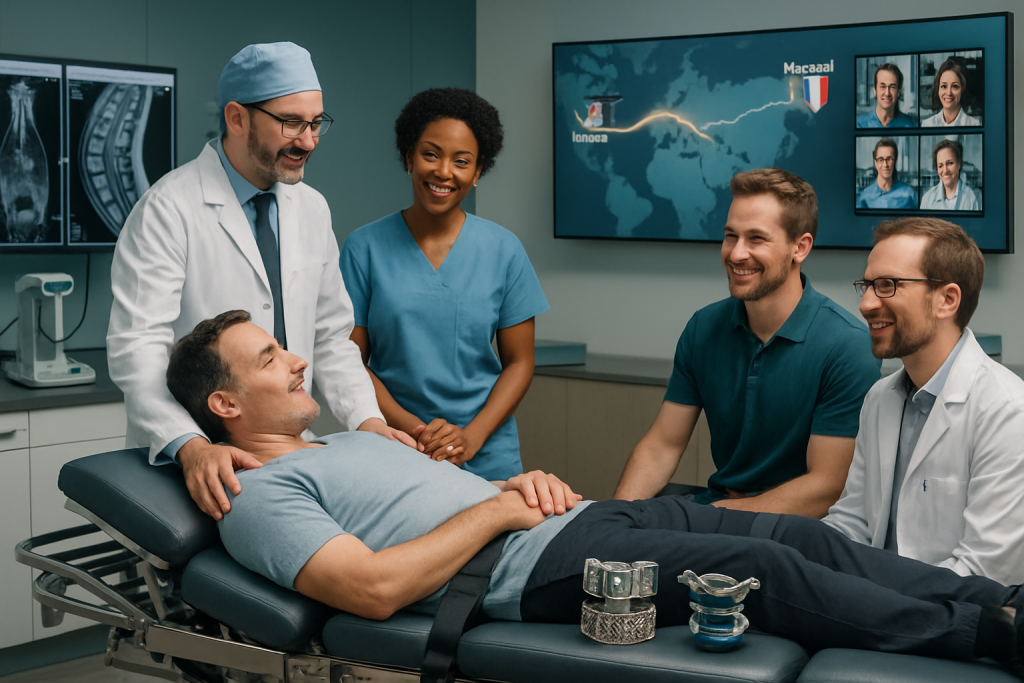
In the field of spinal surgery, the question of the impact of surgical techniques on athletic performance is generating increasing interest, particularly among active and athletic patients. Two approaches stand out: spinal fusion and dynamic, or "motion," implants such as the TOPS system or IntraSPINE. These solutions, rapidly evolving with French technological advancements, offer alternatives that go far beyond simple pain relief. They aim to preserve mobility and promote an optimal return to athletic activity, a major challenge for amateur and professional athletes. This article explores these techniques, their biomechanical impacts, their benefits and limitations in terms of athletic performance, while describing a personalized and coordinated patient pathway between Quebec and France, guaranteeing safe, rigorous, and innovative support.
Comparison of surgical techniques: Spinal fusion versus dynamic implants
The spinal surgery has undergone numerous evolutions, primarily with the aim of improving functional outcomes and patients' quality of life. merger Spinal fusion, long considered the gold standard, involves stabilizing one or more vertebrae by fusing them together, thus eliminating all mobility in the operated segment. This technique is effective for treating various conditions, such as vertebral instability or severe degenerative abnormalities, but it has a major drawback: the loss of local mobility, which can impair athletic performance, particularly in disciplines requiring high flexibility or range of motion.
In contrast, surgery using dynamic or "motion-preserving" implants aims to maintain spinal mobility while stabilizing the spine. Two innovative systems stand out today:
- The system TOPS (Total Posterior Spine System) : dynamic implant placed posteriorly, it stabilizes the vertebral segment while allowing natural movements such as flexion, extension and rotation.
- IntraSPINE : a dynamic interspinous device that acts as a shock absorber, reducing compression on the discs while maintaining joint function.
These devices, developed in collaboration with leading surgical centers in France, allow for a biomechanical recovery closer to normal and thus promote the maintenance of athletic performance after surgery. The choice between these solutions will nevertheless depend on a rigorous assessment of the pathology, the patient's functional expectations, and numerous other clinical variables.
| Features | Spinal fusion | Dynamic implants (TOPS, IntraSPINE) |
|---|---|---|
| Post-intervention mobility | Total local loss | Mobility preserved |
| Impact on athletic performance | Significant reduction, especially in sports involving flexion/rotation | Performance can be maintained or improved |
| Average recovery time | 6 to 12 months | 3 to 6 months |
| Risks of complications | Risk of degeneration of adjacent segments | Mechanism for protecting adjacent segments |
It should be noted that these dynamic implants represent the new wave of lumbar surgery, particularly for patients with intense physical activity or wishing for a quick return to a full sporting life.

Biomechanical effects of dynamic implants on athletic performance
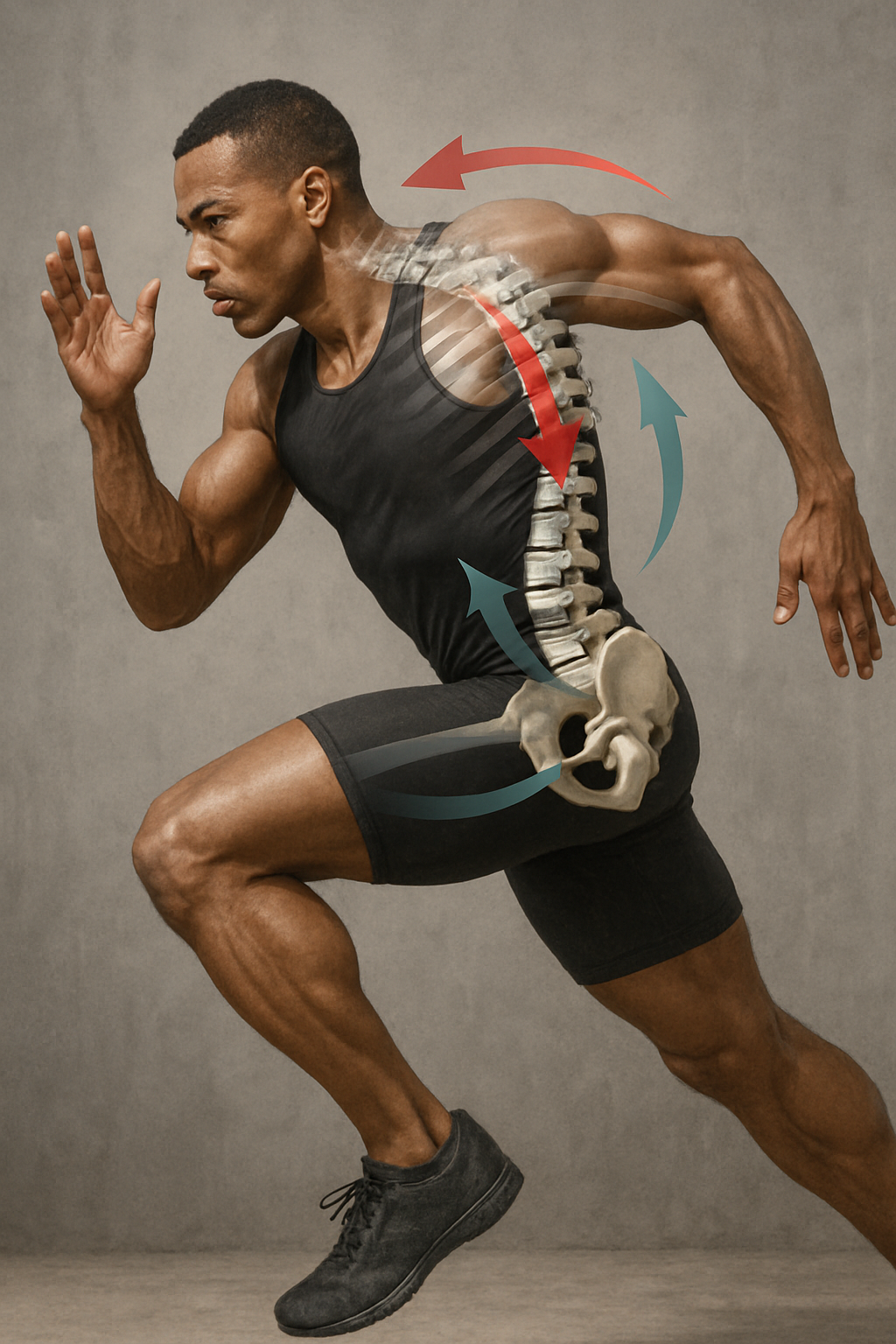
Preserving spinal mobility with innovative implants substantially alters the body's biomechanics during athletic activity. Unlike fusion, TOPS or IntraSPINE implants facilitate natural spinal movement, essential for many athletes, particularly in sports requiring trunk flexion, extension, or rotation.
- Maintaining the functional kinetic chain: Local mobility allows for optimal energy transfer and muscle coordination, essential in combat sports, tennis, or even skiing (brands like Nike, Adidas, Salomon being leading equipment manufacturers in these disciplines).
- Reduction of the load on adjacent vertebral segments: By limiting the phenomenon of degeneration adjacent to the operated area, these implants contribute to the durability of spinal function, essential for a prolonged sporting career.
- Improvement of proprioception: Preserving ligament and muscle tissue around the spine promotes a better perception of movement, crucial for pro athletes wearing Puma, Under Armour or Asics equipment.
However, the key word remains surgical personalization, where French expertise, through experts collaborating with structures like the TAGMED Clinic specializing in advanced conservative care, guarantees optimal adaptation to each sporting profile.
| Biomechanical aspect | Fusion | Dynamic implants |
|---|---|---|
| Range of motion | 0 to 5° (almost total buyback) | 15 to 25° depending on the segment |
| Muscle reaction force | Diminished | Preserved or improved |
| Quality of motor coordination | Altered | Optimized |
| Risk of injury related to compensation | Pupil | Reduced |
Surgical excellence and mastery of new implant technologies, coupled with clear and accessible patient education, are essential for informed decision-making that complies with international standards.
Patient pathway and transatlantic coordination for optimized spinal surgery
The success of spinal surgery depends not only on the surgical technique used. The patient journey is paramount, including a comprehensive pre-operative assessment, personalized support, and rigorous post-operative follow-up. It is within this framework that the expertise of transatlantic teams, bringing together healthcare professionals from Quebec and France, comes into play.
- Initial assessment in Quebec: Patients benefit from a thorough assessment with specialists in sports medicine and physiotherapy, notably through the TAGMED Clinic where conservative treatments such as Spinal decompression therapy are provided before any surgery.
- Orientation towards France: In the event of a surgical indication, a rapid transfer is arranged, guaranteeing care by surgeons experienced in dynamic implants in innovative centers.
- Personalized support: Each step, from the pre-operative consultation to post-operative rehabilitation, is supervised by a multidisciplinary team, facilitating patient understanding, safety and motivation.
- Remote post-operative monitoring: Follow-up consultations use digital platforms with the possibility of French-language teleconsultations, allowing continuous support without interruption of care.
This transatlantic organization, supported by partners such as SOS Medical Tourism, ensures a smooth, responsive journey in accordance with best practices, while offering the patient significant psychological and logistical comfort.
This video device explains in detail the benefits of dynamic systems and the patient's journey between Quebec and France, a support recognized for its seriousness and humanity.
Clinical and athletic impact: studies and observations on post-operative performance recovery
Recent scientific literature emphasizes that before considering spinal surgery, a minimum of 3 to 6 months of conservative treatment, including follow-up at the TAGMED Clinic, is recommended. This phase aims to maximize functional recovery before resorting to an invasive procedure.
- Progressive improvement of physical abilities: In the case of dynamic implants, the gradual resumption of sporting activities demonstrates a better preservation of abilities, similar to the work observed in athletes using equipment from brands such as Reebok, New Balance, or Mizuno, who appreciate the regained mobility.
- Reduced pain and faster recovery: These less invasive techniques allow a return to training that is often faster than with a classic fusion, which is confirmed by several physiotherapy studies worldwide.
- Preserving the quality of the movement: Patients report improved flexibility and functional recovery, allowing for increased safety in sports activities.
| Criteria | Average fusion time | Average time for dynamic implants |
|---|---|---|
| Back to full training | 9 to 12 months | 4 to 6 months |
| Length of hospital stay | 3 to 5 days | 2 to 3 days |
| Functional complication rate | 7-10% | 3-5% |
These figures highlight the growing interest in surgical solutions that are part of a functional trajectory, promoting the maintenance of movement in sports and daily life.

Interactive comparison: Fusion vs. dynamic implants
This filter allows you to search for a specific criterion in the table.The advantages of an innovative French approach for Quebec sports patients
French innovations in dynamic spinal implants offer unique opportunities to Quebec patients seeking recognized surgical quality at controlled costs and with personalized support. Beyond the technique itself, this offering stands out for several advantages:
- Certified expertise : renowned French surgeons operating in centers at the forefront of international best practices in back surgery.
- Rigorous and multidisciplinary monitoring : from the pre-operative phase to rehabilitation, in close collaboration with Quebec teams.
- A clear and reassuring teaching method : precise explanation of the biomechanical benefits, implant options, and realistic prospects for each patient.
- Economic solutions : an organized tour via SOS Medical Tourism optimizes care, reduces waiting times and guarantees a pleasant stay in a secure medical environment.
- Human support active listening, adaptation to specific needs, and access to resources such as the Management of epicondylitis in athletes or management of epitrochleitis.
This transatlantic approach reflects a commitment to excellence and tailored care, where each sports patient is supported with professionalism and humanity, to regain confidence and performance.
This video perfectly illustrates the Franco-Quebec coordination and the quality of support offered, an essential asset in modern surgical practice.
Frequently asked questions about the effects of spinal surgery on athletic performance
- Which surgical technique is best suited for an active athlete?
Dynamic implants such as TOPS or IntraSPINE are generally preferred to preserve mobility and allow a faster return to sports practice, unlike fusion which limits local mobility. - How long does recovery take before resuming sports after back surgery?
With dynamic implants, recovery is possible between 3 and 6 months, while fusion often requires a longer period, up to 12 months. - Can surgery prevent complications on adjacent vertebral segments?
Dynamic implants are designed to reduce the overload on these segments, thereby decreasing the risk of degeneration and future pain. - Can Quebec patients easily access these procedures in France?
Yes, thanks to the coordination provided by SOS Medical Tourism, with a personalized and secure route between Quebec and France. - What alternatives exist before considering surgery?
Conservative treatments, including neurovertebral decompression offered at the TAGMED CLINIC, These factors are essential to consider before any surgical procedure.