TAGMED Clinic Montreal / Mount Royal
Herniated disc and leg weakness: when the situation becomes more urgent
Understanding the link between a herniated disc, the path of sciatic pain, neurological signs and care decisions.
A painful leg may seem weak simply because the patient is protecting it. True motor weakness related to a nerve root is different: it is reproducible during a specific movement and can affect walking or certain tasks.
- Related page in this guide series Sciatica treatment in Montreal.
- A herniated disc seen on MRI is only relevant when the level, side and clinical findings are consistent.
- Progressive weakness, foot drop or signs of cauda equina syndrome change the priority of assessment.

Understanding
What this symptom pattern may mean
A painful leg may seem weak simply because the patient is protecting it. True motor weakness related to a nerve root is different: it is reproducible during a specific movement and can affect walking or certain tasks.
Key point 1
Quadriceps weakness may suggest L3–L4/L4 involvement; difficulty lifting the foot may suggest L5; difficulty standing on tiptoe may suggest S1.
Key point 2
Progressive weakness is more concerning than mild, stable weakness.
Key point 3
A reduction in pain does not rule out neurological deterioration if strength continues to decline.
Clinical guidance
Symptoms, function and disc level should tell a consistent story
A motor deficit is a particularly important sign when deciding whether to continue conservative care. Patients may compensate for a long time before noticing a loss of strength, which is why comparative tests are useful.

An important point
The presence of a herniated disc alone does not establish that it is causing the symptoms. Disc abnormalities are also seen in people without pain.
Assessment
What can be assessed during a consultation
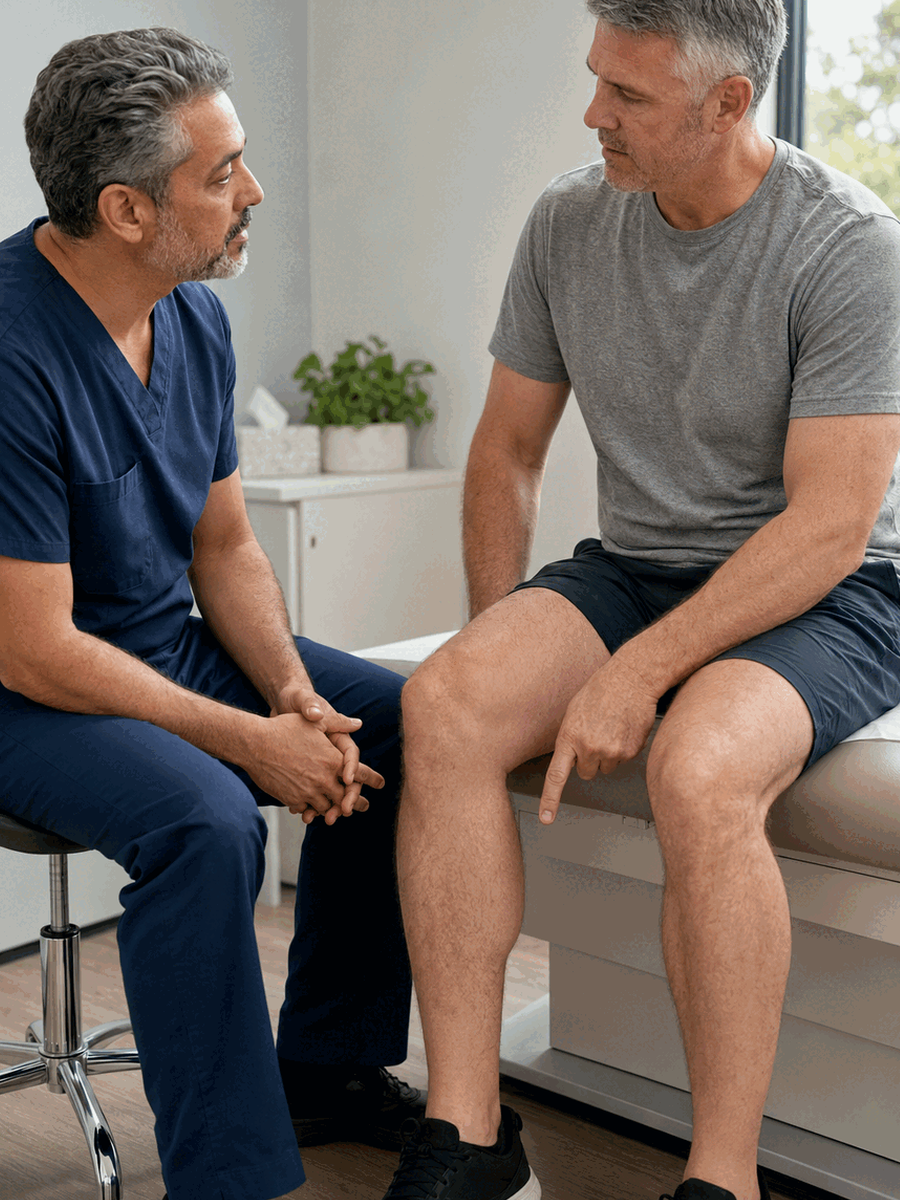
The examination compares key movements, walking, reflexes, sensation and pain levels. Significant or progressive weakness may warrant earlier imaging and medical or surgical advice.
Route
Precisely locate pain, tingling and areas of numbness.
Strength and function
Compare key movements, walking and tasks that may reveal weakness.
Imaging
Relate the disc level, side and morphology to the clinical findings rather than treating an isolated report.
Changes over time
Measure symptom trends and define the criteria that would call for a different course of care.
Evidence and decisions
What the guidelines say
Mild, stable weakness can sometimes be monitored as part of a conservative plan. However, progressing weakness should not have its assessment delayed by passive treatments. NICE does not routinely recommend traction for sciatica; neurological urgency takes priority over any discussion of motorized decompression.
Stay active
NICE recommendations encourage self-management and maintaining normal activities as much as possible, with adjustments to individual needs and abilities.
Targeted imaging
NICE recommends considering imaging in a specialist setting only if the result is likely to change management.
Traction / decompression
NICE does not recommend traction for low back pain with or without sciatica. Motorized decompression should therefore not be presented as a standard or guaranteed treatment, and requires transparent information about the uncertainty of the evidence.
When should you seek prompt or emergency care?
- New, significant or rapidly progressive weakness.
- Recent foot drop or worsening walking ability.
- New bladder or bowel problems.
- Numbness in the saddle area or perineum.
- Significant symptoms on both sides, fever, major trauma or a general deterioration in health.
These signs should not wait for a routine appointment.
Follow-up
Measure progress rather than repeat the same treatment
Follow-up compares leg pain, the area of numbness, strength, walking, sitting tolerance, sleep and activities. Objective worsening should lead to a reassessment of the diagnosis and plan.

In the same guide series
Related guides
Do you have sciatica that may be associated with a herniated disc?
A consultation can help clarify how symptoms, examination findings and imaging fit together, the signs to watch for and the options for care.
Spinal decompression in Montreal · Spinal decompression in Terrebonne
Herniated disc treatment in Montreal · Herniated disc treatment in Terrebonne
Frequently Asked Questions
FAQ — Herniated disc and leg weakness: when the situation becomes more urgent
How can pain be distinguished from true weakness?
True weakness is reproducible during a specific movement, even when pain is controlled as much as possible.
Can L5 cause foot drop?
Yes, but other neurological causes can also lead to foot drop.
Can S1 reduce calf strength?
Yes. Plantar flexion and the ability to rise onto the toes can be reduced.
Can strength recover?
Yes, depending on the cause, severity and timing, but recovery cannot be guaranteed.
Is an MRI needed?
It becomes more relevant when a motor deficit is confirmed on examination or is progressing.
Is surgery always necessary?
No, but specialist advice may become more urgent depending on the severity of the deficit.
Which signs require emergency care?
Rapidly progressive weakness, significant symptoms on both sides or signs of cauda equina syndrome.
Medical references
References and guidelines
These resources provide general guidance on sciatica, lumbar disc herniation, imaging and radiculopathy. They do not replace an individualized clinical decision.
- NICE NG59 — Low back pain and sciatica: recommendations
- American College of Radiology — Appropriateness Criteria: Low Back Pain
- North American Spine Society — Lumbar Disc Herniation with Radiculopathy
Important information
This page provides general information and does not make a diagnosis. Outcomes, recovery times and the need for an intervention vary with the cause, neurological signs, function and individual response.
Sylvain Desforges, docteur en ostéopathie
TAGMED Clinic — Spinal decompression, specific osteopathy and assessment of low back, disc-related and sciatic pain.
Professional profile · Contact · Main guide to sciatica in Montreal