TAGMED Clinic Montreal / Mount Royal
Sciatica and flexion exercises: which clinical presentations may tolerate them better?
Gradual activity, symptom tolerance and measurable functional progress.
La flexion lombaire peut être confortable chez certains patients, notamment lorsque la station debout en extension est mal tolérée, mais elle peut aussi augmenter les symptômes dans d’autres profils. Le diagnostic et la réaction clinique comptent davantage qu’une règle générale.
- Page in this guide series Sciatica exercises and rehabilitation.
- Linked to the main guide Sciatica treatment in Montreal.
- No single exercise is presented as mandatory or suitable for every patient.

Understanding
The right amount matters more than the “perfect” exercise
Le but n’est pas d’étirer le dos de façon maximale, mais de trouver une amplitude et une position qui soutiennent la fonction sans provoquer une aggravation durable.
Tolerance
Observe what happens during the exercise, in the hours that follow and the next day.
Goal
Connect each exercise to a useful ability: walking, working, lifting, driving, sleeping or returning to sport.
Progression
Change one variable at a time: duration, repetitions, range of motion, load or complexity.
Clinical guidance
Adapt exercise to the neurological and functional response
Une amélioration de la marche ou de la tolérance à l’activité peut être un indicateur utile, tandis qu’une augmentation de l’irradiation impose d’adapter l’exercice.
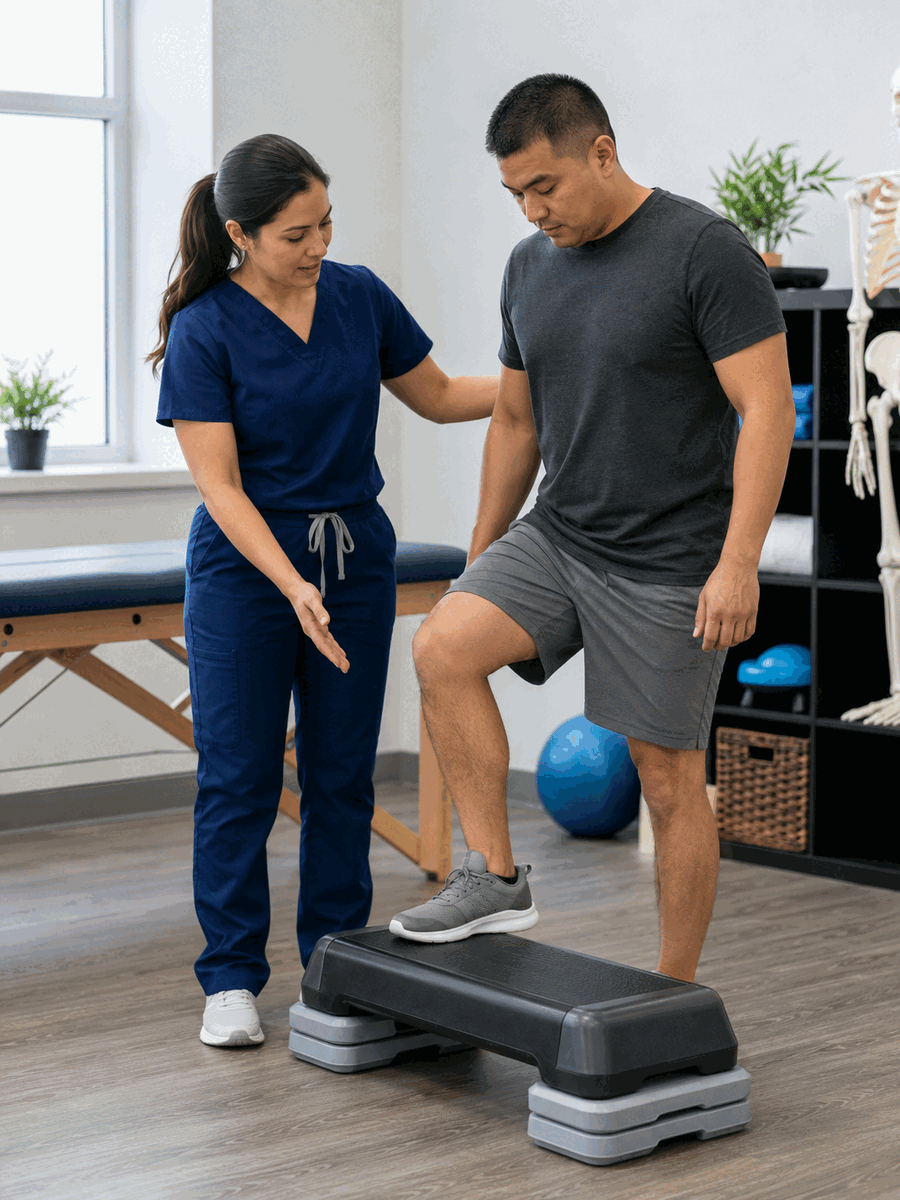
An important point
NICE recommends encouraging self-management, continuing normal activities as much as possible and adapting exercise to needs, preferences and abilities. The aim is not to push through neurological deterioration.
Assessment
Establish a measurable starting point
Before progressing, it is useful to document currently limited tasks, walking distance, sitting or standing tolerance, strength, tingling and recovery after activity.
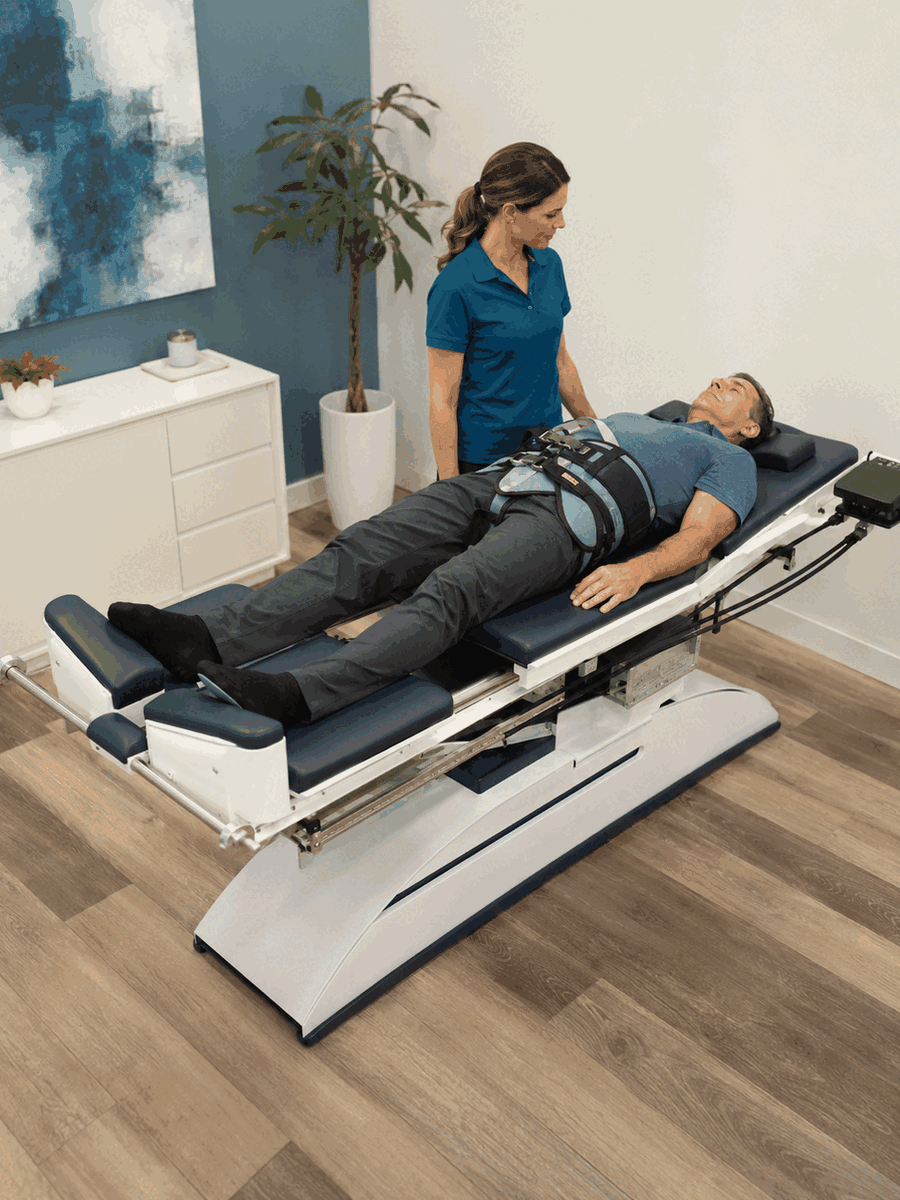
Choose the goal
Identify a real-life activity to improve.
Determine the amount
Start at a level that is tolerable enough to repeat.
Observe the response
Note leg pain, recovery and neurological signs.
Progress
Gradually increase one variable when tolerance allows.
Active program
Combine mobility, muscular capacity and functional activity
A program may include mobility, strengthening, walking, balance and a gradual return to loading, but not every patient needs all of these components. The choice depends on limitations and goals.
Mobility
Explore useful movements without pursuing maximum range at all costs.
Strengthening
Gradually rebuild the capacity to tolerate useful physical effort.
Activity
Reintroduce the real-life tasks that matter to the patient.
When should you stop simply progressing the exercises?
- New or rapidly progressive weakness.
- Recent foot drop or a leg that gives way more often.
- A persistent increase in significant numbness.
- New bladder or bowel problems.
- Numbness in the saddle area or perineum.
These signs call for reassessment rather than intensifying the program.
Follow-up
Measure progress in real life
Meaningful improvement may involve walking more, tolerating work better, fewer sleep interruptions, resuming lifting or gradually returning to sport. Pain alone does not capture all aspects of function.
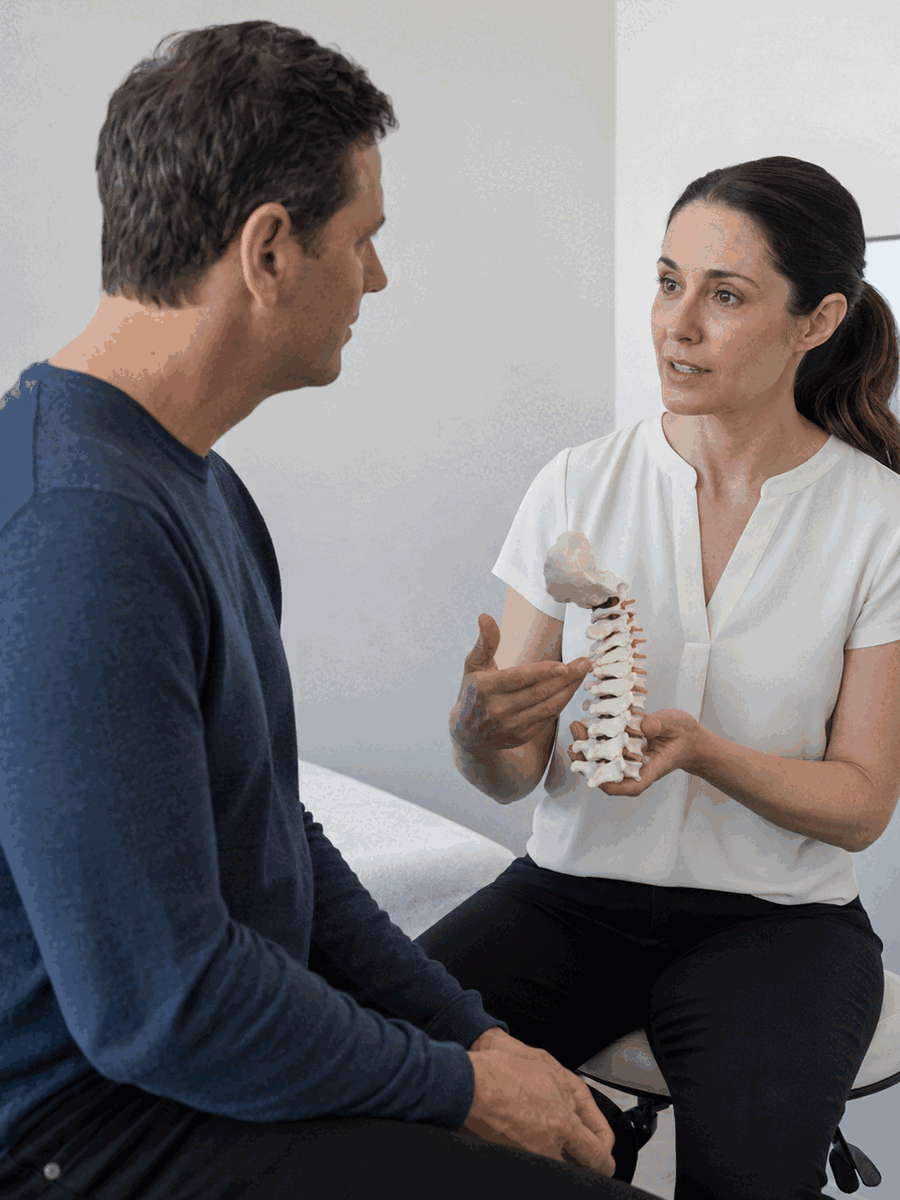
Function
Compare important activities with the starting level.
Recovery
Check the response in the hours that follow and the next day.
Main topic guide
In the same guide series
Related guides
Would you like to plan a return to activity that accommodates your sciatica?
An assessment can help establish a starting point, functional goals and progression criteria suited to your clinical presentation.
Frequently Asked Questions
FAQ — Sciatique et exercices en flexion : dans quels profils peuvent-ils être mieux tolérés?
La flexion aide-t-elle toujours la sténose?
Pas toujours, même si certains patients la tolèrent mieux que l’extension.
Peut-elle aggraver une douleur discale?
Chez certaines personnes, oui; la réponse individuelle guide le choix.
Faut-il toucher les orteils?
Non. L’amplitude maximale n’est pas un objectif obligatoire.
Comment tester la tolérance?
Avec une dose faible, puis en observant les symptômes pendant et après.
Peut-on alterner plusieurs directions?
Oui si le plan individualisé le justifie.
Quand faut-il arrêter?
Si la douleur radiculaire ou les signes neurologiques s’aggravent.
Which signs require emergency care?
Bladder or bowel dysfunction, saddle anaesthesia or severe, rapidly progressive weakness.
Medical references
References and guidelines
These references address self-management, physical activity and exercise for low back pain with or without sciatica. They do not define a single exercise suitable for every patient.
- NICE NG59 — Low back pain and sciatica: assessment and management
- NICE — Exercise and physical activity for low back pain and sciatica
- North American Spine Society — Lumbar Disc Herniation with Radiculopathy
Important information
This page provides general information and is not an individualized exercise prescription. The choice and progression of a program should take safety, tolerance, goals and neurological changes into account.
Sylvain Desforges, docteur en ostéopathie
TAGMED Clinic — Spinal decompression, specific osteopathy and assessment of low back, disc-related and sciatic pain.
Professional profile · Contact · Main guide to sciatica in Montreal
In the same guide series
Related guides to sciatica
Continue with guides that explore the same symptom, its possible cause, assessment or options for care.
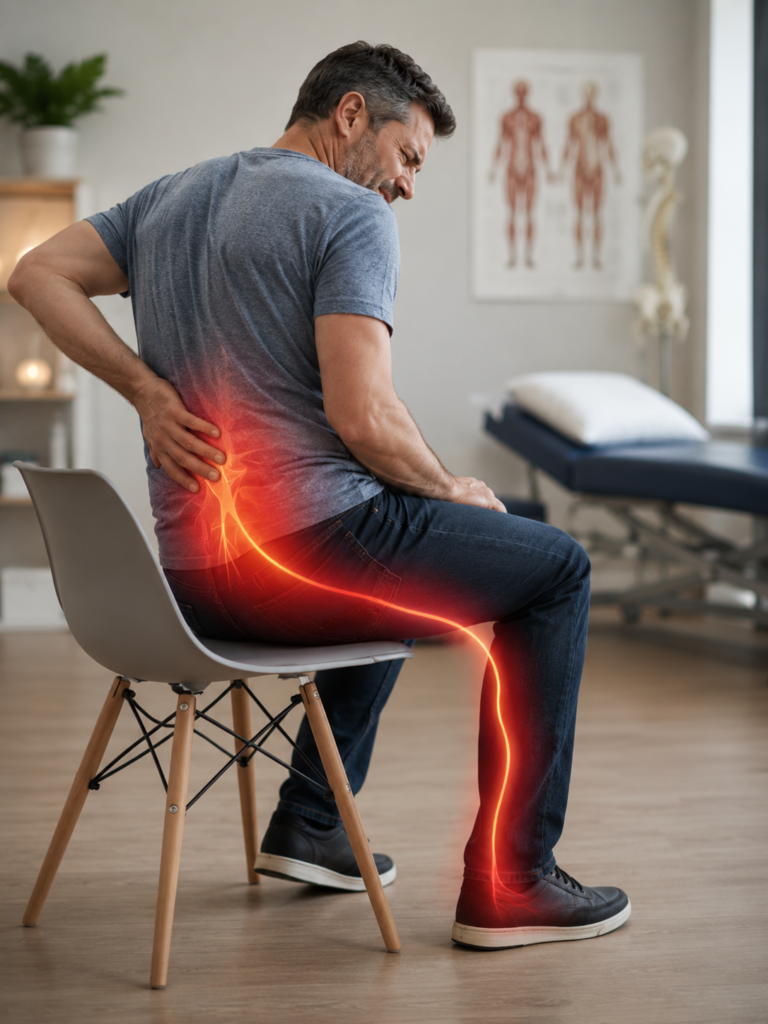
Sciatica treatment in Montreal
TAGMED Clinic Montreal / Mount Royal — Sciatica treatment in Montreal. Free examination, valued at CAD $85. Request your free examination and check availability…
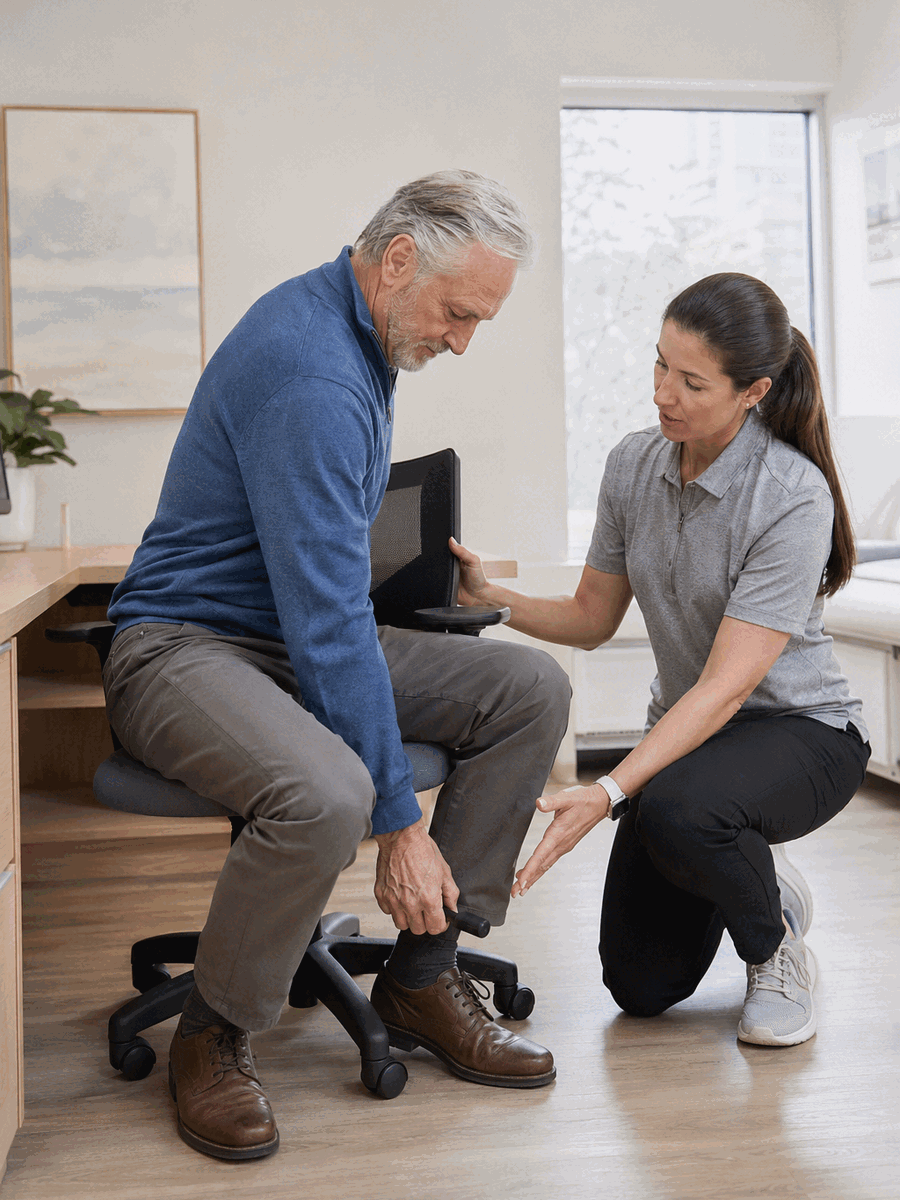
Spinal decompression and sciatica: for which patient profiles can it be discussed?
TAGMED Clinic Montreal / Mount Royal — Spinal decompression and sciatica: for which patient profiles can it be discussed? Clinical criteria, safety and limitations of motorized traction…
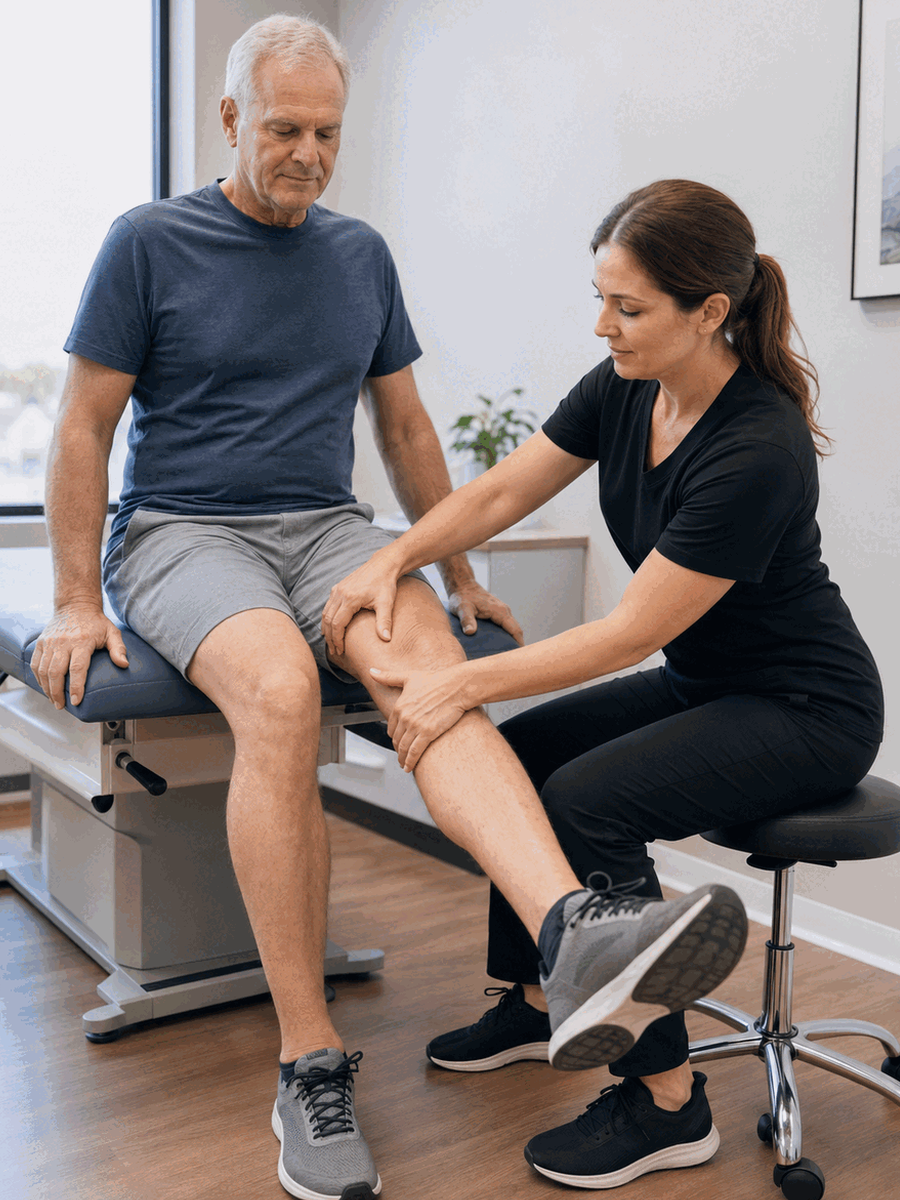
Sciatica and extension exercises: why they help some people but not everyone
TAGMED Clinic Montreal / Mount Royal — Sciatica and extension exercises: why they help some people but not everyone. Gradual activity, symptom tolerance and progression…

Lumbar stenosis and sciatica: which exercises can be discussed?
TAGMED Clinic Montreal / Mount Royal — Lumbar stenosis and sciatica: which exercises can be discussed? Clinical, functional and decision-making pointers in a context of lumbar stenosis…

Sciatica after lumbar surgery: why symptoms may persist or return
TAGMED Clinic Montreal / Mount Royal — Sciatica after lumbar surgery: why symptoms may persist or return. Clinical pointers, signs to monitor and…
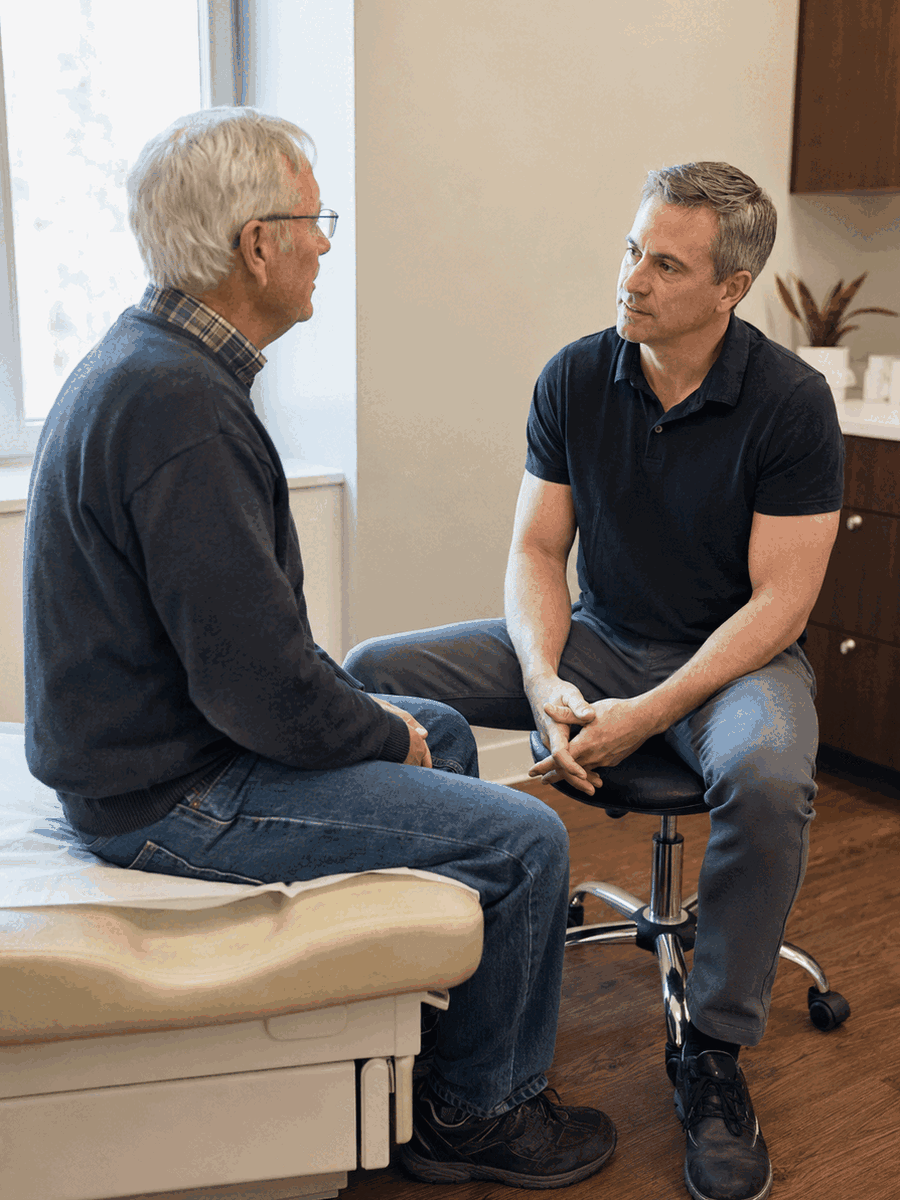
Decompression for sciatica: who may be a candidate?
TAGMED Clinic Montreal / Mount Royal — Decompression for sciatica: who may be a candidate? Clinical pointers, signs to monitor and next steps for pain…