TAGMED Clinic Montreal / Mount Royal
Sciatica when sitting: why does the pain increase?
Clinical guidance, signs to watch for and next steps for sciatic or radicular pain.
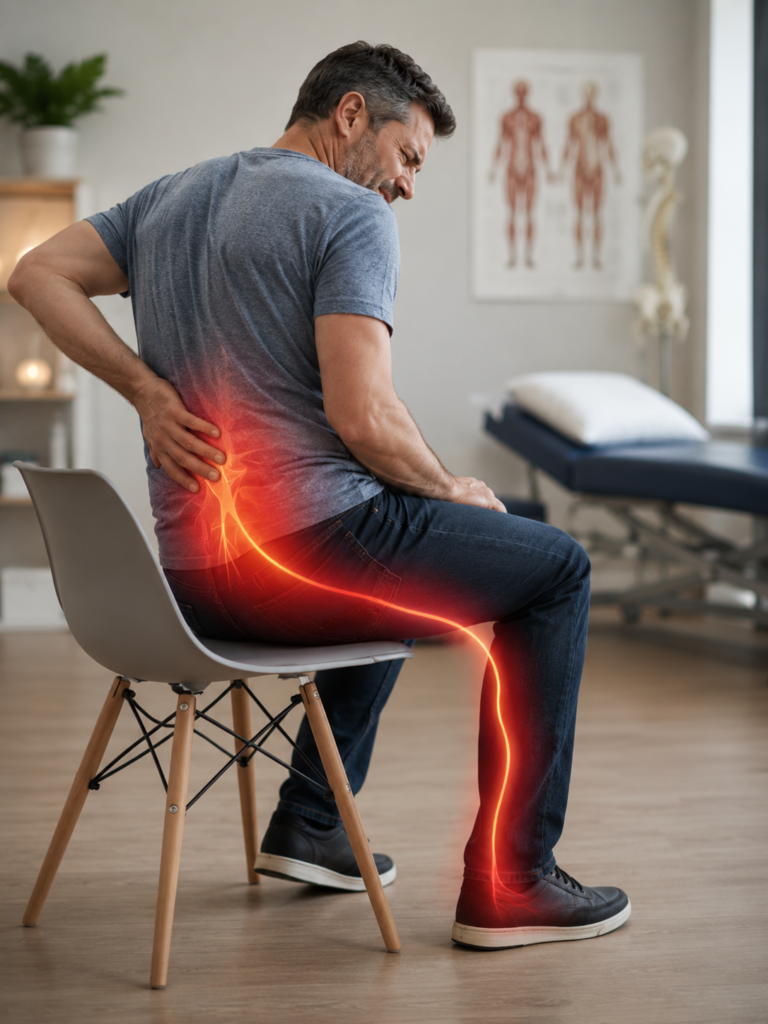
For some people, sitting increases pain in the buttock or leg. Lumbar flexion, disc pressure, time spent without changing position and mechanical tension in the nervous system can contribute.
- Related page in this guide series Sciatica treatment in Montreal.
- An approach focused on whether symptoms, examination findings and imaging, when relevant, are consistent.
- Particular caution is needed when weakness, loss of sensation or emergency signs are present.

Understanding
What this symptom pattern may mean
For some people, sitting increases pain in the buttock or leg. Lumbar flexion, disc pressure, time spent without changing position and mechanical tension in the nervous system can contribute.
Key point 1
Pain aggravated by sitting may be consistent with a disc component, but this sign is not specific.
Key point 2
The length of time spent continuously sitting often matters as much as the position itself; alternating sitting, standing and walking may reduce irritation.
Key point 3
Pain that extends farther down the leg or is accompanied by weakness merits reassessment.
Clinical guidance
Why the path of the pain and its progression matter
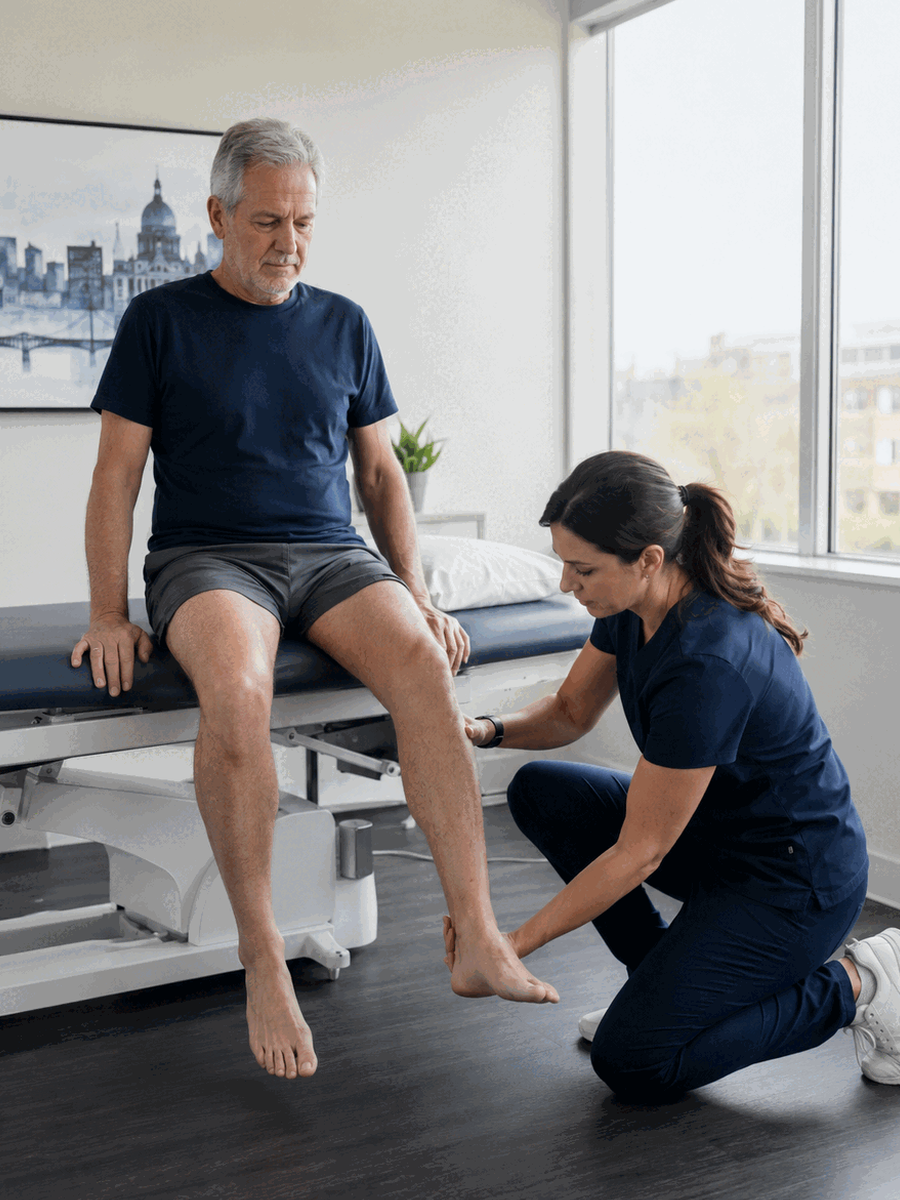
Two people who use the word "sciatica" may have different underlying mechanisms. Location, duration, aggravating factors, changes in sensation and strength provide more guidance than a single word or an imaging abnormality considered on its own.
An important point
Pain, numbness or weakness must be interpreted according to its distribution, progression and impact on function. A neurological or vascular emergency must be ruled out before routine care continues.
Assessment
What can be assessed during a consultation
The assessment compares sitting tolerance, changes with flexion or extension, walking, hip mobility and neurological signs. The aim is to identify positions that actually provoke symptoms rather than impose a single posture.

Symptom history
Pattern, duration, intensity, sleep, walking, positions, recurrences and treatments already tried.
Function and neurological assessment
Strength, sensation, gait and relevant tests according to the presentation.
Imaging when relevant
Existing studies are compared with the level, side and symptoms.
Plan and reassessment
Measurable goals, precautions and criteria for modifying or stopping the plan.
Options and limitations
Adapt treatment to the likely cause
Frequent breaks, an adjusted workstation and a gradual increase in tolerance may be useful. Decompression can be discussed only if the overall clinical picture supports disc or nerve root involvement, rather than solely on the basis of pain when sitting.
Conservative approach
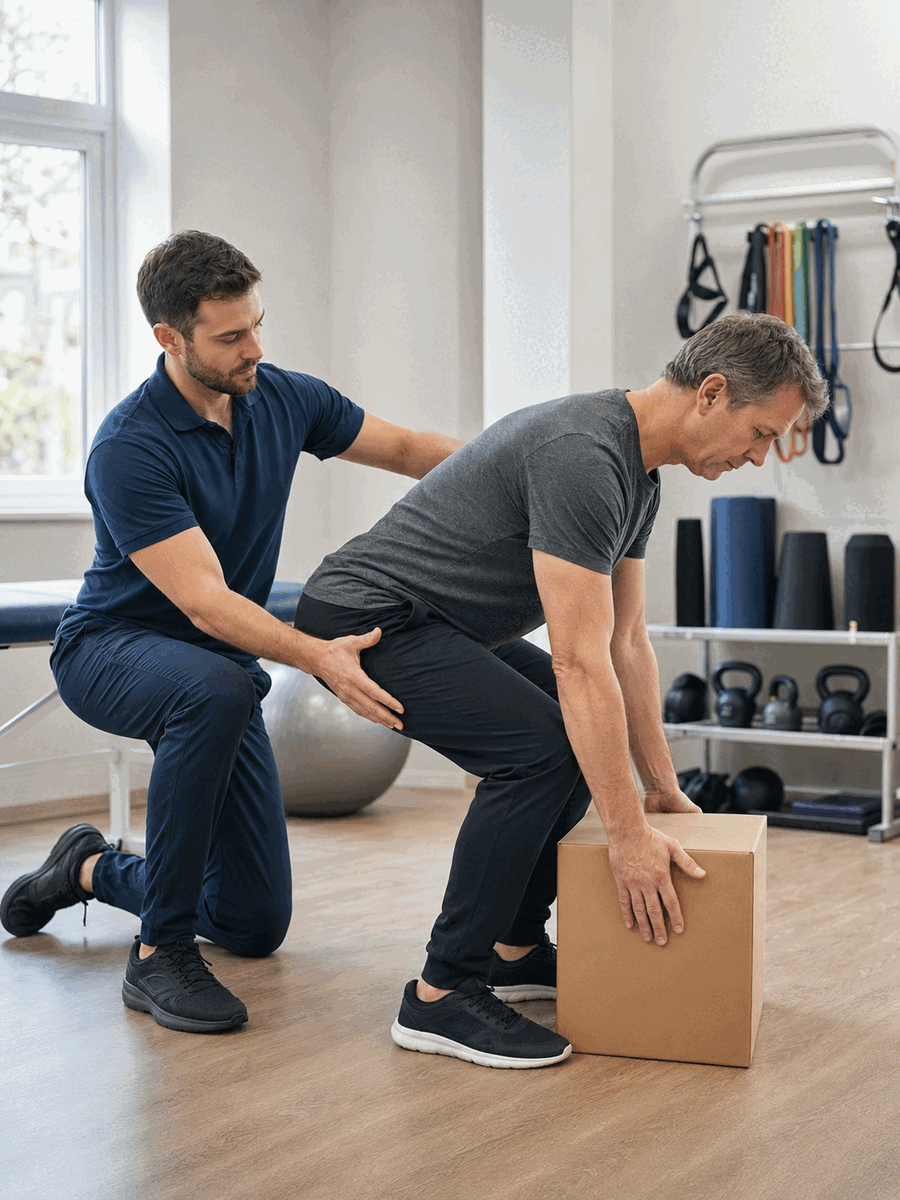
Maintaining tolerated activities, gradual progression, rehabilitation and other measures appropriate to the clinical presentation.
Spinal decompression therapy
Motorized traction may be discussed for selected patients. It is neither suitable for everyone nor guaranteed to work, and requires objective reassessment.
Medical referral
An injection, further investigation or a specialist opinion may become relevant depending on severity, duration, imaging and neurological signs.
When should you seek prompt or emergency care?
- New, significant or rapidly progressive weakness.
- Recent foot drop or a leg that gives way increasingly often.
- New bladder or bowel problems.
- Numbness in the saddle area or perineum.
- Significant symptoms on both sides, major trauma, fever or a decline in general health.
These signs should not wait for a routine appointment. Urgent medical assessment may be necessary.
Follow-up
Measure progress rather than repeat the same treatment
Useful measures include leg pain, walking distance, sitting tolerance, sleep, strength and the ability to resume usual activities. A lack of progress or deterioration should prompt a review of the working diagnosis and plan.
Montréal / Mont-Royal
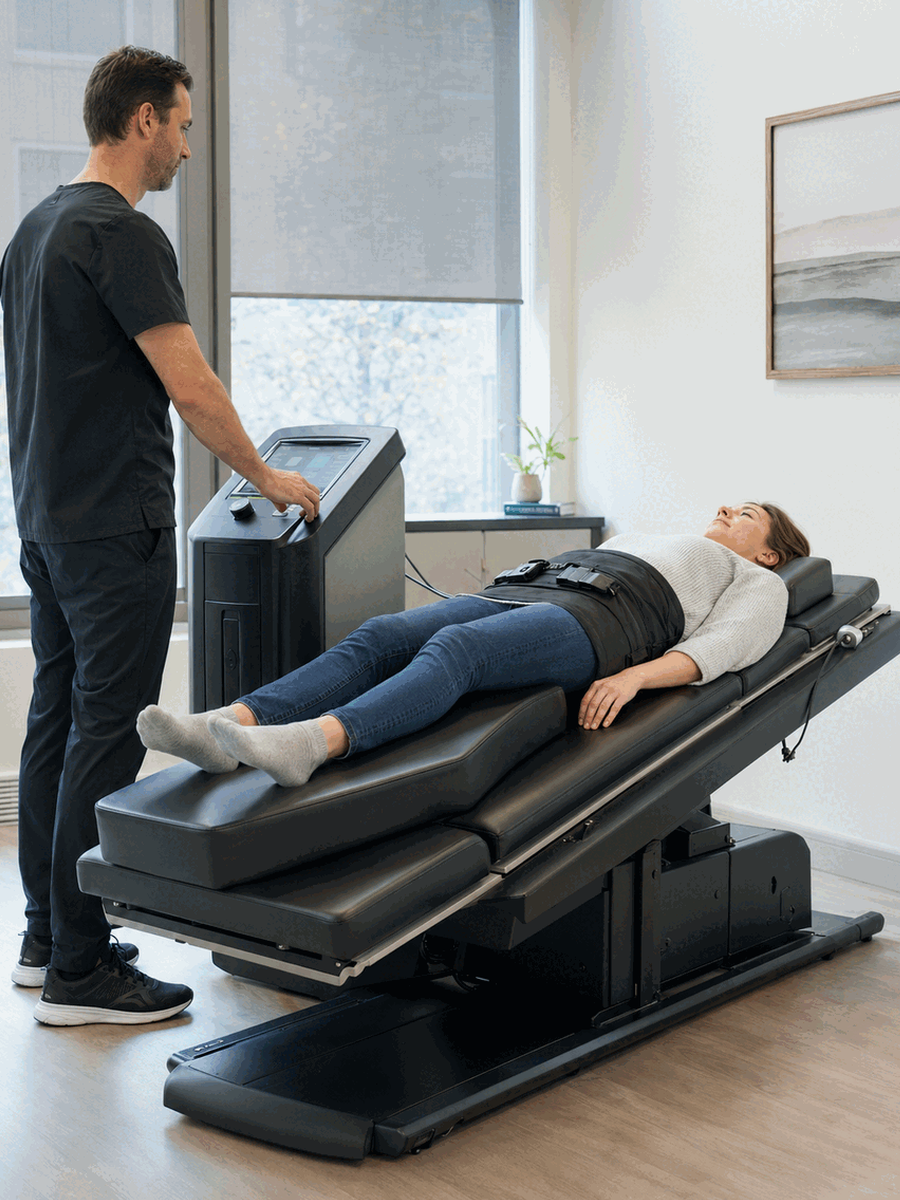
Assessment at TAGMED Clinic Montreal
The clinic is located at 1140 avenue Beaumont, Mont-Royal, QC H3P 3E5. The aim is to clarify the clinical presentation, identify signs that change the priority and discuss a cautious strategy based on the likely cause.
Address
1140 avenue Beaumont
Mont-Royal, QC H3P 3E5
Phone
Main guide
Would you like an assessment of these sciatica symptoms?
A consultation can help clarify the likely cause, the signs to watch for and whether conservative care or another referral is appropriate.
Spinal decompression in Montreal · Spinal decompression in Terrebonne
Sciatica treatment in Montreal · Sciatica treatment in Terrebonne
Frequently Asked Questions
FAQ — Sciatica when sitting: why does the pain increase?
Why does sitting hurt more?
Flexion, time spent without moving and disc or nerve sensitivity may contribute.
Should I use a lumbar cushion?
It may help some people, but alternating positions often remains more important.
How long can I stay seated?
There is no universal duration; use your tolerance and recovery as guides.
Is sitting in a car different?
Yes. Vibration, posture and the inability to change position frequently can increase symptoms.
Should I avoid sitting completely?
Generally, no. The goal is to adapt and break up periods of sitting rather than avoid every position.
What does it mean if pain extends farther down after sitting?
A persistent spread of symptoms farther down the limb should be reported during the assessment.
When should I seek a consultation?
If tolerance decreases rapidly, pain becomes very disabling or neurological signs progress.
Medical references
References and guidelines
The references below provide general guidance for assessing low back pain with sciatica, radiculopathy and the use of imaging. They do not replace an individualized clinical decision.
- NICE NG59 — Low back pain and sciatica: assessment and management
- American College of Radiology — Appropriateness Criteria: Low Back Pain
- North American Spine Society — Lumbar disc herniation with radiculopathy guideline
Important information
This page provides general information and does not establish a diagnosis. Results and recovery times vary according to the cause, duration, neurological signs, medical history and individual response to care.
Sylvain Desforges, docteur en ostéopathie
TAGMED Clinic — Spinal decompression, specific osteopathy and assessment of low back, disc-related and sciatic pain.
Professional profile · Contact · Main guide to sciatica in Montreal
In the same guide series
Related guides to sciatica
Continue with guides that explore the same symptom, its possible cause, assessment or options for care.
Sciatica treatment in Montreal
Clinique TAGMED Montréal / Mont-Royal Traitement de la sciatique à Montréal Examen gratuit — valeur de 85 $ CADemander mon examen gratuitVoir les disponibilitésDemandez…

Herniated disc and sciatica when sitting: why sitting can make symptoms worse
TAGMED Clinic Montreal / Mount Royal — Herniated disc and sciatica when sitting: why sitting can make symptoms worse. Understanding the connection…
Sciatica at night: why does the pain disturb sleep?
TAGMED Clinic Montreal / Mount Royal — Sciatica at night: why does the pain disturb sleep? Clinical pointers, signs to monitor and next steps for…
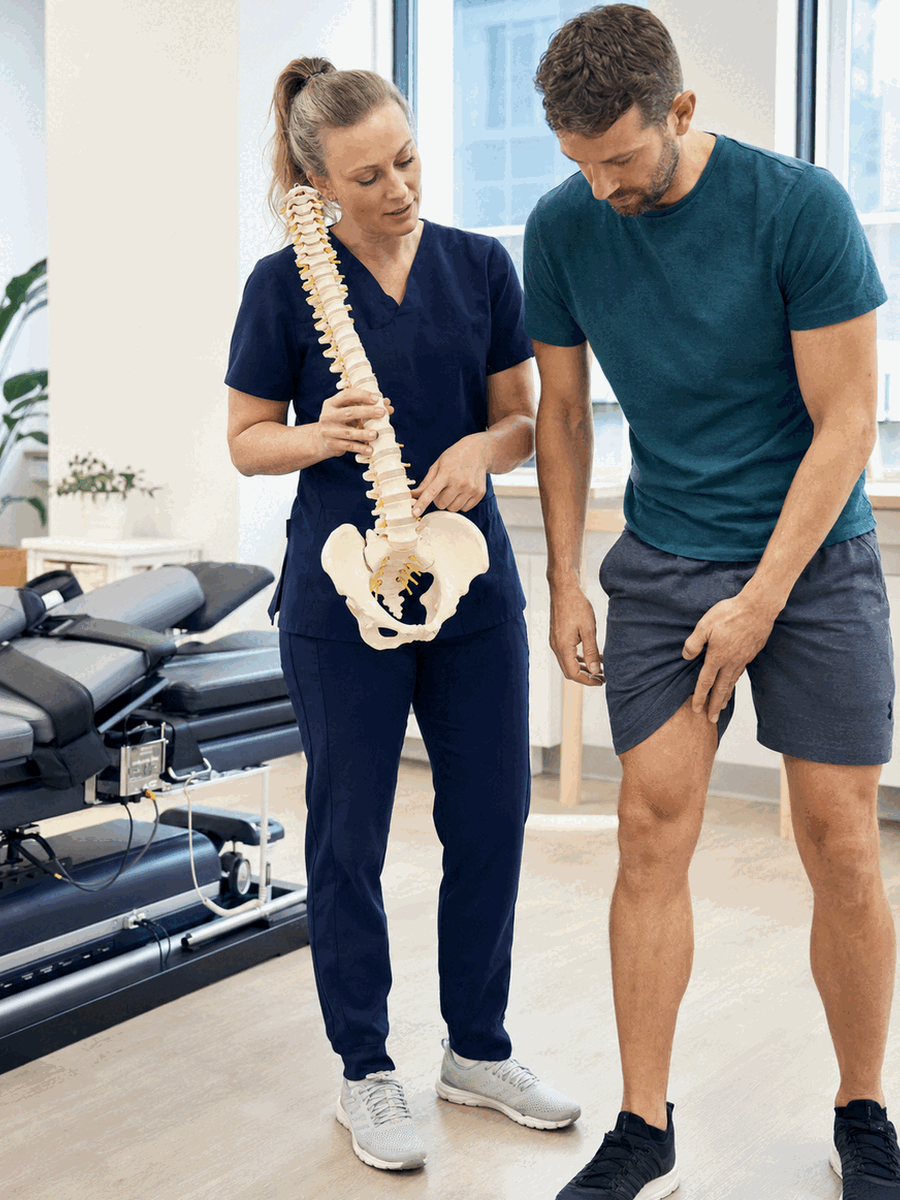
Stenosis-related sciatica: why pain increases when walking
TAGMED Clinic Montreal / Mount Royal — Stenosis-related sciatica: why pain increases when walking. Understanding why walking duration…
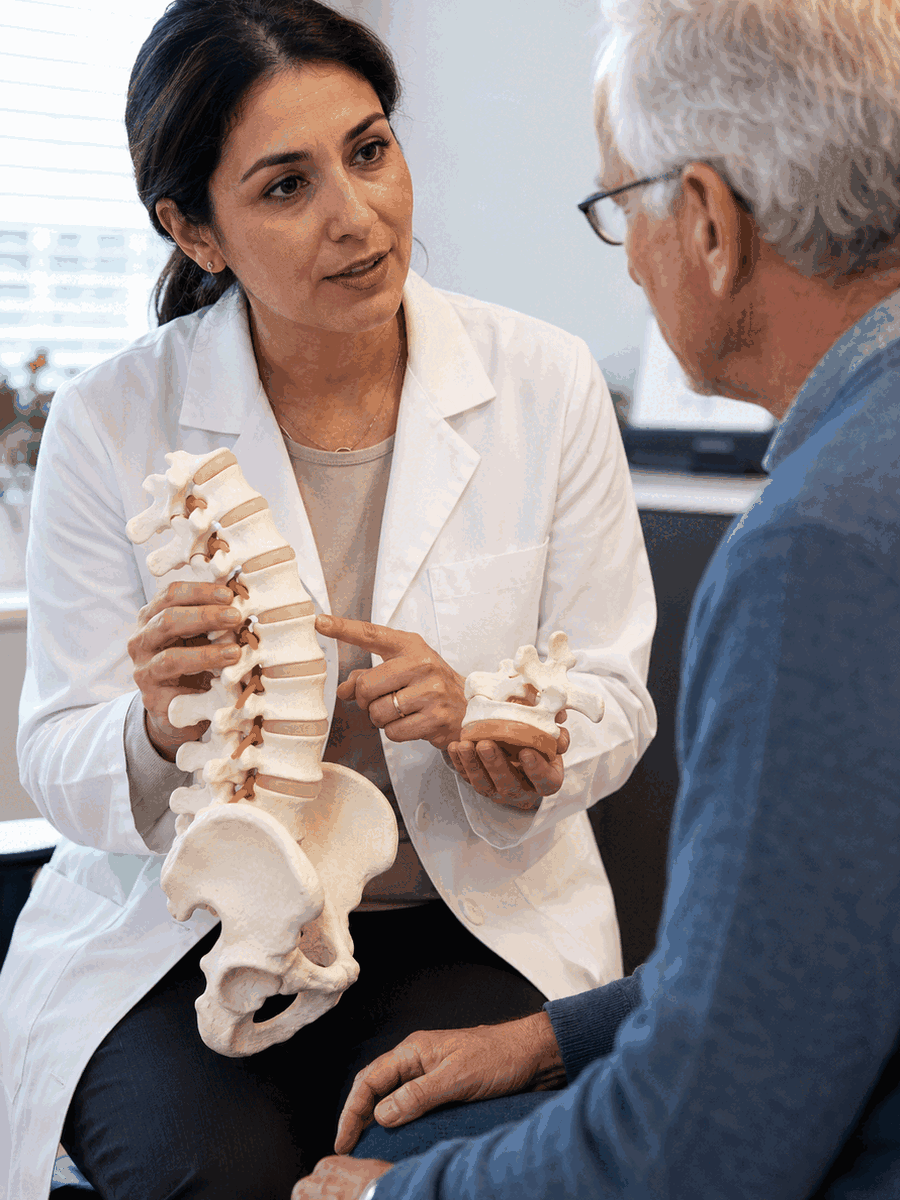
Sciatica aggravated by coughing or sneezing: why does the pain increase?
TAGMED Clinic Montreal / Mount Royal — Sciatica aggravated by coughing or sneezing: why does the pain increase? Clinical pointers, signs to monitor and next…
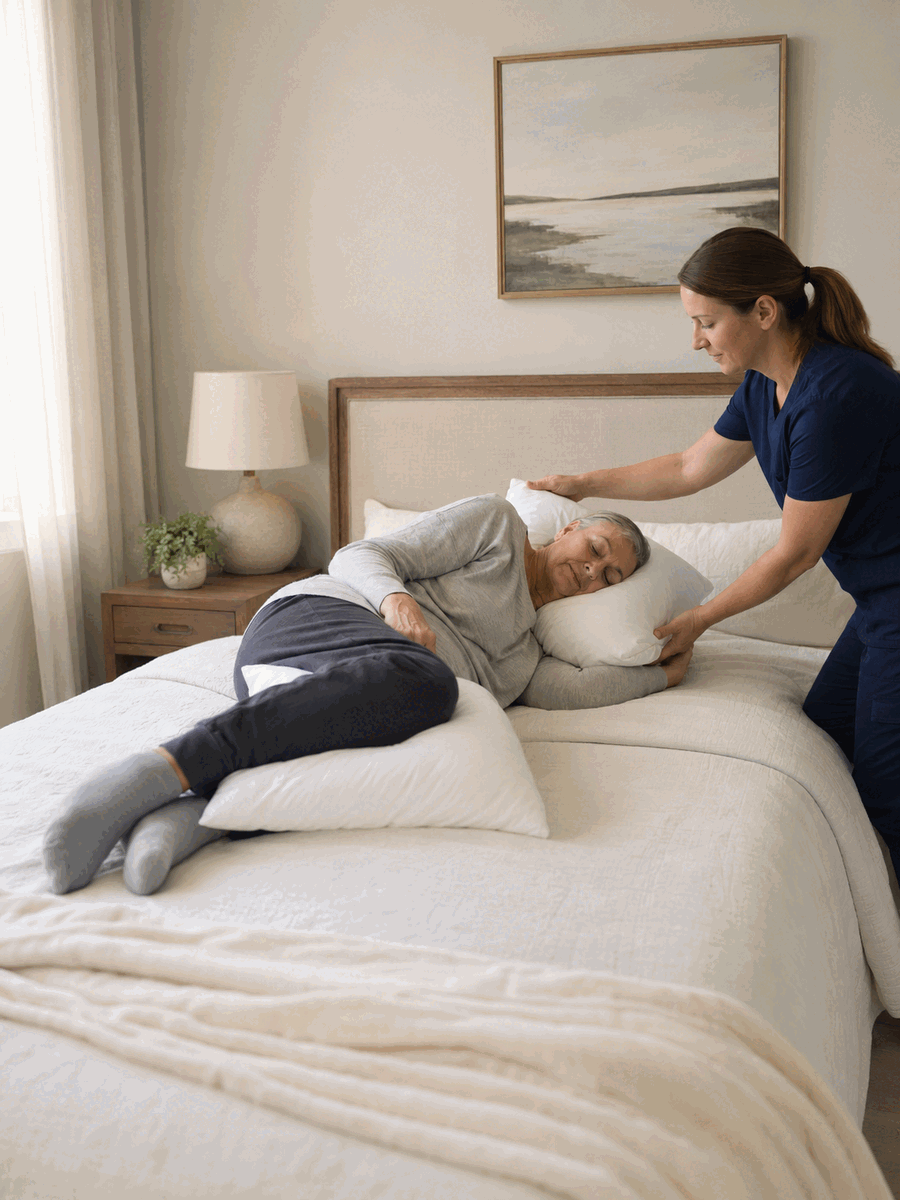
Sciatica at work: how to alternate between sitting and standing
TAGMED Clinic Montreal / Mount Royal — Sciatica at work: how to alternate between sitting and standing. Workstation organization, varying positions, functional capacity…