TAGMED Clinic Montreal / Mount Royal
Sciatica and gait rehabilitation: gradually rebuilding distance and confidence
Gradual activity, symptom tolerance and measurable functional progress.
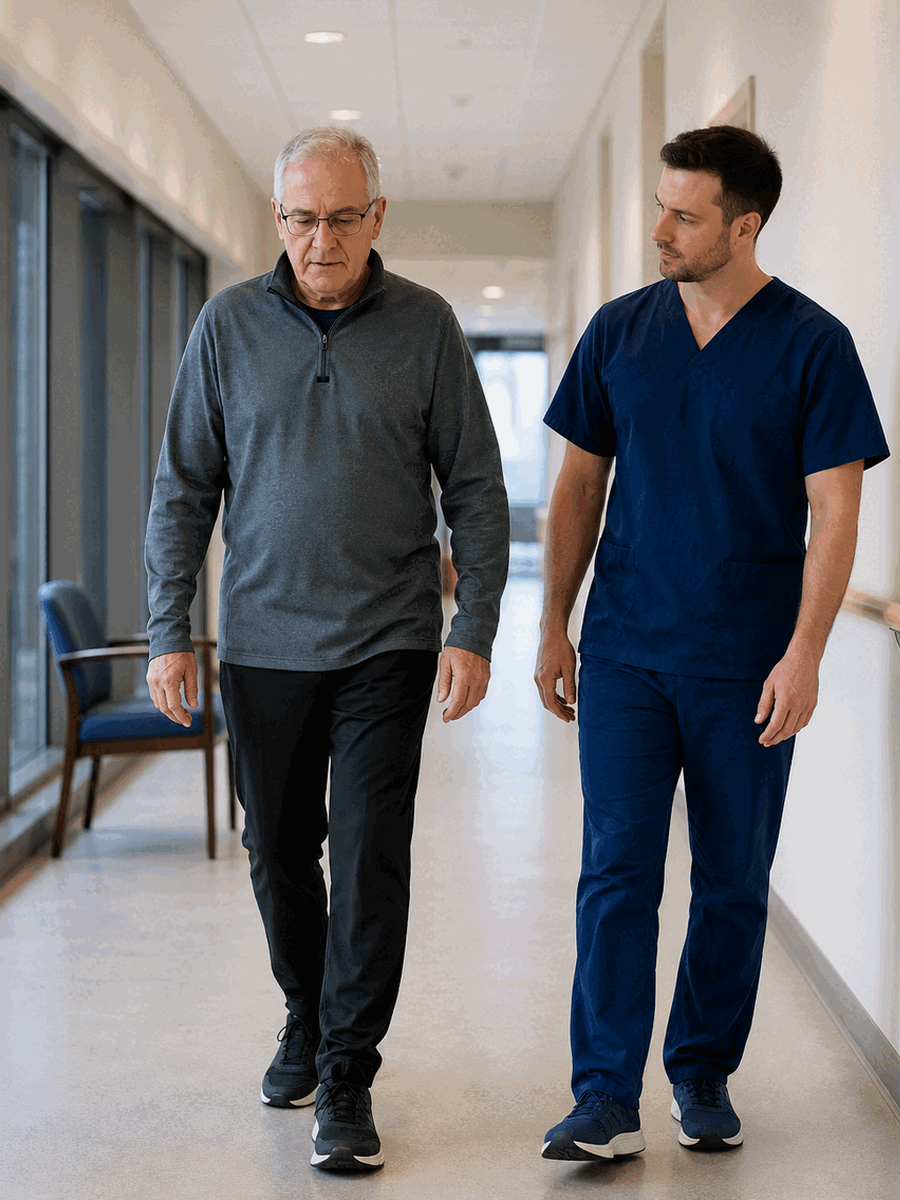
La capacité à marcher est un objectif concret pour de nombreux patients. Au lieu de rechercher une distance idéale dès le départ, on peut partir du seuil bien toléré et progresser selon la récupération.
- Page in this guide series Sciatica exercises and rehabilitation.
- Linked to the main guide Sciatica treatment in Montreal.
- No single exercise is presented as mandatory or suitable for every patient.
Understanding
The right amount matters more than the “perfect” exercise
La vitesse, les pauses, le terrain et la durée peuvent être modifiés séparément. Cette approche permet de construire une progression sans transformer chaque sortie en test maximal.
Tolerance
Observe what happens during the exercise, in the hours that follow and the next day.
Goal
Connect each exercise to a useful ability: walking, working, lifting, driving, sleeping or returning to sport.
Progression
Change one variable at a time: duration, repetitions, range of motion, load or complexity.
Clinical guidance
Adapt exercise to the neurological and functional response
La distance utile est celle qui peut être répétée sans provoquer une aggravation importante ou durable des symptômes.
An important point
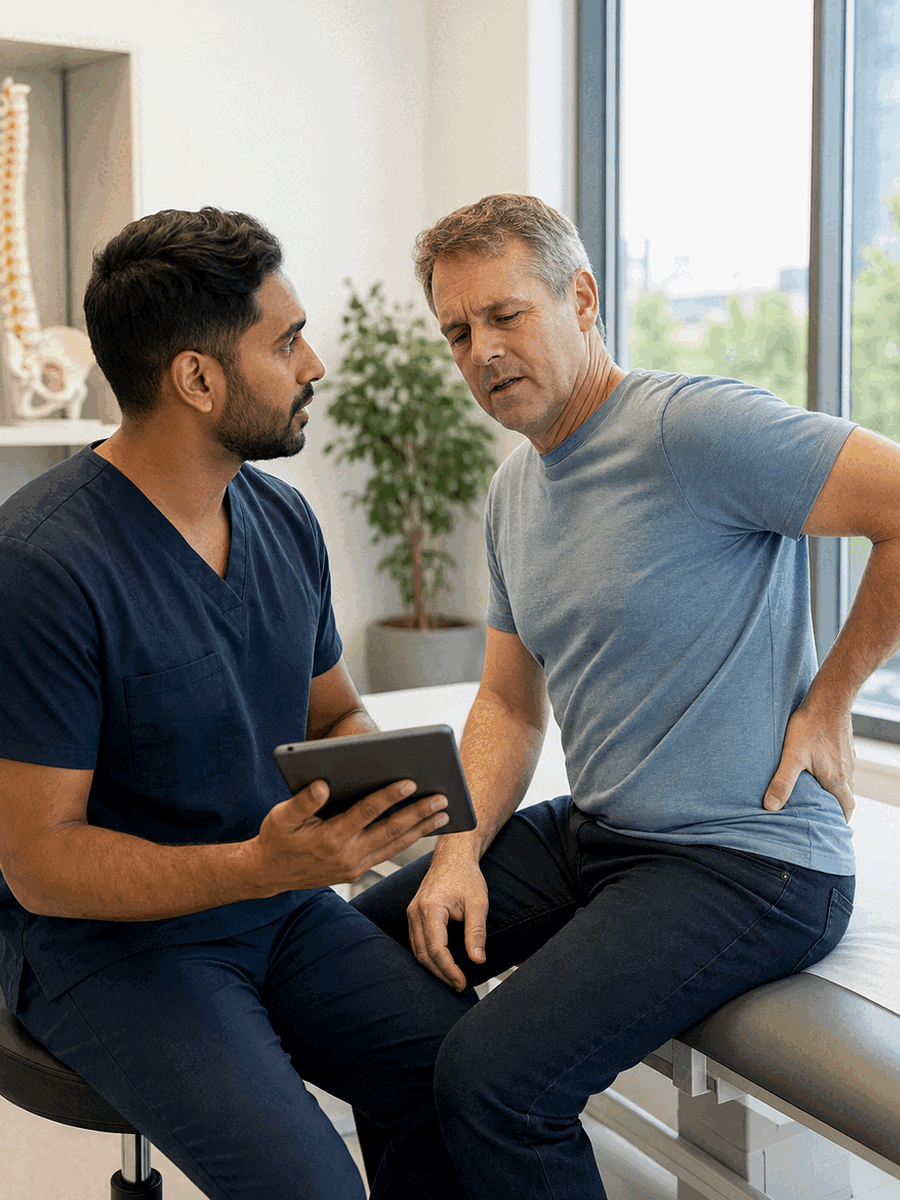
NICE recommends encouraging self-management, continuing normal activities as much as possible and adapting exercise to needs, preferences and abilities. The aim is not to push through neurological deterioration.
Assessment
Establish a measurable starting point
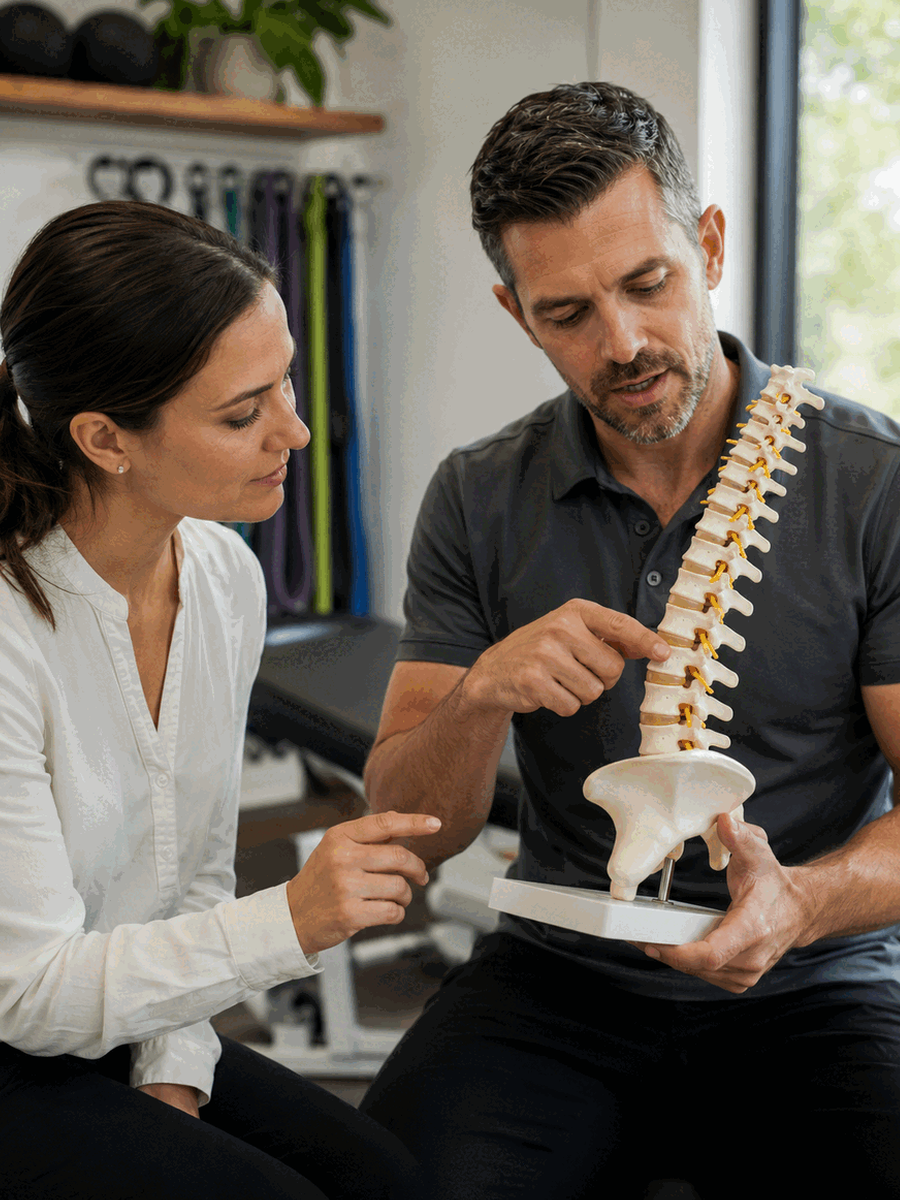
Before progressing, it is useful to document currently limited tasks, walking distance, sitting or standing tolerance, strength, tingling and recovery after activity.
Choose the goal
Identify a real-life activity to improve.
Determine the amount
Start at a level that is tolerable enough to repeat.
Observe the response
Note leg pain, recovery and neurological signs.
Progress
Gradually increase one variable when tolerance allows.
Active program
Combine mobility, muscular capacity and functional activity
A program may include mobility, strengthening, walking, balance and a gradual return to loading, but not every patient needs all of these components. The choice depends on limitations and goals.
Mobility
Explore useful movements without pursuing maximum range at all costs.
Strengthening
Gradually rebuild the capacity to tolerate useful physical effort.
Activity
Reintroduce the real-life tasks that matter to the patient.
When should you stop simply progressing the exercises?
- New or rapidly progressive weakness.
- Recent foot drop or a leg that gives way more often.
- A persistent increase in significant numbness.
- New bladder or bowel problems.
- Numbness in the saddle area or perineum.
These signs call for reassessment rather than intensifying the program.
Follow-up
Measure progress in real life
Meaningful improvement may involve walking more, tolerating work better, fewer sleep interruptions, resuming lifting or gradually returning to sport. Pain alone does not capture all aspects of function.

Function
Compare important activities with the starting level.
Recovery
Check the response in the hours that follow and the next day.
Main topic guide
In the same guide series
Related guides
Would you like to plan a return to activity that accommodates your sciatica?
An assessment can help establish a starting point, functional goals and progression criteria suited to your clinical presentation.
Frequently Asked Questions
FAQ — Sciatique et rééducation à la marche : reconstruire progressivement distance et confiance
Faut-il marcher malgré la douleur?
Une activité tolérée est souvent encouragée, mais la dose doit être adaptée.
Quelle distance faut-il viser?
Il n’existe pas de distance universelle; on part de la capacité actuelle.
Les pauses sont-elles permises?
Oui. Elles peuvent aider à accumuler davantage d’activité sans dépasser la tolérance.
Faut-il marcher vite?
Pas nécessairement. La vitesse peut être adaptée séparément.
Comment progresser?
En augmentant graduellement la durée, la distance ou la fréquence selon la récupération.
Quand faut-il réduire la dose?
Si l’irradiation, l’engourdissement ou la faiblesse augmentent après la marche.
Which signs require emergency care?
Troubles sphinctériens nouveaux, anesthésie de la selle ou déficit moteur majeur.
Medical references
References and guidelines
These references address self-management, physical activity and exercise for low back pain with or without sciatica. They do not define a single exercise suitable for every patient.
- NICE NG59 — Low back pain and sciatica: assessment and management
- NICE — Exercise and physical activity for low back pain and sciatica
- North American Spine Society — Lumbar Disc Herniation with Radiculopathy
Important information
This page provides general information and is not an individualized exercise prescription. The choice and progression of a program should take safety, tolerance, goals and neurological changes into account.
Sylvain Desforges, docteur en ostéopathie
TAGMED Clinic — Spinal decompression, specific osteopathy and assessment of low back, disc-related and sciatic pain.
Professional profile · Contact · Main guide to sciatica in Montreal
In the same guide series
Related guides to sciatica
Continue with guides that explore the same symptom, its possible cause, assessment or options for care.
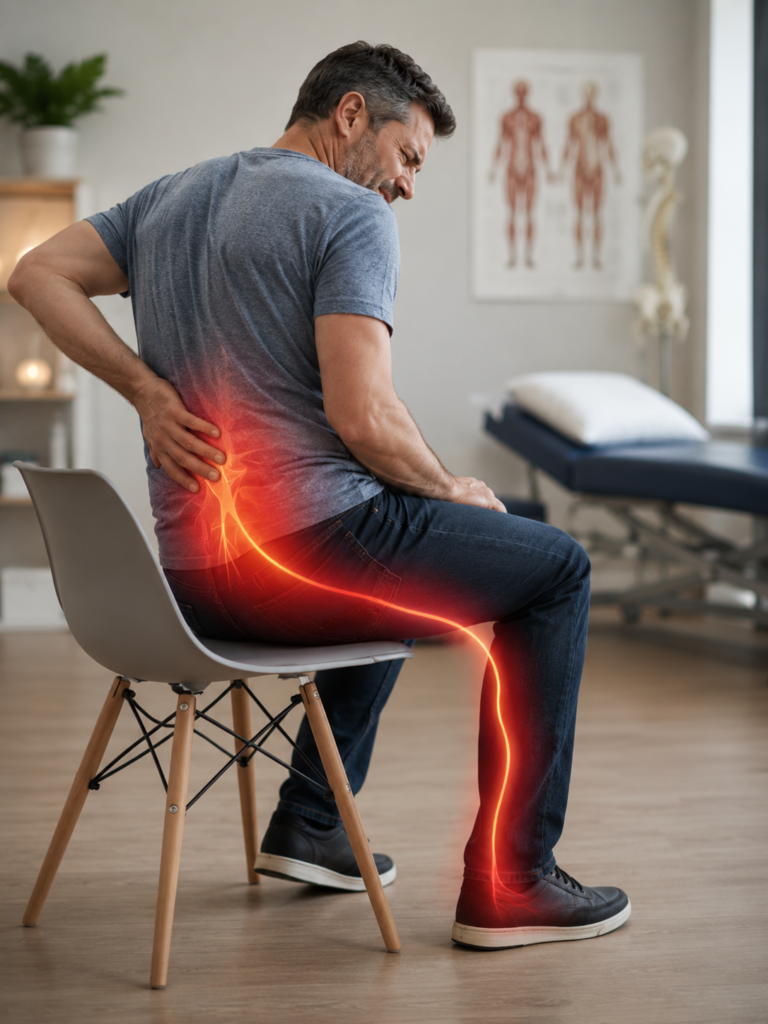
Sciatica treatment in Montreal
TAGMED Clinic Montreal / Mount Royal — Sciatica treatment in Montreal. Free examination, valued at CAD $85. Request your free examination and check availability…
Herniated disc and sciatica when walking: why walking helps some people and aggravates symptoms for others
TAGMED Clinic Montreal / Mount Royal — Herniated disc and sciatica when walking: why walking helps some people and aggravates symptoms for others. Understanding the connection between…
Sciatica and golf: resuming swings, walking and rotation without stopping everything
TAGMED Clinic Montreal / Mount Royal — Sciatica and golf: resuming swings, walking and rotation without stopping everything. Progressing the load,…

Sciatica and walking: when walking helps or aggravates symptoms
TAGMED Clinic Montreal / Mount Royal — Sciatica and walking: when walking helps or aggravates symptoms. Clinical pointers, signs to monitor and next steps for…
Sciatica and walking on your toes: what this test suggests about S1
TAGMED Clinic Montreal / Mount Royal — Sciatica and walking on your toes: what this test suggests about S1. Understanding the distribution…
Sciatica and walking on your heels: a simple test of L5 function
TAGMED Clinic Montreal / Mount Royal — Sciatica and walking on your heels: a simple test of L5 function. Understanding the nerve distribution, the…