TAGMED CLINIC
Treatment of sciatica
A non-surgical approach based on the assessment of likely cause, pain path and neurological signs.
Sciatica can cause pain that starts from the lower back or buttocks and descends into the thigh, calf, foot or certain toes. At the TagMed clinic, the treatment is not only chosen from the word “sciatica”. It is based on a clinical assessment to determine whether the symptoms are compatible with nerve root irritation, disc disease, stenosis foraminal or another mechanical cause.
- Assessment of pain path, sensitivity and muscle strength.
- Review of available imaging examinations when relevant.
- Spinal decompression therapy when the clinical picture lends itself to it.
- Personalized approach offered at TagMed clinics in Montreal / Mont-Royal and Terrebonne.
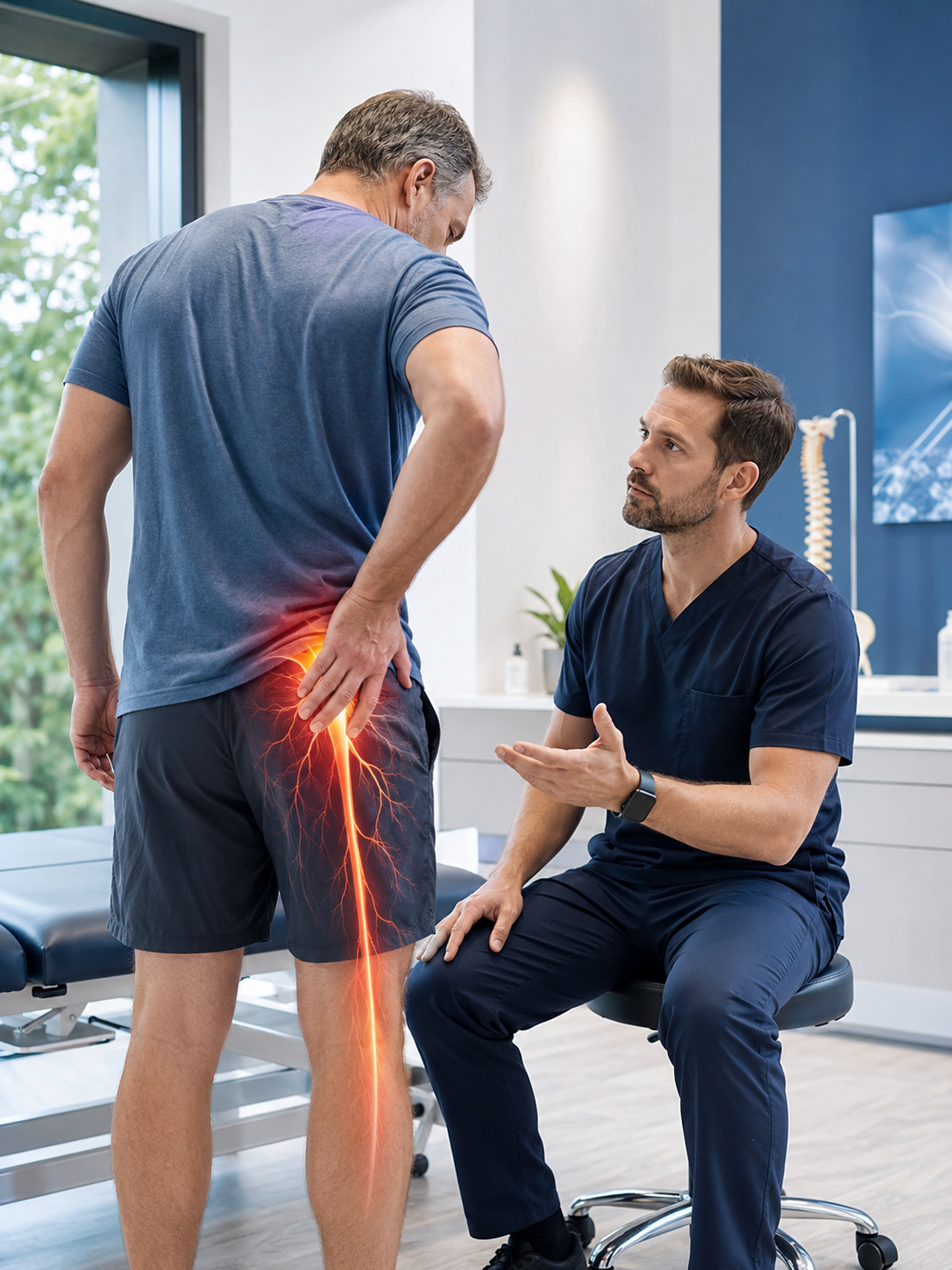
Understand before processing
Treatment depends on the probable cause of sciatica
The term " sciatica Usually describes a set of symptoms consistent with irritation of a lumbar nerve root or sciatic nerve. It does not, on its own, constitute a complete diagnosis.
Two patients may experience pain that descends into the leg while having different mechanisms. In one, symptoms may be associated with a herniated disc or a disc protrusion. In the other, they can be linked to foraminal stenosis, to a disc pinching, joint irritation or referred pain from the pelvis, hip or deep muscle tissue.
This distinction is important, because a suitable approach to disc irritation will not necessarily be relevant for pain from another structure. The objective of the evaluation is therefore to link the symptoms, the clinical examination and, when necessary, the available imaging in order to guide the care plan.
Key takeaways
A cautious approach seeks first to clarify the probable cause, to identify the signs requiring a medical orientation and to choose a conservative strategy consistent with the patient's condition.
Nerve pathway
Where does sciatic pain go?
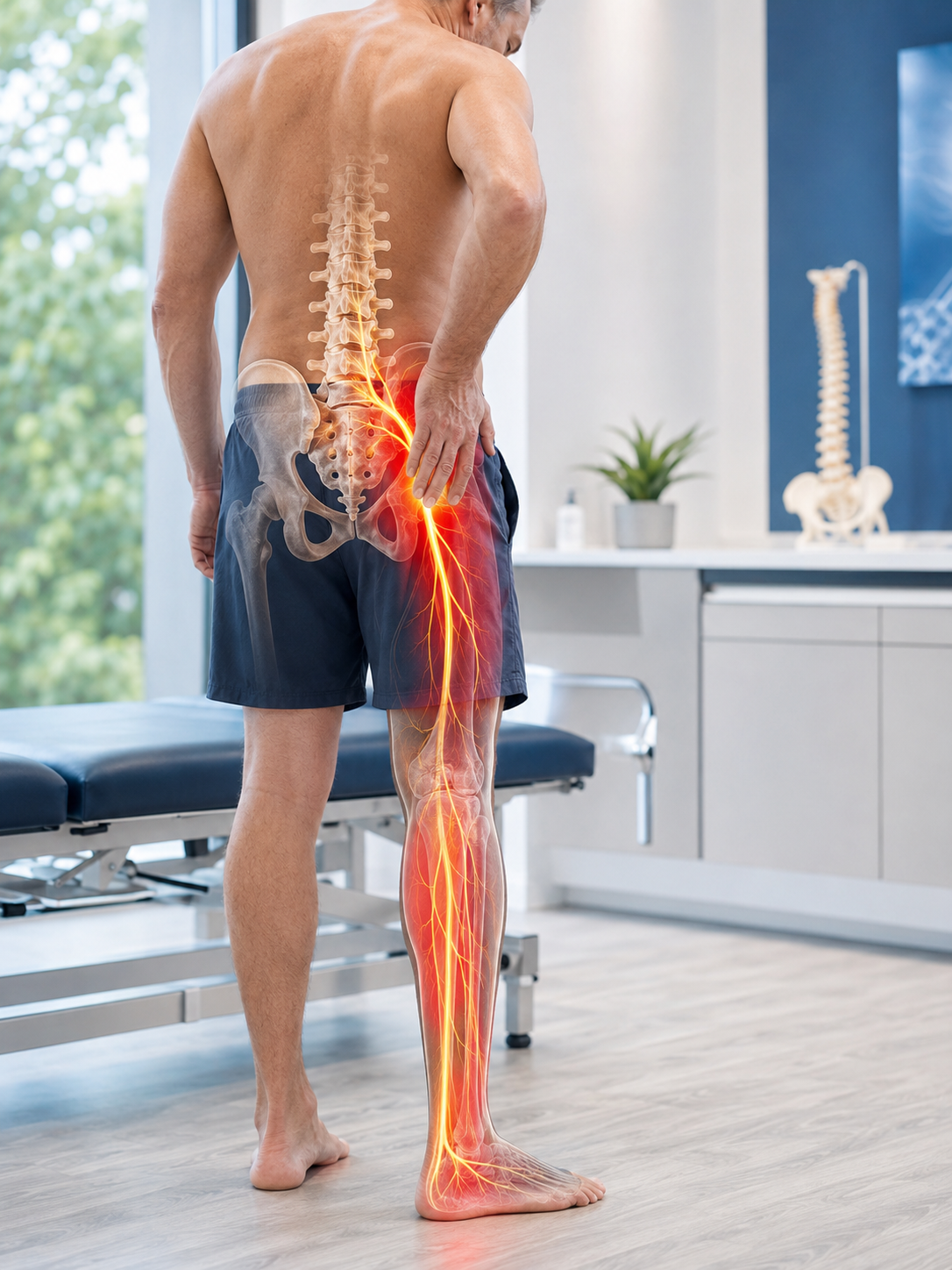
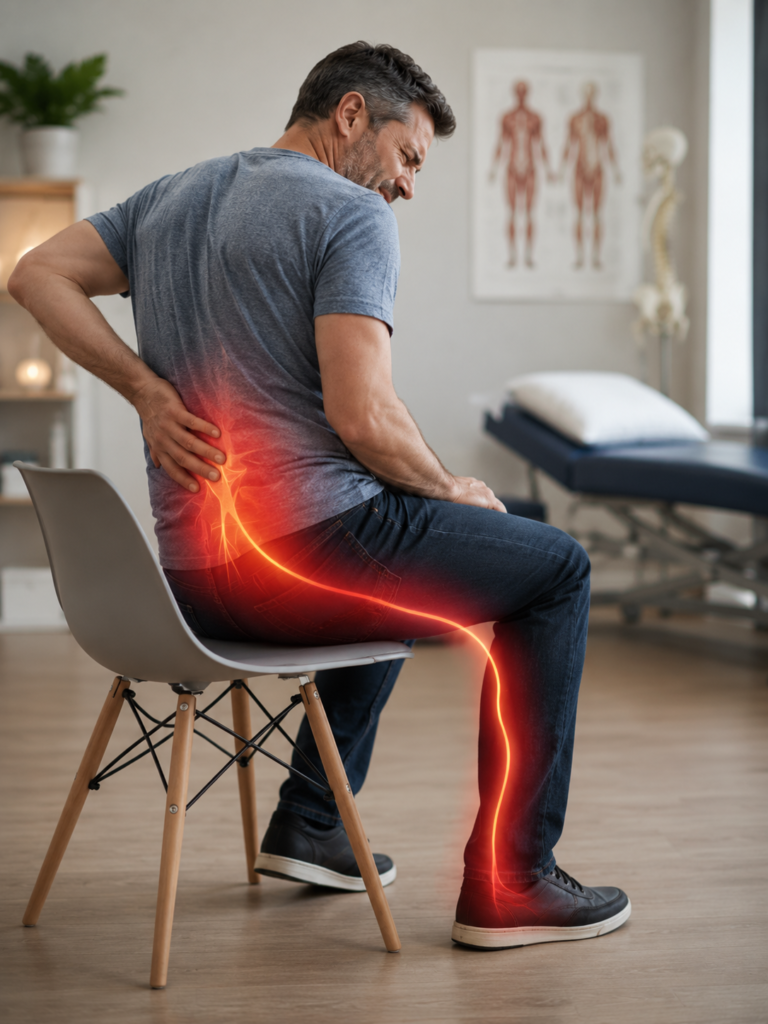
The pain can begin in the lower back, buttock or hip, then descend behind or on the side of the thigh, towards the calf, heel, foot or certain toes.
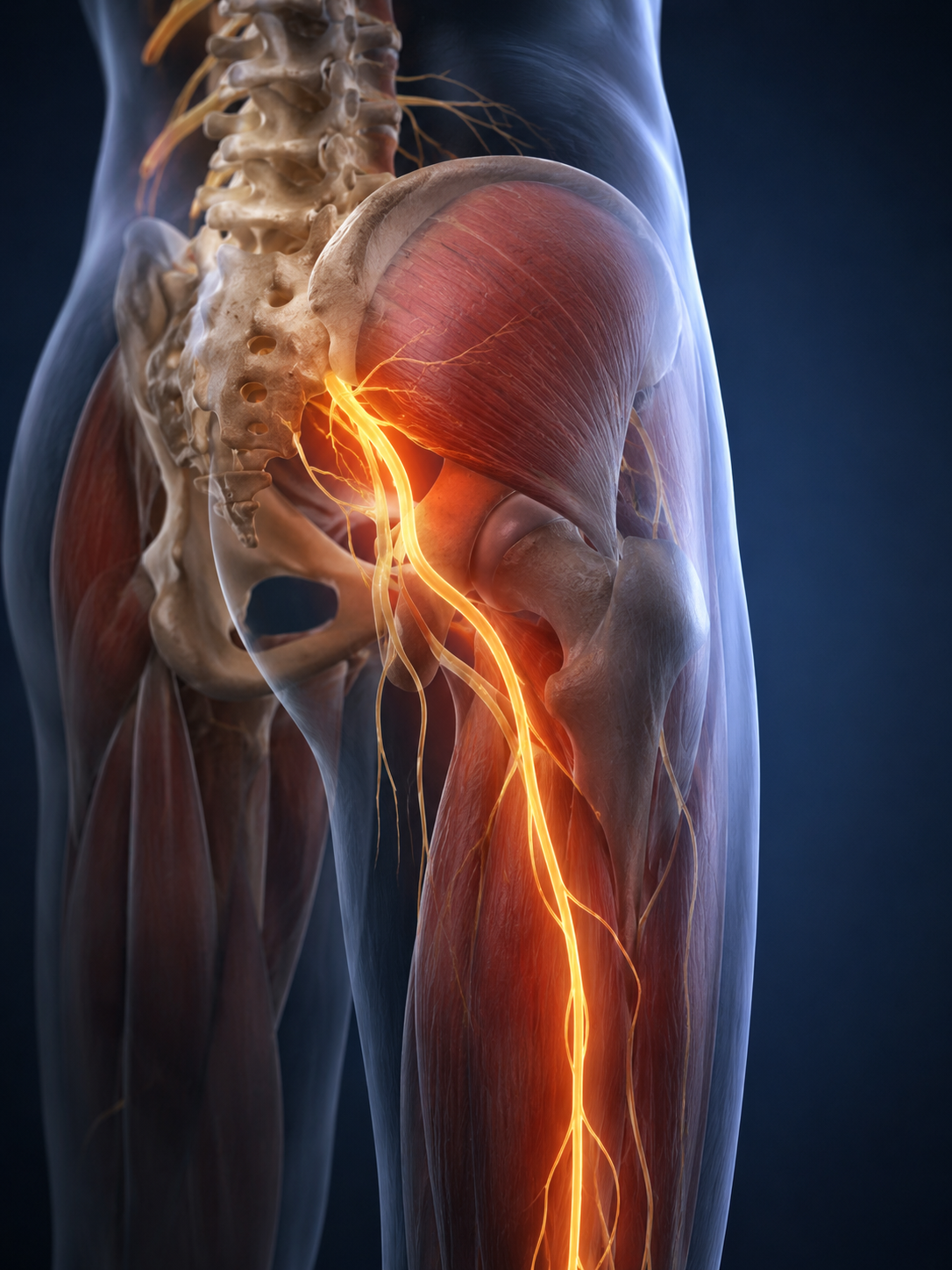
Irritation of the L5 root can cause symptoms to the side of the leg, the top of the foot or the big toe in particular. S1 irritation can further reach the back of the calf, the heel or the outer edge of the foot. These correspondences guide the assessment, but they are not always perfectly clear in each patient.
Pain
Burn, slender, deep pressure or feeling of electric shock in the buttocks and leg.
Sensory disorders
Twinges, numbness, or reduced sensation in the leg, foot, or toes.
Motor impairment
Difficulty lifting the foot, walking on your heels, rising onto the toes, or maintaining strength.
Clinical evaluation
The factors that guide the choice of treatment
The location of the pain is only one of the elements analyzed. Changes over time, aggravating factors, neurological signs, and functional impact also help define the clinical profile.
Aggravating positions
Sitting, trunk flexion, prolonged walking, or certain twisting movements can change the symptoms.
Centralization or progression
Pain that moves up toward the back or, on the contrary, pain that goes farther down the leg provides useful information.
Function
The ability to sleep, walk, work, drive, climb stairs, and carry out daily activities is taken into account.
Muscle strength
The assessment may look for weakness in the foot, ankle, calf, or other muscle groups.
Sensation
The presence of numbness and its area can help identify the specific nerve root involved.
Imaging available
An MRI or another exam that has already been done can be compared with the symptoms, without interpreting it in isolation.
When to consult urgently?
Loss of urinary or intestinal control, anesthesia of the stool area, significant or rapidly progressive weakness, fever, major trauma or unusually worsening pain that is rapidly growing require an urgent medical assessment.
Possible causes
What conditions can cause sciatica pain?
Pain can result from reduced space around a nerve root, local inflammation, disc-related mechanical pressure, or another musculoskeletal mechanism.
Herniated disc
A displaced disc fragment can irritate a nerve root and produce radiating (radicular) pain in the leg.
Disc Protrusion
A disc bulge can reduce space around the root, especially when it aligns with the symptoms.
Degenerative disc disease
A reduction in disc height can contribute to narrowing the foraminal opening.
Foraminal stenosis
The foramen through which the nerve root exits can become narrower and irritate the nerve in certain positions.
Spinal stenosis
A narrowing of the lumbar spinal canal can cause pain, heaviness, numbness, or weakness when walking.
Referred pain
The lumbar joints, the pelvis, the hip, or muscle tissues can sometimes reproduce similar pain.
TAGMED Approach
A non-surgical, personalized approach
The care plan is chosen based on the assessment results. Technologies are not applied automatically, and no single approach fits all forms of sciatica.
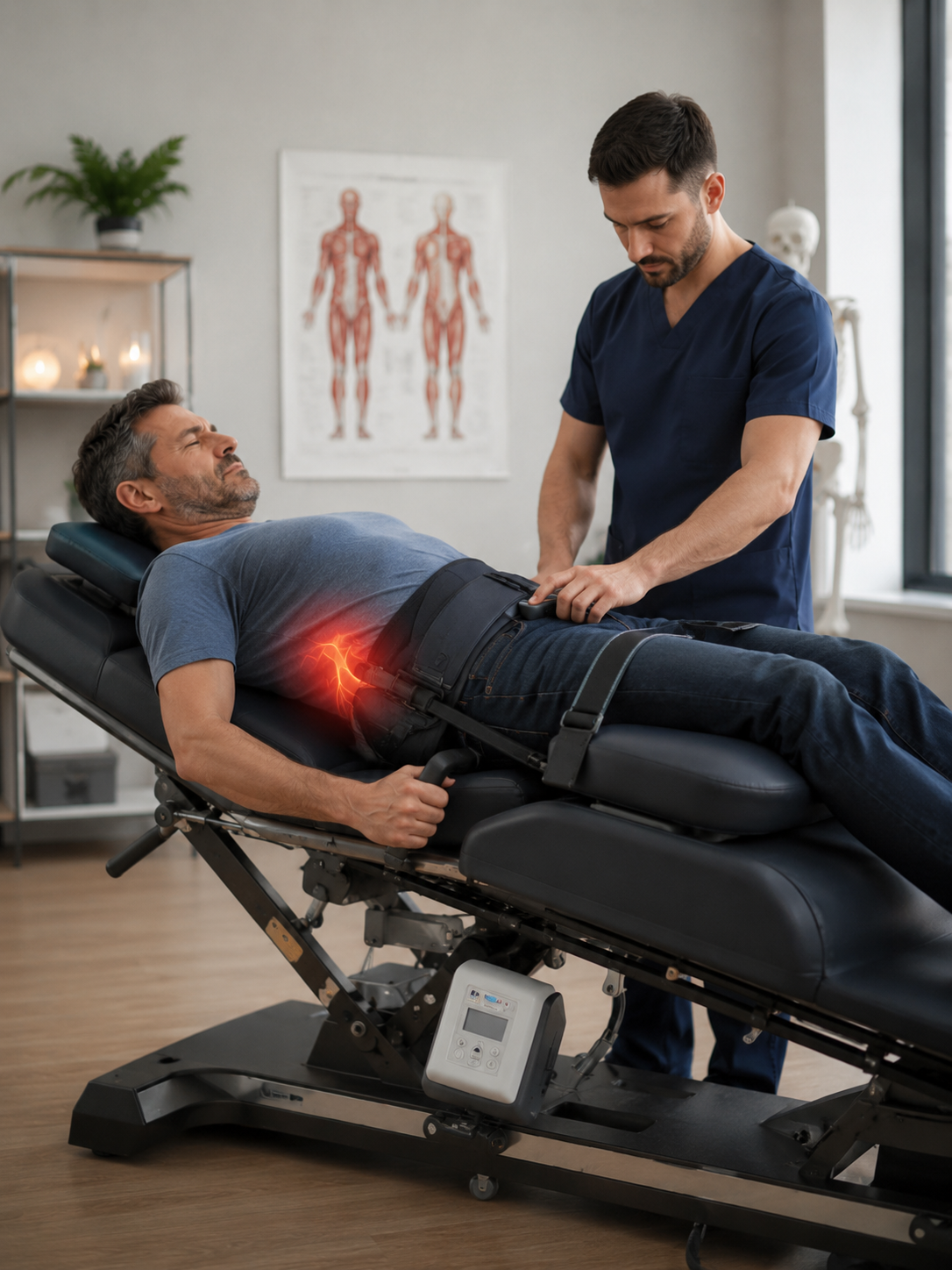
Motorized neurovertebral decompression
Neurovertebral decompression uses controlled, progressive traction matched to the treated area. It aims to reduce certain mechanical stresses on the discs and nerve structures.
It may be considered when the clinical picture is consistent with a herniated disc, a disc protrusion, a disc pinching condition, or foraminal stenosis, as long as the assessment and contraindications are taken into account.
Specific osteopathy and targeted interventions
Depending on the condition, a low-amplitude manual approach or an instrument-assisted intervention may be used to address certain mechanical restrictions, compensations, or associated tensions.
The choice of interventions depends on the patient’s tolerance, the stage of the condition, and the response observed during treatment.
Activity guidance
Prolonged complete rest is generally not the goal. Activities are instead adapted according to pain, neurological signs, walking tolerance, and work demands.
Reassessment
Tracking how the pain pattern changes over time, as well as strength, sensation, and function, helps adjust the care plan or recommend a medical referral.
First consultation
How is sciatica assessed?
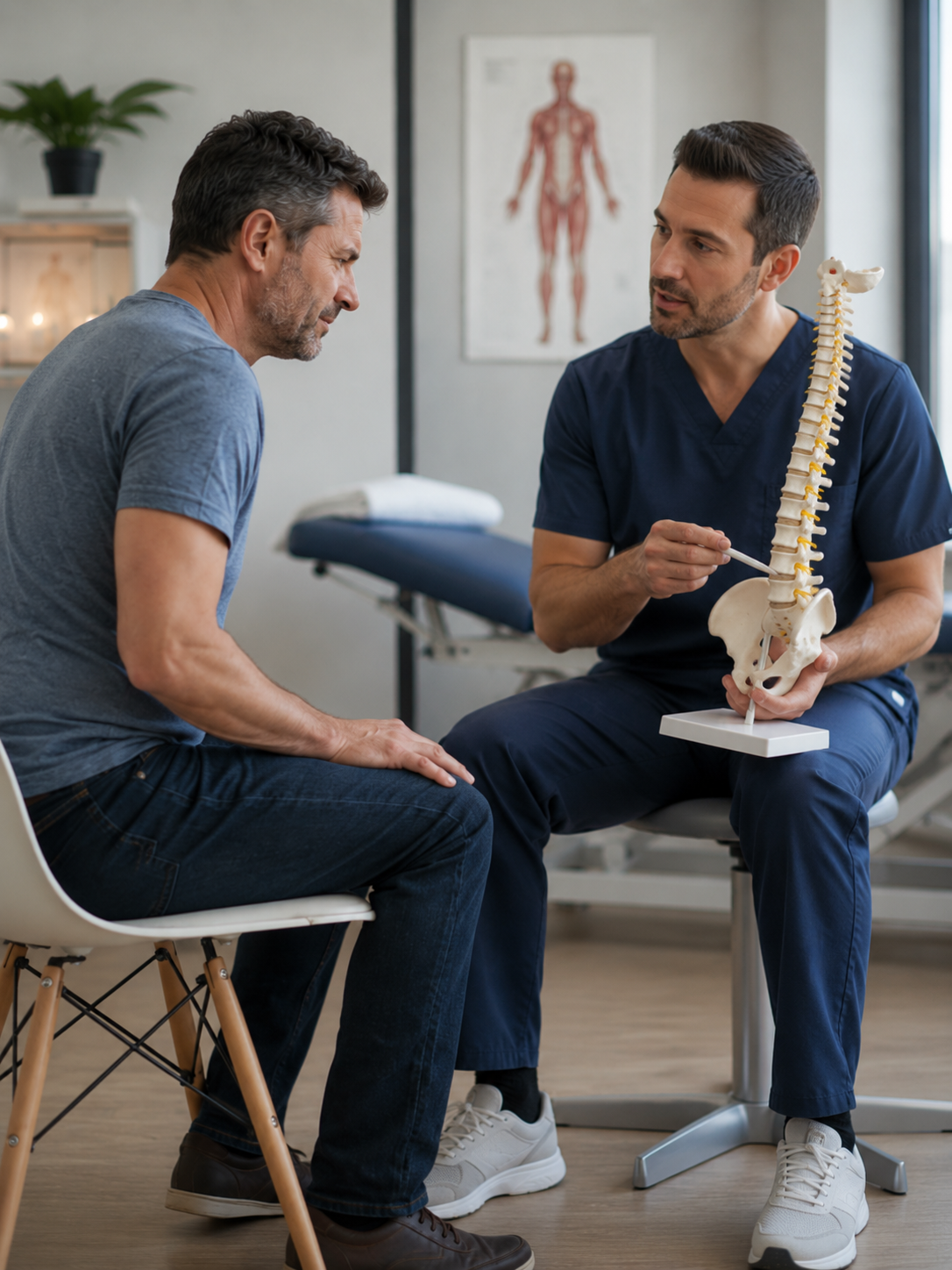
The first consultation aims to build a coherent picture of the condition and to determine whether a conservative approach can be considered safely.
Historical
Onset of symptoms, pain pattern, duration, intensity, aggravating activities, treatments already tried, and relevant medical history.
Clinical exam
Observing mobility, function, muscle strength, sensation, and certain neurological signs.
Clinical correlation
Results are compared with available imaging tests and the behavior of the symptoms.
Personalized plan
An approach is proposed when the condition is suitable for it; a medical referral is recommended when necessary.
Depending on your situation
Treatment may vary based on the pain profile.
A new sciatica episode without significant weakness is not necessarily managed the same way as persistent, recurrent pain, or pain accompanied by a neurological deficit.
New pain
The goal is to control irritability, maintain an activity level you can tolerate, and monitor the appearance of neurological signs.
Persistent pain
A reassessment of the likely cause, mechanical factors, and the care plan becomes important.
Numbness or weakness
The progression, the territory, and functional impact determine how quickly the assessment and direction are carried out.
Our clinics
Treatment for sciatica in Montreal and Terrebonne
The TAGMED Clinic sees patients at two real locations. The local pages provide the contact information and the specific details of each clinic.
Montréal / Mont-Royal
1140 avenue Beaumont
Mont-Royal, QC H3P 3E5
Phone : 1 (877) 672-9060
Terrebonne:
1150 Lévis Street, Suite 200
Terrebonne, QC J6W 5S6
Phone : (450) 704-4447
Does your pain travel down your leg?
An assessment can help clarify the path of the symptoms, the most likely cause, and the relevance of an appropriate non-surgical approach.
Frequently Asked Questions
FAQ about sciatica treatment
This section answers common questions about the length of care, neurospinal decompression, exercises, imaging, and signs that require prompt consultation.
Frequently Asked Questions
Sciatica
What is sciatica?
Sciatica refers to pain related to irritation or compression of the sciatic nerve or a lumbar nerve root. It can cause pain that starts in the lower back, buttock, or hip and travels down the leg.
Is sciatica a disease or a symptom?
Sciatica is generally a symptom rather than a disease on its own. It indicates that a structure, such as a disc, a joint, a muscle, or narrowing of the nerve canal, may irritate a nerve root or the sciatic nerve.
What are the most common symptoms of sciatica?
Common symptoms include pain in the buttock or leg, a burning sensation, sharp pains, tingling, numbness, or sometimes muscle weakness in the leg or foot.
Can sciatica go all the way down to the foot?
Yes. Depending on the irritated nerve root, the pain may travel down the thigh, calf, ankle, or foot. The exact path of the pain can help identify the involved low-back area.
Is leg pain always sciatica?
No. Leg pain can also come from the hip, pelvis, knee, a muscle, a vascular problem, or another nerve irritation. A clinical assessment helps distinguish these causes more clearly.
What is the difference between sciatica and low back pain?
Low back pain is pain located mainly in the lower back. Sciatica usually involves pain that radiates into the buttock or leg, sometimes with neurological signs such as tingling, numbness, or weakness.
What is the difference between sciatica and femoral neuralgia?
Sciatica mainly affects the back or side of the leg, while femoral nerve pain (cruralgia) mainly affects the front of the thigh, sometimes as far as the knee. Both can result from irritation of different lumbar nerve roots.
What are the common causes of sciatica?
Common causes include a herniated disc, a disc protrusion, foraminal stenosis, spinal stenosis, lumbar osteoarthritis, spondylolisthesis, or certain muscle tightnesses that can irritate the sciatic nerve.
Can a herniated disc cause sciatica?
Yes. A herniated disc can irritate or compress a lumbar nerve root, which can cause sciatica pain radiating into the buttock, thigh, calf, or foot.
Can a disc bulge cause sciatica?
Yes. A disc protrusion can reduce the space available around a nerve root and contribute to sciatica pain, especially if it is associated with inflammation or foraminal narrowing.
Can foraminal stenosis cause sciatica?
Yes. Foraminal stenosis is a narrowing of the opening through which a nerve root exits. This narrowing can irritate the nerve and cause pain that travels down the leg.
Is piriformis syndrome really sciatica?
Piriformis syndrome can produce pain that looks like sciatica, because the piriformis muscle can irritate the sciatic nerve in the buttock area. The term pseudo-sciatica is sometimes used when the cause is not a lumbar nerve root.
Why is sciatica pain sometimes worse when sitting?
Sitting can increase pressure on certain lumbar discs or tighten tissues around the sciatic nerve. For some people, this worsens nerve irritation and increases pain in the buttock or leg.
Why can sciatica get worse when coughing or sneezing?
Coughing, sneezing, or straining can temporarily increase pressure in the lumbar spine. When sciatica is related to a disc irritating a nerve root, these movements can worsen the pain.
Can sciatica cause numbness?
Yes. Nerve irritation can cause numbness, tingling, or a pins-and-needles feeling in the leg or foot. Numbness that is progressing should be assessed quickly.
Can sciatica cause weakness in the leg?
Yes. An irritated or compressed nerve root can lead to muscle weakness. New, progressive, or significant weakness requires a rapid clinical assessment.
What is a foot drop in the context of sciatica?
Foot drop means the person has difficulty lifting the front of the foot when walking. This can indicate a significant nerve problem and should be assessed quickly.
When should you seek care urgently for sciatica?
Seek medical care promptly if you have progressive weakness, significant numbness, pain after a trauma, severe pain that is getting worse, fever, unexplained weight loss, or a history of cancer.
Which sciatica symptoms require medical emergency care?
Loss of bladder or bowel control, numbness in the saddle area, severe or progressive weakness in the legs, or significant bilateral pain with neurological signs may be a medical emergency.
Do you always need an MRI for sciatica?
No. An MRI is not always necessary at the beginning, especially if symptoms are stable and there are no red flags. It can become relevant when symptoms persist, worsen, or when a specialized intervention is being considered.
Can an X-ray show sciatica?
An X-ray does not directly show the sciatic nerve or a herniated disc. However, it can show certain signs of arthritis, disc degeneration, or bone misalignment that may contribute to the clinical situation.
How do you diagnose sciatica?
The diagnosis is generally based on your medical history, the path of the pain, the neurological exam, orthopedic tests, and, when needed, imaging. The goal is to identify the most likely cause of nerve irritation.
What clinical tests can be used to assess sciatica?
Tests such as straight leg raise, reflex testing, muscle strength, sensation, and lumbar mobility assessment can help determine whether a nerve root is irritated.
How long does sciatica last?
Duration varies depending on the cause, the intensity of the nerve irritation, age, lifestyle habits, and medical history. Some sciatica improves within a few weeks, while others become persistent or recurrent.
Can sciatica become chronic?
Yes. Sciatica can become chronic if the nerve irritation persists, if the mechanical cause remains active, or if the pain leads to prolonged limitation of movement and activities.
Why does my sciatica keep coming back?
Recurrences can be related to a herniated disc, disc degeneration, stenosis, muscle weakness, prolonged postures, repetitive movements, or poor recovery after an initial episode.
Is complete rest recommended for sciatica?
Prolonged complete rest is generally not recommended. A short period of reducing irritating activities may be helpful, but it is often better to gradually resume movements you can tolerate.
Is walking good for sciatica?
Walking can be beneficial if it is well tolerated. It improves circulation and helps reduce stiffness. However, if walking significantly increases pain or weakness, an assessment is recommended.
What movements can make sciatica worse?
Movement triggers that worsen symptoms vary depending on the cause. Prolonged bending, twisting, lifting heavy loads, prolonged sitting, or certain repetitive movements may increase symptoms in some people.
Should I avoid bending forward with sciatica?
It depends on the cause. Some sciatica related to discs can be worsened by bending your trunk. During an assessment, it is best to identify which movements increase or decrease your symptoms.
Is heat or ice better for sciatica?
Ice can help when pain is very inflammatory or recent, while heat can help relax the muscles. The choice depends on your individual tolerance and how symptoms respond.
Can sciatica be treated without surgery?
Yes. Many cases of sciatica can be managed without surgery, including conservative approaches, reducing irritating factors, appropriate care, a gradual return to activities, and, depending on the case, targeted treatments.
When is surgery considered for sciatica?
Surgery may be considered in the presence of significant neurological signs, persistent pain despite appropriate management, or confirmed compression that matches the symptoms. This decision must be made with a medical specialist.
What is neurovertebral decompression?
Neurovertebral decompression is a non-surgical mechanical approach aimed at reducing certain stresses on the discs and lumbar structures. It may be considered for some patients with pain related to a disc problem.
Can neurovertebral decompression be used for sciatica?
It can be considered when sciatica seems related to a herniated disc, disc protrusion, or mechanical irritation of a nerve root. An assessment is needed to determine whether this approach is appropriate.
Is neurovertebral decompression suitable for everyone?
No. It is not indicated for all cases. Certain conditions, such as significant instability, fracture, infection, a tumor, certain neurological disorders, or some post-surgical situations, may require another approach.
How many sessions are needed for sciatica?
The number of sessions varies depending on the cause, the duration of symptoms, the intensity of pain, the exam results, and the response to treatment. A personalized plan is created after the assessment.
Can sciatica be related to spinal stenosis?
Yes. Spinal stenosis can reduce the space available for the nerves in the lumbar canal. It can cause pain in one or both legs, sometimes made worse by walking or prolonged standing.
Why are some sciatica cases worse when walking?
When pain increases while walking or standing and decreases when sitting or bending forward, spinal or foraminal stenosis may be considered. A clinical assessment helps guide the analysis more effectively.
Can sciatica be caused by lumbar osteoarthritis?
Yes. Lumbar osteoarthritis can contribute to narrowing of the nerve spaces, local inflammation, or mechanical irritation of the nerve roots, which can cause sciatica symptoms.
Can weight influence sciatica?
Weight can influence the mechanical load on the lower back, but it is not the only factor. Posture, physical fitness, genetics, discs, joints, and movement habits also play a role.
Can posture cause sciatica?
Posture alone does not always explain sciatica, but certain prolonged positions can increase pressure in the low back or irritate sensitive tissues. The important thing is often to vary positions and respect the body’s tolerance.
Can desk work worsen sciatica?
Yes. Prolonged sitting can increase symptoms in some people, especially if sciatica is related to a lumbar disc. Frequent breaks and adjusting the work setup may be helpful.
Can you drive with sciatica?
It is possible to drive if the pain, strength, and reflexes allow you to do so safely. If the pain is severe, if the leg is weak, or if medications cause drowsiness, you should avoid driving.
Can sciatica affect both legs?
Yes, but bilateral pain should be assessed with caution, especially if it comes with weakness, significant numbness, or urinary or bowel issues.
Can sciatica appear without back pain?
Yes. Some people feel mostly pain in the buttock, thigh, calf, or foot, with little or no low back pain. This can still come from lumbar nerve irritation.
Is it normal to have tingling with sciatica?
Yes, tingling can accompany nerve irritation. However, tingling that worsens, spreads, or comes with weakness should be assessed quickly.
Can sciatica be mistaken for a hip problem?
Yes. Some hip pain can radiate into the thigh or buttock and mimic sciatica. A clinical exam helps distinguish a lumbar, nerve, muscular, or joint source.
Can sciatica be related to stress?
Stress does not necessarily cause sciatica, but it can amplify how pain is perceived, increase muscle tension, and slow recovery. A whole-person approach can be helpful in persistent cases.
What are the goals of treatment for sciatica?
The goals are to reduce nerve irritation, improve mobility, decrease pain, restore function, limit recurrences, and identify the mechanical or clinical cause that is maintaining the symptoms.
How does TAGMED Clinic assess sciatica?
The assessment may include a history of symptoms, the pattern/route of the pain, aggravating and relieving factors, a neurological exam, an analysis of mobility, and a review of available imaging tests when relevant.
Does TAGMED treat sciatica in Montreal and Terrebonne?
Yes. At the TAGMED Clinic, we provide sciatica pain assessments in Montreal, Ville Mont-Royal, and Terrebonne to determine possible causes and non-surgical treatment options tailored to the patient.
Can I see TAGMED if I already have an MRI or a radiology report?
Yes. If you have an MRI, X-ray, CT scan, or a medical report, it’s helpful to bring it to the appointment. This information can help better understand the possible cause of your symptoms.
Should I wait for the pain to go away before seeing a doctor?
If the pain is mild and improves quickly, monitoring may be reasonable. However, if the pain persists, worsens, travels down the leg, or comes with numbness or weakness, an assessment is recommended.
Can sciatica recur after improvement?
Yes. Sciatica can recur if the mechanical, disc-related, or functional factors that contributed to the initial episode are still present. A personalized prevention plan can reduce the risk of a flare-up.
What signs indicate that my sciatica is improving?
Improvement may show up as less intense pain, better mobility, less leg pain, less numbness, better tolerance for walking or sitting, and more stable sleep.
What does pain that rises from the leg to the back mean?
When pain gradually moves out of the leg to become more centralized in the lower back, it can sometimes be a sign of improvement called centralization. This observation should be interpreted in the context of the overall clinical picture.
Is it worrying if the pain drops further into the leg?
Pain that goes farther down the leg or comes with new neurological symptoms can indicate greater nerve irritation. It’s recommended to have the situation assessed.
Can sciatica cause nocturnal pain?
Yes, some sciatica can disrupt sleep, especially when lying down irritates the lumbar or nerve structures. Severe, constant nighttime pain or pain associated with other warning signs should be assessed.
What kind of pillow or position can help sleep with sciatica?
Some people tolerate sleep better on their side with a pillow between the knees, or on their back with support under the knees. The best position is the one that reduces pain without creating extra tension.
Can sciatica be linked to pregnancy?
Yes. During pregnancy, changes in posture, load, and pelvic mobility can lead to pain that resembles sciatica. An appropriate assessment is recommended to choose safe options.
Can sciatica disappear on its own?
Yes, some sciatica improves over time, especially when it is mild and without major neurological signs. However, persistent, severe, or recurring pain deserves an assessment.
Why should we identify the cause of sciatica before treating?
Treatment depends on the cause. Sciatica due to a disc, foraminal, muscular origin, or associated with stenosis is not always managed the same way. A precise assessment helps avoid an overly general approach.
Is sciatica always caused by a disc?
No. Even though lumbar discs are a common cause, sciatica can also be related to stenosis, osteoarthritis, muscle irritation, instability, trauma, or other conditions.
Can sciatica be associated with a disc pinch?
Yes. A disc pinch can change the mechanics of the low back and reduce some spaces around the nerve roots, which can contribute to sciatica irritation in some patients.
Why does sciatica cause a burning sensation?
A burning sensation is typical of nerve pain. When a nerve is irritated, it can produce burning, electric shock-like sensations, tingling, or sharp, stabbing pain.
What is the difference between muscle pain and sciatic pain?
Muscle pain is often more localized and related to muscle contraction or palpation. Sciatica pain often follows a nerve pathway and can come with tingling, numbness, or weakness.
Are stretching still recommended for sciatica?
No. Some stretching can help, but others may increase tension on the nerve or worsen symptoms. Movements should be adapted to the cause and the patient’s tolerance.
Why does my sciatica change in intensity depending on the day?
Sciatica pain can vary depending on activities, sleep, inflammation, sitting position, walking, exertion, stress, and the nerve’s sensitivity. These fluctuations are common, but progressive worsening should be assessed.
Can I work with sciatica?
It depends on the intensity of symptoms and the type of work. Heavy tasks, twisting, prolonged sitting, or vibrations can worsen some sciatica. Temporary adjustments may be necessary.
Can sciatica be caused by an accident?
Yes. A fall, a car accident, a sudden strain, or trauma can trigger nerve irritation or worsen a pre-existing low back condition. Pain after trauma should be assessed.
Do drugs cure sciatica?
Medications can sometimes reduce pain or inflammation, but they do not necessarily fix the mechanical or neurological cause. They should be discussed with a qualified professional who can prescribe or recommend them.
Why is a personalized approach important for sciatica?
Because two patients may have similar symptoms but different causes. A personalized approach takes into account the likely diagnosis, imaging, mobility, neurological signs, your work situation, and the patient’s goals.
How to make an appointment for sciatica at TagMed?
You can book an appointment with the TAGMED Clinic for an assessment of your sciatica pain in Montreal, Ville Mont-Royal, or Terrebonne. A consultation helps determine possible causes and options tailored to your situation.
References
The following references are provided for informational purposes to support the educational content of this page.
Medical references
Sources used for this page
The content is based on guidelines and publications on the assessment of low back pain with sciatica, lumbar radiculopathy, disc herniation, and certain conservative approaches.
NICE — low back pain and sciatica
The NG59 guideline covers the assessment and management of low back pain and sciatica in adults, including directing care based on the clinical profile and searching for signs of severity.
Disc herniation with radiculopathy
The North American Spine Society provides recommendations on the diagnosis and treatment of lumbar disc herniation with radiculopathy.
Non-surgical approaches
A 2024 review examines various conservative approaches used in the presence of a lumbar disc herniation associated with radiculopathy.
Non-surgical decompression
A 2022 clinical trial studied adding non-surgical decompression to conventional care in patients with lumbar radiculopathy. The results should be interpreted based on the study’s limitations and the patient’s profile.
Important information
The information provided on this page is for educational purposes only. It does not replace a professional assessment or medical advice. Results may vary depending on the cause of symptoms, the patient’s condition, and the patient’s individual response to care.
Dr. Sylvain Desforges, B.Sc., DO, ND, Osteopath
TagMed Clinic — Neurovertebral decompression and assessment of lower back, disc and sciatica pain.
Dans le même silo
Guides connexes sur la sciatique
Continuez avec des guides qui approfondissent le même symptôme, sa cause possible, son évaluation ou les options de prise en charge.
Sciatica treatment in Montreal
Clinique TAGMED Montréal / Mont-Royal Traitement de la sciatique à Montréal Une approche non chirurgicale centrée sur l’évaluation de la douleur qui descend dans…

Décompression neurovertébrale et sciatique : à quelle fréquence réévaluer le traitement?
Clinique TAGMED Montréal / Mont-Royal Décompression neurovertébrale et sciatique : à quelle fréquence réévaluer le traitement? Critères cliniques, sécurité, limites de la traction motorisée…
Sciatique et massage : soulagement musculaire ou traitement de la cause?
Clinique TAGMED Montréal / Mont-RoyalSciatique et massage : soulagement musculaire ou traitement de la cause?Comprendre la place de cette option dans une prise en…
Traitement de la sciatique : comparer les principales options de prise en charge
Clinique TAGMED Montréal / Mont-Royal · Mini-pilier — Options de traitement Traitement de la sciatique : comparer les principales options de prise en charge…

Décompression neurovertébrale et récidive de sciatique : faut-il prévoir un entretien?
Clinique TAGMED Montréal / Mont-Royal Décompression neurovertébrale et récidive de sciatique : faut-il prévoir un entretien? Critères cliniques, sécurité, limites de la traction motorisée…
Décompression neurovertébrale et sciatique : dans quels profils peut-elle être discutée?
Clinique TAGMED Montréal / Mont-Royal Décompression neurovertébrale et sciatique : dans quels profils peut-elle être discutée? Critères cliniques, sécurité, limites de la traction motorisée…