Dynamic stabilization: applications
02/23/26
How to know if you have a herniated disc? Signs, tests and solutions
05/13/26
What if the scalpel were not the only way to finally put an end to the disabling pain that is ruining your weekend? You have probably had enough of treatments that merely mask the symptoms without ever addressing the underlying problem. The fear of losing your mobility over the long term is a legitimate source of anxiety when every movement becomes a challenge. At TAGMED Clinic, we take a rigorous approach to herniated disc treatment in Montreal, using spinal decompression to act directly on the structure of the disc, without resorting to surgery or injections.
You will discover why a damaged disc struggles to regenerate on its own and how a precise clinical intervention can make a difference. This guide explains how our advanced technology, approved by Health Canada, offers a lasting solution for returning to an active, pain-free life. We will review the benefits of this non-invasive method, which places your recovery at the centre of a specialized, safe protocol.
Key Takeaways
- Identify the mechanical origin of your nerve pain to understand why temporary solutions often fail over the long term.
- Discover how spinal decompression acts as a non-invasive herniated disc treatment by directly targeting the source of the disc-related problem.
- Explore the limitations of traditional approaches such as cortisone and why surgery should be considered only as a last resort.
- Learn how the principle of negative pressure creates a vacuum that helps draw disc material back inward and oxygenate the tissues.
- Understand the importance of an accurate diagnosis using imaging, such as MRI or a CT scan, to confirm your eligibility for this advanced clinical protocol in Montreal.
What is a herniated disc, and why does your back hurt?
Understanding the exact origin of your pain is the first essential step towards lasting relief. To understand what a herniated disc is, imagine your intervertebral discs as hydraulic shock absorbers. Each disc contains a gel-like centre surrounded by a strong fibrous outer layer. A herniation occurs when this outer layer develops a tear, allowing the centre to escape. This is more than a passing discomfort; it is a serious mechanical problem that disrupts the balance of your spine.
This leaking disc material comes into contact with the surrounding nerve roots, causing chemical inflammation and physical compression. This interaction is precisely what produces the electric-shock or burning sensations that travel down the leg. Clinical statistics show that about 80% of lumbar disc herniations occur at L4-L5 or L5-S1, the levels that support the most weight. Unlike a cut in the skin, a disc does not repair itself simply through rest. Because it has a very limited blood supply, it does not naturally receive the oxygen and nutrients it needs to heal on its own once damaged.
It is also crucial to distinguish between different disc conditions when choosing the right herniated disc treatment. A bulging of the disc involves a collapse of the disc that extends beyond its usual space, while a protrusion is a more localized deformation. A herniated disc represents the stage at which the integrity of the outer layer is compromised. Without an intervention that reduces internal pressure, the disc material remains trapped outside, maintaining constant pressure on your nerves.
Symptoms that should not be ignored
Certain warning signs indicate that your back needs clinical expertise. Lower back or neck pain that becomes worse when sitting or during exertion often signals a disc under pressure. Persistent numbness and tingling, often associated with sciatica, confirm that the nerve is irritated. The most concerning symptom is a loss of strength in the legs or arms. If you have trouble climbing stairs or holding an object, the nerve is under compression that could cause permanent damage without prompt care. To better interpret these signs and learn how to recognize the signs of a herniated disc through appropriate clinical tests, it is essential to consult specialized resources before beginning any course of care.
The cycle of chronic pain in Quebec
Many patients in Montreal lose valuable time shopping around for temporary solutions. Looking for miracle remedies or masking symptoms with strong medication only delays genuine healing. This cycle of chronic pain develops when the mechanical cause of the problem is ignored. At TAGMED Clinic, we emphasize the importance of an accurate diagnosis, ideally supported by an MRI or CT scan, before beginning any herniated disc treatment. This careful approach identifies the exact location of the injury and allows a targeted decompression force to be applied to help draw the disc material back inward.
Traditional treatments: medication, injections and surgery
When pain persists, the conventional pathway often begins with a series of traditional approaches. Although these methods aim to reduce immediate discomfort, they rarely address the mechanical root of the problem. Standard physical manipulation or the application of heat can relax the muscles, but they cannot reposition the disc material pressing on your nerves. Similarly, cortisone injections act as a powerful local anti-inflammatory. Their effect remains temporary, however, and repeated steroid use risks weakening ligament tissues, which can compromise the long-term stability of your spine.
Why pills do not repair a disc
As discussed earlier, the disc is an isolated structure that receives very few nutrients through the bloodstream. The medications you take circulate throughout your body, but only a tiny fraction reaches the injured area. Painkillers and muscle relaxants can be useful for calming a flare-up, but they act like a veil over a warning signal. They merely mask the pain without treating the structural compression. Without a mechanical intervention to relieve this pressure, inflammation eventually becomes chronic, even if pills give you the impression of temporary improvement.
The risks of surgery: what you need to know
Surgery is often presented as the ultimate solution, but it raises issues that every patient must weigh carefully. Recovery is demanding and frequently requires a prolonged absence from work. Beyond the risks inherent in any anaesthetic, neurological complications and infections remain real concerns. Surgery also does not guarantee that symptoms will disappear for good.
Failed back surgery syndrome is a documented reality in which pain persists or worsens after an operation. That is why it is essential to explore all non-invasive clinical options before making an irreversible decision. For those seeking effective, safe herniated disc treatment , consulting our complete guide to the Montreal back clinic and avoiding surgery often makes it possible to obtain meaningful results while avoiding the risks of the scalpel.

Spinal decompression: a revolution in herniated disc treatment
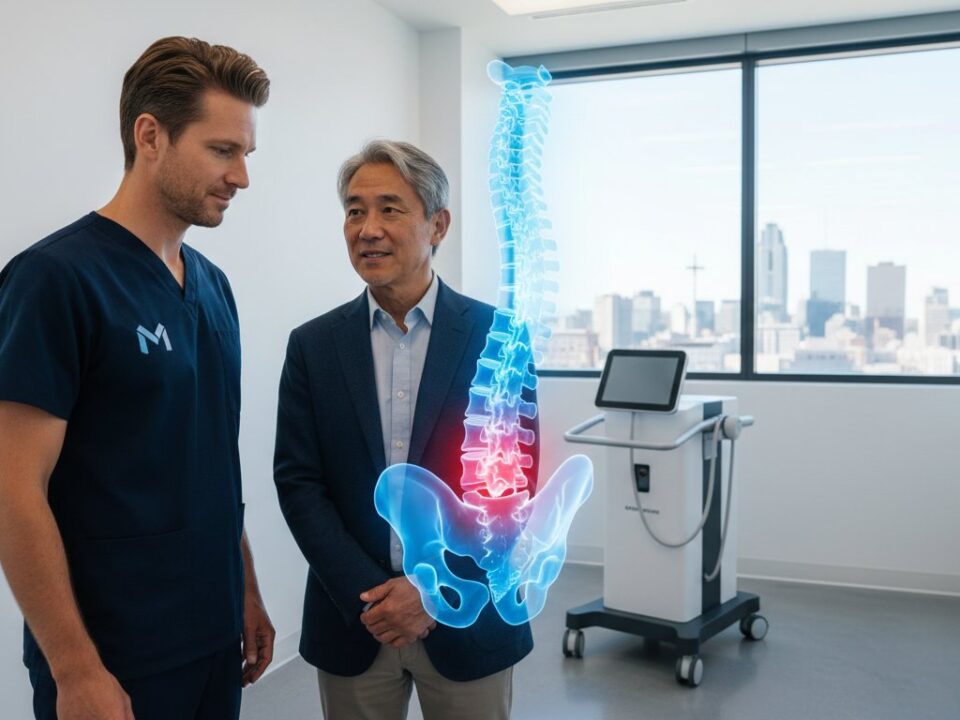
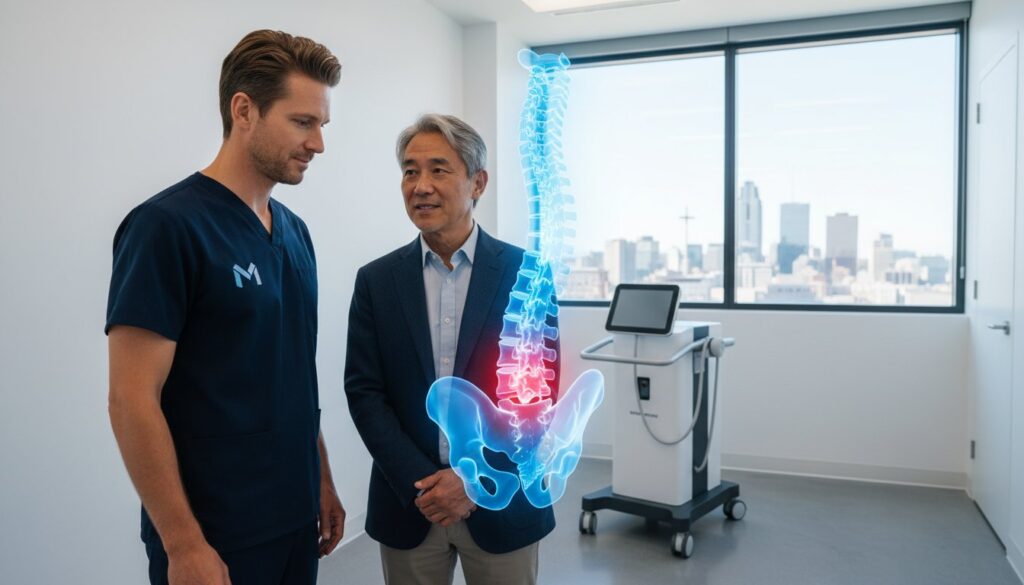
Medical science has advanced considerably to offer concrete alternatives for people who want to avoid the operating room. Spinal decompression differs from passive approaches by acting directly on the mechanics of the disc. The principle is simple but powerful: by applying precise, controlled tension, the equipment creates negative pressure, a genuine vacuum effect, within the intervertebral space. This physical phenomenon helps retract the herniated disc material towards the centre of the disc, releasing the compressed nerve root. There are many non-surgical treatment optionstoday, but few are as targeted as this advanced technology.
Beyond simply reducing the herniation, this process acts as a biological pump. By creating this vacuum, decompression draws nutrients, water and oxygen into the disc. This rehydration is vital for restarting the natural healing process of the fibrous tissues. Precision is the key to effective herniated disc treatment . Our computerized systems adjust the traction force in real time, ensuring that the effort is focused exactly on the affected vertebra. A typical clinic session lasts about 30 minutes, during which the patient remains comfortably lying down, often experiencing immediate relief from pressure without any pain.
Spinal decompression versus mechanical traction
Modern decompression should not be confused with the ordinary mechanical traction of the past. Traditional traction applies a constant force that often triggers a protective response in the back muscles. When the muscles contract to protect the spine, stretching the disc becomes impossible. The technology used at TAGMED Clinic employs highly sensitive sensors that detect even the slightest muscular resistance. The system then adjusts its tension within milliseconds to inhibit the protective spasm. This millimetre-level precision makes it possible to isolate the affected spinal segment rather than pulling on the entire spine.
Long-term benefits for spinal health
The ultimate goal goes beyond simple temporary relief. By increasing the space between the vertebrae, we allow the disc to regain some of its original height. This restoration of spinal architecture reduces the risk of recurrence and improves your overall mobility. Whether you want to return to work or fully enjoy your weekend without worrying about a wrong movement, decompression offers a structural solution. This herniated disc treatment gives your body back the ability to move freely by eliminating the mechanical source of nerve irritation, thereby supporting lasting spinal health.
Are you a good candidate for this non-surgical treatment?
Careful patient selection is the cornerstone of our clinical success. Although spinal decompression is a powerful technology, it is not a universal solution for all back pain. To determine whether you can benefit from this herniated disc treatment, we rely on precise clinical criteria and a thorough review of your history. Medical imaging, such as an MRI or CT scan, is essential to our protocol. These examinations allow us to see the actual condition of your discs, measure the extent of the herniation and confirm that the bony structure of your vertebrae is suitable for treatment.
Acting quickly often makes all the difference between a full recovery and persistent neurological effects. When a nerve is compressed for too long, it risks permanent damage that can no longer be corrected, even with later surgery. If you are developing muscle weakness or a loss of sensation, time is pressing. Our aim is to intervene before the nerve irritation becomes irreversible, using the precision of our equipment to free the nerve passage.
Specific cases treated successfully
Most of the cases we treat in Montreal involve L4-L5 and L5-S1 disc herniations, which account for about 80% of lumbar conditions. We also obtain excellent results for patients with spinal stenosis or foraminal stenosis. For these people, simply walking or standing becomes an ordeal. By restoring space in the spinal canal, decompression often allows them to regain valuable freedom of movement. Treatment is also indicated for bulging discs and advanced disc degeneration, where the aim is to rehydrate a disc that has collapsed over the years.
Your first consultation at TAGMED Clinic
Your care begins with a comprehensive clinical examination that looks beyond the painful area alone. We carefully review your imaging examinations to confirm whether the protocol is feasible. At TAGMED Clinic, we believe in complete clinical honesty: if we consider that your condition is better suited to surgery, or that a contraindication such as severe osteoporosis or a vertebral fracture prevents treatment, we will tell you directly. We only treat patients for whom we have genuine confidence in the chances of success.
Each care plan is tailored to your body structure and the severity of your injury. To find out whether you are eligible for our specialized approach, schedule your initial assessment today to discuss your options with our experts.
Why choose TAGMED Clinic in Montreal for your back?
Choosing the right clinic for your herniated disc treatment is a decision that directly affects your future mobility. Under the direction of Sylvain Desforges, docteur en ostéopathie, TAGMED Clinic has established itself as a leading reference in Montreal. With more than 30 years of experience devoted exclusively to complex spinal conditions, our team has clinical expertise that few centres can match. We have made a deliberate choice to specialize solely in advanced non-invasive solutions because we believe surgery should be considered only as a last resort.
Our approach is based on one certainty: even the most advanced decompression technology is not enough without a rigorous diagnosis. Our convenient Montreal location makes it easier to attend regular care, a decisive factor in the success and continuity of your protocol. At our clinic, you benefit from a calm, highly professional setting in which every aspect of your care is coordinated to maximize your chances of recovery without entering the operating room. To learn more about the available options, our 2026 guide to the Montreal back clinic and avoiding surgery explains the non-invasive alternatives in detail.
A commitment to your recovery
We do more than treat your symptoms; we monitor the progress of your condition with methodical precision. Every step is documented to ensure that you are genuinely moving towards your health goals. Our educational role is central to this process: we teach you the essential biomechanical principles for protecting your back at home or at work. With an often-overloaded public healthcare system, where waits to see a specialist can stretch over months, TAGMED Clinic offers a credible, prompt alternative to stop the degeneration of your discs.
Book an appointment today
Consultation in Montreal — Mont-Royal
1140, avenue Beaumont, Mont-Royal, Quebec H3P 3E5.
Tuesdays and Thursdays: 9 a.m. to 6 p.m.
1 877 672-9060 · Contact details and directions
Do not let sciatic pain or lower back stiffness spoil your next family weekend. Too many people wait until the situation becomes unbearable before seeking care. There is no need to keep driving around shopping for generic treatments that do not address the mechanical cause of your suffering. Every day of waiting is another day during which your nerve is subjected to pressure that could be avoided.
Take the initiative and choose a solution that has proved itself with thousands of patients. Book your herniated disc consultation in Montreal now for an honest assessment and a concrete action plan towards lasting recovery.
Take back control of your spinal health
Chronic pain should no longer dictate your schedule or prevent you from enjoying your weekend. You have learned that a serious clinical alternative exists to treat the mechanical cause of your suffering without entering the operating room. Spinal decompression enables disc regeneration that medication simply cannot offer. By choosing personalized herniated disc treatment , you give your body the opportunity to heal in a lasting way.
Founded in 1991 by Sylvain Desforges, docteur en ostéopathie, TAGMED Clinic stands out for its exclusive specialization in non-surgical spinal care. We provide advanced decompression technology used around the world for its unmatched precision. Our more than 30 years of expertise are your best ally in regaining the mobility you thought you had lost.
Do not let your symptoms worsen. Find out whether spinal decompression can save your back — Book an appointment in Montreal today. Your path towards an active, pain-free life begins with a rigorous assessment by our experts. We are here to support you towards a full recovery.
Frequently asked questions about herniated disc treatment
Is herniated disc treatment painful?
The treatment is not painful at all; the vast majority of patients experience soothing relief within the first few minutes of a session. The robotic technology applies tension so gradually and precisely that the body perceives no mechanical stress. It is not unusual for patients to use this relaxing time to take a nap while the machine works to release their nerves.
How many spinal decompression sessions are needed?
A complete protocol generally requires between 20 and 25 sessions to achieve optimal, lasting results. This frequency is essential to respect the disc's biological healing cycle, as disc tissue regenerates slowly. Each visit builds on the previous one to increase the intervertebral space and encourage deep rehydration of the damaged tissues.
Are the results permanent?
The results are lasting because we correct the mechanical source of the problem instead of simply numbing the pain. Once the disc has regained its height and the herniation has resolved, the spinal structure becomes stable again. By following our advice after treatment to maintain a healthy lifestyle, you considerably reduce the risk of symptoms returning in the future.
Can I drive my car after a treatment session?
Yes, you can safely drive your car immediately after your appointment at the clinic. Since treatment involves neither sedating medication nor an invasive procedure, your reflexes and ability to concentrate remain intact. There is no mandatory downtime, allowing you to return to your normal activities without delay.
Does private insurance cover spinal decompression?
Most private insurance companies in Canada reimburse part of the cost of our specialized care. We provide official receipts that you can submit to your insurer to assist with your claims. Because every policy is different, we suggest confirming your specific coverage for professional care before starting your protocol.
Why has my doctor not mentioned this option?
The public healthcare system is often oriented towards traditional solutions such as medication management or hospital surgery. Family doctors, although competent, do not always have access to information about the advanced technologies used in specialized private clinics. Our approach offers a modern alternative for patients who want to avoid long waiting lists and surgical risks.
What is the difference between a herniated disc and disc space narrowing?
A disc pinching means thinning of the disc, which reduces the space between two vertebrae, whereas a herniation means that the disc's inner material has escaped. Narrowing often precedes a herniation because constant pressure eventually causes a tear in the protective outer layer. If you are wondering how to tell whether you have a herniated disc rather than simply disc space narrowing, specific clinical tests can distinguish these two conditions precisely. Decompression-based herniated disc treatment is particularly effective for both conditions by restoring the appropriate internal pressure.
Can I work during my treatment protocol?
Most of our patients maintain their usual work activities throughout their care. Treatment is designed to fit into your routine without causing disabling fatigue or major restrictions. If your job involves extremely strenuous physical effort, we will discuss the temporary adjustments needed to protect your back during the critical healing phase.