TOPS™: Implantation and Post-Operative Monitoring
02/05/26
Lumbar disc replacement: an innovative treatment for lower back pain
02/05/26
Chronic lower back pain represents a major challenge to public health and the quality of life of patients worldwide, particularly in Quebec where waiting lists for specialized care are often long. In this context, spinal surgery in France stands out as an innovative, rapid, and safe alternative, offering access to cutting-edge technologies. Among these surgical advances, the IntraSPINE device embodies the latest generation of dynamic implants designed to stabilize the spine while preserving its physiological mobility. This solution is part of a comprehensive and personalized approach, in close collaboration with leading centers, to support patients through a controlled transatlantic journey. The combination of recognized French expertise in neurosurgery back care and support tailored to the specific needs of Quebec patients makes it possible to reconcile safety, technological innovation and humanity, while facilitating care for lasting relief from lower back pain.
This innovative technology, developed to address the limitations of traditional interventions such as spinal fusion, ensures a dynamic stabilization thanks to an implant inserted between the vertebral bodies without compromising the mobility of the affected vertebral segment. The device IntraSPINE agit ainsi directement sur le disque intervertébral et réduit la pression exercée sur les nerfs, offrant un soulagement de la douleur tout en maintenant la fonction biomécanique naturelle. En parallèle, une stratégie rigoureuse encadre le choix opératoire, basée sur une évaluation complète et un suivi post-opératoire précis. Cette démarche repose sur des pratiques fondées sur la preuve, la sécurité des patients et un respect strict des protocoles internationaux. Ainsi, la stabilisation dynamique devient une option précieuse pour de nombreux patients souffrant de douleurs lombaires invalidantes qui souhaitent bénéficier de soins chirurgicaux innovants, réalisés dans des conditions optimales.
The fundamental principles of dynamic stabilization with IntraSPINE for the spine
The spinal surgery This technique has undergone a major evolution thanks to dynamic stabilization, an innovative approach offered notably by the IntraSPINE system. This method provides an alternative to traditional spinal fusion, which permanently immobilizes the affected segments, often at the cost of reduced mobility and an increased risk of degeneration in adjacent segments.
IntraSPINE is a spinal implant designed to be inserted between the vertebral bodies, at the level of the intervertebral disc. It allows for dynamic stabilization of the spine while preserving the range of motion of the treated segment. The disc thus retains a degree of natural mobility, preventing mechanical overload of adjacent segments, a common problem in traditional spinal fusion.
This implant primarily reduces lower back pain by decreasing pressure on nerves and increasing the biomechanical support of the disc. The implant's specific design absorbs shocks and loads, thus limiting the progressive wear of the intervertebral disc. This innovative biomechanical function relies on close collaboration between surgeons and biomedical engineers to ensure the device's safety and effectiveness.
Unlike rigid systems, IntraSPINE promotes a return to normal spinal function while preserving biomechanics. For example, clinical studies have shown a significant improvement in quality of life and improved mobility in patients treated with this implant, compared to more invasive techniques. Furthermore, postoperative recovery is generally faster, reducing hospital stays and complications related to prolonged immobilization.
Patients also benefit from personalized follow-up, allowing care to be adapted at each stage, from pre-operative assessment to rehabilitation. This integrated approach underscores the importance of choosing surgical intervention only after a phase of conservative treatment, particularly the Spinal decompression therapy available in France. In this regard, the TAGMED CLINIC ensures a reference role in non-surgical care before any interventional decision.

Comparison between dynamic stabilization and other surgical options for the back
The back surgery offers several techniques adapted according to the pathology and the patient's profile. The main ones are spinal fusion, simple decompression, and dynamic stabilization, notably via IntraSPINE and the system TOPS. Each has significant advantages and limitations that should be fully understood.
Traditional spinal fusion involves immobilizing one or more segments of the spine by fixing the vertebrae together using screws and plates. While this method is effective in relieving pain associated with severe instability or a herniated disc This significant procedure results in a near-permanent loss of mobility at this level and can promote degeneration of adjacent segments. This technique often requires prolonged rehabilitation and places increased biomechanical stress on the spine.
Decompression is a procedure designed to relieve pressure on the nerves, particularly for treating herniated discs or foraminal stenosis. This operation can be performed simply, without fixation, but does not always correct the underlying spinal instability.
The IntraSPINE dynamic stabilization This positions it as an innovative and less invasive intermediate solution. It combines the benefits of maintaining mobility with sufficient stabilization to relieve pain and prevent worsening. According to a comparative study conducted at the TAGMED CLINIC, Patients treated with dynamic stabilization retain 30 % to 40 % greater spinal flexibility compared to those operated on by fusion, with a shorter average length of hospital stay and accelerated recovery.
A summary table illustrates these key differences:
| Surgical technique | Post-operative mobility | Pain relief | Risks and complications | Recovery time |
|---|---|---|---|---|
| Spinal fusion | Limited mobility, rigid fixation | Often effective on pain | Degeneration of adjacent segments is possible | 4 to 6 months or more |
| Simple decompression | Mobility preserved | Good localized relief | Risk of persistent instability | 2 to 3 months |
| Dynamic stabilization (IntraSPINE) | Mobility partially preserved | Lasting and functional relief | Fewer complications observed | 1 to 2 months in general |
French expertise in spinal orthopedics and neurosurgery, combined with the use of state-of-the-art implants, allows us to offer surgical solutions tailored to each patient. Rigorous post-operative clinical follow-up, coupled with targeted rehabilitation, optimizes functional outcomes.

Patient journey of Quebecers undergoing dynamic back surgery in France: assessment, intervention and follow-up
The process of undergoing back surgery in France always begins with a comprehensive and personalized evaluation, conducted in collaboration with specialists from Quebec and France. The leading expertise of Clinique TAGMED in conservative treatment is essential to ensure that surgery, particularly with IntraSPINE, is only offered after a minimum of 3 to 6 months of non-invasive care.
This includes, in particular, spinal decompression, advanced physiotherapy sessions, and lifestyle modifications aimed at limiting aggravating factors. When these treatments do not provide sufficient relief, surgical evaluation is considered. This rigorous, scientifically supported approach reflects a commitment to patient safety and quality of care.
Care in France benefits from seamless coordination thanks to specialized platforms such as SOS Medical Tourism, This system facilitates administrative procedures, consultation scheduling, and intervention in a state-of-the-art clinical setting. The patient has a dedicated contact person, ensuring personalized and supportive care before, during, and after surgery.
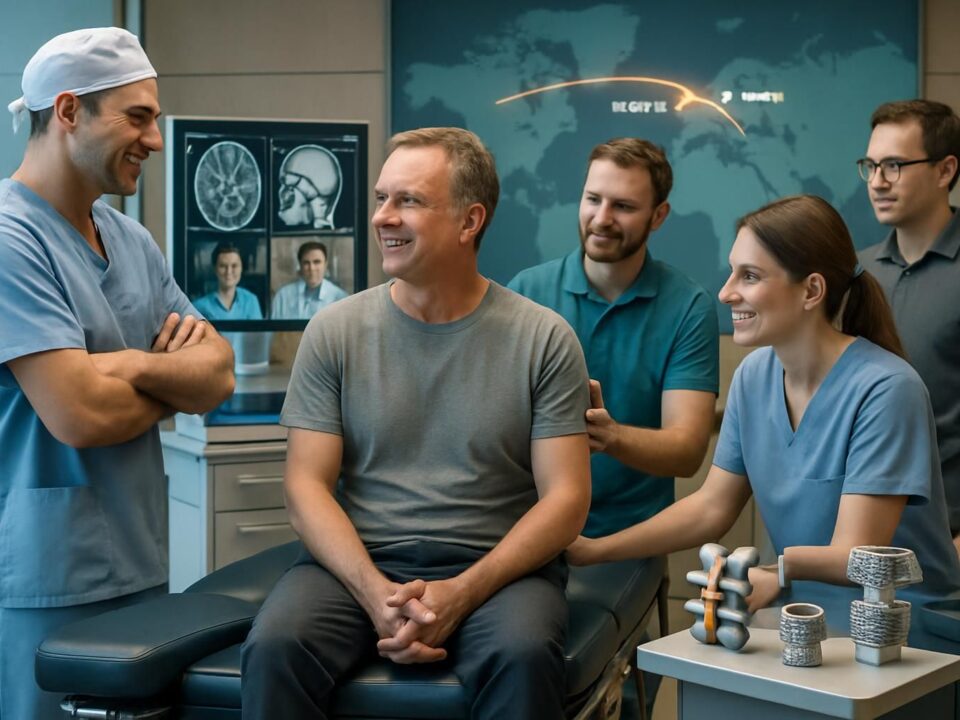
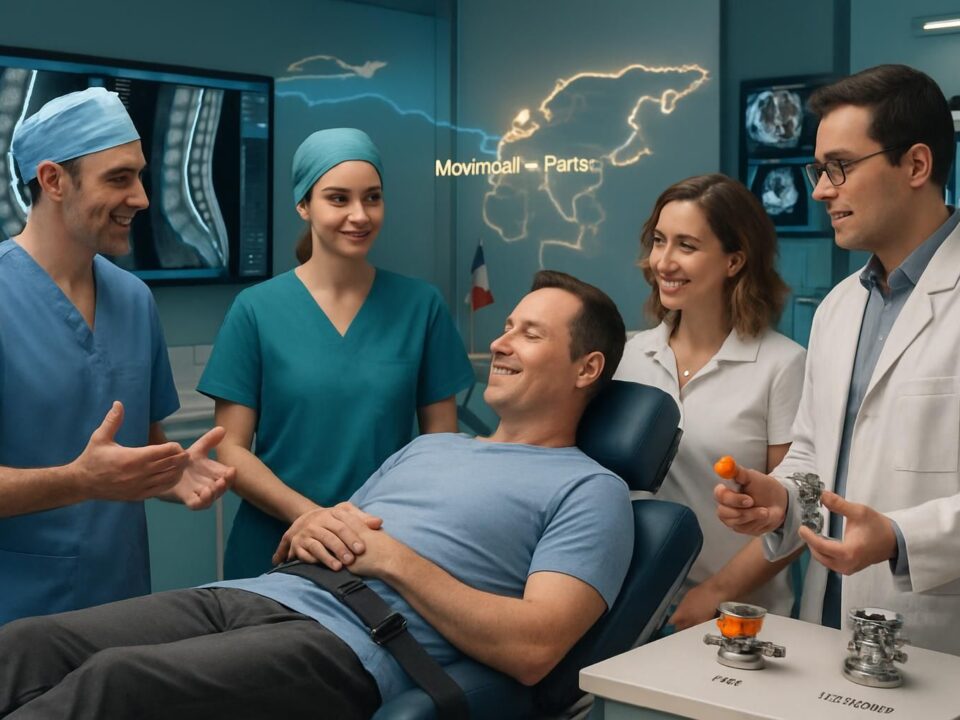
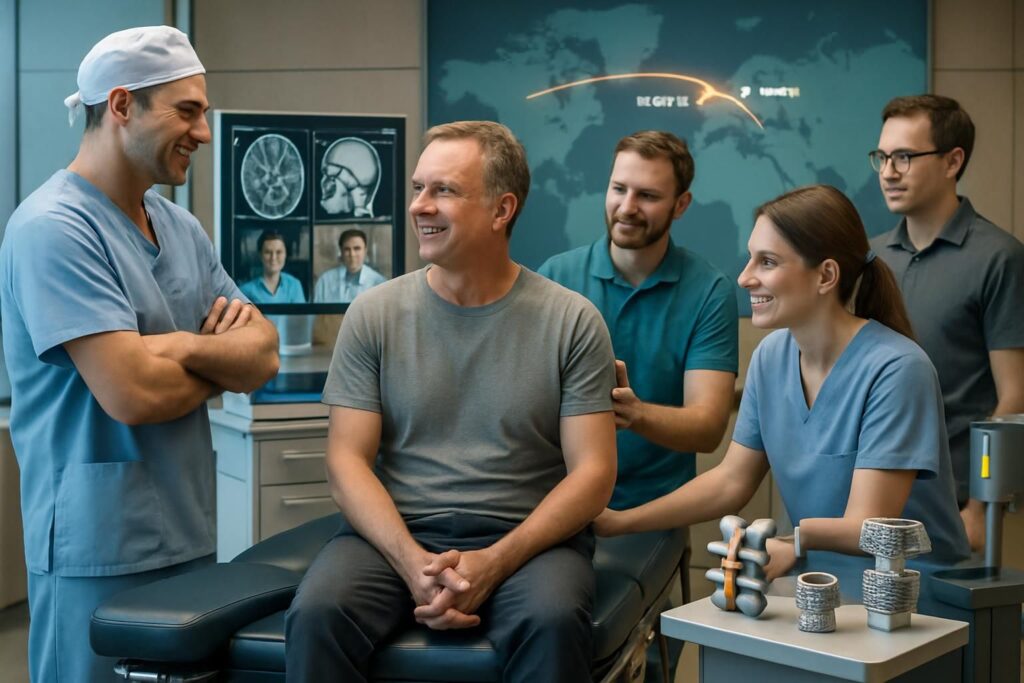
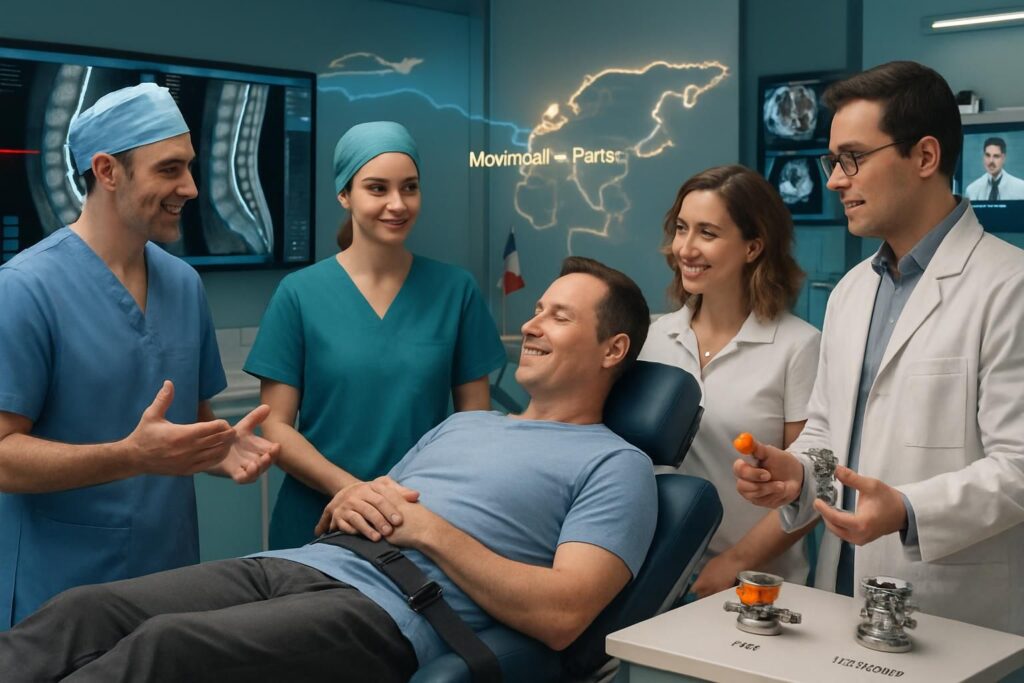
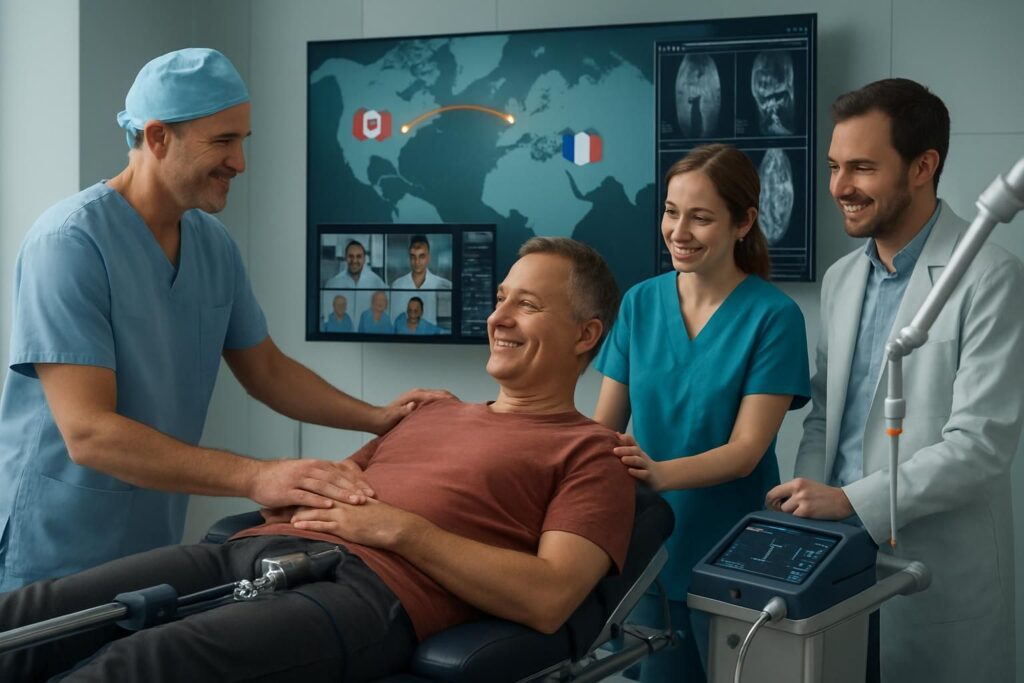
Dynamic stabilization surgery using IntraSPINE is performed according to demanding international standards, in a high-tech environment and a reassuring atmosphere. The multidisciplinary team includes neurosurgeons, anesthesiologists, specialized nurses, and physiotherapists. The postoperative phase includes close monitoring to control healing, manage pain, and implement a tailored rehabilitation program.
Patients also benefit from clear and educational documentation, ensuring a complete understanding of the implanted device, its expected benefits, and the recommendations to follow. This educational approach helps establish trust between the patient and the medical team, which is essential for long-term success.
Biomechanical and functional benefits of dynamic implants for lumbar treatment
Dynamic implants, and specifically IntraSPINE, offer significant added value in the treatment of lower back pain thanks to their unique biomechanical characteristics. These devices are designed to mimic the natural function of the spine, providing stabilization without sacrificing the spinal mobility essential for maintaining posture and preventing pain.
The main innovation lies in the implant's ability to absorb and distribute loads evenly across the intervertebral discs. This reduces mechanical stress on nerve tissue, a frequent source of debilitating pain. Unlike fusion, which immobilizes the segment, the dynamic implant offers limited but sufficient freedom of movement to preserve normal function.
This biomechanical approach offers several clinical advantages:
- Maintaining mobility : essential to maintain spinal functionality and prevent stiffness.
- Reduction of the risk of degeneration adjacent segments, common after rigid fusion.
- Improvement in overall comfort thanks to better biomechanical adaptation.
- Faster post-operative recovery with a faster return to daily activities.
Furthermore, the IntraSPINE implant is made from biocompatible and durable materials, ensuring optimal integration and long-term longevity. Precise implant placement is guaranteed through rigorous preoperative planning and the use of advanced imaging technologies.
To further understand the benefits of dynamic stabilization on spinal mobility, visit the website of the TAGMED CLINIC offers detailed explanations on the specific benefit of dynamic implants in preventing post-surgical complications.

IntraSPINE: dynamic stabilization and pain relief
Discover how IntraSPINE uses dynamic stabilization principles to provide lasting relief, by combining biomechanical benefits, quick recovery and preservation of mobility.
Select a concept to learn more
Visual synthesis
Advantages of the innovative surgical approach in France for Quebec patients
Access to spinal surgery in France, particularly with dynamic implants like IntraSPINE, offers substantial advantages for Quebec patients facing long wait times and high costs of local private care. Transatlantic coordination optimizes every step of the medical journey, from the initial contact and assessment to detailed post-operative follow-up.
Collaboration with leading centers in orthopedic and neurosurgical surgery guarantees access to recognized expertise and mastery of the most innovative implant technologies. The patient is guided by a spinal implant expert who oversees their medical journey with a constant focus on safety and effectiveness.
This personalized approach includes psychological and informational support, ensuring that each patient fully understands the available options, benefits, and limitations of surgery. This reassuring framework helps reduce anxiety and optimize preparation for the procedure.
From an economic standpoint, treatment in France can be a more accessible solution, offering excellent value for money, including transparent pricing, clear packages, and comprehensive care. The speed of the process reduces the time spent in pain and allows for a quick return to an active life.
Here are the key elements that distinguish the French route:
- In-depth evaluation in connection with conservative care provided in Quebec (notably via the TAGMED Clinic).
- Rapid access to innovative surgery with the latest generation of dynamic implants.
- Full supervision before, during and after the on-site intervention.
- Personalized post-operative follow-up including rehabilitation and specific advice.
- Smooth coordination through specialized platforms such as SOS Medical Tourism.
This integrative model not only promotes better recovery but also a positive patient experience, based on trust and transparency.
{"@context": "https://schema.org", "@type": "FAQPage", "mainEntity":[{"@type": "Question", "name": "What is the IntraSPINE implant?", "acceptedAnswer":{"@type": "Answer", "text": "The IntraSPINE implant is an indirect dynamic stabilization device between the vertebral bodies to relieve lumbar pain while preserving the natural mobility of the affected vertebral segment."}},{"@type": "Question", "name": "When is IntraSPINE surgery recommended?" ", "acceptedAnswer":{"@type": "Answer", "text": "Surgery is considered only after a period of 3 to 6 months of complete conservative treatment, including neurovertebral compression, when pain persists and impacts quality of life."}},{"@type": "Question", "name": "What are the advantages of dynamic stabilization compared to fusion?"}},{"@type": "Question", "name": "What are the advantages of dynamic stabilization compared to fusion?"}} ", "acceptedAnswer":{"@type": "Answer", "text": "Dynamic stabilization allows for the preservation of some vertebral mobility, reduces the risk of duplication of adjacent segments, and promotes faster postoperative recovery."}},{"@type": "Question", "name": "How is the follow-up after IntraSPINE implantation carried out?" ", "acceptedAnswer":{"@type": "Answer", "text": "Follow-up includes regular monitoring, tailored pain management, and a personalized education program to optimize back recovery and functionality."}},{"@type": "Question", "name": "How to arrange surgical care in France from Quebec?"}} ", "acceptedAnswer":{" @type": "Answer", "text": "It is advisable to contact specialized platforms such as SOS Tourisme Musical, which provide comprehensive coordination of the process, covering consultation, surgery, and post-operative follow-up."}}]}What is the IntraSPINE implant?
The IntraSPINE implant is a dynamic stabilization device inserted between the vertebral bodies to relieve lumbar pain while preserving the natural mobility of the affected vertebral segment.
When is IntraSPINE surgery recommended?
Surgery is considered only after a period of 3 to 6 months of complete conservative treatment, including neurovertebral decompression, when pain persists and impacts quality of life.
What are the advantages of dynamic stabilization compared to fusion?
Dynamic stabilization helps to preserve some spinal mobility, reduces the risk of degeneration of adjacent segments and promotes faster post-operative recovery.
How is the follow-up carried out after the implantation of IntraSPINE?
The follow-up includes regular monitoring, appropriate pain management, and a personalized rehabilitation program to optimize recovery and back functionality.
How to arrange surgical treatment in France from Quebec?
It is advisable to contact specialist platforms such as SOS Medical Tourism, which provide complete coordination of the process, covering consultation, surgery and post-operative follow-up.