TAGMED Clinic Montreal / Mount Royal
Herniated disc and chronic sciatica: why pain can persist
Understanding the link between a herniated disc, the path of sciatic pain, neurological signs and care decisions.
Sciatica that lasts for several months does not necessarily mean that a herniated disc is continuing to grow. Nerve sensitivity, deconditioning, sleep, fear of movement and other factors can help maintain symptoms even when the anatomy has changed.
- Related page in this guide series Sciatica treatment in Montreal.
- A herniated disc seen on MRI is only relevant when the level, side and clinical findings are consistent.
- Progressive weakness, foot drop or signs of cauda equina syndrome change the priority of assessment.

Understanding
What this symptom pattern may mean
Sciatica that lasts for several months does not necessarily mean that a herniated disc is continuing to grow. Nerve sensitivity, deconditioning, sleep, fear of movement and other factors can help maintain symptoms even when the anatomy has changed.
Key point 1
Some herniated discs shrink over time, but symptoms may take longer to improve.
Key point 2
Persistent pain warrants a reassessment of the working diagnosis and functional goals.
Key point 3
Chronic pain does not mean that the pain is imaginary; it often reflects several biological, mechanical and contextual factors.
Clinical guidance
Symptoms, function and disc level should tell a consistent story
Follow-up for chronic sciatica should distinguish what remains neurological, what is mainly mechanical and what has become a problem with activity tolerance. Repeating the same treatment without measuring progress is rarely a sufficient strategy.

An important point
The presence of a herniated disc alone does not establish that it is causing the symptoms. Disc abnormalities are also seen in people without pain.
Assessment
What can be assessed during a consultation
A new assessment may review strength, sensation, walking, previous treatments and whether further imaging is appropriate. NICE recommends imaging in a specialist setting only if it is likely to change management.

Route
Precisely locate pain, tingling and areas of numbness.
Strength and function
Compare key movements, walking and tasks that may reveal weakness.
Imaging
Relate the disc level, side and morphology to the clinical findings rather than treating an isolated report.
Changes over time
Measure symptom trends and define the criteria that would call for a different course of care.
Evidence and decisions
What the guidelines say
A strategy for chronic symptoms is generally active and multimodal. Motorized decompression is not a standard treatment recommended by NICE; if it is offered, it should be guided by measurable goals and clear information about the uncertainty of the evidence.
Stay active
NICE recommendations encourage self-management and maintaining normal activities as much as possible, with adjustments to individual needs and abilities.
Targeted imaging
NICE recommends considering imaging in a specialist setting only if the result is likely to change management.
Traction / decompression
NICE does not recommend traction for low back pain with or without sciatica. Motorized decompression should therefore not be presented as a standard or guaranteed treatment, and requires transparent information about the uncertainty of the evidence.
When should you seek prompt or emergency care?
- New, significant or rapidly progressive weakness.
- Recent foot drop or worsening walking ability.
- New bladder or bowel problems.
- Numbness in the saddle area or perineum.
- Significant symptoms on both sides, fever, major trauma or a general deterioration in health.
These signs should not wait for a routine appointment.
Follow-up
Measure progress rather than repeat the same treatment
Follow-up compares leg pain, the area of numbness, strength, walking, sitting tolerance, sleep and activities. Objective worsening should lead to a reassessment of the diagnosis and plan.

Do you have sciatica that may be associated with a herniated disc?
A consultation can help clarify how symptoms, examination findings and imaging fit together, the signs to watch for and the options for care.
Spinal decompression in Montreal · Spinal decompression in Terrebonne
Frequently Asked Questions
FAQ — Herniated disc and chronic sciatica: why pain can persist
When is sciatica considered chronic?
Often when symptoms persist beyond several weeks to a few months, depending on the context.
Is the herniated disc necessarily still present?
Not necessarily in the same form; some herniated discs regress.
Why can the pain continue?
Nerve sensitivity, function, sleep and other factors can contribute to persistent symptoms.
Should an MRI be repeated?
Only if the result is likely to change a clinical decision.
Can symptoms still improve after several months?
Yes, chronic symptoms do not rule out improvement.
Should activity be avoided?
Prolonged inactivity is rarely advisable; progression should be adapted to the individual.
When is a specialist opinion useful?
If the deficit persists, function remains very limited or appropriate treatments fail.
Medical references
References and guidelines
These resources provide general guidance on sciatica, lumbar disc herniation, imaging and radiculopathy. They do not replace an individualized clinical decision.
- NICE NG59 — Low back pain and sciatica: recommendations
- American College of Radiology — Appropriateness Criteria: Low Back Pain
- North American Spine Society — Lumbar Disc Herniation with Radiculopathy
Important information
This page provides general information and does not make a diagnosis. Outcomes, recovery times and the need for an intervention vary with the cause, neurological signs, function and individual response.
Sylvain Desforges, docteur en ostéopathie
TAGMED Clinic — Spinal decompression, specific osteopathy and assessment of low back, disc-related and sciatic pain.
Professional profile · Contact · Main guide to sciatica in Montreal
In the same guide series
Related guides to sciatica
Continue with guides that explore the same symptom, its possible cause, assessment or options for care.
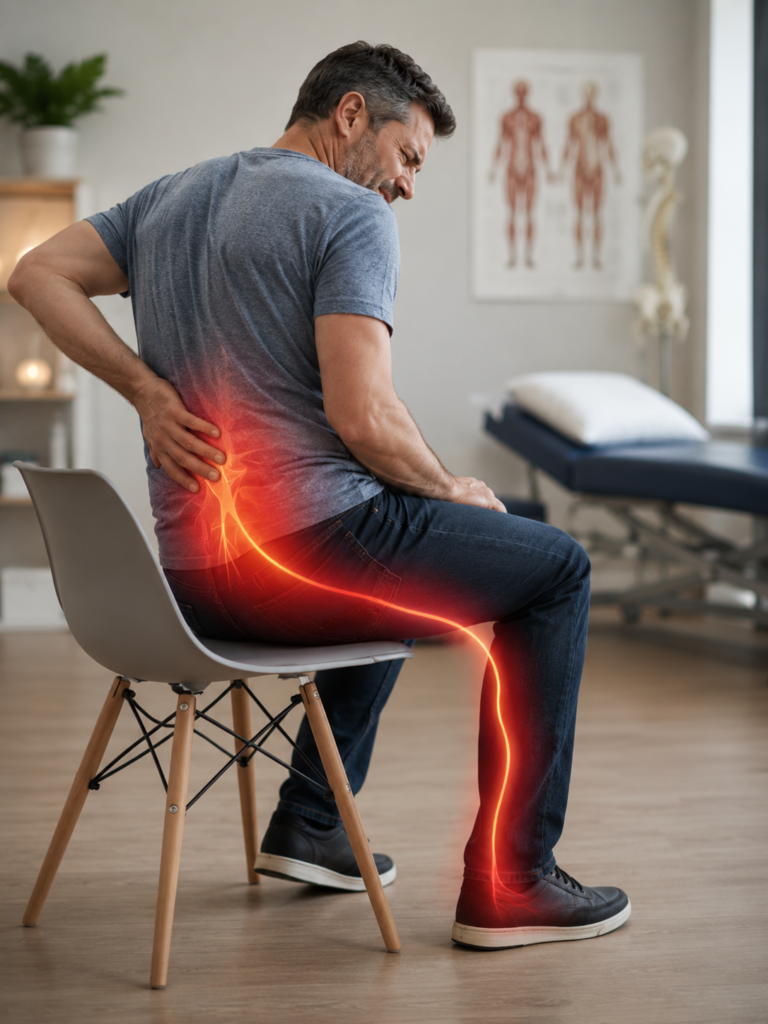
Sciatica treatment in Montreal
TAGMED Clinic Montreal / Mount Royal — Sciatica treatment in Montreal. Free examination, valued at CAD $85. Request your free examination and check availability…

L4–L5 herniated disc and sciatica: what symptoms can it cause?
TAGMED Clinic Montreal / Mount Royal — L4–L5 herniated disc and sciatica: what symptoms can it cause? Understanding the connection with sciatic pain…

Herniated disc and sciatica when sitting: why sitting can make symptoms worse
TAGMED Clinic Montreal / Mount Royal — Herniated disc and sciatica when sitting: why sitting can make symptoms worse. Understanding the connection…

Causes of sciatica: herniated disc, stenosis and other mechanisms
TAGMED Clinic Montreal / Mount Royal — Causes of sciatica: herniated disc, stenosis and other mechanisms. Understanding the likely cause…

Herniated disc and sciatica without back pain: is it possible?
TAGMED Clinic Montreal / Mount Royal — Herniated disc and sciatica without back pain: is it possible? Understanding the connection…
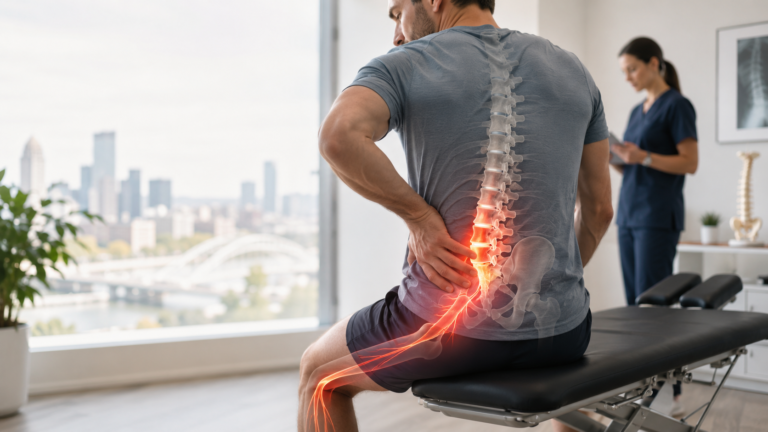
Herniated disc and sciatica in Montreal: understanding the connection
TAGMED Clinic Montreal / Mount Royal — Herniated disc and sciatica in Montreal: understanding the connection. Clinical guidance, signs to watch for and next steps…