TAGMED Clinic Montreal / Mount Royal
Sciatica and balance: when to include stability and leg control in rehabilitation
Gradual activity, symptom tolerance and measurable functional progress.
Une sciatique douloureuse ou associée à une faiblesse peut modifier la confiance dans la jambe et certaines tâches d’équilibre. Le travail d’équilibre peut faire partie de la rééducation lorsque la sécurité le permet.
- Page in this guide series Sciatica exercises and rehabilitation.
- Linked to the main guide Sciatica treatment in Montreal.
- No single exercise is presented as mandatory or suitable for every patient.

Understanding
The right amount matters more than the “perfect” exercise
La difficulté est adaptée : appui près d’un support, transfert de poids, marche contrôlée ou tâches fonctionnelles. L’objectif n’est pas de mettre le patient en situation de chute.
Tolerance
Observe what happens during the exercise, in the hours that follow and the next day.
Goal
Connect each exercise to a useful ability: walking, working, lifting, driving, sleeping or returning to sport.
Progression
Change one variable at a time: duration, repetitions, range of motion, load or complexity.
Clinical guidance
Adapt exercise to the neurological and functional response
Une faiblesse nouvelle, une jambe qui cède ou une détérioration rapide de la marche doit être évaluée avant de simplement augmenter la difficulté des exercices.

An important point
NICE recommends encouraging self-management, continuing normal activities as much as possible and adapting exercise to needs, preferences and abilities. The aim is not to push through neurological deterioration.
Assessment
Establish a measurable starting point
Before progressing, it is useful to document currently limited tasks, walking distance, sitting or standing tolerance, strength, tingling and recovery after activity.

Choose the goal
Identify a real-life activity to improve.
Determine the amount
Start at a level that is tolerable enough to repeat.
Observe the response
Note leg pain, recovery and neurological signs.
Progress
Gradually increase one variable when tolerance allows.
Active program
Combine mobility, muscular capacity and functional activity
A program may include mobility, strengthening, walking, balance and a gradual return to loading, but not every patient needs all of these components. The choice depends on limitations and goals.
Mobility
Explore useful movements without pursuing maximum range at all costs.
Strengthening
Gradually rebuild the capacity to tolerate useful physical effort.
Activity
Reintroduce the real-life tasks that matter to the patient.
When should you stop simply progressing the exercises?
- New or rapidly progressive weakness.
- Recent foot drop or a leg that gives way more often.
- A persistent increase in significant numbness.
- New bladder or bowel problems.
- Numbness in the saddle area or perineum.
These signs call for reassessment rather than intensifying the program.
Follow-up
Measure progress in real life
Meaningful improvement may involve walking more, tolerating work better, fewer sleep interruptions, resuming lifting or gradually returning to sport. Pain alone does not capture all aspects of function.

Function
Compare important activities with the starting level.
Recovery
Check the response in the hours that follow and the next day.
Main topic guide
In the same guide series
Related guides
Would you like to plan a return to activity that accommodates your sciatica?
An assessment can help establish a starting point, functional goals and progression criteria suited to your clinical presentation.
Frequently Asked Questions
FAQ — Sciatique et équilibre : quand intégrer stabilité et contrôle de la jambe en rééducation
La sciatique peut-elle affecter l’équilibre?
Oui, notamment par la douleur, la faiblesse ou une baisse de confiance dans la jambe.
Faut-il pratiquer sur une surface instable?
Pas nécessairement. On commence par une situation sécuritaire et adaptée.
Dois-je fermer les yeux pour progresser?
Ce n’est pas obligatoire et cela augmente la difficulté; la sécurité prime.
Les exercices d’équilibre remplacent-ils le renforcement?
Non. Ils peuvent compléter d’autres composantes du programme.
Que faire si la jambe cède?
Une jambe qui cède, surtout si le phénomène progresse, doit être évaluée.
When should you seek medical help quickly?
Si la marche se détériore ou si une faiblesse apparaît.
Which signs require emergency care?
Bladder or bowel dysfunction, saddle anaesthesia or severe, rapidly progressive weakness.
Medical references
References and guidelines
These references address self-management, physical activity and exercise for low back pain with or without sciatica. They do not define a single exercise suitable for every patient.
- NICE NG59 — Low back pain and sciatica: assessment and management
- NICE — Exercise and physical activity for low back pain and sciatica
- North American Spine Society — Lumbar Disc Herniation with Radiculopathy
Important information
This page provides general information and is not an individualized exercise prescription. The choice and progression of a program should take safety, tolerance, goals and neurological changes into account.
Sylvain Desforges, docteur en ostéopathie
TAGMED Clinic — Spinal decompression, specific osteopathy and assessment of low back, disc-related and sciatic pain.
Professional profile · Contact · Main guide to sciatica in Montreal
In the same guide series
Related guides to sciatica
Continue with guides that explore the same symptom, its possible cause, assessment or options for care.
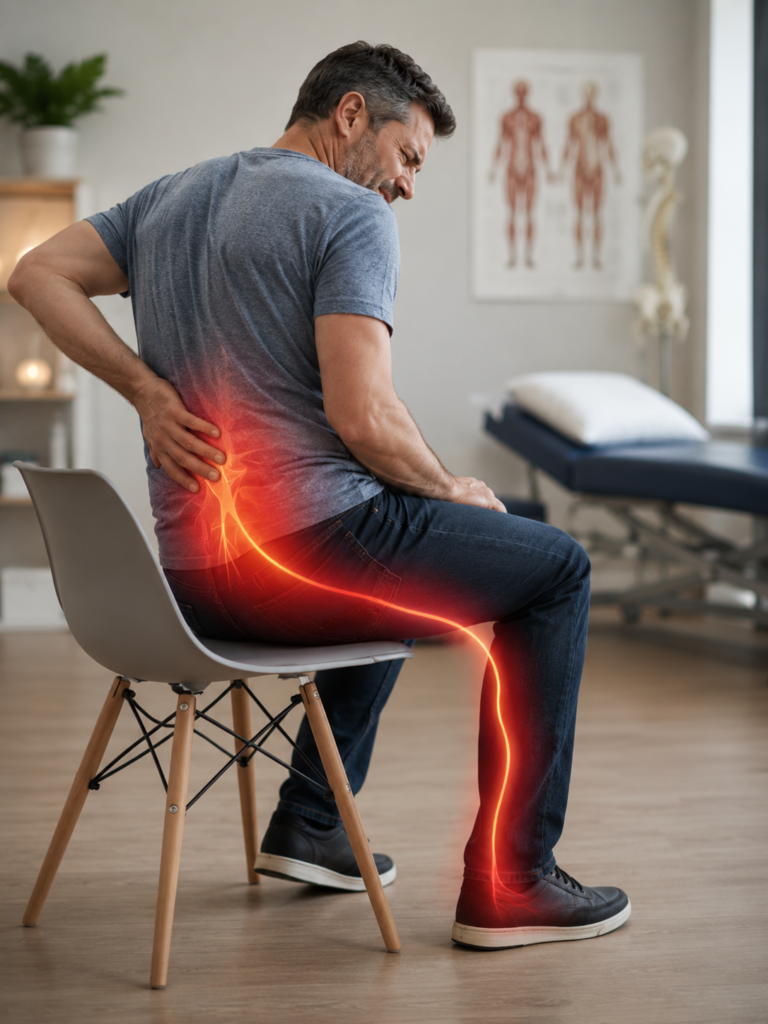
Sciatica treatment in Montreal
TAGMED Clinic Montreal / Mount Royal — Sciatica treatment in Montreal. Free examination, valued at CAD $85. Request your free examination and check availability…
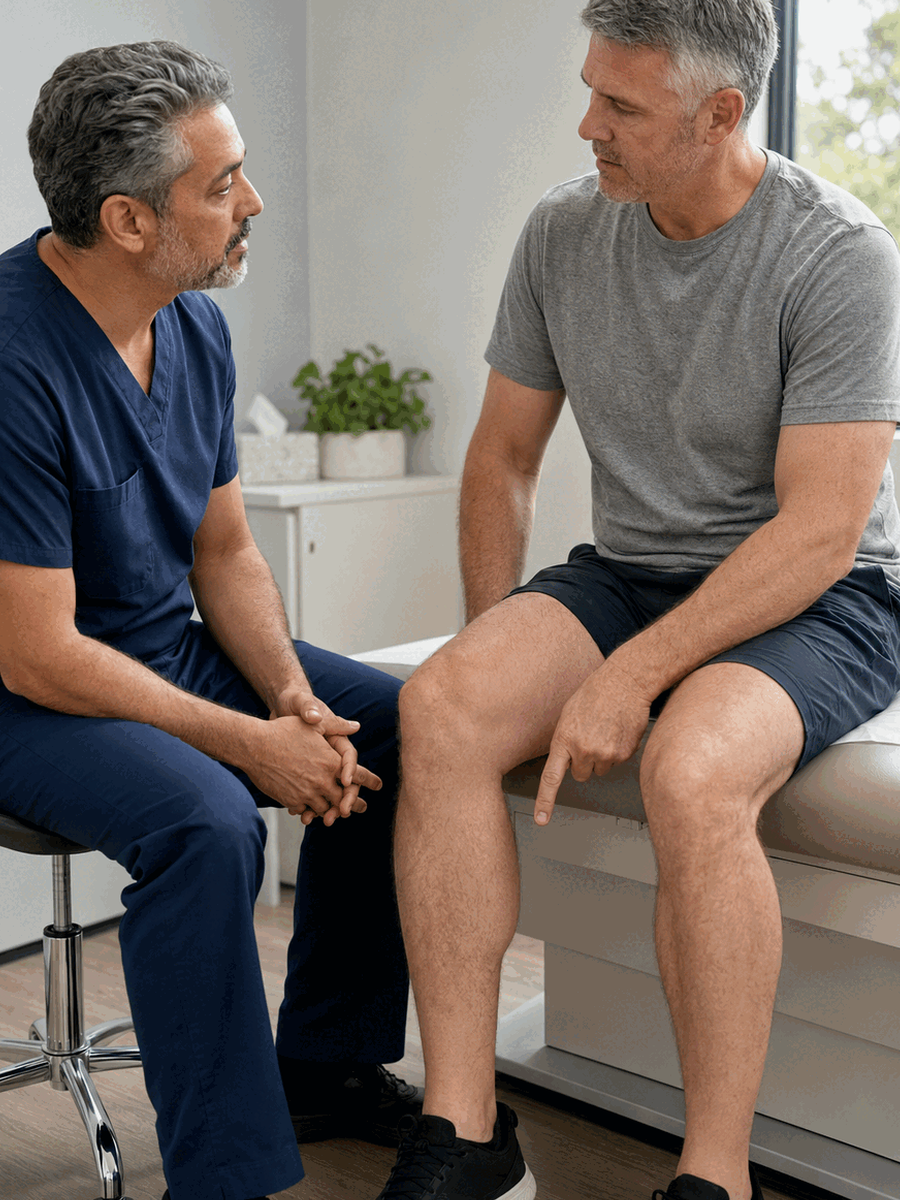
Sciatica: rest or movement? Finding the right balance during a flare-up
TAGMED Clinic Montreal / Mount Royal — Sciatica: rest or movement? Finding the right balance during a flare-up. Clinical pointers, differential diagnosis and next steps…
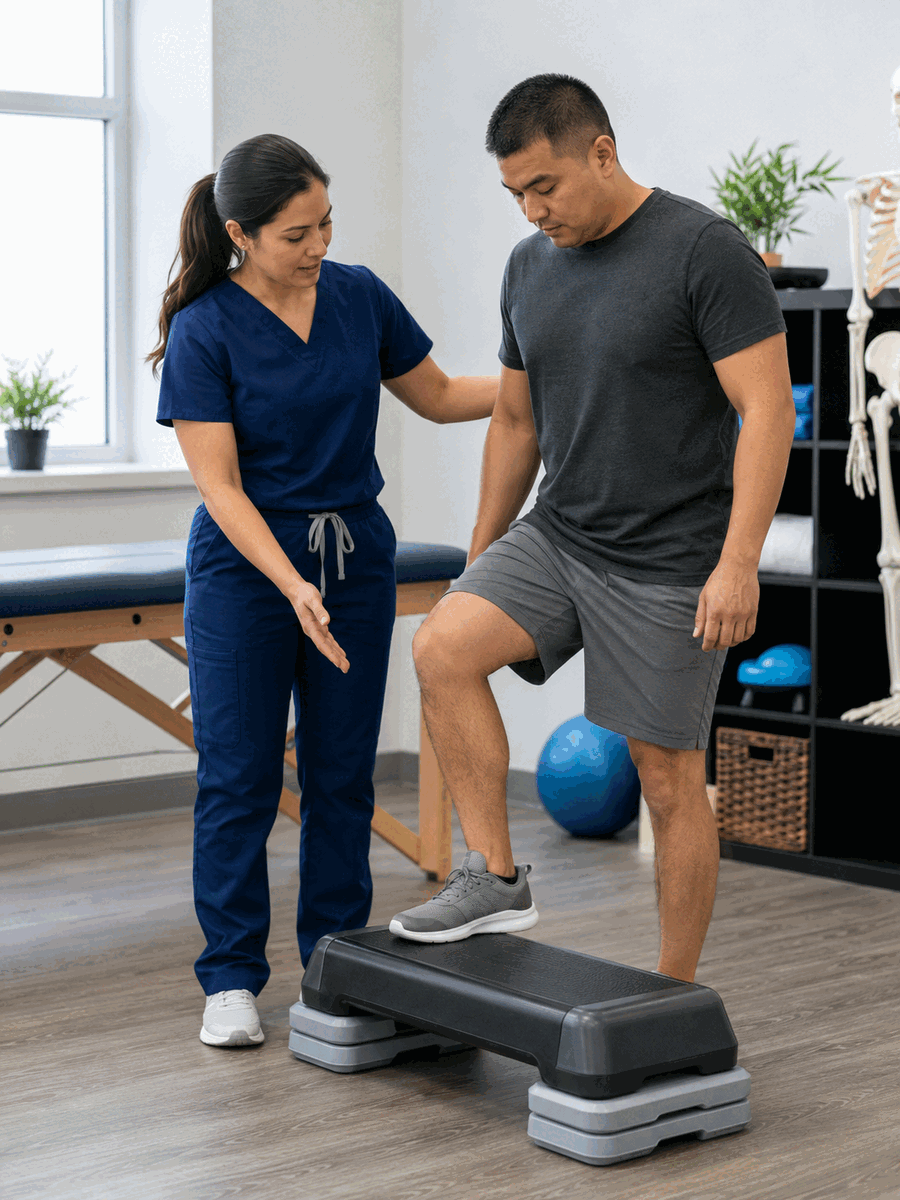
Sciatica and Pilates: trunk control, progression and limitations
TAGMED Clinic Montreal / Mount Royal — Sciatica and Pilates: trunk control, progression and limitations. Practical pointers for incorporating this strategy while keeping…
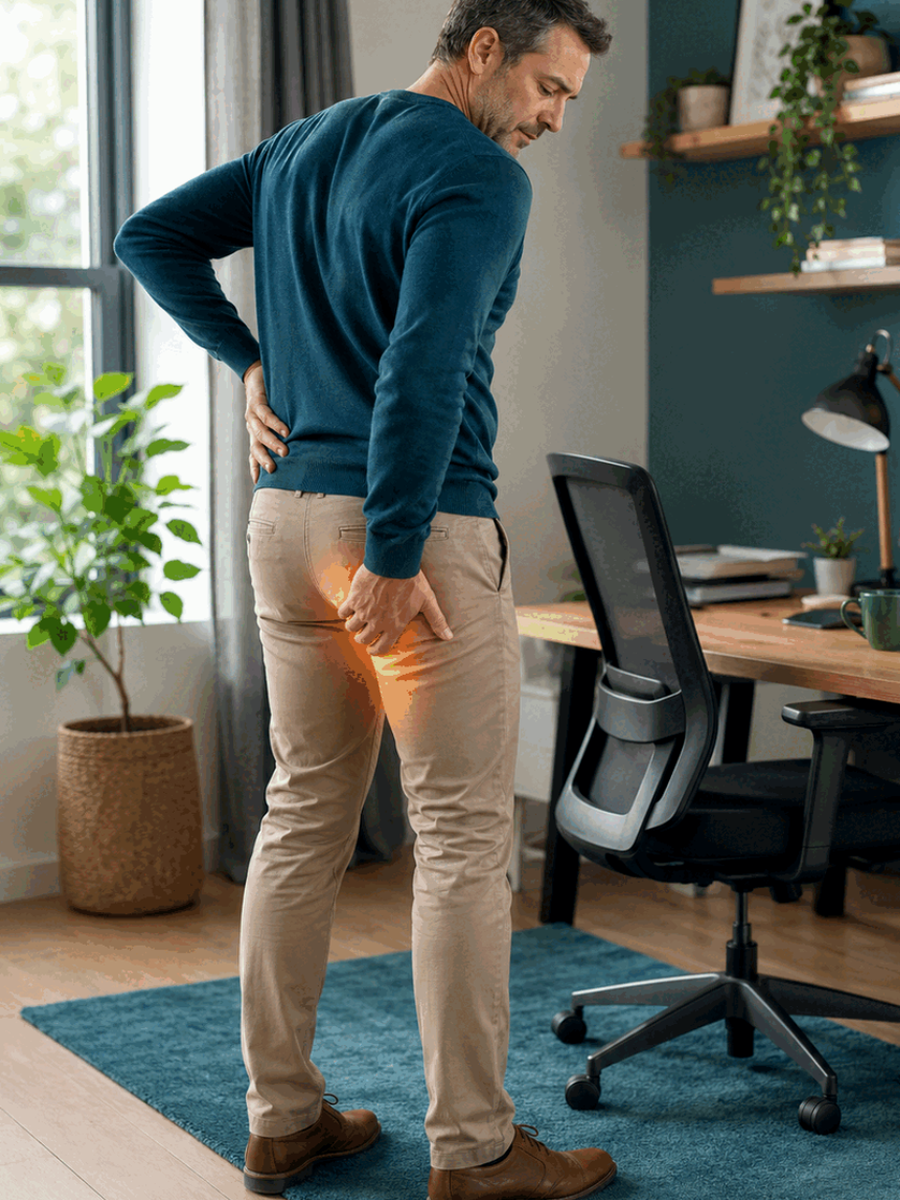
Sciatica or hip osteoarthritis: groin, buttock or leg pain?
TAGMED Clinic Montreal / Mount Royal — Sciatica or hip osteoarthritis: groin, buttock or leg pain? Comparing the…

Sciatica or referred lumbar pain: when the leg hurts without radiculopathy
TAGMED Clinic Montreal / Mount Royal — Sciatica or referred lumbar pain: when the leg hurts without radiculopathy. Comparing the distribution and neurological signs…
Sciatica or deep vein thrombosis: leg pain that should not be confused
TAGMED Clinic Montreal / Mount Royal — Sciatica or deep vein thrombosis: leg pain that should not be confused. Comparing the distribution, the signs…