Spinal stenosis and treatment with spinal decompression
Introduction
Spinal stenosis is a condition that occurs when the spinal canal narrows, causing pressure on the spinal cord or the nerve roots. This can cause a variety of symptoms such as back pain, leg pain, and numbness or weakness in the legs. While surgery is often recommended for severe cases, therapy spinal decompression non-surgical becomes more and more popular for those looking to relieve their symptoms.
Definition of spinal stenosis
Spinal stenosis is a medical condition characterized by narrowing of the spinal canal, which houses the spinal cord and the nerve roots. This narrowing can be due to various factors, such as aging, degenerative changes, or birth defects, and can result in compression of the nerve structures.

This compression can significantly affect a patient's quality of life. It may affect one or more regions of the spine, including the cervical spine (neck), thoracic spine (mid-back) and lumbar spine (lower back). Stenosis can range from mild to severe and may require different medical interventions.
General symptoms
Symptoms of spinal stenosis vary depending on the region of the spine affected. Common symptoms include back pain, pain radiating into the legs or arms, and tingling or numbness.
Muscle weakness, difficulty walking and, in more severe cases, loss of bladder or bowel control may also occur. These symptoms can significantly affect quality of life by limiting mobility and independence.
Treatment Options
The treatment of spinal stenosis is often multidisciplinary, and may vary as a function of the severity of the symptoms and the location of the stenosis. The options for non-surgical treatment include anti-inflammatory medications, corticosteroid injections, and physical therapies, such as decompression neurovertébrale.
Surgery may be considered in more severe cases when symptoms are disabling and do not respond to conservative treatment. Procedures may include laminectomy, foraminotomy or spinal fusion, which aim to widen the spinal canal and relieve pressure on the nerve structures.
Epidemiology
Prevalence
Spinal stenosis is a condition that affects a significant number of people, especially in elderly populations. According to epidemiological studies, about 8 to 11% of people aged 50 years and older are likely to develop a form of spinal stenosis. This prevalence increases with age, reaching up to 30% in people aged 70 years and older. It is therefore crucial to understand the magnitude of this condition in order to better inform prevention efforts and treatment.
The prevalence of spinal stenosis also varies depending on various factors, geographic and ethnic. For example, some studies have shown that spinal stenosis is more common in western populations compared to asian populations. These variations may be attributed to differences in the styles of life, medical practices, and even genetics, which highlights the importance of an epidemiological approach nuanced to understand this condition.
Risk groups
Older adults have the highest risk of developing spinal stenosis because of age-related degenerative changes in the spine. Aging can reduce the water content of intervertebral discs and lead to bone spur formation, both of which can contribute to spinal stenosis. People with a history of spinal injuries or spinal surgery are also more likely to develop this condition.
In addition to age and medical history, other risk factors include obesity, lack of exercise, and certain medical conditions such as osteoarthritis and osteoporosis. Persons engaged in professional activities or sports that put excessive pressure on the spine can also be the most vulnerable. To understand these at-risk groups is essential for developing effective prevention strategies and targeted.
Symptoms of spinal stenosis
Symptoms of spinal stenosis can vary depending on the severity of the condition. Common symptoms include:
- Back pain
- Pain in the legs or arms
- Numbness or tingling in the legs or arms
- Weakness in the legs or arms
- Difficulty walking
- Loss of control of bladder or bowels
Spinal stenosis is a medical condition in which the spinal canal, which contains the spinal cord, narrows and puts pressure on nerves and nerve roots. It can range from mild to severe, and symptoms may vary depending on the degree of narrowing.
In mild spinal stenosis, narrowing of the spinal canal is moderate and pressure on the nerves is mild. Symptoms may include pain in the back, legs or arms, muscle weakness, tingling or a burning sensation.

In moderate spinal stenosis, narrowing of the spinal canal is more pronounced, which may further compress the nerves and nerve roots. Symptoms may include more intense pain in the back, legs or arms, loss of coordination, difficulty walking and greater muscle weakness.
Severe spinal stenosis involves marked narrowing of the spinal canal and can significantly compress the spinal cord. Symptoms may include severe pain in the back, legs or arms, loss of sensation, marked muscle weakness, coordination problems, and bladder or bowel dysfunction.
The table below gives a general example of how symptoms may differ between mild, moderate and severe spinal stenosis:
| Symptoms | Mild spinal stenosis | Moderate spinal stenosis | Severe spinal stenosis |
|---|---|---|---|
| Pain in the back | Moderate | Intense | Very intense |
| Radiating pain in the legs or arms | Mild | Moderate | Intense |
| Muscle weakness | Mild | Marked | Severe |
| Tingling or burning sensation | Mild | Moderate | Marked |
| Loss of coordination | No | Possible | Possible |
| Loss of sensation | No | Possible | Possible |
| Bladder or bowel dysfunction | No | Possible | Possible |
As with foraminal stenosis, symptoms of stenosis in the spine can vary from person to person, and the table above provides a general example. If you have symptoms of spinal stenosis, consult a healthcare professional for an accurate diagnosis and an appropriate treatment plan.
Pathophysiology of spinal stenosis
Cellular and molecular mechanisms
Spinal stenosis is often the result of degenerative changes that affect the structures of the spine. At the cellular and molecular level, these changes may include the dehydration of the intervertebral disc, the formation of bony spurs and chronic inflammation. These structural changes can cause a narrowing of the spinal canal and compression of the nerve elements.
The molecular mechanisms involved in spinal stenosis are complex and may include activation of inflammatory pathways and the release of cytokines and other chemical mediators. These processes can contribute to cartilage and bone breakdown, worsening the narrowing of the spinal canal. Understanding these mechanisms at the molecular level may lead to more targeted and effective treatments.
Impact on the nervous system
Compression of nerve structures in spinal stenosis can significantly affect the nervous system. The affected nerves may control muscle movements or carry sensory information to the brain. This compression can cause pain, numbness and muscle weakness, affecting a patient's quality of life.
Over time, untreated nerve compression can permanently damage nerves and the spinal cord. This may cause loss of motor function, coordination problems, and bladder or bowel control problems. Early diagnosis and treatment of spinal stenosis are therefore important to limit its effects on the nervous system.
Causes of the stenosis foraminal
Several factors can contribute to spinal stenosis, including:
Aging : As we age, intervertebral discs can lose water and begin to shrink, which can lead to spinal stenosis.
Osteoarthritis : Osteoarthritis can cause inflammation and bone spurs, which can narrow the spinal canal.
Trauma : Injuries to the spine can cause spinal stenosis.
Genetics : Some people are born with a smaller spinal canal, which can make them more susceptible to spinal stenosis.
Disc bulge: A bulging disc occurs when the outer layer of the disc weakens and begins to spill out of its normal position. Unlike a herniated discthe material inside the disc does not pass through the outer layer. A bulging disc can also cause spinal stenosis compressing the spinal canal and narrowing the space for the spinal cord.
Herniated disc: A herniated disc may cause stenosis of the vertebral pushing out of its normal position and pressing on the spinal canal. A herniated disc occurs when the outer layer of the disc tears and the material is soft and gelatinous inside pushes through the tear. This can occur after an injury or degenerative changes of the spine due to aging. When a herniated disc based on the spinal canal, it can cause a narrowing of the canal and lead to stenosis of the vertebral.
Risk factors
Introduction to Risk Factors
Spinal stenosis can be influenced by a range of risk factors beyond its direct medical causes. Understanding these factors can help with both prevention and effective management. This section examines risk factors associated with spinal stenosis, including lifestyle and related medical conditions.
Importance of the Risk Factors
Identifying risk factors is important when developing personalized prevention and treatment strategies. A multidisciplinary approach that considers these factors can significantly improve treatment outcomes and quality of life for people with spinal stenosis.
Lifestyle
Impact of lifestyle
Lifestyle plays a significant role in the exacerbation or alleviation of symptoms of spinal stenosis. Habits such as lack of exercise, poor posture and obesity may contribute to the severity of spinal stenosis. For example, obesity can increase the pressure on the spine, thus exacerbating the symptoms.
Lifestyle changes as an intervention
The changes of style of life target may be used of non-pharmaceutical interventions to be effective. The adoption of a balanced diet, engaging in regular physical activity and improving posture can not only alleviate symptoms but also to reduce the need for more invasive treatments. Studies have shown that regular exercise can improve the flexibility and strength of the spinal column, which may be beneficial for people with spinal stenosis.
Associated medical conditions
Comorbidities and their Influence
Some medical conditions may act as risk factors for the development or worsening of spinal stenosis. Diseases such as diabetes, inflammatory disorders, and certain autoimmune diseases can have an impact on the health of the spine. For example, diabetes can affect the blood circulation, which in turn may affect the health of the spinal discs.
Management of Comorbidities
The effective management of medical conditions associated with it is essential to the overall treatment of spinal stenosis. An integrated approach that includes the glycemic control for diabetic patients, or anti-inflammatory treatments for those with inflammatory conditions, may improve the symptoms of spinal stenosis. It is crucial to work in collaboration with specialists to address these co-morbidities in a holistic manner.
Diagnosis of spinal stenosis
To diagnose spinal stenosis, a doctor usually performs a physical examination and reviews the patient's medical history. Imaging tests such as X-rays, a CT scan or an MRI may also be requested to examine the spine in more detail.
Advanced diagnostic methods
Spinal stenosis is a complex medical condition that often requires advanced diagnostic methods for an accurate assessment. These methods go beyond the physical examination and medical history to include imaging techniques and neurophysiological tests. They help confirm the diagnosis and assess the severity of the condition, supporting an appropriate treatment plan.
Advanced diagnostic methods, including electromyography, MRI, X-rays and CT scans, provide detailed information about a patient's neurological and anatomical status. These techniques are often used alongside other tests to obtain a complete clinical picture.
Electromyography
Electromyography (EMG) is a neurophysiological test that measures the electrical activity of muscles. It is particularly useful for assessing peripheral nerves and nerve roots that may be compressed in spinal stenosis. EMG can help identify the level of nerve compression and distinguish spinal stenosis from other conditions with similar symptoms.
In practice, EMG involves inserting fine needle electrodes into the muscles being examined. The patient is then asked to gently contract the muscle while its electrical activity is recorded. The information collected helps assess nerve and muscle function, supporting diagnosis and more targeted treatment planning.
MRI
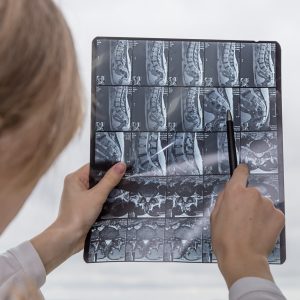
Magnetic resonance imaging (MRI) is often considered the preferred method for diagnosing spinal stenosis. It provides high-resolution images of soft tissues, including the spinal cord, nerves and intervertebral discs. MRI is particularly useful for detecting degenerative changes, herniated discs and other abnormalities that may contribute to stenosis.
A major advantage of MRI is its ability to produce images in multiple planes, allowing a comprehensive assessment of the spine. MRI can also help identify associated conditions, such as tumours or infections, that may mimic symptoms of spinal stenosis. This makes MRI a valuable diagnostic tool for clinicians.
X-Ray
X-rays are another commonly used diagnostic method, although they are more limited than MRI for viewing soft tissues. They are useful for assessing the spine's bony structures, including bone spurs, narrowing of the spinal canal and other bony abnormalities.
X-rays do not provide detailed information about soft tissues such as intervertebral discs or nerves. They are often combined with other diagnostic methods, such as MRI, to obtain a more complete picture of the patient's condition. X-rays can also guide certain treatment procedures, such as steroid injections.
Computed tomography
Computed tomography (CT) is another advanced diagnostic method that uses X-rays to create detailed images of the spine. Unlike standard X-rays, CT provides cross-sectional images that allow a more detailed view of internal structures. This is particularly useful for identifying areas where the spinal canal has narrowed and assessing the extent of bone spurs or herniated discs.
The examination is usually quick and non-invasive, although a contrast agent may be needed to improve image quality. CT results are often used alongside other diagnostic tests to confirm the presence and severity of spinal stenosis. They can also help plan surgery or other treatment procedures.
Treatment for spinal stenosis
Spinal stenosis is a condition that can have a significant impact on the quality of life of patients. Treatment options vary depending on the severity of the symptoms and the extent of the stenosis. The therapeutic approaches primarily aim to relieve pain, improve mobility, and prevent potential neurological complications.
Treatment options for spinal stenosis are multiple and can be conservative or invasive. Conservative treatments include spinal decompression therapy, medications and injections, while invasive options can include surgery. The choice of treatment depends on several factors, including the severity of symptoms, the age of the patient, and associated comorbidities.
Spinal decompression therapy
The spinal decompression therapy is a treatment option efficient which can help relieve the symptoms of spinal stenosis. During the treatment, the patient is lying on a table, traction robotic stretches gently on the spine, creating a negative pressure in the intervertebral discs. This negative pressure can help relieve the pressure on the nerves and reduce inflammation in the surrounding tissues.

The Spinal decompression therapy is a non-invasive technique that uses a table of traction robot to gently stretch the spine. This method creates a negative pressure in the intervertebral discs, which can help to relieve the pressure on the nerves and reduce inflammation in the surrounding tissues.
This technique is particularly useful for patients who are seeking alternatives to surgery. The decompression neurovertébrale is often recommended for cases of spinal stenosis with mild to moderate and has shown promising results in several clinical studies. It is generally well-tolerated and may be a viable treatment option for many patients.
Osteopathy
Manual therapies, such as osteopathy can provide relief extra in improving the mobility of the spine and reducing muscle tension. These techniques often involve mobilizations of the spine and gentle manipulations to improve the alignment and function.
It is important to note that the manual therapies should be carried out by qualified practitioners and are not recommended for all cases of spinal stenosis. A complete evaluation is needed to determine if these treatments are appropriate for your specific condition.
In addition to spinal decompression therapy and osteopathy, other non-surgical treatment options for Spinal stenosis may include:
Drugs
The drugs, including nonsteroidal anti-inflammatory drugs (NSAIDS) and muscle relaxants are often prescribed to relieve pain and inflammation associated with spinal stenosis. These drugs act by inhibiting the enzymes responsible for the production of substances that cause inflammation and pain.
It is crucial to note that although the medication can provide temporary relief, they do not treat the underlying cause of the spinal stenosis. In addition, the long-term use of these drugs may lead to side effects such as gastrointestinal disorders and cardiovascular risk. Therefore, they are generally used in conjunction with other forms of treatment.
Injections
Steroid injections épiduraux are another option for the treatment of spinal stenosis. These injections are administered directly into the epidural space of the spine and act by reducing inflammation and relieving the pressure on the nerves.
Although the injections can provide quick relief, their effects are usually temporary and only last a few weeks to a few months. In addition, there are limits to the number of injections a patient can receive because of potential side effects, such as osteoporosis, increased blood sugar, and infections. Therefore, injections are often seen as a short-term solution and are used as a complement to other forms of treatment.
For severe cases of spinal stenosis who do not respond to conservative treatments, medications, injections or surgery may be necessary to relieve pressure on the spinal cord. Please discuss with your family doctor.
Advantages and disadvantages of different treatment options
Each treatment option for spinal stenosis has its own advantages and disadvantages. For example, the decompression neurovertébrale is less invasive than surgery, and can provide rapid relief of symptoms. However, it may not be effective in cases of spinal stenosis are more severe. Drugs can offer temporary relief, but they come with their own set of side-effects and risks.
Surgical procedures, although more invasive, can provide longer lasting relief for severe cases of spinal stenosis. However, as with all surgery, they involve risks such as infection, reaction to anesthesia, and a long recovery period. Therefore, it is essential to carefully weigh the advantages and disadvantages of each treatment option in consultation with a qualified health professional.
Recommendations
For individuals suffering from spinal stenosis, it is strongly recommended to consult a health professional for an accurate diagnosis and an individualized treatment plan. A multidisciplinary approach involving specialists in neurology, orthopedic and osteopathic can often provide the best results.
Staying informed and taking an active role in treatment is also recommended. This can include learning about recent advances in spinal stenosis treatment, participating in physical rehabilitation programmes and seeking more than one medical opinion when needed. A proactive approach can help improve quality of life and reduce symptoms of spinal stenosis.
Conclusion
Spinal stenosis is a condition that can cause a variety of symptoms, including back pain, leg pain, and numbness or weakness in the legs. Although surgery may be necessary in some cases, the therapy of spinal decompression is becoming more and more popular for those looking to relieve their symptoms. By creating a negative pressure in the intervertebral discs, this treatment can help to relieve the pressure on the nerve structures and to reduce inflammation in the surrounding tissues.
Choosing treatment for spinal stenosis should be an informed decision made in consultation with qualified healthcare professionals. At TAGMED CLINIC, we are committed to providing a comprehensive assessment and a personalized treatment plan for each patient. Our multidisciplinary team of experts uses an integrated approach to manage symptoms of spinal stenosis and improve our patients' quality of life.
If you suffer from spinal stenosis and that you are in search of effective treatment options and less invasive, we invite you to make an appointment at the Clinic TAGMED. We are dedicated to excellence in health care and the application of methods of treatment of the more advanced, including decompression neurovertébrale. Don't let the pain and discomfort dictate your life; take the first step towards a lasting relief by consulting our team of highly qualified specialists.
Published research/studies in Spinal Decompression Therapy
Download the research that has been published regarding spinal decompression therapy:

FREE special report on spinal decompression to download

To find out more about non-surgical spinal decompression therapy, please visit our specialized websites:
 Conditions Treated
- Vertebra moved
- Treatment for Carpal Tunnel Syndrome
- Bulging disc treatment in Terrebonne
- Bulging disc treatment in Montreal
- Spinal stenosis treatment in Terrebonne
- Spinal stenosis treatment in Montreal
- Foraminal stenosis treatment in Terrebonne
- Foraminal stenosis treatment in Montreal
- Disc protrusion treatment in Terrebonne
- Disc protrusion treatment in Montreal
- Torticollis
- Calcific tendonitis
- Tendinitis
- Spinal stenosis
- Foraminal stenosis
- Spondylolisthesis
- Sciatica
- Disc Protrusion
- Disc space narrowing
- Morton's neuroma
- Back pain
- Neck pain
- Herniated disc
- Plantar fasciitis
- Medial epicondylitis (golfer's elbow)
- Heel Spur
- Lateral epicondylitis (tennis elbow)
- Pain between the shoulder blades
- Foot pain
- Knee pain
- Pain in elbow or wrist
- Pain in the neck, arm and shoulder blade
- Cruralgia
- Capsulitis
- Bursitis and Tendinitis
- Calcific bursitis
- Brachialgia
- Disc bulge
- Facet arthrosis
- Arthritis, Osteoarthritis, Osteoporosis
Frequently Asked Questions
Lumbar spinal stenosis
Lumbar spinal stenosis: what does it mean?
Lumbar spinal stenosis is narrowing of the spaces available for nerve structures in the lower back. It is frequently associated with degenerative changes in several spinal structures.
Further information: NIAMS — Spinal Stenosis.
Lumbar spinal stenosis: what symptoms can occur?
Leg pain, heaviness, tingling or weakness may occur when walking or standing and ease when sitting or leaning forward. Not every stenosis seen on imaging causes symptoms.
Further information: NIAMS — Spinal Stenosis.
Lumbar spinal stenosis: what distinctions matter?
Neurogenic claudication associated with stenosis needs to be distinguished from circulation problems. Position-related relief informs assessment but does not replace a complete examination.
Further information: NIAMS — Spinal Stenosis.
Lumbar spinal stenosis: what does assessment involve?
Assessment begins with your history, pain distribution, difficult activities and previous care. It includes movement testing and, when symptoms warrant it, assessment of sensation, strength and reflexes. Available imaging reports are considered alongside these findings.
Further information: NIAMS — Spinal Stenosis.
Lumbar spinal stenosis: is an MRI always necessary?
Imaging is not routine for every episode of back pain. It is considered according to symptoms, examination and whether it may change care. Progressive weakness or other concerning findings can warrant faster investigation.
Further information: NICE NG59 — Low back pain and sciatica.
Lumbar spinal stenosis: what role may spinal decompression have at TAGMED?
At TAGMED, suitability for spinal decompression is discussed after individual assessment. A motorized table applies controlled traction and relaxation phases adapted to the region. This approach is not suitable for every situation and cannot guarantee recovery or disappearance of an imaging finding.
Further information: Clinique TAGMED.
Lumbar spinal stenosis: what other measures may be discussed?
Depending on the situation, options include activity adjustments, progressive exercise and individualized conservative care. Medical assessment may be appropriate for medication, injections or other interventions. Choices depend on your goals, tolerance and symptom progression.
Further information: NICE NG59 — Low back pain and sciatica.
Lumbar spinal stenosis: how are progress and the duration of care assessed?
Follow-up considers pain, daily activities, tolerance for positions and, when relevant, neurological findings. Visit frequency and duration are reassessed according to response. Lack of progress or worsening symptoms should lead to review of the plan and any further investigations.
Further information: NICE NG59 — Low back pain and sciatica.
Lumbar spinal stenosis: which signs need prompt medical assessment?
New loss of bladder or bowel control, reduced sensation around the saddle area or marked progressive leg weakness requires urgent assessment. Pain with fever, significant trauma or general illness also warrants prompt medical assessment.
Further information: NIAMS — Spinal Stenosis.
Lumbar spinal stenosis: how can I prepare for a TAGMED appointment?
Prepare a timeline of symptoms, activities that change them, previous treatments and any available imaging reports. Note your goals and questions. The associated detailed page provides condition information and practical details for the next step.
Further information: Clinique TAGMED.
References
Preparing for spinal decompression treatment for spinal stenosis
- Book your appointment online or contact our staff at the TAGMED clinic to book your appointment by phone.
- Before going to the TAGMED clinic in Montreal or Terrebonne for your first treatment, there are some things you should absolutely do. First, make sure you have your medical imaging reports (X-ray, MRI, or ultrasound) available.
- Also, make sure you are aware of the various possible risks and side effects associated with treatment at Tagmed Clinic. You should also take all necessary measures (ex. Apply ice to the inflamed area to ensure that your body is ready for further treatment.
- Also, make sure you are aware of the various possible risks and side effects associated with treatment at Tagmed Clinic. You should also take all necessary measures (ex. Apply ice to the inflamed area to ensure that your body is ready for further treatment.
- Finally, if you were unable to complete our form, as mentioned above, arrive 15 minutes before your appointment time to ensure you have enough time to discuss your condition, make the assessment and your treatment.
To be completed before your consultation at TAGMED clinic
Download, print and complete this questionnaire (your health history), before consulting us, in order to save time. (Click on the tablet!)

TAGMED CLINIC
Terrebonne
1150 rue Levis, suite 200, Terrebonne, QC, J6W 5S6
(450) 704-4447
TAGMED CLINIC
Montreal
1140 ave Beaumont, Mont-Royal, QC, H3P 3E5
1-877-672-9060