Herniated disc treatment in Montreal — Mount Royal
Free Examination — $85 CAD Value
Ask for the “Free Examination — $85 Value” offer when booking in Montreal / Town of Mount Royal. The offer covers the examination; any treatment is separate.
Looking for treatment for a herniated disc in Montreal? TAGMED Clinic in Montreal, located in Mount Royal, offers spinal decompression therapy. Learn about this approach for lumbar or cervical herniated discs and book an appointment to assess whether it is appropriate for your situation.
TAGMED Clinic Montreal — Mount Royal
1140, avenue Beaumont, Mont-Royal (Québec) H3P 3E5
Tuesdays and Thursdays: 9 a.m. to 6 p.m.
On Medexa, the portal is listed as “Le Centre Neurothérapie de Montréal”. For your first appointment with Sylvain Desforges, select “Nouveau patient” (new patient), then “Ostéopathie / Osteopathy”. Check that Sylvain Desforges is selected.
See the contact details and directions for the Montreal clinic, as well as our fees. For an appointment on the North Shore, visit the page on Herniated disc in Terrebonne.
Lumbar or cervical herniated disc: information for your consultation
Introduction
Herniated discs are a common medical condition that can cause severe pain and functional limitations. If you live in Montreal or the surrounding area, Clinique TAGMED offers innovative and effective treatment options for herniated discs in Montreal.
 Summary

Understand the herniated disc
The spine is a complex structure made up of vertebrae, intervertebral discs, ligaments and muscles. The intervertebral discs act as cushions between the vertebrae, allowing fluid mobility of the spine. A herniated disc occurs when the gel-like centre of a spinal disc protrudes through a tear in its outer fibrous ring.
Causes of herniated discs
- Natural wear and tear: With age, intervertebral discs can lose elasticity and hydration, making them more prone to tears.
- Injuries: Accidents, falls and sudden movements may cause damage to the intervertebral discs.
- Overweight: Being overweight can put additional pressure on the spine, contributing to disc deterioration.
- Improper PosturePoor posture can also contribute to the degeneration of the intervertebral disc.
Symptoms of herniated disc
The symptoms of a herniated disc can vary depending on the location and severity of the herniation. They may include:
- Pain in the back or neck: This pain may be acute or chronic and may worsen with certain movements.
- Numbness or tingling: These sensations can occur in the arms or legs and are often associated with nerve compression.
- Muscle weakness: Compression of the nerves can lead to weakness in the affected muscles.
- Radiating pain: Pain can travel along the path of a compressed nerve, creating a burning or stinging sensation.

The TAGMED Clinic: Your partner of choice in Montreal for the treatment of herniated discs
The TAGMED CLINIC is a treatment centre specializing in herniated discs and other spinal conditions. Located in Montreal, our clinic is made up of a team of dedicated, experienced professionals.
Why choose TAGMED Clinic?
- Expertise: Our team has extensive experience in the treatment of herniated discs and other spinal conditions.
- Innovation: We use cutting-edge techniques, including Spinal decompression therapydelivering effective treatment.
- Personalized approach: Each patient is unique, and we are committed to providing a personalized treatment plan.
- Welcoming environment: Our clinic offers a warm and comfortable, where you will feel supported and understood.
Treatment Options for herniated discs in the Clinical TAGMED
We offer a full range of treatment options for herniated discs, adapted to the specific needs of each patient. These options include:
- Manual therapy (osteopathy): Our therapists use manual techniques to improve mobility and reduce pain.
- Therapy spinal decompression: This non-invasive method that uses traction control to reduce the pressure on the intervertebral discs.
- Infiltrations of corticosteroids: These injections can reduce inflammation and pain in the affected area.
Spinal decompression at TAGMED Clinic
The Spinal decompression therapy is an innovative technique used to treat herniated discs and other spinal disorders. It offers a non-invasive alternative to surgery and can be particularly effective for patients who have not found relief with other treatment methods. 
What is spinal decompression therapy?
The Spinal decompression therapy uses a specialized device to apply a controlled traction force to the spine. This force creates a space between the vertebrae, allowing the intervertebral discs to return to their normal shape and relieving pressure on the nerves.
How does spinal decompression work?
The Spinal decompression therapy is performed on a specially designed table, where the patient lies comfortably. The device applies gentle, controlled traction, creating space between the vertebrae and allowing the discs to rehydrate and regenerate.
Benefits of spinal decompression
- Pain reduction: By eliminating pressure on compressed nerves, the Spinal decompression therapy can significantly reduce pain.
- Improved mobility: By creating space between the vertebrae, Spinal decompression therapy promotes better spinal mobility.
- Targeted treatment: The Spinal decompression therapy allows precise treatment of affected areas, providing a tailor-made solution for each patient.
- Without surgery: Unlike surgery, the Spinal decompression therapy is a non-invasive method that does not require incisions or a prolonged recovery period.
Who can benefit from spinal decompression therapy?
Neurovertebral decompression is suitable for those suffering from herniated discs, pain chronic back or neck, and other spinal conditions. It offers a safe and effective alternative to surgery for many patients.
Neurovertebral decompression in Montreal: A revolution in the treatment of herniated discs
Spinal decompression therapy is a cutting-edge technique that has revolutionized the treatment of herniated discs and other spinal disorders. In Montreal, the TAGMED CLINIC is proud to offer this innovative treatment method.
How does a spinal decompression therapy session take place?
- Initial assessment: Before treatment, a comprehensive assessment is carried out to understand the specific needs of the patient.
- Positioning on the table: The patient lies on a specially designed table, and straps are used to secure the body.
- Application of traction: The table applies controlled, targeted traction to the affected region, creating space between the vertebrae.
- Relaxation and recovery: After the session, the patient may experience immediate pain relief and improved mobility.
Results of spinal decompression therapy
- Pain relief: Many patients report a significant reduction in pain after just a few sessions.
- Restoration of function: The Spinal decompression therapy can help restore normal spinal function, allowing a return to daily activities.
- Prevention of surgery: For some patients, the Spinal decompression therapy may eliminate the need for surgery.
Testimonials from patients treated for a herniated disc at our Montreal clinic
"After years of back pain, spinal decompression at the TAGMED CLINIC changed my life. I can finally enjoy my favourite activities without pain!" - Marie, Montréal "The Spinal decompression therapy was my last chance before surgery. I am so grateful to have found TAGMED Clinic. The treatment was a complete success!" - Jean, Montréal
Neurovertebral decompression: An in-depth exploration
The Spinal decompression therapy is a treatment method that has gained popularity in recent years, particularly for its effectiveness in treating herniated discs. Here is a more in-depth exploration of this technique.
The Science Behind Neurovertebral Decompression
The Spinal decompression therapy works by creating space between the vertebrae, allowing the intervertebral discs to rehydrate and regenerate. This method uses mechanics and biology to promote healing.
- Mechanical: Controlled traction creates space between the vertebrae, reducing pressure on the intervertebral discs.
- Biology: The space created allows nutrients and oxygen to enter the discs, promoting healing and regeneration.
Neurovertebral decompression as an alternative to surgery
Spine surgery may be a treatment option for herniated discs severe, but it carries risks and requires prolonged recovery. There Spinal decompression therapy offers a non-invasive alternative.
- Less risk: Unlike surgery, the Spinal decompression therapy does not require incisions or anaesthesia, reducing the risk of complications.
- Faster recovery: The Spinal decompression therapy does not require prolonged recovery time, allowing patients to quickly return to daily activities.
- Lower cost: Compared to surgery, Neurovertebral decompression may be a more affordable option for many patients.
Neurovertebral decompression at the TAGMED Clinic in Montreal
The Clinique TAGMED is a leader in the field of spinal decompression therapy in Montreal. Here's why our clinic is the ideal choice for this treatment.
- Cutting edge technology: We use the latest generation equipment to ensure precise and efficient treatment.
- Qualified staff: Our team is highly qualified in the use of Spinal decompression therapy, guaranteeing safe and effective treatment.
- Personalized follow-up: Each patient receives personalized follow-up to ensure that treatment is adapted to their specific needs.
Herniated disc and sciatic pain in Montreal
A lumbar herniated disc can sometimes irritate or compress a nerve root that contributes to the sciatic nerve. In this situation, pain can travel from the lower back into the buttock, the back of the thigh, the calf, the foot or some toes. This presentation is often described as disc-related sciatic pain.
In Montreal, an assessment of pain consistent with sciatica should take into account the path of the pain, the presence of numbness, tingling or muscle weakness, tolerance for sitting, and imaging findings when available. A herniated disc should not be interpreted in isolation: it must be considered alongside the symptoms and clinical examination.
To better understand this presentation, see our page on sciatica treatment in Montreal.
Montreal: A city committed to health and well-being
Montreal is a dynamic and cosmopolitan city, known for its commitment to the health and well-being of its residents. The TAGMED Clinic is proud to be part of this community, offering quality care to the residents of Montreal and surrounding areas.
The TAGMED Clinic: A pillar of the Montreal community
- Convenient location: Located in the heart of Montreal, the TAGMED Clinic is easily accessible by car or public transportation.
- Education and awareness: Clinique TAGMED is committed to educating the public about herniated discs and Spinal decompression therapy, offering free workshops and seminars.
Neurovertebral decompression: An even more in-depth exploration
The origins of spinal decompression therapy
The Spinal decompression therapy is not a new technique, but it has been refined over the years through research and technology. Its origins can be traced to manual therapies in which practitioners used their hands to apply gentle traction to the spine.
- The first methods: Manual therapies, such as osteopathy, used traction to relieve pressure on the intervertebral discs.
- The evolution of technology: As technology advanced, specialized decompression tables were developed to apply precise, controlled traction.
- Research and development: Ongoing research has helped refine the technique by improving our understanding of how decompression affects the biology of the intervertebral discs.
Neurovertebral Decompression: Conditions Treated
1. Herniated Disc
- Description: A herniated disc occurs when the nucleus of an intervertebral disc protrudes through its outer fibrous ring.
- Treatment with Neurovertebral Decompression: Decompression relieves pressure on the disc, allowing the nucleus to return to its normal position and promoting healing.
2. Spinal Stenosis
- Description: The stenosis spinal canal is a narrowing of the spinal canal that can compress nerves.
- Treatment with Neurovertebral Decompression: Decompression increases the space within the spinal canal, reducing pressure on the nerves and relieving pain.
3. Sciatica
- Description: Sciatica is pain that radiates along the sciatic nerve, often caused by compression of this nerve.
- Treatment with Neurovertebral Decompression: Decompression can reduce compression of the sciatic nerve, thereby relieving pain and inflammation.
4. Spondylolisthesis
- Description: Spondylolisthesis occurs when a vertebra slips forward relative to the adjacent vertebra.
- Treatment with Neurovertebral Decompression: Decompression helps realign the vertebrae and reduce pressure on surrounding nerves and tissues.
5. Chronic Back and Neck Pain
- Description: Pain chronic back or neck can have a variety of causes, including disc problems, muscle strains, or joint problems.
- Treatment with Neurovertebral Decompression: Decompression can relieve pressure on discs and joints, promoting muscle relaxation and pain reduction.
6. Radiculopathy
- Description: Radiculopathy is irritation or compression of the nerve roots exiting the spine.
- Treatment with Neurovertebral Decompression: Decompression can reduce pressure on nerve roots, relieving associated symptoms such as pain, tingling, or weakness.
The Spinal decompression therapy is a versatile and effective technique that can treat a variety of conditions involving the spine. By reducing pressure on the discs, nerves and other structures of the spine, it provides relief for many patients suffering from chronic pain and debilitating conditions. At Clinique TAGMED, this technique is applied by qualified professionals who understand the nuances of each condition and adapt treatment to each patient's specific needs.
Neurovertebral decompression at the TAGMED Clinic in Montreal: A patient experience
At Clinique TAGMED, we are committed to providing an exceptional patient experience. Here's what you can expect:
- Initial consultation: A comprehensive assessment to understand your needs and determine if the Spinal decompression therapy is the right treatment for you.
- Personalized treatment plan: A tailor-made treatment plan, designed to meet your specific needs.
- Treatment sessions: Regular sessions with our qualified team, using cutting-edge technology to apply decompression.
- Ongoing support: Ongoing support throughout your treatment, including adjustments to the treatment plan if necessary.
Conclusion
A herniated disc can be a debilitating condition, but with the right treatment approach, it is possible to return to a life without pain. Spinal decompression therapy is an innovative treatment method that offers a non-invasive and effective solution. In Montreal, Clinique TAGMED is your partner of choice for herniated disc treatment. With a dedicated team and a patient-centred approach, we are here to help you regain your health and well-being. If you or a loved one suffers from a herniated disc or other spinal problems, please contact us to learn more about spinal decompression therapy and how we can help.
Published research/studies in Spinal Decompression Therapy
Download the research that has been published regarding spinal decompression therapy:

FREE special report on spinal decompression to download

 Our Treatments
Conditions Treated
- Vertebra moved
- Treatment for Carpal Tunnel Syndrome
- Bulging disc treatment in Terrebonne
- Bulging disc treatment in Montreal
- Spinal stenosis treatment in Terrebonne
- Spinal stenosis treatment in Montreal
- Foraminal stenosis treatment in Terrebonne
- Foraminal stenosis treatment in Montreal
- Disc protrusion treatment in Terrebonne
- Disc protrusion treatment in Montreal
- Torticollis
- Calcific tendonitis
- Tendinitis
- Spinal stenosis
- Foraminal stenosis
- Spondylolisthesis
- Sciatica
- Disc Protrusion
- Disc space narrowing
- Morton's neuroma
- Back pain
- Neck pain
- Herniated disc
- Plantar fasciitis
- Medial epicondylitis (golfer's elbow)
- Heel Spur
- Lateral epicondylitis (tennis elbow)
- Pain between the shoulder blades
- Foot pain
- Knee pain
- Pain in elbow or wrist
- Pain in the neck, arm and shoulder blade
- Cruralgia
- Capsulitis
- Bursitis and Tendinitis
- Calcific bursitis
- Brachialgia
- Disc bulge
- Facet arthrosis
- Arthritis, Osteoarthritis, Osteoporosis
Frequently Asked Questions
Disc herniation
Disc herniation: what does it mean?
A disc herniation is a localized displacement of material from an intervertebral disc. Its significance depends on its location and whether it corresponds to symptoms and examination findings.
Further information: AAOS — Herniated Disk in the Lower Back.
Disc herniation: what symptoms can occur?
A herniation may cause no symptoms or may be associated with back or neck pain. Nerve root irritation can produce pain spreading into a limb, tingling or weakness.
Further information: AAOS — Herniated Disk in the Lower Back.
Disc herniation: what distinctions matter?
Herniation, protrusion and bulging describe different anatomical findings. An imaging term alone does not determine symptom severity or the appropriate treatment.
Further information: AAOS — Herniated Disk in the Lower Back.
Disc herniation: what does assessment involve?
Assessment begins with your history, pain distribution, difficult activities and previous care. It includes movement testing and, when symptoms warrant it, assessment of sensation, strength and reflexes. Available imaging reports are considered alongside these findings.
Further information: AAOS — Herniated Disk in the Lower Back.
Disc herniation: is an MRI always necessary?
Imaging is not routine for every episode of back pain. It is considered according to symptoms, examination and whether it may change care. Progressive weakness or other concerning findings can warrant faster investigation.
Further information: NICE NG59 — Low back pain and sciatica.
Disc herniation: what role may spinal decompression have at TAGMED?
At TAGMED, suitability for spinal decompression is discussed after individual assessment. A motorized table applies controlled traction and relaxation phases adapted to the region. This approach is not suitable for every situation and cannot guarantee recovery or disappearance of an imaging finding.
Further information: Clinique TAGMED.
Disc herniation: what other measures may be discussed?
Depending on the situation, options include activity adjustments, progressive exercise and individualized conservative care. Medical assessment may be appropriate for medication, injections or other interventions. Choices depend on your goals, tolerance and symptom progression.
Further information: NICE NG59 — Low back pain and sciatica.
Disc herniation: how are progress and the duration of care assessed?
Follow-up considers pain, daily activities, tolerance for positions and, when relevant, neurological findings. Visit frequency and duration are reassessed according to response. Lack of progress or worsening symptoms should lead to review of the plan and any further investigations.
Further information: NICE NG59 — Low back pain and sciatica.
Disc herniation: which signs need prompt medical assessment?
New loss of bladder or bowel control, reduced sensation around the saddle area or marked progressive leg weakness requires urgent assessment. Pain with fever, significant trauma or general illness also warrants prompt medical assessment.
Further information: AAOS — Herniated Disk in the Lower Back.
Disc herniation: how can I prepare for a TAGMED appointment?
Prepare a timeline of symptoms, activities that change them, previous treatments and any available imaging reports. Note your goals and questions. The associated detailed page provides condition information and practical details for the next step.
Further information: Clinique TAGMED.
Preparations for the treatment of spinal decompression therapy for herniated disc
- Book your appointment online or contact our staff at the TAGMED clinic to book your appointment by phone.
- Before going to the TAGMED clinic in Montreal or Terrebonne for your first treatment, there are some things you should absolutely do. First, make sure you have your medical imaging reports (X-ray, MRI, or ultrasound) available.
- Also, make sure you are aware of the various possible risks and side effects associated with treatment at Tagmed Clinic. You should also take all necessary measures (ex. Apply ice to the inflamed area to ensure that your body is ready for further treatment.
- Also, make sure you are aware of the various possible risks and side effects associated with treatment at Tagmed Clinic. You should also take all necessary measures (ex. Apply ice to the inflamed area to ensure that your body is ready for further treatment.
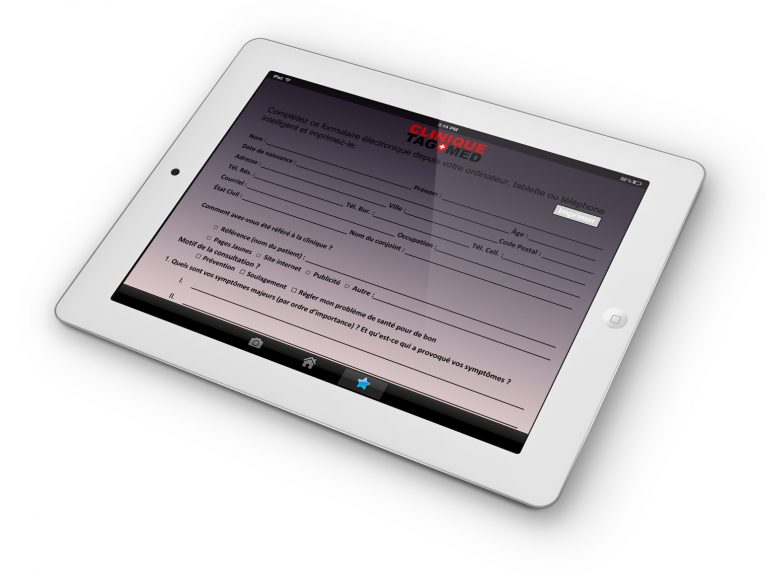
- Finally, if you were unable to complete our form, as mentioned above, arrive 15 minutes before your appointment time to ensure you have enough time to discuss your condition, make the assessment and your treatment.
To be completed before your consultation at TAGMED clinic
Download, print and complete this questionnaire (your health history), before consulting us, in order to save time. (Click on the tablet!)
To find out more about non-surgical spinal decompression therapy, please visit our specialized websites:
Discover the herniated disc treatment in Montreal the most advanced at TAGMED CLINIC!
Frequently asked questions: your consultation in Montreal
Where is the clinic for an appointment in Montreal?
TAGMED Clinic Montreal is located at 1140 Beaumont Avenue, Mount Royal, Quebec, H3P 3E5. See contact details and directions.
What are the consultation days and hours in Montreal?
Consultations in Montreal — Mount Royal take place on Tuesdays and Thursdays, from 9 a.m. to 6 p.m. Appointment availability is shown in Medexa.
How do I book my first appointment in Montreal?
Use the “Book an appointment in Montreal” button. On Medexa, the portal is listed as “Le Centre Neurothérapie de Montréal”. Select “Nouveau patient” (new patient), then “Ostéopathie / Osteopathy”, and check that Sylvain Desforges is selected.
What should I prepare before my consultation?
Have your medical imaging reports available and complete the health history questionnaire provided on this page. If you have not completed it, plan to arrive 15 minutes before your appointment.
Where can I find the fees?
The TAGMED Clinic fees are listed on the prices page. You can also call 1 877 672-9060 before booking.
Where can I find information for Terrebonne?
For an appointment on the North Shore, visit the page on herniated disc treatment in Terrebonne.