Neck surgery: innovations for treating degenerative disc disease
09/03/25
Lumbar disc replacements: the benefits for young patients
09/06/25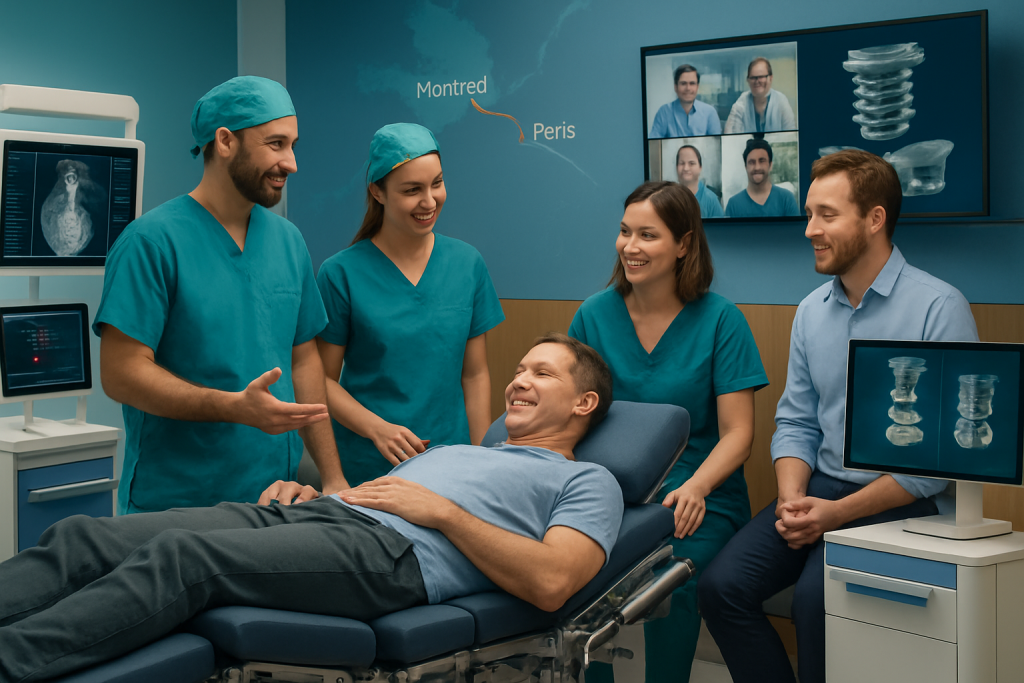
In a context where spinal pain is among the most frequent reasons for medical consultation in Quebec, Motion Surgery in France appears as an innovative and promising alternative. Offering the possibility of preserving natural mobility while effectively treating spinal pathologies, this surgical approach redefines the traditional standards of back care. Technological advancements, embodied by dynamic implants such as TOPS and IntraSPINE, combined with recognized French surgical expertise, give rise to an integrated patient pathway, coordinated across the Atlantic, and centered on safety and personalized care. The scientific rigor supported by centers of excellence, such as the TAGMED Clinic, ensures that each step, from conservative treatments to post-operative rehabilitation, is based on solid data and proven protocols. This overview highlights the key factors enabling every Quebec patient to consider a surgery of the spine in France, combining innovation, humanity and proven results.
Dynamic implants: a major innovation for preserving spinal movement
Spinal surgery has long been synonymous with vertebral fusion, a restrictive technique that permanently immobilizes the operated segments. This rigidity, while effective in stabilizing conditions such as spondylolisthesis or lumbar stenosis, often leads to long-term consequences, notably the degeneration of adjacent vertebral segments. Faced with these limitations, surgery Motion offers a biomechanical revolution thanks to dynamic implants designed to combine stability and flexibility.
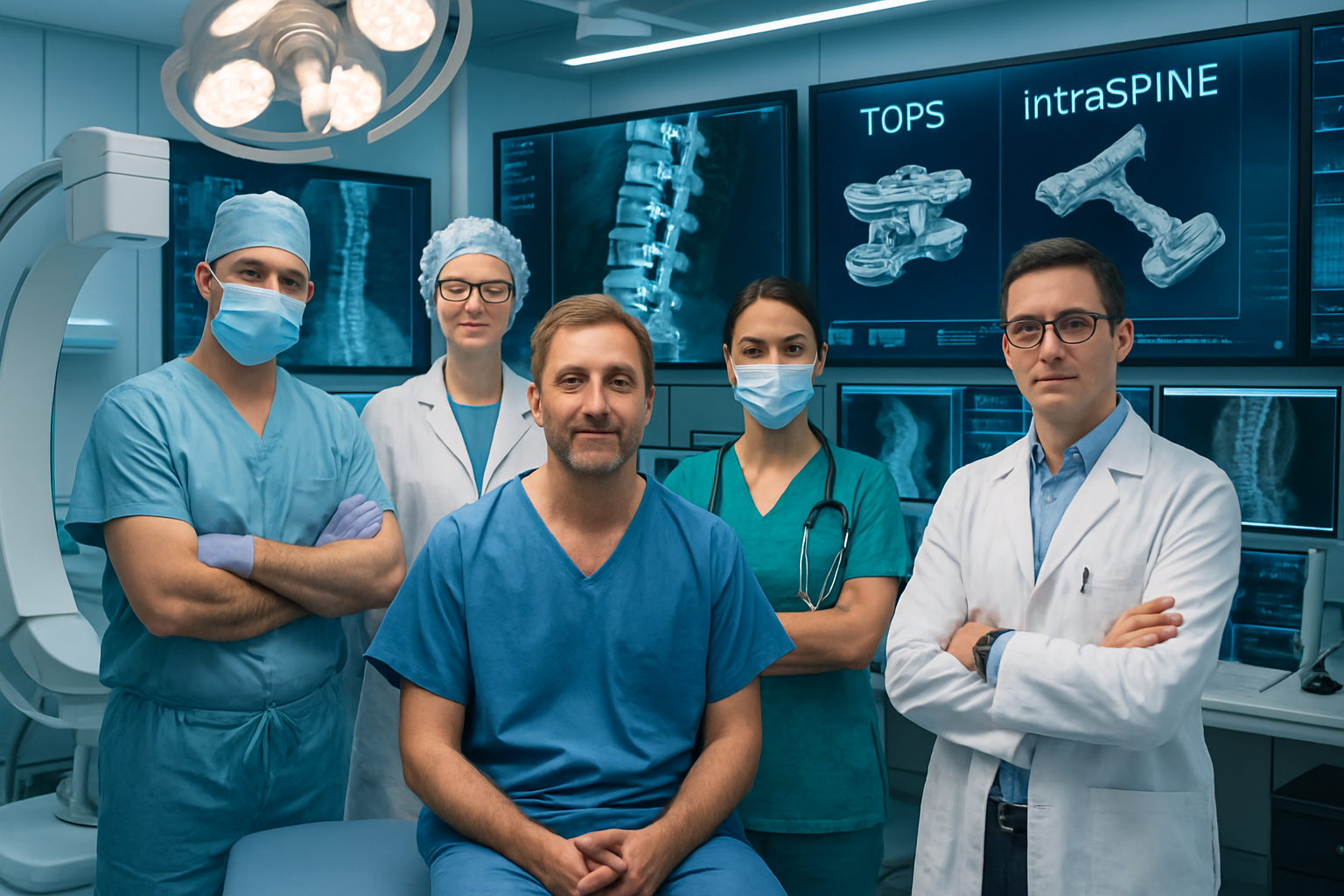
The system TOPS (Total Posterior Spine) is among the leaders in these innovations. This device provides multidirectional stabilization that respects the range of natural movements such as flexion, extension, and rotation. By preserving this mobility, TOPS significantly reduces postoperative pain and limits secondary degenerative changes. Furthermore, the technology avoids the cascade of harmful effects associated with traditional spinal fusion.
Another innovative solution is the implant. IntraSPINE IntraSPINE is positioned as a minimally invasive interspinous alternative. Placed between the vertebral spines, it provides dynamic support by improving the natural lordosis of the spine and clearing the spinal canal. This approach not only preserves the anatomical structure by limiting surgical trauma, but also promotes accelerated recovery. The use of the IntraSPINE implant, particularly indicated in cases of mechanical lower back pain and moderate lumbar stenosis, offers a significant advancement in protecting spinal tissues from repeated stress.
These implants benefit from the collaboration of renowned manufacturers such as Medtronic, DePuy Synthes, NuVasive, And Stryker, Active in ongoing research and development to ensure safety and efficiency. Many French centers are equipped with advanced technologies such as intraoperative navigation. KARL STORZ and Nexcare, implement these dynamic implants in an ultra-modern and rigorous surgical environment.
| Implant Type | Main Advantages | Common Indications | Partner Manufacturers |
|---|---|---|---|
| TOPS | Multidirectional stabilization, preservation of mobility | Lumbar instability, spondylolisthesis, stenosis | DePuy Synthes, Medtronic |
| IntraSPINE | Implant minimally invasive interspinous decompression, functional decompression | Lumbar spinal stenosis, mechanical lower back pain | NuVasive, Direct Implant |
To delve deeper into the technical aspects and clinical benefits, an excellent resource is available on the TOPS presentation at the TAGMED Clinic, while Deciphering the IntraSPINE implant offers a comprehensive understanding of its clinical and biomechanical relevance.
The patient pathway in spinal surgery in France: rigor, coordination and personalization
The success of Motion surgery relies not only on the implantable technology, but also on a comprehensive patient journey based on close coordination between medical experts and patients. In France, this model is exemplary, particularly thanks to specialized facilities such as the TAGMED Clinic, renowned for its conservative treatments prior to any surgical intervention.
The recommended protocol involves implementing conservative treatments for a cautious period of 3 to 6 months. This phase includes the Spinal decompression therapy, Targeted physiotherapy, medication management, and ergonomic advice are all part of this approach. The aim is to avoid surgery when the benefit is not clearly established, or to optimize the prerequisite conditions for a better surgical outcome.
The consultation begins with a thorough assessment that takes into account the patient's medical history, recent imaging, and functional needs. Transatlantic expertise is provided through platforms such as SOS Medical Tourism, which ensure secure logistical, administrative and medical coordination between Quebec and France. Thus, preliminary consultations, additional assessments, and post-operative follow-up are harmonized, allowing the patient comfort and clarity throughout their journey.
Surgical care is performed in centers of excellence, using the latest equipment in 3D imaging, computer-assisted navigation, and minimally invasive techniques. After the procedure, a rigorous follow-up protocol supports the patient until their return to Quebec, with multidisciplinary care including tailored rehabilitation and telehealth consultations.
- Personalized upstream assessment, including a consultation at the TAGMED Clinic.
- Priority conservative phase of 3 to 6 months, emphasizing non-invasive solutions.
- Transatlantic coordination via SOS Medical Tourism for the overall organization.
- Surgical intervention in certified facilities, incorporating TOPS or IntraSPINE implants.
- Continuous post-operative monitoring and supervised rehabilitation, with tailored support.
| Stage of the Route | Goals | Resources and Partners |
|---|---|---|
| Initial assessment | Accurate diagnosis, shared decision | TAGMED Clinic, SOS Medical Tourism |
| Preservative treatment | Reducing symptoms, avoiding surgery | Sofradim, Biomet, specialist physiotherapists |
| Surgery | Stabilization and preservation of movement | Expert surgeons, DePuy Synthes, Stryker |
| Post-operative follow-up | Rehabilitation and prevention of complications | SOS Medical Tourism Platform, multidisciplinary team |
To better understand the patient's complete journey, additional information is available on the page dedicated to Motion surgery on the TAGMED Clinic website and via the ACMA blog that supports Quebec patients.
Surgical techniques in France: from classic to innovative Motion
France offers a full range of surgical procedures tailored to varying degrees of severity and clinical needs. Traditional spinal fusion remains a standard treatment for severe deformities and instabilities. This technique, which involves immobilizing the vertebral segment using titanium implants (screws, rods) and performing a bone graft, provides a lasting correction but at the cost of an inevitable loss of local mobility.
In contrast, Motion surgery, which incorporates dynamic implants, presents a different profile, combining stability with the maintenance of a physiological range of motion. It is particularly well-suited to cases of moderate instability or mechanical pain related to disc degeneration. This technique promotes a rapid return to independence and avoids the complications usually associated with spinal fusion.
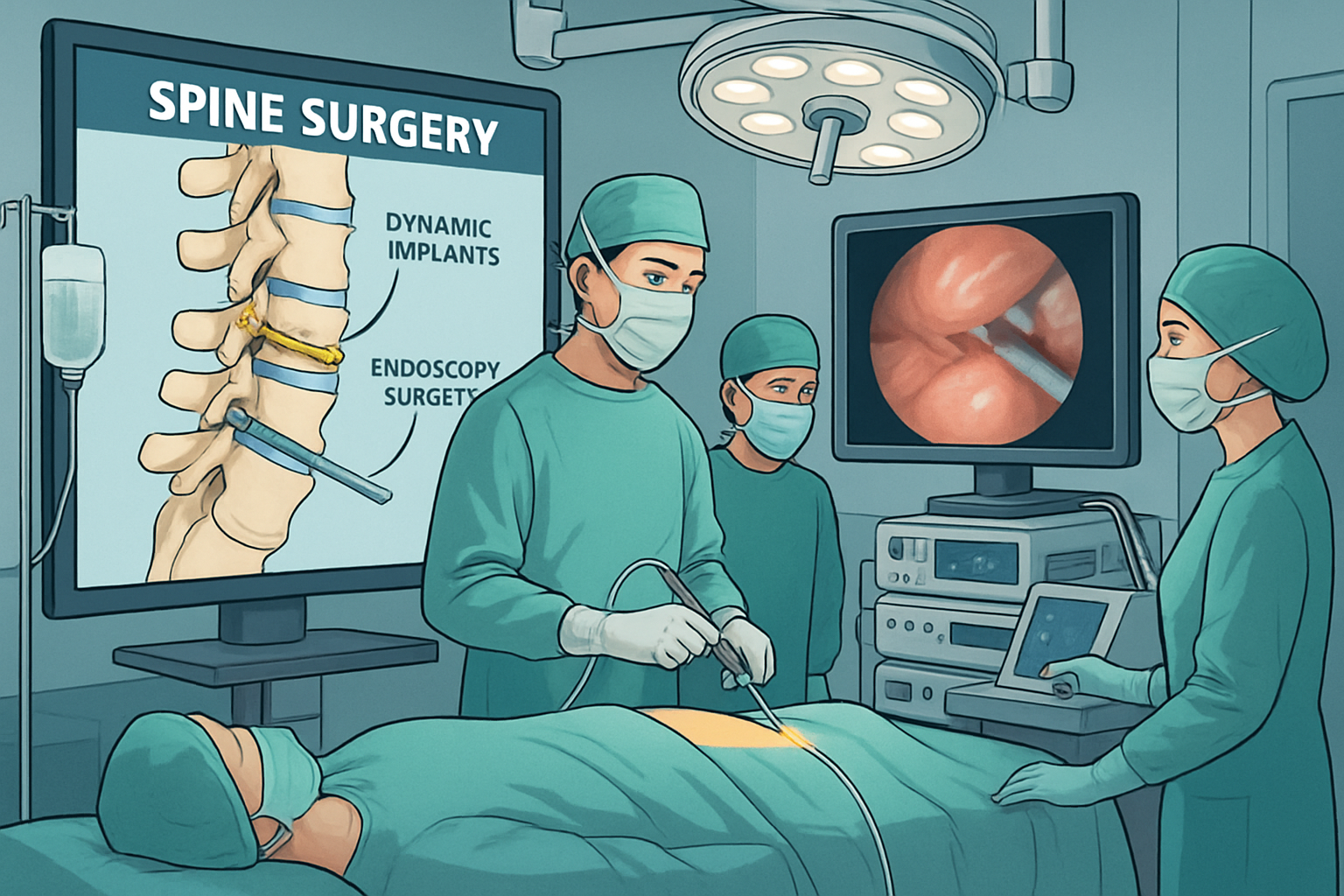
Furthermore, endoscopic surgery, designed for localized lumbar disc herniations or stenoses, complements this arsenal by offering a minimally invasive solution that tends to reduce trauma and postoperative pain.
- Spinal fusion (arthrodesis) : correction of severe deformities, but loss of local mobility.
- Dynamic implants (TOPS, IntraSPINE) : stabilization with preservation of movements.
- Endoscopic surgery : minimally invasive treatment for herniated discs, localized stenoses.
- Complementary techniques : intraoperative navigation, interventional radiology.
| Technical | Benefits | Limitations | Main Indications |
|---|---|---|---|
| Spinal fusion (arthrodesis) | Stable and lasting correction | Loss of segmental mobility | Scoliosis, severe instability |
| Dynamic implants | Maintaining mobility and rapid recovery | Less suitable for major deformations | Moderate instabilities, lumbar stenosis |
| Endoscopic surgery | Less invasive, reduced complications | Reserved for localized cases | Herniated discs, mild stenosis |
A comprehensive summary is provided on SOS Medical Tourism and on Pulse Align Clinic, recognized resources on innovations in spinal surgery in France.
The biomechanical and functional benefits of Motion implants for quality of life
At the heart of spinal rehabilitation medicine, Motion implants rely on a deep understanding of biomechanics to offer surgical solutions that respect the physiology of the spine. These devices aim to restore a natural balance between stability and mobility, essential factors for better functional recovery and the prevention of long-term complications.
The TOPS system, for example, maintains segmental range of motion while controlling stress, thus reducing the load on adjacent discs and delaying degeneration. The IntraSPINE implant, meanwhile, improves lumbar lordosis and relieves nerve compression through functional decompression, resulting in an immediate and significant reduction in pain.
The adoption of these dynamic implants results in several notable advantages:
- Preservation of natural mobility (flexion, extension, rotation).
- Reduction of chronic lower back and neck pain.
- Accelerated recovery thanks to minimally invasive procedures.
- Prevention of degeneration of adjacent segments.
- Improvement of postural comfort and overall quality of life.
The materials used are designed to be biocompatible and durable, thus limiting the risk of wear and tear and immune complications. Major brands such as Zimmer Biomet, Spineart, B. Braun and Vexim are involved in this sector, guaranteeing high-end medical quality and constant monitoring of innovations.
In short, these innovations combine biomechanical benefits with increased respect for spinal function, paving the way for lasting recovery. These benefits are documented in clinical studies accessible via SOS Shockwave and the specialist blog ACMA.
Comparison: TOPS vs. Spinal Fusion
| Characteristic | TOPS (Dynamic Implant) | Spinal Fusion (Arthrodesis) |
|---|