Comprendre la douleur sciatique : symptômes et quand consulter
08/19/26
La science révèle les causes insoupçonnées des maladies
10/21/26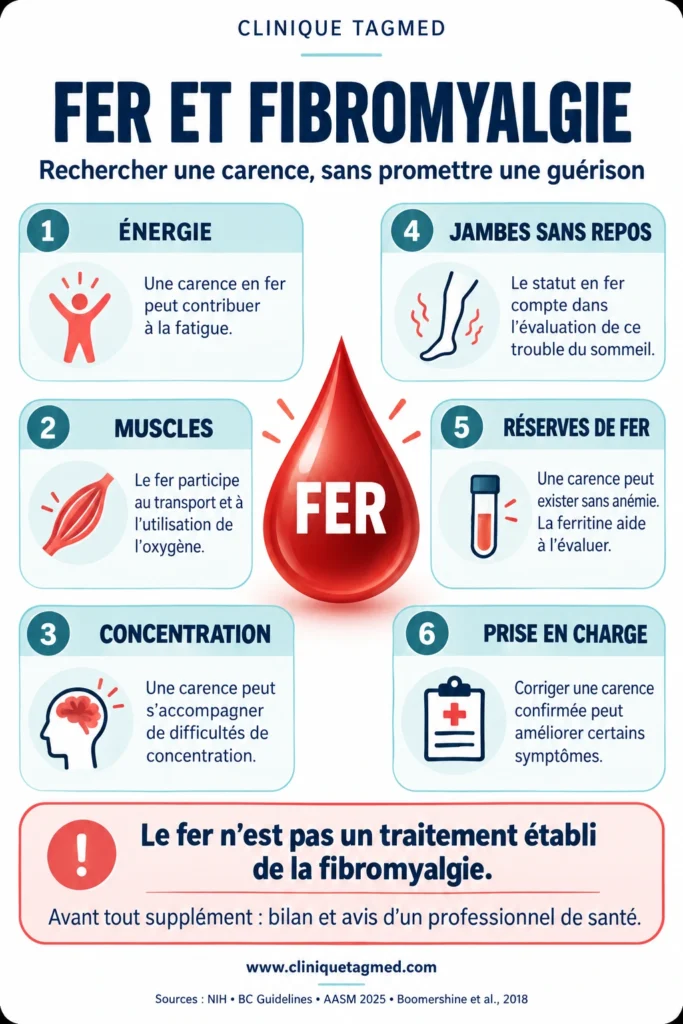
CLINIQUE TAGMED · UNDERSTANDING CHRONIC PAIN
Iron and fibromyalgia: deficiency, ferritin and fatigue
Iron deficiency can coexist with fibromyalgia and add to fatigue. Recognizing it is useful; concluding that iron treats fibromyalgia would go beyond the available evidence.
By Sylvain Desforges, Doctor of Osteopathy
Published October 21, 2026 · Educational information
Key point: correcting a confirmed deficiency may improve symptoms related to that deficiency. It does not promise relief from fibromyalgia pain.

Why does iron matter?
Iron contributes to oxygen transport through hemoglobin and to oxygen use in muscles. It also supports cellular and neurological function. Deficiency, particularly with anemia, can cause fatigue, weakness and difficulty concentrating. These symptoms are not specific to low iron.
Fibromyalgia is a complex pain condition, often accompanied by unrefreshing sleep and cognitive difficulties. Overlapping symptoms call for an individualized assessment; fatigue alone cannot establish an iron deficiency diagnosis.
What the studies actually show
Association does not establish causation. A 2010 case-control study involving 46 people with fibromyalgia and 46 controls found lower average ferritin in the fibromyalgia group. Its design cannot establish that low iron causes fibromyalgia.
An exploratory trial, not definitive proof. In a trial published in 2018, the efficacy analysis included 80 patients with fibromyalgia and iron deficiency. At 42 days, 77% of the intravenous iron group and 67% of the placebo group met the primary endpoint; the difference was not statistically significant. Some secondary outcomes improved more with iron. The small sample, short follow-up and industry funding warrant caution.
Fatigue and quality of life are different outcomes. A 2012 trial involving 198 nonanemic women with fatigue and low ferritin found a benefit of oral iron for fatigue, without a significant improvement in quality of life. This was not a fibromyalgia-specific trial, so its findings should not be generalized to all patients.
Ferritin, anemia and blood tests
Iron deficiency can exist while hemoglobin remains normal. Ferritin reflects iron stores; a complete blood count helps assess anemia. Inflammation can raise ferritin and complicate interpretation. Depending on the clinical context, a clinician may request additional measurements, including transferrin saturation.
No ferritin value confirms fibromyalgia. Thresholds used for general iron deficiency and restless legs syndrome are not interchangeable. Results must be interpreted alongside symptoms, medical history and other tests.
Restless legs: a separate issue
An urge to move the legs at rest, especially in the evening and relieved by movement, is worth discussing. Restless legs syndrome has several contributors; low iron is not its only cause. The 2025 American Academy of Sleep Medicine guideline includes ferritin and transferrin saturation in assessment, with iron treatment in selected circumstances. Treating this coexisting disorder is not the same as treating fibromyalgia itself.
A practical approach before supplementation
- Get assessed. Discuss your symptoms, how they have changed, your medications and your supplements with your physician or nurse practitioner.
- Investigate the cause if deficiency is confirmed. Heavy periods, gastrointestinal blood loss, insufficient intake or poor absorption may contribute. Raising iron levels without understanding the cause is not enough.
- Choose and monitor treatment. Oral iron is commonly used; intravenous iron has specific indications. Dose, duration and follow-up testing must be individualized. Supplements can cause digestive side effects and interact with certain medications; excess iron can be harmful.
Fibromyalgia care remains comprehensive: education, adapted physical activity, sleep and treatment options discussed according to individual needs. A coexisting deficiency may be one part of this approach, not a universal explanation.
Frequently asked questions about iron and fibromyalgia
Can you have low iron without anemia?
Yes. Low stores may precede a drop in hemoglobin. A normal complete blood count alone therefore does not settle the question of iron stores.
Should everyone with fibromyalgia take iron?
No, not routinely. The decision depends on assessment and iron status. A fibromyalgia diagnosis alone is not an indication for supplementation.
Does low ferritin explain all the pain?
No. An association observed in a study does not prove a single cause. Persistent pain requires a broader clinical assessment.
Are iron infusions an established treatment for fibromyalgia?
No. The available exploratory trial is insufficient to establish that indication. An infusion may be offered for deficiency depending on the medical situation.
What if fatigue persists after iron levels improve?
Arrange a reassessment of possible contributors, including sleep and other health conditions. Increasing supplements without reassessment is not a solution.
Your care journey in Montréal and Terrebonne
Would you like to discuss persistent pain and learn about TAGMED services? Contact our team. For assessment of possible iron deficiency, consult your medical clinician; this article does not replace an individualized evaluation.

Sylvain Desforges, docteur en ostéopathie
Scientific and clinical references
- NIH Office of Dietary Supplements (2025). Iron — professional fact sheet.
- BC Guidelines (2019). Iron deficiency: diagnosis and management.
- Ortancil et al. (2010). Ferritin–fibromyalgia study. European Journal of Clinical Nutrition, 64, 308–312.
- Boomershine, Koch & Morris (2018). Ferric carboxymaltose trial. Rheumatology and Therapy, 5, 271–281.
- Vaucher et al. (2012). Trial on fatigue without anemia. CMAJ, 184, 1247–1254.
- Winkelman et al. (2025). AASM restless legs guideline. Journal of Clinical Sleep Medicine, 21, 137–152.
- American College of Rheumatology (2025). Fibromyalgia — patient information.
Sources checked October 21, 2026. Studies of iron do not establish an effect of the clinic’s other treatments on iron deficiency or fibromyalgia.