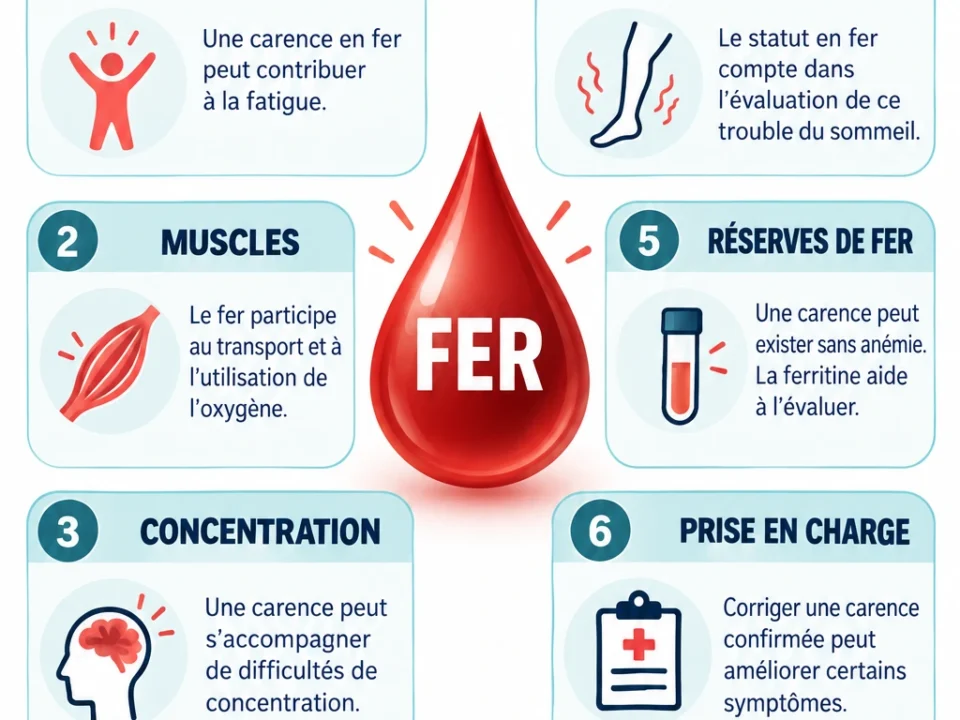
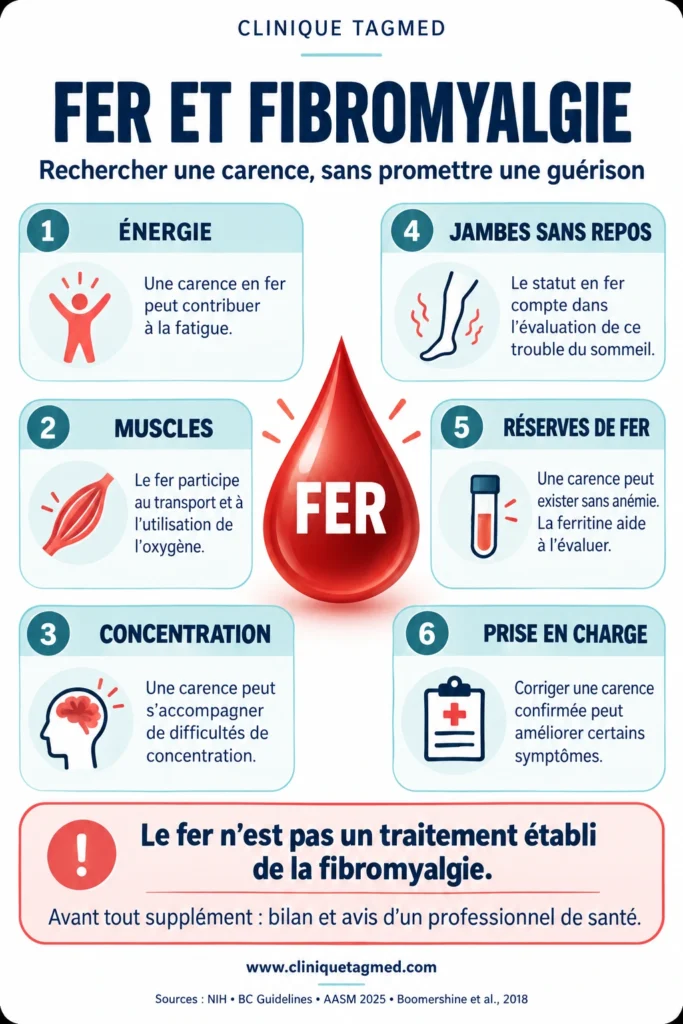
Iron and fibromyalgia: deficiency, ferritin and fatigue
10/21/26
Rheumatoid arthritis: symptoms, diagnosis and treatment
10/26/26

CLINIQUE TAGMED · UNDERSTANDING RESEARCH
How science uncovers unexpected causes of disease
From ulcers to certain cancers, from viruses to autoimmune responses: yesterday’s discoveries illuminate tomorrow’s biggest questions.
AI-generated conceptual illustration; it does not depict a specific infectious agent.
CURIOSITY MOVES MEDICINE FORWARD
What if the explanation lies where we have not yet looked?
A bacterium behind many ulcers. A virus involved in certain cancers. A tick bite leading to a meat allergy. Medical history reminds us that the causes of a disease can differ from what we first imagined. These discoveries have sometimes changed prevention, diagnosis and treatment.
Current research is opening other avenues: the role of certain viruses in autoimmunity, the contribution of bacteria to tumour progression, and the effects of microbial toxins on our DNA. Causes that are unexpected today may therefore be uncovered. That potential is a reason for hope and continued research, while keeping an appealing hypothesis distinct from a demonstrated explanation.
This feature brings together 26 examples of links or mechanisms. It distinguishes established discoveries, strongly supported research avenues and more debated hypotheses. It is not an exhaustive catalogue of diseases.
A demonstrated cause or mechanism for the specified disease form.
Several lines of evidence agree; causal questions remain open.
A serious hypothesis with limited, conflicting or insufficient evidence.
THE ILLUSTRATED OVERVIEW
The body: a landscape of discovery
Ten examples at a glance. Markers locate the system being discussed; they do not represent lesions or a diagnostic tool. Lupus and alpha-gal reactions may have systemic effects.
Multiple sclerosis
Type 1 narcolepsy
Some oropharyngeal cancers
Lupus: an immune-system hypothesis
Promising B-cell mechanism; further confirmation is needed.[23]
STRONGLY SUPPORTED
Many peptic ulcers
Type 1 diabetes
Colorectal cancer: two hypotheses
Crohn disease
An active hypothesis; causation remains unproven.[33]
DEBATED
Rheumatoid arthritis
AI-generated anatomical illustration. The same colour does not imply identical evidence strength for every link. The tables below provide the qualifications and references.
Research that could change our understanding
Strongly supported
The following six links are supported by converging evidence. Their strength is not identical: EBV–multiple sclerosis already goes beyond a simple correlation, while other avenues need broader confirmation.
| Disease or specific form | Agent or mechanism | What the evidence shows |
|---|---|---|
Multiple sclerosisMilestone : 2022–2026 | Epstein–Barr virus — EBV | A causal role is very strongly supported: a large study found an approximately 32-fold increase in risk after infection. EBV alone is not sufficient; mechanisms, cofactors and prevention remain under study.[21][22] |
Systemic lupus erythematosusMilestone : 2025 | Epstein–Barr virus — EBV | A study shows how EBV can reprogram autoreactive B cells. This promising mechanism needs larger-scale confirmation and evidence that targeted interventions improve clinical outcomes.[23] |
Type 1 diabetesMilestone : 2023–2025 | Enteroviruses, including some coxsackie B viruses | Viral markers have been detected in some pancreases. A phase 2 antiviral trial showed better preservation of insulin production. The causal role and the proportion of patients affected remain to be clarified.[24][25] |
Colorectal cancer: the Fusobacterium hypothesisMilestone : 2024 | Certain Fusobacterium nucleatum strains | These bacteria are enriched in some tumours and can promote growth in experimental models. Their role in initiating cancer must be distinguished from their role in its progression.[26] |
Colorectal cancer: the colibactin hypothesisMilestone : 2025 | Toxin produced by certain E. coli strains | A DNA-damage signature is found in human tumours, more often in early-onset cancers. The mutagenic mechanism is supported; the attributable cancer burden and effective prevention remain to be established.[27] |
Rheumatoid arthritisMilestone : 2016–2023 | Periodontitis and certain oral bacteria | Mechanisms link oral bacteria, including Aggregatibacter actinomycetemcomitans, with autoimmune responses. Their role as an initial human trigger must be distinguished from their contribution to flares.[28][29] |
Serious hypotheses that remain debated
Debated
These three associations deserve investigation, but should not be presented at the same level as recognized causes.
| Disease or specific form | Agent or mechanism | What the evidence shows |
|---|---|---|
Alzheimer diseaseMilestone : 2025–2026 | Herpes simplex virus type 1 — HSV-1 | Human associations support the hypothesis, but findings are conflicting. In VALAD, valacyclovir did not improve the disease and cognitive worsening was greater: causation has not been demonstrated.[30][31] |
SchizophreniaMilestone : 2019 | Toxoplasma gondii parasite | Studies report an association with infection markers, sometimes before diagnosis. They do not demonstrate that the parasite causes the disease; confounding remains important.[32] |
Crohn diseaseMilestone : 2024 | Mycobacterium avium subspecies paratuberculosis — MAP | A trial of combination antibiotics added to usual care found more remissions. This does not prove that MAP is the cause: the drugs may affect other microbes or mechanisms.[33] |
When a discovery changes the explanation
Established
The following nine examples represent major advances since 1996. For several autoimmune or neurological conditions, a key mechanism has been discovered without fully explaining its initial trigger.
| Disease or specific form | Agent or mechanism | What the evidence shows |
|---|---|---|
Some oropharyngeal cancersMilestone : 2000+ | High-risk HPV, especially HPV 16 | Persistent infection can cause cancer of the tonsils or base of the tongue. This explanation does not apply to every throat cancer.[9][10] |
Merkel cell carcinomaMilestone : 2008 | Merkel cell polyomavirus | A virus contributes to a large proportion of these rare skin cancers. Virus-negative forms also exist.[11][12] |
Alpha-gal syndromeMilestone : 2009–2011 | Sensitization after certain tick bites | An allergic response to alpha-gal can cause delayed reactions after eating mammalian meat. This is an allergy, not an infection transmitted by the meat.[13][14] |
AQP4-antibody neuromyelitis opticaMilestone : 2004–2005 | Autoantibodies against aquaporin-4 | Finding a specific target in the nervous system helped distinguish this form of disease from multiple sclerosis. The initial autoimmune trigger is not fully understood.[15] |
Anti-NMDA receptor encephalitisMilestone : 2007 | Autoantibodies disrupting brain receptors | An immune mechanism explains a form of encephalitis with neurological and psychiatric symptoms, sometimes associated with an ovarian teratoma.[16] |
Type 1 narcolepsyMilestone : 2000 | Loss of orexin-producing neurons | Orexin, or hypocretin, deficiency explains the impaired regulation of wakefulness. The reasons for the neuronal loss remain partly understood.[17][35] |
Immune-mediated acquired TTPMilestone : 1998 | Severe autoantibody-related ADAMTS13 deficiency | Antibodies inhibit the enzyme that regulates large von Willebrand factor molecules, promoting small clots in blood vessels.[18] |
PLA2R-associated membranous nephropathyMilestone : 2009 | Autoantibodies against the PLA2R receptor | A major target was identified in kidney filtration cells. This explains a disease subgroup, not every form or every initiating trigger.[19] |
Some gastrointestinal stromal tumours — GISTMilestone : 1998 | Activating KIT mutations | These mutations abnormally stimulate cell growth. The mechanism does not apply to every GIST and does not necessarily involve an inherited mutation.[20] |
Earlier discoveries that opened the way
Established
These eight examples were already known or identified before 1996. Each date marks an important discovery or recognition, not necessarily the point when definitive consensus was reached.
| Disease or specific form | Agent or mechanism | What the evidence shows |
|---|---|---|
ShinglesMilestone : 1954 | Varicella-zoster virus | Shingles results from reactivation of the virus that remains latent after chickenpox. The virus was isolated from both conditions in 1954, long before 1996.[1] |
Many peptic ulcersMilestone : 1982 | Helicobacter pylori bacterium | A bacterial infection explains many stomach and duodenal ulcers. However, H. pylori does not cause every peptic ulcer.[2][3] |
A proportion of stomach cancersMilestone : 1994 | Chronic H. pylori infection | Its carcinogenic role is established, particularly in non-cardia gastric adenocarcinoma. The bacterium was classified as carcinogenic to humans in 1994.[3] |
H. pylori-associated gastric MALT lymphomaMilestone : 1993 | Chronic immune stimulation by H. pylori | Some of these tumours regress after eradication of the bacterium, providing important evidence for a causal link.[4][3] |
Cervical cancerMilestone : 1983–1984 | Persistent high-risk HPV infection | Identification of HPV types 16 and 18 paved the way to understanding the causal role of persistent infection and to targeted prevention.[5][34] |
Hepatitis CMilestone : 1989 | Hepatitis C virus | Identifying the virus explained a large share of “non-A, non-B” hepatitis. Chronic infection can lead to cirrhosis and liver cancer.[6] |
Kaposi sarcomaMilestone : 1994 | Human herpesvirus 8 / KSHV | The virus is a causal factor; immune status strongly influences the risk of developing the disease.[7][36] |
Lyme diseaseMilestone : 1982 | Borrelia burgdorferi group bacteria | Identification of tick-transmitted bacteria explained a set of manifestations that had previously been difficult to connect.[8] |
READING SCIENCE WITH PERSPECTIVE
How does a link become a cause?
Finding a microbe in someone with a disease is not enough. It may be a trigger, an aggravating factor, a bystander or a consequence. Researchers therefore bring together several types of evidence.
Observe
Does the link recur across populations using reliable methods?
Follow over time
Does the exposure precede the disease, rather than occurring afterwards?
Explain
Does a credible biological mechanism connect the exposure to the observed damage?
Intervene and confirm
Does acting on the factor change risk or progression, with reproducible results?
A mechanism demonstrated in the laboratory does not, on its own, prove that it explains disease in humans. Conversely, failure of a treatment tested late in a disease does not always exclude an earlier role for the factor being studied.
Why new causes may still be discovered
Studies that follow people for years can establish the order of events. Sequencing can reveal a microbe or the footprint it has left in DNA. Single-cell analysis shows how an infection can alter an immune response. These approaches connect observations that once seemed unrelated.[21][23][27]
The discovery of Helicobacter pylori illustrates this shift in perspective. Research on EBV, lupus and colibactin signatures shows how science continues to investigate unexpected relationships. Future findings may confirm some hypotheses, revise others or lead researchers to abandon them.[21][23][27]
It is therefore reasonable to expect new explanations. It would be premature, however, to promise a single cause for every disease or assume that a virus or bacterium lies behind every condition. Chronic diseases often result from several interacting factors.
Common questions
Is a disease associated with a virus contagious?
Transmission of the virus and development of the chronic disease are different questions. An infection can contribute to cancer or an autoimmune condition without that disease passing directly from one person to another.[34][22]
Why do most infected people not develop the disease?
Exposure alone is often insufficient. Genetics, age, immunity, environment and the duration of infection can modify risk. This is a central question in the link between EBV and multiple sclerosis.[22]
Do these findings justify antibiotics or antivirals?
Not automatically. A biological link demonstrates neither treatment effectiveness nor safety. The VALAD trial in Alzheimer disease highlights the need to test interventions directly before recommending them.[31]
Were all these discoveries made in the past 30 years?
No. In 2026, a 30-year period starts in 1996. The chickenpox–shingles connection and discoveries involving H. pylori, hepatitis C and cervical HPV are older. The tables make this distinction explicit.
Does discovering a cause mean a cure exists?
No. Understanding a mechanism may improve diagnosis or suggest prevention without immediately providing a cure. Developing and validating interventions is a further step.
Stay curious. Ask for evidence. Let knowledge evolve.
Science advances by exploring new explanations and testing them against the facts. Understanding what is established and what remains to be discovered allows us to follow that progress with hope and sound judgement.
References and method
Selected original publications and institutional sources consulted for this feature. The displayed evidence levels are an educational synthesis, not a validated clinical rating. References are listed in their publication language.
- CDC. Varicella: virology and history.
- Nobel Assembly. H. pylori and peptic ulcer disease (2005; discovery in 1982).
- National Cancer Institute. Helicobacter pylori and cancer.
- Wotherspoon et al. Regression of gastric MALT lymphoma after H. pylori eradication. Lancet, 1993.
- Nobel Assembly. HPV and cervical cancer (2008; discoveries in 1983–1984).
- Nobel Assembly. Discovery of hepatitis C virus (2020; identification in 1989).
- Chang et al. Herpesvirus-like DNA in Kaposi sarcoma. Science, 1994.
- Burgdorfer et al. Lyme disease—a tick-borne spirochetosis? Science, 1982.
- Gillison et al. HPV and a subset of head and neck cancers. JNCI, 2000.
- CDC. HPV and oropharyngeal cancer.
- Feng et al. Clonal integration of a polyomavirus in Merkel cell carcinoma. Science, 2008.
- National Cancer Institute. Merkel cell carcinoma treatment (PDQ).
- Commins et al. Delayed red meat allergy and alpha-gal IgE. JACI, 2009.
- Commins et al. Tick bites and alpha-gal IgE. JACI, 2011.
- Lennon et al. Aquaporin-4 as the target of NMO-IgG. J Exp Med, 2005.
- Dalmau et al. Anti-NMDA receptor encephalitis. Ann Neurol, 2007.
- Thannickal et al. Reduced hypocretin neurons in narcolepsy. Neuron, 2000.
- Tsai & Lian. Antibodies to von Willebrand factor-cleaving protease in TTP. NEJM, 1998.
- Beck et al. PLA2R as a target antigen in membranous nephropathy. NEJM, 2009.
- Hirota et al. Activating KIT mutations in GIST. Science, 1998.
- Bjornevik et al. Longitudinal analysis of EBV infection and multiple sclerosis. Science, 2022.
- NIH. Clues to what causes multiple sclerosis, 23 September 2026.
- Younis et al. EBV reprograms autoreactive B cells in lupus. Sci Transl Med, 2025.
- nPOD-Virus Group. Enterovirus markers in pancreatic tissue. Diabetologia, 2025.
- Krogvold et al. Antiviral treatment in new-onset type 1 diabetes: phase 2 trial. Nat Med, 2023.
- Zepeda-Rivera et al. A Fusobacterium clade in colorectal cancer. Nature, 2024.
- Díaz-Gay et al. Geographic and age variations in colorectal cancer mutational processes. Nature, 2025.
- König et al. Periodontal infection and hypercitrullination in rheumatoid arthritis. Sci Transl Med, 2016.
- Brewer et al. Oral bacteria and autoimmune responses in rheumatoid arthritis. Sci Transl Med, 2023.
- Liu et al. HSV-1 and Alzheimer disease: retrospective case-control study. BMJ Open, 2025.
- Devanand et al. VALAD randomized clinical trial. JAMA, online 2025; print 2026.
- Burgdorf et al. Toxoplasma and serious psychiatric disorders. Brain Behav Immun, 2019.
- Graham et al. Anti-mycobacterial therapy RHB-104 in Crohn disease: randomized trial. Antibiotics, 2024.
- National Cancer Institute. HPV and cancer.
- NIH. Narcolepsy: causes and mechanisms.
- National Cancer Institute. Infectious agents and cancer.
General educational information. This feature does not provide an individual diagnosis or recommend treatment for the conditions discussed.
© 2026 Clinique TAGMED · Montréal and Terrebonne