Spinal fusion: modern alternatives to avoid stiffness
02/05/26
Motion Surgery: Clinical and Technical Advantages
02/05/26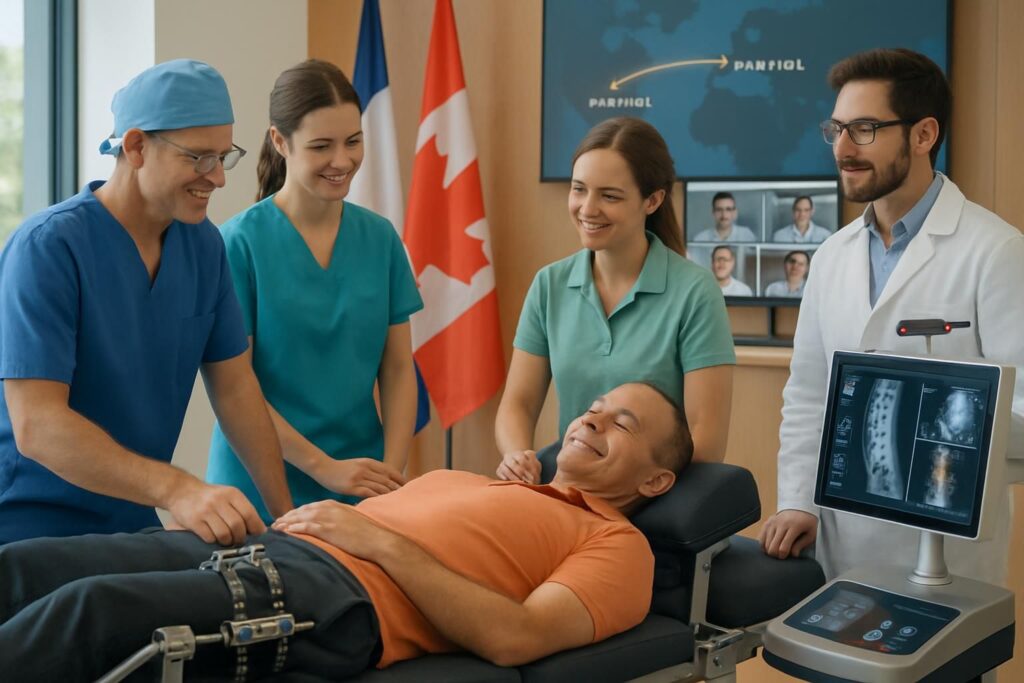
In the field of spinal surgery, technological advances in dynamic implants represent a true revolution in addressing the complications frequently observed after traditional procedures such as spinal fusion. Among these complications, adjacent segment disease stands out as a major challenge, characterized by rapid degeneration of vertebral segments adjacent to the surgical site. This condition can cause pain, loss of mobility, and sometimes necessitate secondary interventions. Dynamic implants, particularly innovative systems such as TOPS and IntraSPINE are now positioned as a solution that is both biomechanical and functional. They not only stabilize the spine but also preserve segmental mobility, thus reducing mechanical stress on adjacent segments. This dual role is crucial in preventing adjacent osteoarthritis, thereby protecting patients' spinal health in the long term. These techniques, developed and mastered by leading centers in France in collaboration with recognized experts, offer a new lease of life to the back surgery, while ensuring personalized, secure monitoring adapted to the specific needs of each patient.
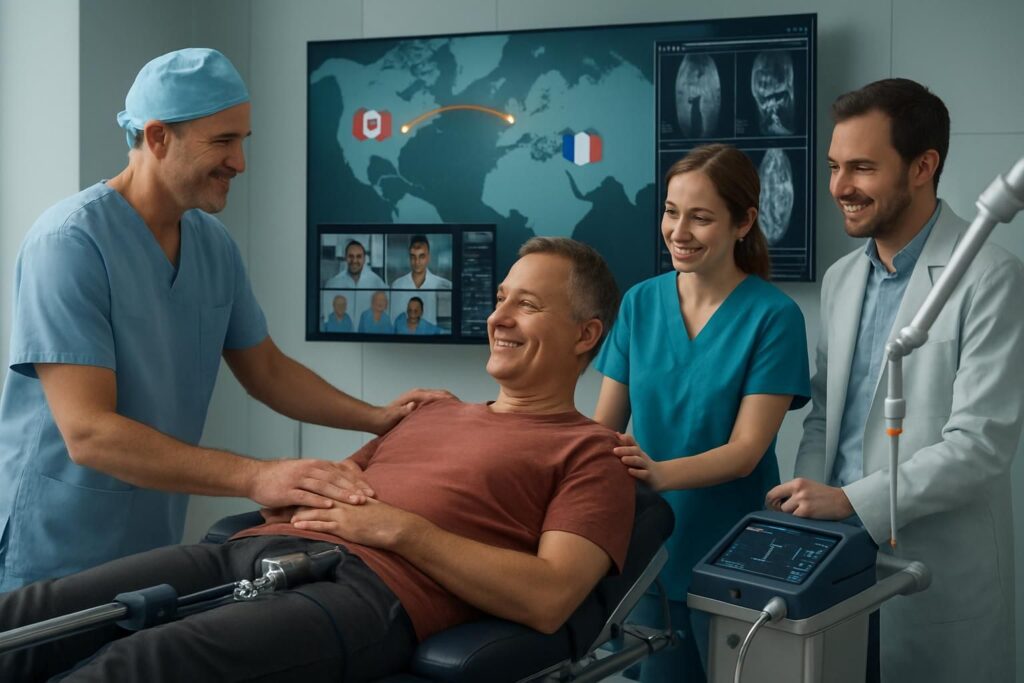
Quebec patients, faced with the sometimes prohibitive delays and costs of local care, find a promising alternative in this transatlantic pathway. Access to the latest French surgical innovations, combined with coordinated and compassionate support, guarantees comprehensive care at every stage: from the initial assessment to the post-operative rehabilitation phase. Developed with clear explanations, this pathway facilitates understanding and acceptance of the proposed solutions, highlighting the tangible benefits of dynamic implants on spinal biomechanics and the patient's quality of life. By emphasizing safety, scientific rigor, and innovation, this transatlantic expertise perfectly illustrates modern medicine in the service of personalized, safe, and efficient spinal surgery.
Dynamic implants in spinal surgery: principles and innovations for the prevention of adjacent segment disease
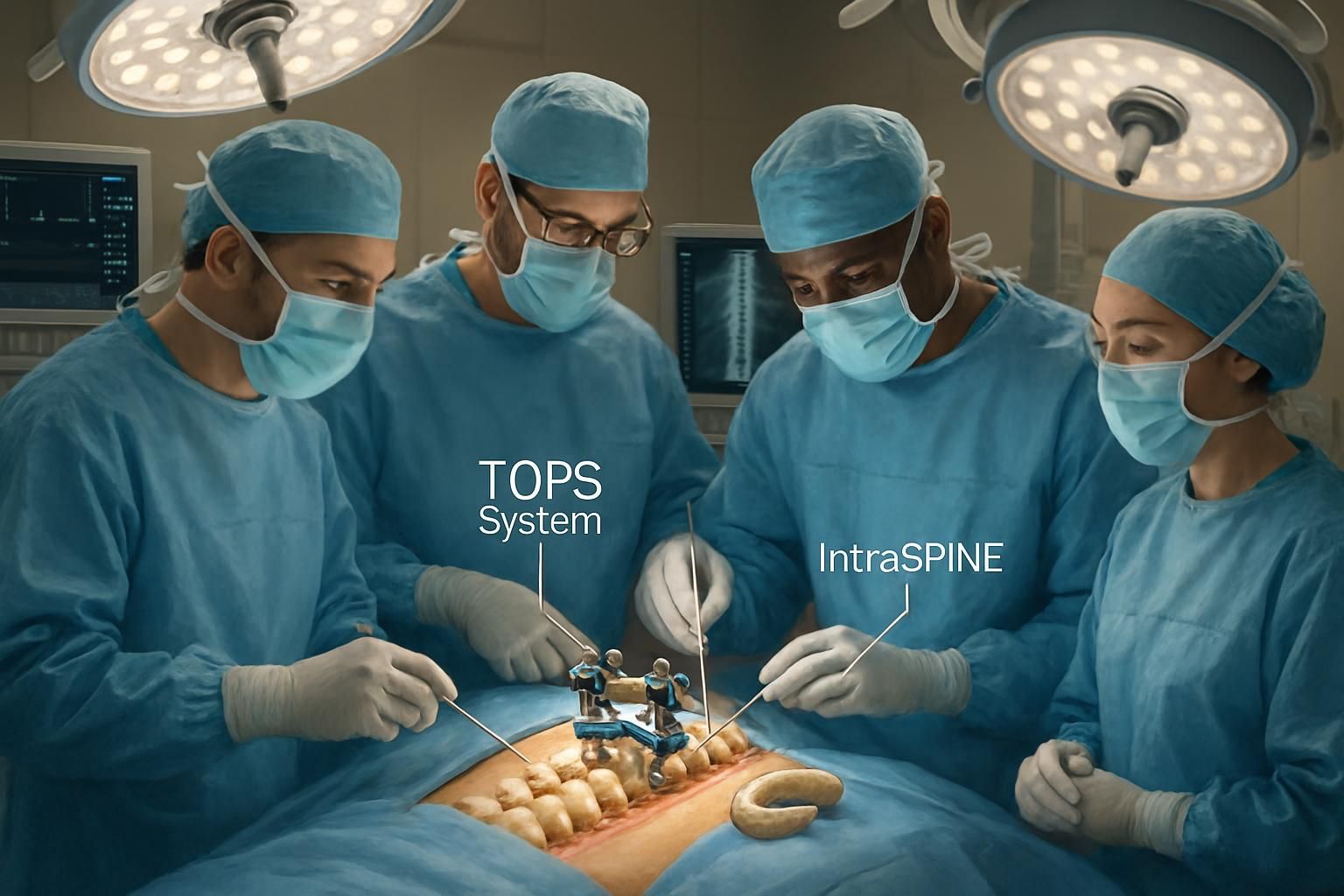
Dynamic implants represent a major advance in spinal stabilization, acting in perfect harmony with natural spinal biomechanics. Unlike traditional techniques of merger Unlike vertebral implants that permanently immobilize a segment, dynamic implants such as the TOPS system or IntraSPINE seek to preserve some segmental mobility, a key element to minimize stress on neighboring segments and thus prevent disease of the adjacent segment.
The concept is based on a balance between stabilization and flexibility. These devices allow for the control of vertebral movements to prevent harmful hypermobility while preserving normal physiological function. This approach is particularly effective for complex conditions such as difficult-to-treat herniated discs, degenerative instabilities, and certain types of scoliosis. Each implant is custom-designed, incorporating the latest scientific data in biomechanics, to offer optimal protection of neighboring segments and delay, or even prevent, the onset of adjacent osteoarthritis.
These innovations rely on advanced, high-strength, biocompatible materials combined with a sophisticated design capable of absorbing and redistributing mechanical forces. The controlled deployment of these implants, in close collaboration with a multidisciplinary team, also ensures rigorous monitoring, allowing treatments to be adapted to the patient's clinical progress. These technical and clinical advantages explain the recommended caution regarding the choice of surgery and the importance of initially prioritizing conservative treatment, as proposed in the [context missing]. TAGMED CLINIC, before any invasive surgical procedure.
Preserving mobility with dynamic implants marks a decisive step forward, particularly in the long-term management of patients. A concrete example illustrates this advantage: a patient with lumbar stenosis treated with a TOPS implant experienced not only a significant reduction in postoperative pain but also the maintenance of flexibility in their back, thus limiting mechanical overload and degeneration in adjacent vertebral segments. Such observations reinforce the relevance of integrating these technologies into advanced therapeutic strategies.
Comparison of surgical techniques: dynamic implants vs. conventional spinal fusion
The spinal surgery We offer several options depending on the pathology and the patient's profile. Spinal fusion remains a well-established technique that involves immobilizing a vertebral segment to eliminate pain or correct instability. However, it can contribute to the development of disease in the adjacent segment by increasing the biomechanical load on neighboring segments. Conversely, dynamic implants preserve controlled mobility, reducing the occurrence of this undesirable phenomenon.
The advantages of dynamic implants compared to fusion include:
- Preservation of natural and functional segmental mobility.
- Reduced risk of adjacent osteoarthritis thanks to better force distribution.
- Reduction in the need for secondary surgical interventions.
- Optimizing post-operative comfort and quality of life.
- Improved biomechanical adaptation allows for faster and more efficient recovery.
Despite these benefits, spinal fusion remains essential in certain cases, particularly when a segment is severely damaged or unstable. The choice between dynamic implants and fusion must be carefully evaluated based on specific needs, the patient's health status, and expert recommendations during a personalized treatment plan. This dialogue is facilitated by close coordination between French surgeons and Quebec teams, ensuring a seamless transition between the two continents.
| Criteria | Dynamic implants | Spinal fusion |
|---|---|---|
| Segmental mobility | Preserved and controlled | Complete immobilization |
| Risk of disease in the adjacent segment | Significantly reduced | Pupil |
| Post-operative recovery | Faster and more functional | Long and sometimes painful |
| Main indication | Moderate instabilities, complex hernias | Severe pathologies, significant deformities |
It is essential that patients are fully informed about these differences in order to make an informed decision. Partnerships with specialist centers such as the TAGMED CLINIC contributes to ensuring this transparency and access to appropriate, high-quality treatments.
Patient journey between Quebec and France: tailored support for safe, innovative surgery
The transatlantic care provided to Quebec patients undergoing spinal surgery with dynamic implants reflects an expert organization that prioritizes patient safety and comfort. This comprehensive pathway includes several steps, minimizing uncertainty and ensuring safety at every stage, from the initial consultation to post-operative follow-up.
The process begins with a thorough evaluation of symptoms, imaging, and previous treatments, prioritizing continuity with conservative modalities recommended for 3 to 6 months. For example, patients primarily benefit from non-invasive neurovertebral decompression offered at the TAGMED CLINIC, a key partner with recognized expertise in advanced conservative care.
Once the surgical indication is confirmed, logistical coordination between Quebec teams and French surgeons facilitates rapid care, including scheduling the procedure at leading facilities, organizing the hospital stay, and providing personalized support. This follow-up continues after surgery with a rehabilitation protocol specific to dynamic implants, designed to optimize recovery and preserve spinal mobility over the long term.
This model is supported by a constant exchange of medical information, thanks to secure digital tools, ensuring seamless communication between professionals and continuous monitoring of clinical progress. For patients, this approach represents a genuine guarantee of trust, supported by attentive listening and clear information throughout their care journey.
Biomechanical and functional benefits of dynamic implants: preserving spinal health and preventing complications
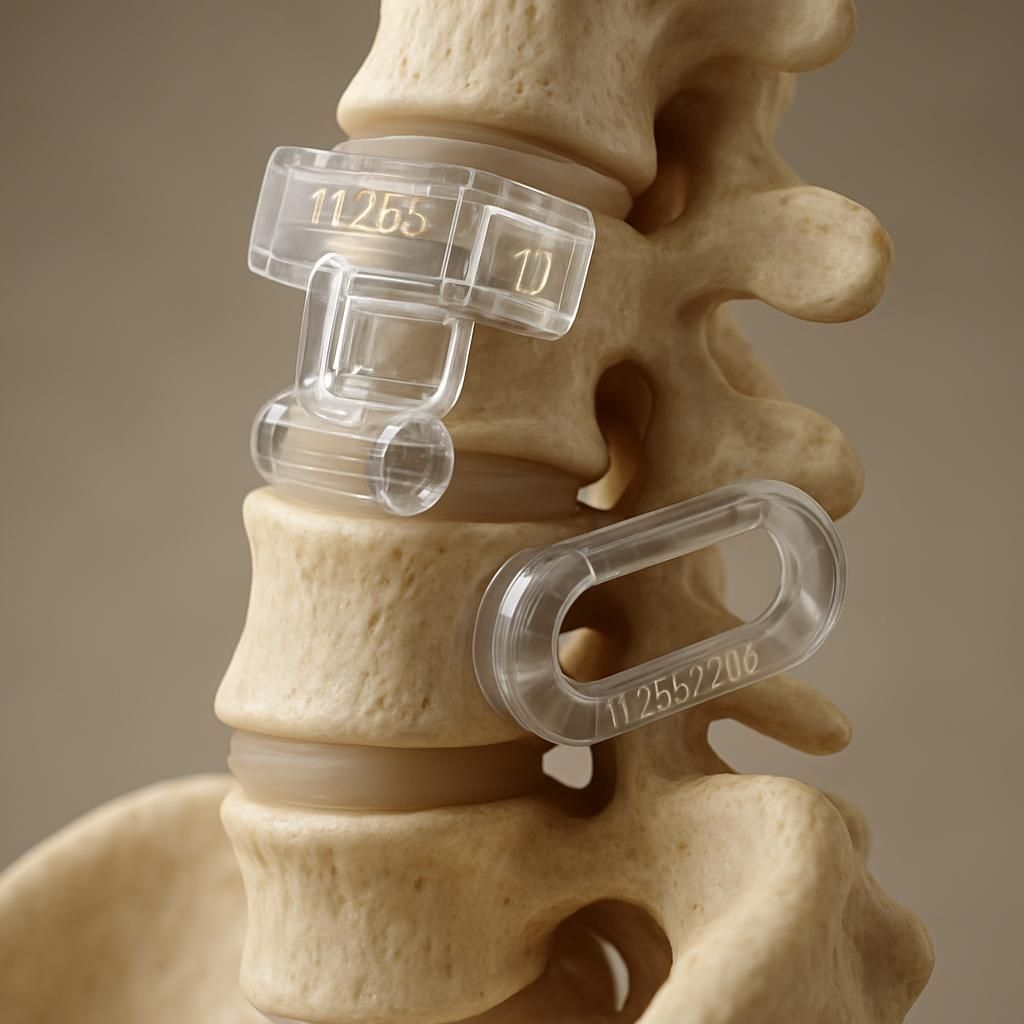
Dynamic implants developed for spinal surgery address a key objective: to reconcile stability and mobility for better preservation of the overall health of the vertebral segments. Their biomechanical benefits lie in their ability to reproduce the natural curves of the spine while limiting excessive stress on adjacent segments.
This innovative technological approach has demonstrated, through numerous studies, a significant reduction in the development of adjacent osteoarthritis, a phenomenon closely linked to the stiffening caused by spinal fusion. By maintaining a degree of segmental mobility, the implants allow for a balanced distribution of mechanical forces, thus preventing overload and premature wear.
Functionally, patients report an improved postoperative quality of life, with less pain and a renewed ability to perform daily movements without restriction. This positive trend is further enhanced by the customization of implants to meet specific needs, whether for complex disc herniations or for delicate treatments such as adult scoliosis.
Here are some key benefits put in the spotlight:
- Protection of neighboring segments to limit the progression of the degenerative disease.
- Spinal stabilization» effective without sacrificing range of motion.
- Reducing the risk of chronic pain and adjacent osteoarthritis.
- Facilitating post-operative rehabilitation with a protocol adapted to the implemented dynamics.
- Improved biomechanical adaptation on a daily basis, improving comfort and overall mobility.
To deepen understanding and support during this crucial phase, it is advisable to consult specialized resources such as the role of dynamic implants in post-operative rehabilitation, which details the best practices for taking full advantage of these technologies.
Comparison of TOPS and IntraSPINE dynamic implants
Interact with the table to filter and sort the criteria
| Criteria | TOPS | IntraSPINE |
|---|
Use the table headers to sort. Use the search bar to filter by criteria.
Human aspects and call to action: supporting each patient towards an informed and personalized decision
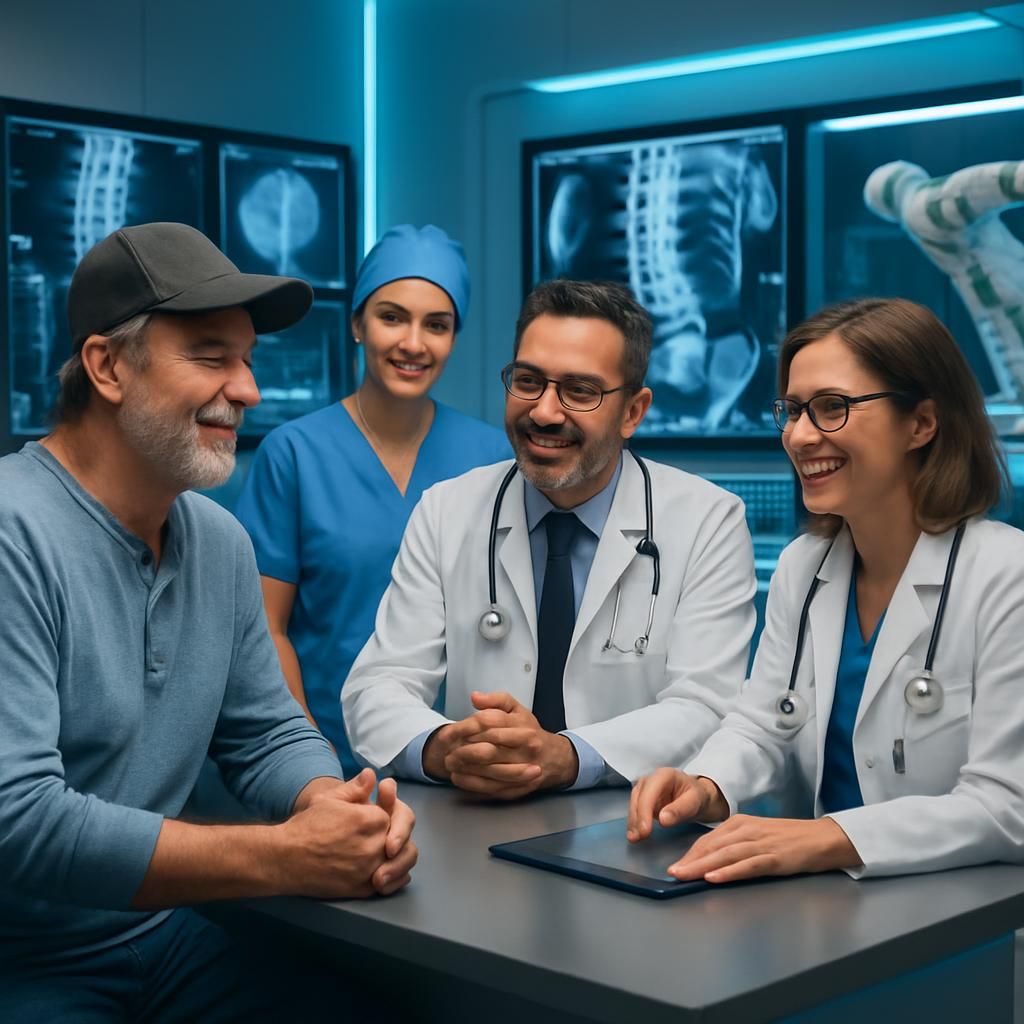
At the heart of this innovative surgery lies the commitment to offering a personalized approach, where each patient receives individualized attention and clear information, facilitating an informed and confident decision. Recognized French expertise in the field of dynamic implants is made available to Quebec patients through comprehensive support, incorporating the latest research and technologies.
In this context, the role of the spinal implant expert is crucial in guiding patients towards the most suitable solutions, working closely with medical teams and partner organizations such as the TAGMED CLINIC. This approach prioritizes safety, compliance with international standards, and accessible teaching methods that provide reassurance regarding the complexity of the interventions.
Each case is unique, which is why our support includes an individualized assessment based on open dialogue and careful listening to the patient's expectations and concerns. This humanized approach contributes to better adherence to treatment, reduces anxiety, and optimizes outcomes.
Patients are encouraged to ask questions, seek information, and consider the innovative surgical options offered by dynamic implant stabilization. The coordinated support between Quebec and France ensures not only rapid and safe access to care but also continuity of treatment with personalized post-operative follow-up.
To learn more or for a personalized assessment, visit SOS Medical Tourism and get in touch with a team dedicated to your spinal health.
{"@context": "https://schema.org", "@type": "FAQPage", "mainEntity":[{"@type": "Question", "name": "What is adjacent segment disease?", "acceptedAnswer":{"@type": "Answer", "text": "Adjacent segment disease is the accelerated degradation of vertebral segments near an open area, often following vertebral fusion, causing pain and stiffness."}},{"@type": "Question", "name": "How do dynamic implants cause this disease?"}}} ", "acceptedAnswer":{"@type": "Answer", "text": "They maintain a certain natural mobility of the segment, thus reducing the mechanical stresses on neighboring segments and limiting their premature wear."}},{"@type": "Question", "name": "What are the main dynamic implants available?", "acceptedAnswer":{"@type": "Answer", "text": "The TOPS and IntraSPINE systems are among the most advanced implants, each adapted to specific indications and offering constructed mobility. "}},{" @type": "Question", "name": "Are all patients eligible for these implants?", "acceptedAnswer":{" @type": "Answer", "text": "The choice of implant depends on many clinical factors. A personalized evaluation is necessary to determine the best surgical option."}},{" @type": "Question", "name": "How does follow-up proceed after surgery with a dynamic implant?" ", "acceptedAnswer":{" @type": "Answer", "text": "It includes adapted education, regular follow-up by professionals, and coordination between French-Canadian medical teams for optimal spinal health."}}]}What is adjacent segment disease?
Adjacent segment disease refers to the accelerated degradation of vertebral segments close to an operated area, often following vertebral fusion, causing pain and stiffness.
How do dynamic implants prevent this disease?
They preserve a certain natural mobility of the operated segment, thus reducing mechanical stress on neighboring segments and limiting their premature wear.
What are the main dynamic implants available?
The TOPS and IntraSPINE systems are among the most advanced implants, each tailored to specific indications and offering controlled mobility.
Are all patients eligible for these implants?
The choice of implant depends on many clinical factors. A personalized evaluation is necessary to determine the best surgical option.
What is the follow-up process like after surgery with a dynamic implant?
It includes tailored rehabilitation, regular monitoring by professionals and coordination between French and Canadian medical teams for optimal control of spinal health.